• Home
  • Latest
  • Fortune 500
  • Finance
  • Tech
  • Leadership
  • Lifestyle
  • Rankings
  • Multimedia
Personal FinanceSocial Security

Millions will get higher Social Security benefits after Biden signs ‘fairness’ bill

Alicia Adamczyk
By
Alicia Adamczyk
Alicia Adamczyk
Senior Writer
Down Arrow Button Icon
Alicia Adamczyk
By
Alicia Adamczyk
Alicia Adamczyk
Senior Writer
Down Arrow Button Icon
January 7, 2025, 10:59 AM ET
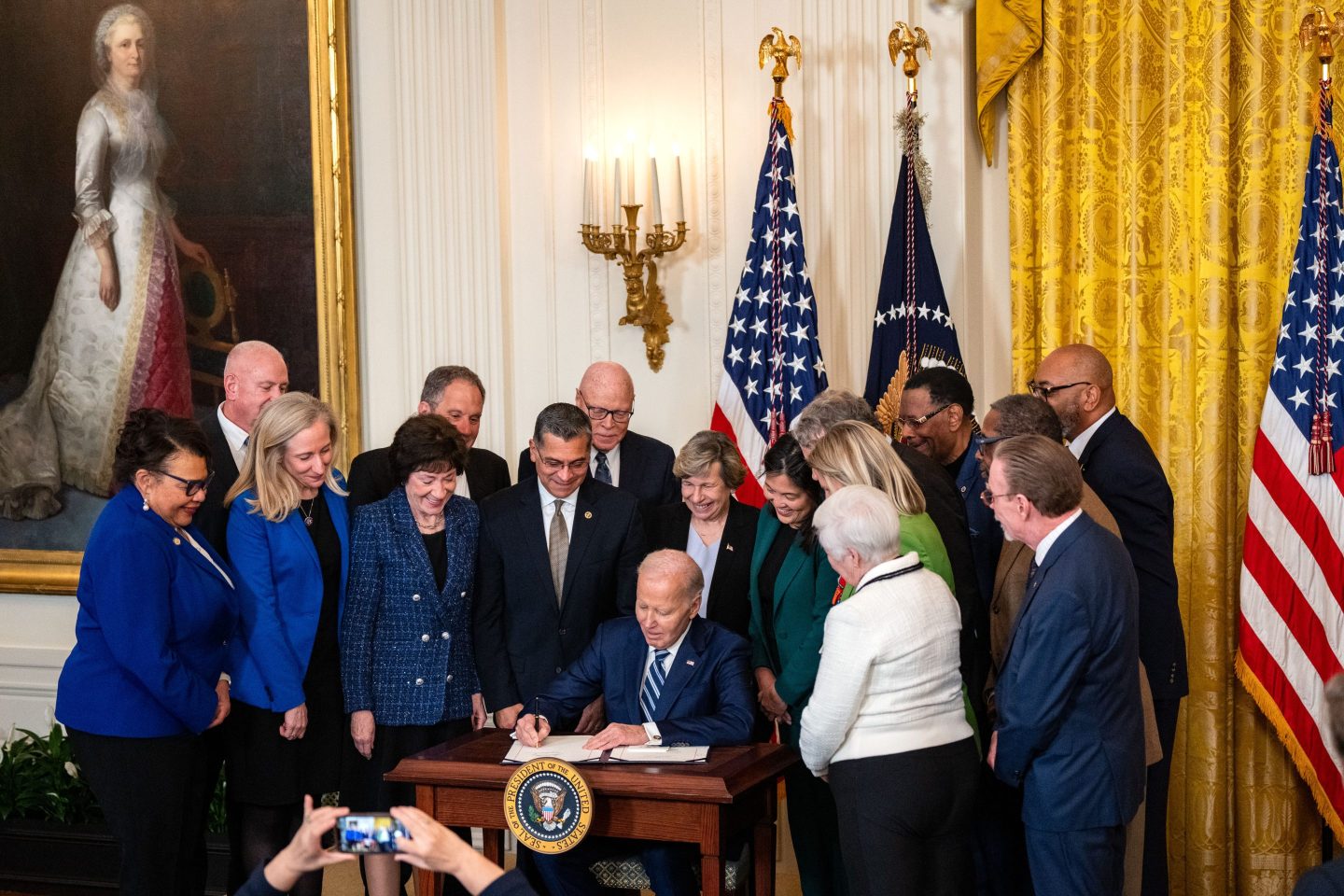
President Joe Biden signs the Social Security Fairness Act into law.
President Joe Biden signs the Social Security Fairness Act into law.Kent Nishimura / Getty

Nearly 3 million current and former public sector workers are set to receive higher Social Security payments after President Joe Biden signed the Social Security Fairness Act into law on Sunday.

Recommended Video

In what the White House says is the first such expansion in 20 years, the bipartisan law eliminates two provisions that reduced monthly benefits for some retirees with other pension income. The Congressional Budget Office (CBO) estimates some public employees could see their benefits increase by an average of $360 per month, while some spouses could see an average monthly increase of $700. Meanwhile, those who have lost their partners could see a $1,190 increase. The benefits will increase along with Social Security’s annual cost-of-living adjustment (COLA).

Additionally, millions of Americans will receive a one-time payment worth thousands of dollars for the benefits they should have received in 2024, Biden said.

“The bill I’m signing today is about a simple proposition: Americans who have worked hard all their lives to earn an honest living should be able to retire with economic security and dignity,” Biden said at the bill-signing ceremony Sunday. “The law that existed denied millions of Americans access to the full Social Security benefits they earned by thousands of dollars a year.”

The eliminated provisions include the Windfall Elimination Provision (WEP) and the Government Pension Offset (GPO), which were enacted over 40 years ago. The WEP reduced benefits for public employees who received pensions not covered by Social Security payroll taxes, while the GPO cut Social Security spousal or widow benefits if the job was not covered by Social Security.

The two provisions were meant to prevent Social Security from “overpaying” certain beneficiaries, including public school teachers, firefighters, police officers, postal workers, and others, who also collect state and local pensions.

The Social Security Administration (SSA) says it is “evaluating how to implement the Act,” and that more information will be provided “as soon as available.” SSA advises that workers who think they qualify for the enhanced benefits “do not need to take any action,” except verifying their mailing address and direct deposit information with the administration. This can be done online.

The new law comes as Social Security recipients are set to see a 2.5% COLA in 2025, which many say is not adequate to keep up with inflation. The CBO estimates it will cost $196 billion over the next decade.

Opponents of the new law say it pushes the U.S. closer to Social Security insolvency. A May 2024 report from the Social Security trustees finds the program’s trust fund will be exhausted in November of 2033; the CBO finds the new law will deplete it six months earlier than that if no other action is taken to shore up the fund.

Join us at the Fortune Workplace Innovation Summit May 19–20, 2026, in Atlanta. The next era of workplace innovation is here—and the old playbook is being rewritten. At this exclusive, high-energy event, the world’s most innovative leaders will convene to explore how AI, humanity, and strategy converge to redefine, again, the future of work. Register now.
About the Author
Alicia Adamczyk
By Alicia AdamczykSenior Writer
LinkedIn iconTwitter icon

Alicia Adamczyk is a former New York City-based senior writer at Fortune, covering personal finance, investing, and retirement.

See full bioRight Arrow Button Icon

Latest in Personal Finance

Julian Braithwaite is the Director General of the International Alliance for Responsible Drinking
CommentaryProductivity
Gen Z is drinking 20% less than Millennials. Productivity is rising. Coincidence? Not quite
By Julian BraithwaiteDecember 13, 2025
17 hours ago
Personal Financemortgages
7 best HELOC lenders in 2025: How to choose the best home equity line of credit for your situation
By Joseph HostetlerDecember 12, 2025
2 days ago
Personal FinanceCertificates of Deposit (CDs)
Truist CD rates 2025: Probably not your best option (but here’s how to decide)
By Joseph HostetlerDecember 12, 2025
2 days ago
The Citibank logo on a green layered background.
Personal FinanceCertificates of Deposit (CDs)
Citibank CD rates 2025
By Joseph HostetlerDecember 12, 2025
2 days ago
The Bank of America logo on a green layered background.
Personal FinanceCertificates of Deposit (CDs)
Bank of America CD rates 2025: How to ensure you get the highest APY
By Joseph HostetlerDecember 12, 2025
2 days ago
The Citizens Bank logo on a green layered background.
Personal FinanceCertificates of Deposit (CDs)
Citizens Bank CD rates 2025: Strong APY (but can you afford it?)
By Joseph HostetlerDecember 12, 2025
2 days ago

Most Popular

placeholder alt text
Success
Apple cofounder Ronald Wayne sold his 10% stake for $800 in 1976—today it’d be worth up to $400 billion
By Preston ForeDecember 12, 2025
2 days ago
placeholder alt text
Economy
Tariffs are taxes and they were used to finance the federal government until the 1913 income tax. A top economist breaks it down
By Kent JonesDecember 12, 2025
2 days ago
placeholder alt text
Success
40% of Stanford undergrads receive disability accommodations—but it’s become a college-wide phenomenon as Gen Z try to succeed in the current climate
By Preston ForeDecember 12, 2025
2 days ago
placeholder alt text
Economy
The Fed just ‘Trump-proofed’ itself with a unanimous move to preempt a potential leadership shake-up
By Jason MaDecember 12, 2025
1 day ago
placeholder alt text
Success
Apple CEO Tim Cook out-earns the average American’s salary in just 7 hours—to put that into context, he could buy a new $439,000 home in just 2 days
By Emma BurleighDecember 12, 2025
2 days ago
placeholder alt text
Economy
For the first time since Trump’s tariff rollout, import tax revenue has fallen, threatening his lofty plans to slash the $38 trillion national debt
By Sasha RogelbergDecember 12, 2025
1 day ago
Rankings
  • 100 Best Companies
  • Fortune 500
  • Global 500
  • Fortune 500 Europe
  • Most Powerful Women
  • Future 50
  • World’s Most Admired Companies
  • See All Rankings
Sections
  • Finance
  • Leadership
  • Success
  • Tech
  • Asia
  • Europe
  • Environment
  • Fortune Crypto
  • Health
  • Retail
  • Lifestyle
  • Politics
  • Newsletters
  • Magazine
  • Features
  • Commentary
  • Mpw
  • CEO Initiative
  • Conferences
  • Personal Finance
  • Education
Customer Support
  • Frequently Asked Questions
  • Customer Service Portal
  • Privacy Policy
  • Terms Of Use
  • Single Issues For Purchase
  • International Print
Commercial Services
  • Advertising
  • Fortune Brand Studio
  • Fortune Analytics
  • Fortune Conferences
  • Business Development
About Us
  • About Us
  • Editorial Calendar
  • Press Center
  • Work At Fortune
  • Diversity And Inclusion
  • Terms And Conditions
  • Site Map

© 2025 Fortune Media IP Limited. All Rights Reserved. Use of this site constitutes acceptance of our Terms of Use and Privacy Policy | CA Notice at Collection and Privacy Notice | Do Not Sell/Share My Personal Information
FORTUNE is a trademark of Fortune Media IP Limited, registered in the U.S. and other countries. FORTUNE may receive compensation for some links to products and services on this website. Offers may be subject to change without notice.