• Home
  • News
  • Fortune 500
  • Tech
  • Finance
  • Leadership
  • Lifestyle
  • Rankings
  • Multimedia
FinanceStock Options

Employee stock options: 3 things to know

By
The Associated Press
Down Arrow Button Icon
By
The Associated Press
Down Arrow Button Icon
January 2, 2025, 5:53 AM ET
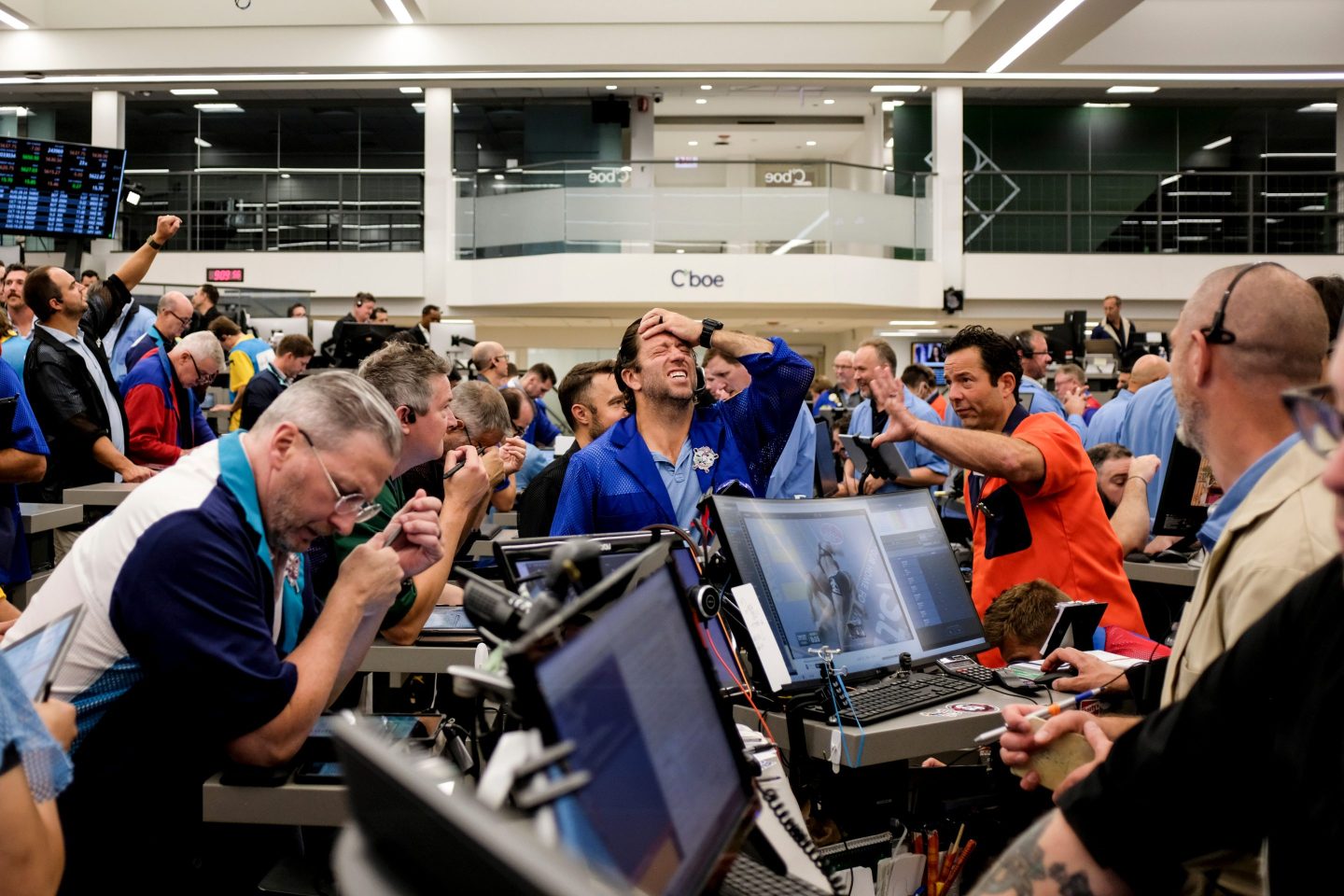
Traders work in the S&P options pit at the Cboe Global Markets exchange in Chicago
3 must-knows about employee stock options Alex Wroblewski/Bloomberg via Getty Images

Forms of compensation like restricted stock units and performance shares—whereby executives receive a batch of stock from their companies after meeting a performance target — have some key advantages relative to employee stock options.

They’re more straightforward than stock options, and the associated taxes are less complex and often better aligned with gains. That said, employee stock options can be a key source of wealth for some households. That means if options are part of your compensation package, it’s worth your while to get familiar with how they work generally, as well as how your company handles stock options specifically.

Employee stock option basics

When employees receive stock option grants, they have the opportunity to exercise the options at some later date at a predetermined price, called the strike price or exercise price.

Assume that Sharon received 100 shares of her employer stock in 2014, when it was trading at $2.35 per share, with a strike price of $10 per share and an expiration date of Dec. 31, 2023. If the stock were trading at $20 per share when Sharon wanted to exercise her options toward the end of 2023, the options would be “in the money,” meaning that the strike price is below the stock price at the time of exercise. Her profit would be on the difference between her $1,000 exercise price (her 100 stock options multiplied by the $10 strike price) and $2,000, the shares’ value at the time of exercise. She could either continue to hold the stock after exercise in the hope that it would go higher, or sell and pocket her profit.

Taxes? It depends

There are two key types of employee stock options: incentive stock options and nonqualified stock options. That distinction has a big impact on the tax treatment, which in turn may affect the strategy you employ with the options.

Nonqualified stock options (NSOs) are taxed at the investor’s ordinary income tax rate at the time of exercise.

Incentive stock option (ISO) gains, by contrast, aren’t taxed as ordinary income at the time of exercise (unless the ISO holder sells the stock at the same time). Instead, there’s a tax benefit to holding the stock after exercise in order to qualify for the lower long-term capital gains rate on the profits from the sale.

In order to do so, however, the employee must meet two criteria: 1) they must have held the options more than two years beyond the grant date and 2) they must hold the stock more than one year after exercise.

Mitigating company-specific risk

As with restricted stock, employees with hefty options grants risk having too much of their economic wherewithal riding on their companies. Minding diversification argues for divesting the shares as soon as is practical while balancing that against tax considerations and the company’s valuation (especially undervaluation).

One way to mitigate the risk of exercising options at precisely the wrong time is to exercise a portion of a grant at a time. Much like dollar-cost averaging into a stock or fund, conducting multiple exercises of multiple lots of options can help ensure that an employee exercises at a variety of price points. Exercising over a period of years rather than all in one go will also enable the employee to spread out the tax costs related to the options. Here again, it’s helpful to obtain advice from a tax or financial advisor who’s well-versed in options to determine the best course of action.


Fortune Brainstorm AI returns to San Francisco Dec. 8–9 to convene the smartest people we know—technologists, entrepreneurs, Fortune Global 500 executives, investors, policymakers, and the brilliant minds in between—to explore and interrogate the most pressing questions about AI at another pivotal moment. Register here.
About the Author
By The Associated Press
See full bioRight Arrow Button Icon

Latest in Finance

A computer screen with the Vanguard logo on it
CryptoBlockchain
Vanguard has a change of heart on crypto, lists Bitcoin and other ETFs
By Carlos GarciaDecember 2, 2025
5 hours ago
Anthropic cofounder and CEO Dario Amodei
AIEye on AI
How Anthropic’s safety first approach won over big business—and how its own engineers are using its Claude AI
By Jeremy KahnDecember 2, 2025
7 hours ago
Costco
BankingTariffs and trade
Costco sues Trump, demanding refunds on tariffs already paid
By Paul Wiseman and The Associated PressDecember 2, 2025
7 hours ago
Man on private jet
SuccessWealth
CEO of $5.6 billion Swiss bank says country is still the ‘No. 1 location’ for wealth after voters reject a tax on the ultrarich
By Jessica CoacciDecember 2, 2025
9 hours ago
Elon Musk, standing with his arms crossed, looks down at Donald Trump sitting at his desk in the Oval Office
EconomyTariffs and trade
Elon Musk says he warned Trump against tariffs, which U.S. manufacturers blame for a turn to more offshoring and diminishing American factory jobs
By Sasha RogelbergDecember 2, 2025
9 hours ago
layoffs
EconomyLayoffs
What CEOs say about AI and what they mean about layoffs and job cuts: Goldman Sachs peels the onion
By Nick LichtenbergDecember 2, 2025
9 hours ago

Most Popular

placeholder alt text
Economy
Ford workers told their CEO 'none of the young people want to work here.' So Jim Farley took a page out of the founder's playbook
By Sasha RogelbergNovember 28, 2025
4 days ago
placeholder alt text
Success
Warren Buffett used to give his family $10,000 each at Christmas—but when he saw how fast they were spending it, he started buying them shares instead
By Eleanor PringleDecember 2, 2025
15 hours ago
placeholder alt text
Economy
Elon Musk says he warned Trump against tariffs, which U.S. manufacturers blame for a turn to more offshoring and diminishing American factory jobs
By Sasha RogelbergDecember 2, 2025
9 hours ago
placeholder alt text
Success
Forget the four-day workweek, Elon Musk predicts you won't have to work at all in ‘less than 20 years'
By Jessica CoacciDecember 1, 2025
1 day ago
placeholder alt text
C-Suite
MacKenzie Scott's $19 billion donations have turned philanthropy on its head—why her style of giving actually works
By Sydney LakeDecember 2, 2025
16 hours ago
placeholder alt text
Personal Finance
Current price of gold as of December 1, 2025
By Danny BakstDecember 1, 2025
2 days ago
Rankings
  • 100 Best Companies
  • Fortune 500
  • Global 500
  • Fortune 500 Europe
  • Most Powerful Women
  • Future 50
  • World’s Most Admired Companies
  • See All Rankings
Sections
  • Finance
  • Leadership
  • Success
  • Tech
  • Asia
  • Europe
  • Environment
  • Fortune Crypto
  • Health
  • Retail
  • Lifestyle
  • Politics
  • Newsletters
  • Magazine
  • Features
  • Commentary
  • Mpw
  • CEO Initiative
  • Conferences
  • Personal Finance
  • Education
Customer Support
  • Frequently Asked Questions
  • Customer Service Portal
  • Privacy Policy
  • Terms Of Use
  • Single Issues For Purchase
  • International Print
Commercial Services
  • Advertising
  • Fortune Brand Studio
  • Fortune Analytics
  • Fortune Conferences
  • Business Development
About Us
  • About Us
  • Editorial Calendar
  • Press Center
  • Work At Fortune
  • Diversity And Inclusion
  • Terms And Conditions
  • Site Map

© 2025 Fortune Media IP Limited. All Rights Reserved. Use of this site constitutes acceptance of our Terms of Use and Privacy Policy | CA Notice at Collection and Privacy Notice | Do Not Sell/Share My Personal Information
FORTUNE is a trademark of Fortune Media IP Limited, registered in the U.S. and other countries. FORTUNE may receive compensation for some links to products and services on this website. Offers may be subject to change without notice.