• Home
  • News
  • Fortune 500
  • Tech
  • Finance
  • Leadership
  • Lifestyle
  • Rankings
  • Multimedia
LeadershipNext to Lead

Think you have what it takes to be CEO? Here’s what top executive search firms look for

By
Ruth Umoh
Ruth Umoh
Editor, Next to Lead
Down Arrow Button Icon
By
Ruth Umoh
Ruth Umoh
Editor, Next to Lead
Down Arrow Button Icon
December 17, 2024, 5:30 AM ET
an illustration of professionals working, in meeting, and reviewing documents
Top search firms use rigorous methods to identify who has CEO potential.Illustration by Studio Muti

Assessing whether you have what it takes to be a CEO requires a comprehensive evaluation of your skills, traits, and experiences in relation to the role’s demands. Few understand this better than executive recruitment and management consulting firms, which specialize in advising companies on C-suite appointments. Fortune interviewed over a dozen such experts to understand how they identify candidates with the potential to lead some of the world’s largest and most influential organizations.

Recommended Video

Fernando Ortiz-Barbachano, CEO of executive recruitment firm Barbachano International, says he focuses on how candidates have handled past challenges, as this often serves as a reliable predictor of future behavior. While it’s not an absolute measure, the approach involves probing deeply into specific scenarios to uncover leadership tendencies. Candidates might be asked to describe a time when their team had conflicting views, how they managed the situation, the steps they took, the responses elicited, and the outcome. Similarly, they might be asked to recount experiences such as addressing an underperforming group or adapting to cultural nuances to foster inclusion.

Ortiz-Barbachano notes a shift in the typical CEO career path: While leaders traditionally emerged from sales or business development, there is now growing interest in candidates with expertise in fields like engineering or technology operations, especially when combined with sales and operational experience. He also values candidates with consistent career progression, marked by regular promotions and the acquisition of new skills. “We don’t like to see leaders who stay in one role for eight or nine years. We’d like to see rapid promotion … and tackling different things and building new skill sets,” he says.

Aileen Alexander, CEO of Philadelphia-based Diversified Search Group, evaluates candidates by asking about their vision for the organization’s future. This reveals their ability to think strategically and holistically, connecting strategy, operations, and culture. Alexander cautions against candidates who focus solely on operational or strategic aspects without addressing the human dimension, as successful leadership requires balancing all three. 

For Rick Western, CEO of management consulting firm Kotter, leadership is defined by the ability to inspire and influence others. “If you’re leading and no one’s following, are you really leading?” he asks. High-potential CEO candidates, he says, have demonstrated an ability to collaborate, solve problems, and build trust and cooperation long before stepping into the corner office.

An often overlooked aspect of ascending to the corner office is understanding the why behind the aspiration. Prime CEO candidates have a clear North Star for the organization that aligns with their personal value systems, explains Erin Zolna, global assessment capability leader at Russell Reynolds Associates.

Jason Baumgarten, Spencer Stuart’s head of global board and CEO practice, offers a complementary viewpoint, noting that great leaders are deeply aware of what motivates them to pursue the CEO role because that sense of purpose must align with how they show up and what they aim to achieve once they have reached the top position. 

“Are you a results-oriented person who wants to win? Do you want to disrupt an industry? Do you want to make your employees feel like they’ve had the best life experiences? Are you all about your customers?” Whatever the motivation, Baumgarten insists that candidates must clarify how their internal drivers align with the specific needs of the organization they wish to lead.

Understanding one’s motivation is critical because misalignment between a candidate’s personal mission and the needs of the company or the role can leave them feeling disconnected and drained. A potential CEO who’s passionate about customer experience, for instance, might struggle in a turnaround scenario focused solely on financial recovery. Though they might still achieve results, it may come with significant strain and over an extended time horizon.

Understanding CEO motivation is especially crucial when you consider that there is no such thing as a universally good or bad CEO, Baumgarten explains: “You’re a universally good CEO for the exact moment in that time for that company in that context. We want a CEO whose motivation is unique to that moment.”  

Lastly, says Baumgarten, many aspire to become CEO without realizing that their desire is often tied to ideal circumstances—when the company is thriving, profits are strong, and employees are happy. “It’s a wonderful and happy place to lead,” he acknowledges. However, in today’s unpredictable and disruptive business climate, aspiring CEOs must engage in self-reflection about why they want the role. “This is really a time of complexity, so make sure that context meets your motivation,” he advises.

Natalie McCormick contributed additional reporting.

Fortune Brainstorm AI returns to San Francisco Dec. 8–9 to convene the smartest people we know—technologists, entrepreneurs, Fortune Global 500 executives, investors, policymakers, and the brilliant minds in between—to explore and interrogate the most pressing questions about AI at another pivotal moment. Register here.
About the Author
By Ruth UmohEditor, Next to Lead
LinkedIn icon

Ruth Umoh is the Next to Lead editor at Fortune, covering the next generation of C-Suite leaders. She also authors Fortune’s Next to Lead newsletter.

See full bioRight Arrow Button Icon

Latest in Leadership

Rich woman lounging on boat
SuccessWealth
The wealthy 1% are turning to new status symbols that can’t be bought—and it’s hurting Dior, Versace, and Burberry
By Emma BurleighDecember 3, 2025
2 hours ago
Mark Zuckerberg, chief executive officer of Meta Platforms Inc., during the Meta Connect event in Menlo Park, California, US, on Wednesday, Sept. 25, 2024.
AIMeta
Inside Silicon Valley’s ‘soup wars’: Why Mark Zuckerberg and OpenAI are hand delivering soup to poach talent
By Eva RoytburgDecember 3, 2025
3 hours ago
Alex Karp smiles on stage
Big TechPalantir Technologies
Alex Karp credits his dyslexia for Palantir’s $415 billion success: ‘There is no playbook a dyslexic can master … therefore we learn to think freely’
By Lily Mae LazarusDecember 3, 2025
4 hours ago
Isaacman
PoliticsNASA
Billionaire spacewalker pleads his case to lead NASA, again, in Senate hearing
By Marcia Dunn and The Associated PressDecember 3, 2025
4 hours ago
UPS
LawUPS
Lawyer blasts UPS for favoring profits over safety after fiery, deadly crash in Kentucky
By Jeffrey Collins and The Associated PressDecember 3, 2025
4 hours ago
Startups & VentureLeadership Next
Only social media platforms with ‘real humanity’ will survive, investor and Reddit cofounder Alexis Ohanian says
By Fortune EditorsDecember 3, 2025
5 hours ago

Most Popular

placeholder alt text
North America
Jeff Bezos and Lauren Sánchez Bezos commit $102.5 million to organizations combating homelessness across the U.S.: ‘This is just the beginning’
By Sydney LakeDecember 2, 2025
1 day ago
placeholder alt text
Economy
Ford workers told their CEO 'none of the young people want to work here.' So Jim Farley took a page out of the founder's playbook
By Sasha RogelbergNovember 28, 2025
5 days ago
placeholder alt text
North America
Anonymous $50 million donation helps cover the next 50 years of tuition for medical lab science students at University of Washington
By The Associated PressDecember 2, 2025
1 day ago
placeholder alt text
C-Suite
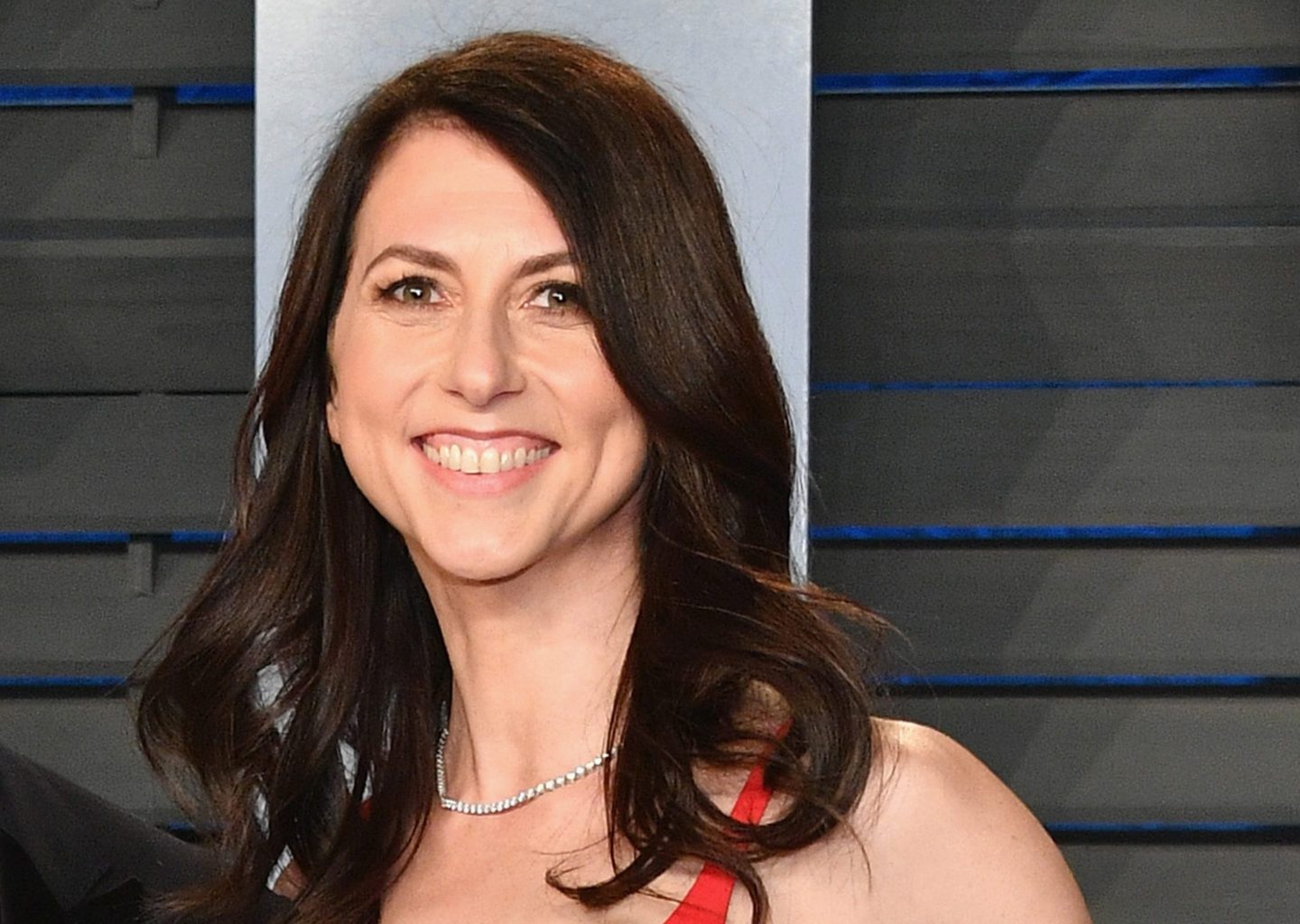
MacKenzie Scott's $19 billion donations have turned philanthropy on its head—why her style of giving actually works
By Sydney LakeDecember 2, 2025
2 days ago
placeholder alt text
Success
Warren Buffett used to give his family $10,000 each at Christmas—but when he saw how fast they were spending it, he started buying them shares instead
By Eleanor PringleDecember 2, 2025
1 day ago
placeholder alt text
Economy
Elon Musk says he warned Trump against tariffs, which U.S. manufacturers blame for a turn to more offshoring and diminishing American factory jobs
By Sasha RogelbergDecember 2, 2025
1 day ago
Rankings
  • 100 Best Companies
  • Fortune 500
  • Global 500
  • Fortune 500 Europe
  • Most Powerful Women
  • Future 50
  • World’s Most Admired Companies
  • See All Rankings
Sections
  • Finance
  • Leadership
  • Success
  • Tech
  • Asia
  • Europe
  • Environment
  • Fortune Crypto
  • Health
  • Retail
  • Lifestyle
  • Politics
  • Newsletters
  • Magazine
  • Features
  • Commentary
  • Mpw
  • CEO Initiative
  • Conferences
  • Personal Finance
  • Education
Customer Support
  • Frequently Asked Questions
  • Customer Service Portal
  • Privacy Policy
  • Terms Of Use
  • Single Issues For Purchase
  • International Print
Commercial Services
  • Advertising
  • Fortune Brand Studio
  • Fortune Analytics
  • Fortune Conferences
  • Business Development
About Us
  • About Us
  • Editorial Calendar
  • Press Center
  • Work At Fortune
  • Diversity And Inclusion
  • Terms And Conditions
  • Site Map

© 2025 Fortune Media IP Limited. All Rights Reserved. Use of this site constitutes acceptance of our Terms of Use and Privacy Policy | CA Notice at Collection and Privacy Notice | Do Not Sell/Share My Personal Information
FORTUNE is a trademark of Fortune Media IP Limited, registered in the U.S. and other countries. FORTUNE may receive compensation for some links to products and services on this website. Offers may be subject to change without notice.