• Home
  • Latest
  • Fortune 500
  • Finance
  • Tech
  • Leadership
  • Lifestyle
  • Rankings
  • Multimedia
TechAI

Europe’s AI industry watches Trump’s return with a mix of fear and hope

By
David Meyer
David Meyer
Down Arrow Button Icon
By
David Meyer
David Meyer
Down Arrow Button Icon
November 14, 2024, 5:00 AM ET
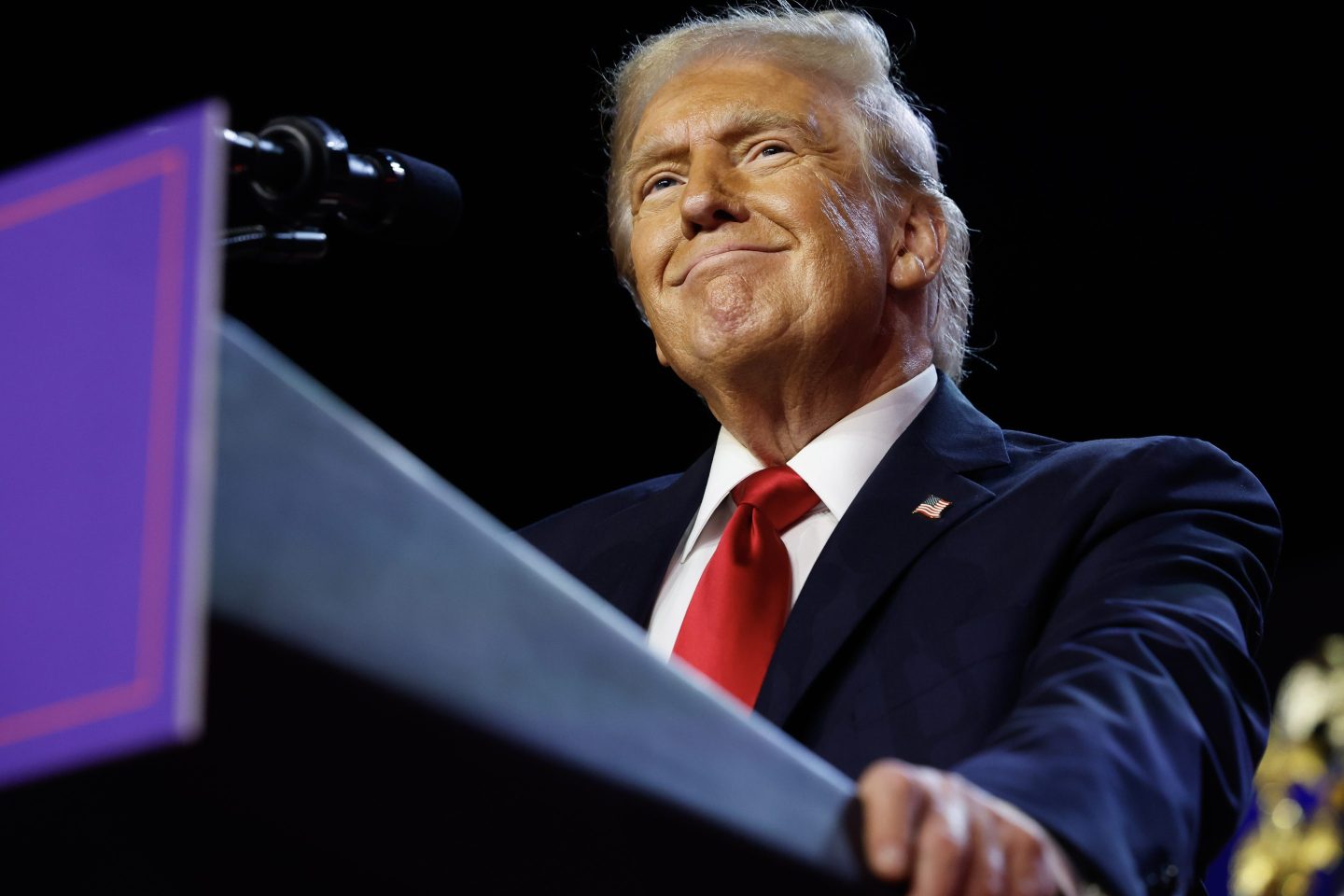
Former U.S. President Donald Trump arrives to speak during an election night event at the Palm Beach Convention Center on November 06, 2024 in West Palm Beach, Florida.
Former U.S. President Donald Trump.Chip Somodevilla—Getty Images

AI researchers and European startups are watching the U.S. nervously after the re-election of former President Donald Trump.

With AI regulation ratcheting up in Europe, and with tech companies in the region generally attracting less capital than their American counterparts, there are concerns that Trump’s deregulatory America First strategy could leave European AI in an even trickier position than it is now.

While it’s impossible to predict exactly how Trump will tackle AI, the likelihood is that he avoids imposing federal regulation on the sector in the U.S. Key ally Elon Musk may advise him that AI poses major future dangers if not kept under control, but Trump has already promised to scrap the tentative first steps that the U.S. took toward AI regulation under President Joe Biden, and some backers like venture capitalist Marc Andreessen oppose any such regulation.

If Trump does steer clear of regulating AI, that would create an even greater gap between the U.S. and the European Union, where privacy laws limit the data that AI companies can use to train their models. The EU also this year passed an AI Act that bans some uses of AI—like manipulating people or deducing someone’s race or sexuality from their biometric data—while placing big responsibilities on companies building “high-risk” AI systems.

Many European startups are grappling with the new law’s implications as they prepare for its full enforcement by mid-2026, and they fear uncertainty could hold their scene back just as the U.S. strengthens its own position in the rapidly forming global AI sector.

“In the next two years there will be a lot of uncertainty about these regulations, and [European] startups will be [discouraged] because it’s not really clear what the legal state is,” said Wieland Brendel, a group leader at Germany’s Max Planck Institute for Intelligent Systems, a major technology research institute, and cofounder of the visual quality control startup Maddox AI.

“In general, I think the idea that the EU has around being protective of consumers and being protective of their citizens’ personal data, is the right one,” said Talha Zaman, the chief technology officer at Germany’s Meshcapade, a 3D body-modeling and avatar creation company. “It’s just a question of how it’s implemented and whether that’s essentially too much of a damper on innovation.”

But, while the disparity could see U.S. AI firms power ahead without regulatory shackles, some suggest their European counterparts might benefit from developing their models according to strict rules—a potential plus in the eyes of highly-regulated customers.

“It could turn out to be good for us, especially in the medical field,” said Marc Mausch, co-founder of the German AI-powered breast cancer detection firm Earlytrace.

Trump’s effect on talent

Fortune spoke to Brendel, Zaman and Mausch at Germany’s Cyber Valley AI cluster, a couple days after the U.S. election. Located in the picturesque medieval city of Tübingen, Cyber Valley has over the last eight years become Europe’s largest AI research consortium—a joint initiative of the state of Baden-Württemberg, the Max Planck Institute, the universities of Stuttgart and Tübingen, and a host of companies including Amazon and German stalwarts like BMW and Bosch.

The setup is unlike what one might find in the U.S., but the consortium is trying to provide a European counterweight to Silicon Valley, with fundamental research being closely allied with entrepreneurship. There are now around 100 startups in the Cyber Valley ecosystem, with the hub encouraging a very non-German willingness to take risks.

Michael Black, a Bay Area transplant who is a founding director at Max Planck Institute for Intelligent Systems and played a key role in setting up Cyber Valley, reckons the U.S.’s deepening divisions could make it easier for European research institutions and AI companies to retain talent.
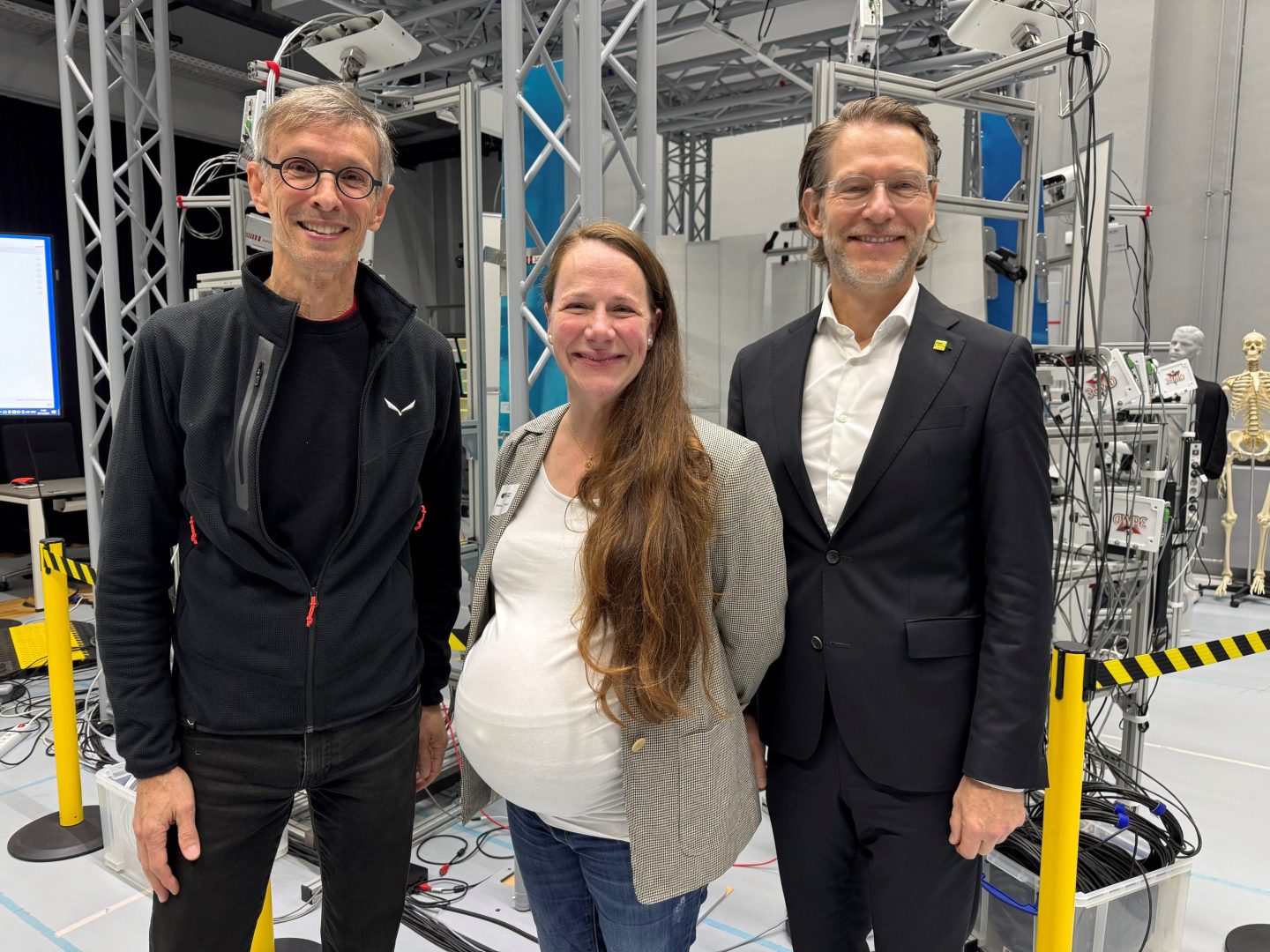
Michael Black of Meshcapade and the Max Planck Institute (L), with Cyber Valley managing director Rebecca Reisch, and Florian Stegmann, head of the chancellery in the German state of Baden-Württemberg.
Michael Black of Meshcapade and the Max Planck Institute (L), with Cyber Valley managing director Rebecca Reisch and Florian Stegmann, head of the chancellery in the German state of Baden-Württemberg.
David Meyer

“U.S. politics makes it maybe appealing for people to stay here,” said Black, who is also co-founder and chief scientist at Meshcapade, which spun out of Cyber Valley five years ago.

Black said a more regulation-averse era in the U.S. could benefit AI firms there, particularly when training models. “Companies that have that data have a huge competitive advantage today, and that’s independent of all the regulation out there,” he said. However, Black also warned that this would still leave U.S. companies having to stick to the same rules as their counterparts in Europe and elsewhere.

“Clearly the places where people are allowed to use any data for training will get a jump on things, but they may find markets closed,” Black said. “If Europe has a regulation that you have to make sure that the people’s privacy has to be protected, or some other country has things that say that people’s copyright has to be protected, if you’ve trained your model in a country where those things don’t hold, that model may not be usable elsewhere.”

Open-source AI

While that may limit the growth of AI companies that design their models for a low-regulation environment, it could also have an unpleasant knock-on effect in Europe.

Rather than paying expensive access fees for proprietary AI models like OpenAI’s GPT series or Google’s Gemini, many startups use “open source” models that they can run for free and easily modify. The main producers of these models are the U.S.’s Meta and France’s Mistral—now the only major large language model developer in Europe, since Germany’s Aleph Alpha pivoted away from LLM creation a couple months ago.

Meta has already made its consumer-facing Meta AI services unavailable in Europe, because the region’s data protection laws don’t allow the company to simply repurpose Facebook and Instagram user data for AI training. According to Brendl, if a similar fate met Llama, “that would be a huge problem for our ecosystem” in Europe.

There is also a chance that Trump could crack down on the spread of U.S. open AI models globally. Some of his supporters back open-source AI, but others see national security concerns and have called for open-source AI models to be added to U.S. export controls lists.

“If things head further in that direction in the sense of locking down models such that they’re only available to the big players, then that would have a negative impact on everyone else,” said Zaman. “If you start treating it like a weapon, then everyone needs to develop their own.”

“We should not lose the ability to create our own foundation models,” said Mausch.
Join us at the Fortune Workplace Innovation Summit May 19–20, 2026, in Atlanta. The next era of workplace innovation is here—and the old playbook is being rewritten. At this exclusive, high-energy event, the world’s most innovative leaders will convene to explore how AI, humanity, and strategy converge to redefine, again, the future of work. Register now.
About the Author
By David Meyer
LinkedIn icon
See full bioRight Arrow Button Icon

Latest in Tech

Finance
Lorem ipsum dolor sit amet, consectetur adipiscing elit, sed do eiusmod tempor incididunt ut labore et dolore magna aliqua. Ut enim ad minim veniam
By Fortune Editors
October 20, 2025
Finance
Lorem ipsum dolor sit amet, consectetur adipiscing elit, sed do eiusmod tempor incididunt ut labore et dolore magna aliqua. Ut enim ad minim veniam
By Fortune Editors
October 20, 2025
Finance
Lorem ipsum dolor sit amet, consectetur adipiscing elit, sed do eiusmod tempor incididunt ut labore et dolore magna aliqua. Ut enim ad minim veniam
By Fortune Editors
October 20, 2025
Finance
Lorem ipsum dolor sit amet, consectetur adipiscing elit, sed do eiusmod tempor incididunt ut labore et dolore magna aliqua. Ut enim ad minim veniam
By Fortune Editors
October 20, 2025
Finance
Lorem ipsum dolor sit amet, consectetur adipiscing elit, sed do eiusmod tempor incididunt ut labore et dolore magna aliqua. Ut enim ad minim veniam
By Fortune Editors
October 20, 2025
Finance
Lorem ipsum dolor sit amet, consectetur adipiscing elit, sed do eiusmod tempor incididunt ut labore et dolore magna aliqua. Ut enim ad minim veniam
By Fortune Editors
October 20, 2025

Most Popular

Finance
Lorem ipsum dolor sit amet, consectetur adipiscing elit, sed do eiusmod tempor incididunt ut labore et dolore magna aliqua. Ut enim ad minim veniam
By Fortune Editors
October 20, 2025
Finance
Lorem ipsum dolor sit amet, consectetur adipiscing elit, sed do eiusmod tempor incididunt ut labore et dolore magna aliqua. Ut enim ad minim veniam
By Fortune Editors
October 20, 2025
Finance
Lorem ipsum dolor sit amet, consectetur adipiscing elit, sed do eiusmod tempor incididunt ut labore et dolore magna aliqua. Ut enim ad minim veniam
By Fortune Editors
October 20, 2025
Finance
Lorem ipsum dolor sit amet, consectetur adipiscing elit, sed do eiusmod tempor incididunt ut labore et dolore magna aliqua. Ut enim ad minim veniam
By Fortune Editors
October 20, 2025
Finance
Lorem ipsum dolor sit amet, consectetur adipiscing elit, sed do eiusmod tempor incididunt ut labore et dolore magna aliqua. Ut enim ad minim veniam
By Fortune Editors
October 20, 2025
Finance
Lorem ipsum dolor sit amet, consectetur adipiscing elit, sed do eiusmod tempor incididunt ut labore et dolore magna aliqua. Ut enim ad minim veniam
By Fortune Editors
October 20, 2025
Fortune Secondary Logo
Rankings
  • 100 Best Companies
  • Fortune 500
  • Global 500
  • Fortune 500 Europe
  • Most Powerful Women
  • Future 50
  • World’s Most Admired Companies
  • See All Rankings
Sections
  • Finance
  • Fortune Crypto
  • Features
  • Leadership
  • Health
  • Commentary
  • Success
  • Retail
  • Mpw
  • Tech
  • Lifestyle
  • CEO Initiative
  • Asia
  • Politics
  • Conferences
  • Europe
  • Newsletters
  • Personal Finance
  • Environment
  • Magazine
  • Education
Customer Support
  • Frequently Asked Questions
  • Customer Service Portal
  • Privacy Policy
  • Terms Of Use
  • Single Issues For Purchase
  • International Print
Commercial Services
  • Advertising
  • Fortune Brand Studio
  • Fortune Analytics
  • Fortune Conferences
  • Business Development
About Us
  • About Us
  • Editorial Calendar
  • Press Center
  • Work At Fortune
  • Diversity And Inclusion
  • Terms And Conditions
  • Site Map
Fortune Secondary Logo
  • About Us
  • Editorial Calendar
  • Press Center
  • Work At Fortune
  • Diversity And Inclusion
  • Terms And Conditions
  • Site Map
  • Facebook icon
  • Twitter icon
  • LinkedIn icon
  • Instagram icon
  • Pinterest icon

Latest in Tech

PoliticsColleges and Universities
Pentagon chief blocks officers from attending Ivy League schools and other top universities, including partners on AI and space
By Jason MaFebruary 28, 2026
7 hours ago
AIAnthropic
Anthropic CEO Dario Amodei says ‘we are patriotic Americans’ committed to defending the U.S. but won’t budge on ‘red lines’
By Jason MaFebruary 28, 2026
12 hours ago
sarandos
InvestingMedia
3 things we will never know after Netflix pulled out of the Warner Bros. bidding, handing it to Paramount
By Nick LichtenbergFebruary 28, 2026
15 hours ago
OpenAI CEO Sam Altman
AIAnthropic
OpenAI sweeps in to ink deal with Pentagon as Anthropic is designated a ‘supply chain risk’—an unprecedented action likely to crimp its growth
By Jeremy KahnFebruary 28, 2026
15 hours ago
Big TechAmerican Politics
Your spend as a ‘weapon’: Scott Galloway’s ‘Resist and Unsubscribe’ movement asks you to ditch Amazon, Apple, and Netflix to oppose Trump
By Kristin StollerFebruary 28, 2026
19 hours ago
world's fair
CommentaryRobots
Something big is happening in AI, but panic is the wrong reaction
By Peter CappelliFebruary 28, 2026
20 hours ago

Most Popular

placeholder alt text
Success
Japanese companies are paying older workers to sit by a window and do nothing—while Western CEOs demand super-AI productivity just to keep your job
By Orianna Rosa RoyleFebruary 27, 2026
2 days ago
placeholder alt text
Middle East
Iran is now on 'death ground' amid existential threat from U.S. attacks and could 'go big' in retaliation, former NATO commander warns
By Jason MaFebruary 28, 2026
13 hours ago
placeholder alt text
AI
The week the AI scare turned real and America realized maybe it isn't ready for what's coming
By Nick LichtenbergFebruary 28, 2026
21 hours ago
placeholder alt text
Success
Walmart exec says U.S. workforces needs to take inspiration from China where ‘5 year-olds are learning DeepSeek’
By Preston ForeFebruary 27, 2026
2 days ago
placeholder alt text
Personal Finance
Current price of gold as of February 27, 2026
By Danny BakstFebruary 27, 2026
2 days ago
placeholder alt text
Middle East
Dubai’s worst nightmare unfolds as Iran strikes Gulf neighbors
By Dana Khraiche, Fiona MacDonald and BloombergFebruary 28, 2026
9 hours ago

© 2026 Fortune Media IP Limited. All Rights Reserved. Use of this site constitutes acceptance of our Terms of Use and Privacy Policy | CA Notice at Collection and Privacy Notice | Do Not Sell/Share My Personal Information
FORTUNE is a trademark of Fortune Media IP Limited, registered in the U.S. and other countries. FORTUNE may receive compensation for some links to products and services on this website. Offers may be subject to change without notice.