• Home
  • Latest
  • Fortune 500
  • Finance
  • Tech
  • Leadership
  • Lifestyle
  • Rankings
  • Multimedia
LeadershipLeadership

Donald Trump reveals the leadership qualities we actually value—whether we want to admit it or not, says a top professor

By
Lila MacLellan
Lila MacLellan
Former Senior Writer
Down Arrow Button Icon
By
Lila MacLellan
Lila MacLellan
Former Senior Writer
Down Arrow Button Icon
November 8, 2024, 5:00 AM ET
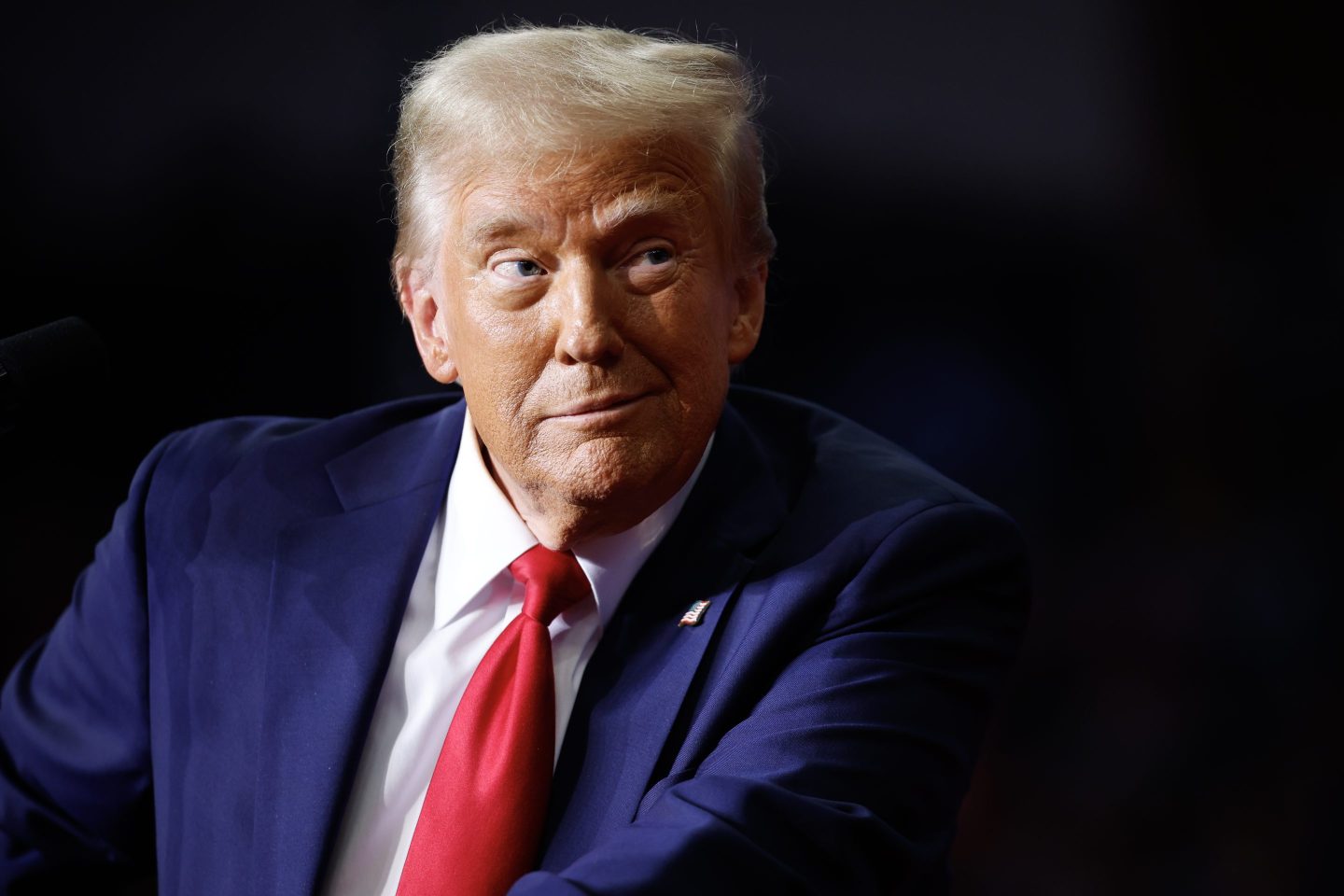
Republican presidential nominee, former President Donald Trump holds a campaign rally at the PPG Paints Arena on November 04, 2024 in Pittsburgh, Pennsylvania.
Republican presidential nominee, former President Donald Trump holds a campaign rally at the PPG Paints Arena on November 04, 2024 in Pittsburgh, Pennsylvania.Chip Somodevilla/Getty Images

Many Democratic voters thought they were feeling a vibe shift by the time Nov. 5 rolled around in this year’s U.S. election cycle. Most polls showed a tight race, but some numbers from Ohio, late observations from a prominent data scientist, and some intangible feeling in the air suggested that Vice President Kamala Harris was going to break new ground in political leadership and take the Oval Office in January. Instead, Trump won a surprising and decisive victory. 

Recommended Video

Since then, political pundits have been dissecting Trump’s success and Harris’s failure: Did misogyny and racism hold Harris back? Did toxic masculinity guarantee Trump’s win? Had the Democrats ignored the realities of today’s economy or failed to present a coherent vision of the future?  

Stanford business school professor Jeffrey Pfeffer, who teaches a popular class on the rules of corporate power and has written several books on leadership, has a different theory: Trump is the kind of leader who people like and seek out, whether in politics or at the office, not despite his perceived faults but because of them. 

The current zeitgeist might tell us otherwise, but Pfeffer argued in a 2015 Fortune essay that today’s leadership industrial complex—pushing ideas about the effectiveness and appeal of empathetic, and modest CEOs—has it all wrong. The chief executives who get rewarded, and the politicians who get elected, are narcissistic, boastful, and overly confident, he says. Writing on LinkedIn after the election this year, Pfeffer said the current “fascination with constructs such as servant leadership, authenticity, and as Stephen Colbert would say, ‘truthiness’ belies how social life actually operates.”

Until people who seek to change the way the world works accept realities about power dynamics, he added, they will not make any progress. 

The Trump case study

Pfeffer has been writing and speaking about his views on influence for decades—and has used Donald Trump as a muse. 

In his 2015 essay, the professor pointed out that Trump was anything but self-effacing; he put his name on buildings and golf courses. (This year, he also slapped his name on bibles and sneakers.) For this habit, Pfeffer predicted years ago that Trump would find followers, partly because of the “exposure effect”—Trump made his name familiar to all—but also because people are drawn to those who self-aggrandize. The average person secretly likes “confident, overbearing people because they provide us with confidence—emotions are contagious—and also present themselves like winners,” he explained. “We all want to associate with success and pick those who seemingly know what they are doing,” he wrote, linking to research to support his point. 

Leaders who have mastered the art of making grand but not entirely true statements —or outright lying—are also likely to be admired despite the half-truths, according to Pfeffer’s analysis. In 2015, he called truth-telling an “overrated quality” in a leader, and pointed out that even the late and much admired Apple CEO Steve Jobs made things happen by speaking as if they already had. The former president, too, “did not write the best-selling business book of all time, as he claimed. And some aspects of his business acumen and success are clearly exaggerated—after all, Trump-named casinos went into bankruptcy,” Pfeffer wrote. “No matter.” 

Part of Pfeffer’s theory also speaks to one of the most vexing questions Democratic voters have asked about Trump’s large following: Why don’t Republican voters seem to care about his criminal convictions or his role in the Jan 6 Capitol Riot? In his recent book, 7 Rules of Power, Pfeffer asserts that influence protects people from paying the price for their misbehaviors, “partly because people want to be close to money and power and are therefore willing either to forgive those who have them or avert their gaze from their possessors’ misdeeds.”

To be sure, one could argue that Pfeffer is himself exaggerating. Trump is on track to win just over 50% of the popular vote, a figure that would hardly be a commendable approval rating for the CEO of a major company. What’s more, the corporate world has produced plenty of CEOs—like Microsoft’s Satya Nadella, GM’s Mary Barra, or Apple’s Tim Cook—who have mostly won the respect of their employees, investors, and customers, without turning their respective companies into vanity projects and shrines to their personalities. Some CEOs rose to the top on their competence, not their ability to play power games. 

But those CEOs might be the exception rather than the rule. Which brings us back to Pfeffer’s ultimate message: Rather than ignore the reality of power dynamics, he suggests, those who were surprised and disappointed by this election’s outcome ought to study and accept the way power actually works in the world, not as you might wish it did. People who aren’t white men have all the more reason to do so, he said in an interview a few years ago. If you hope to see an alternative leadership model take hold in politics or the corner office, Pfeffer suggests, there’s no other way. 

Read Pfeffer’s original essay, here.

Join us at the Fortune Workplace Innovation Summit May 19–20, 2026, in Atlanta. The next era of workplace innovation is here—and the old playbook is being rewritten. At this exclusive, high-energy event, the world’s most innovative leaders will convene to explore how AI, humanity, and strategy converge to redefine, again, the future of work. Register now.
About the Author
By Lila MacLellanFormer Senior Writer
LinkedIn icon

Lila MacLellan is a former senior writer at Fortune, where she covered topics in leadership.

See full bioRight Arrow Button Icon

Latest in Leadership

Elon Musk, wearing a black DOGE hat, looks forward. He is standing in the Oval Office.
PoliticsDOGE
DOGE isn’t dead—it’s been absorbed into the bloodstream of the government, federal employees say
By Sasha RogelbergDecember 12, 2025
11 minutes ago
Former Meta COO Sheryl Sandberg
SuccessWomen
Sheryl Sandberg breaks down why it’s a troubling time for women in the workplace right now
By Emma BurleighDecember 12, 2025
2 hours ago
NewslettersCEO Daily
Honest Company CEO Carla Vernón on being mentored by Walmart’s Doug McMillon
By Diane BradyDecember 12, 2025
4 hours ago
Five panelists seated; two women and five men.
AIBrainstorm AI
The race to deploy an AI workforce faces one important trust gap: What happens when an agent goes rogue?
By Amanda GerutDecember 11, 2025
14 hours ago
InnovationBrainstorm AI
Backflips are easy, stairs are hard: Robots still struggle with simple human movements, experts say
By Nicholas GordonDecember 11, 2025
15 hours ago
Late Apple cofounder Steve Jobs
SuccessCareers
Apple’s Steve Jobs told students to never ‘settle’ in their careers: ‘If you haven’t found it yet, keep looking’
By Emma BurleighDecember 11, 2025
21 hours ago

Most Popular

placeholder alt text
Success
At 18, doctors gave him three hours to live. He played video games from his hospital bed—and now, he’s built a $10 million-a-year video game studio
By Preston ForeDecember 10, 2025
2 days ago
placeholder alt text
Investing
Baby boomers have now 'gobbled up' nearly one-third of America's wealth share, and they're leaving Gen Z and millennials behind
By Sasha RogelbergDecember 8, 2025
4 days ago
placeholder alt text
Success
Palantir cofounder calls elite college undergrads a ‘loser generation’ as data reveals rise in students seeking support for disabilities, like ADHD
By Preston ForeDecember 11, 2025
21 hours ago
placeholder alt text
Economy
‘We have not seen this rosy picture’: ADP’s chief economist warns the real economy is pretty different from Wall Street’s bullish outlook
By Eleanor PringleDecember 11, 2025
1 day ago
placeholder alt text
Uncategorized
Transforming customer support through intelligent AI operations
By Lauren ChomiukNovember 26, 2025
16 days ago
placeholder alt text
Economy
‘Be careful what you wish for’: Top economist warns any additional interest rate cuts after today would signal the economy is slipping into danger
By Eva RoytburgDecember 10, 2025
2 days ago
Rankings
  • 100 Best Companies
  • Fortune 500
  • Global 500
  • Fortune 500 Europe
  • Most Powerful Women
  • Future 50
  • World’s Most Admired Companies
  • See All Rankings
Sections
  • Finance
  • Leadership
  • Success
  • Tech
  • Asia
  • Europe
  • Environment
  • Fortune Crypto
  • Health
  • Retail
  • Lifestyle
  • Politics
  • Newsletters
  • Magazine
  • Features
  • Commentary
  • Mpw
  • CEO Initiative
  • Conferences
  • Personal Finance
  • Education
Customer Support
  • Frequently Asked Questions
  • Customer Service Portal
  • Privacy Policy
  • Terms Of Use
  • Single Issues For Purchase
  • International Print
Commercial Services
  • Advertising
  • Fortune Brand Studio
  • Fortune Analytics
  • Fortune Conferences
  • Business Development
About Us
  • About Us
  • Editorial Calendar
  • Press Center
  • Work At Fortune
  • Diversity And Inclusion
  • Terms And Conditions
  • Site Map

© 2025 Fortune Media IP Limited. All Rights Reserved. Use of this site constitutes acceptance of our Terms of Use and Privacy Policy | CA Notice at Collection and Privacy Notice | Do Not Sell/Share My Personal Information
FORTUNE is a trademark of Fortune Media IP Limited, registered in the U.S. and other countries. FORTUNE may receive compensation for some links to products and services on this website. Offers may be subject to change without notice.