The vibes are off at Starbucks.
Baristas are overworked as they try to churn out a constant stream of complicated customized drinks. Mobile orders and staffing problems have only made the problem worse, and added to longer wait times. There’s often nowhere to sit. In short, it’s the last place anyone would want to linger over a $3.45 cup of coffee, let alone a $6.65 pumpkin spice latte.
Customers have noticed. The company released a painful earnings report this week, revealing that fourth-quarter revenues tumbled 3% to $9.1 billion, and the magic retail metric—quarterly global comparable store sales—were down 7%. Ultimately, business challenges prompted the $110 billion coffee chain to suspend guidance last week for the full fiscal year of 2025 “to allow ample opportunity to complete an assessment of the business and solidify key strategies.”
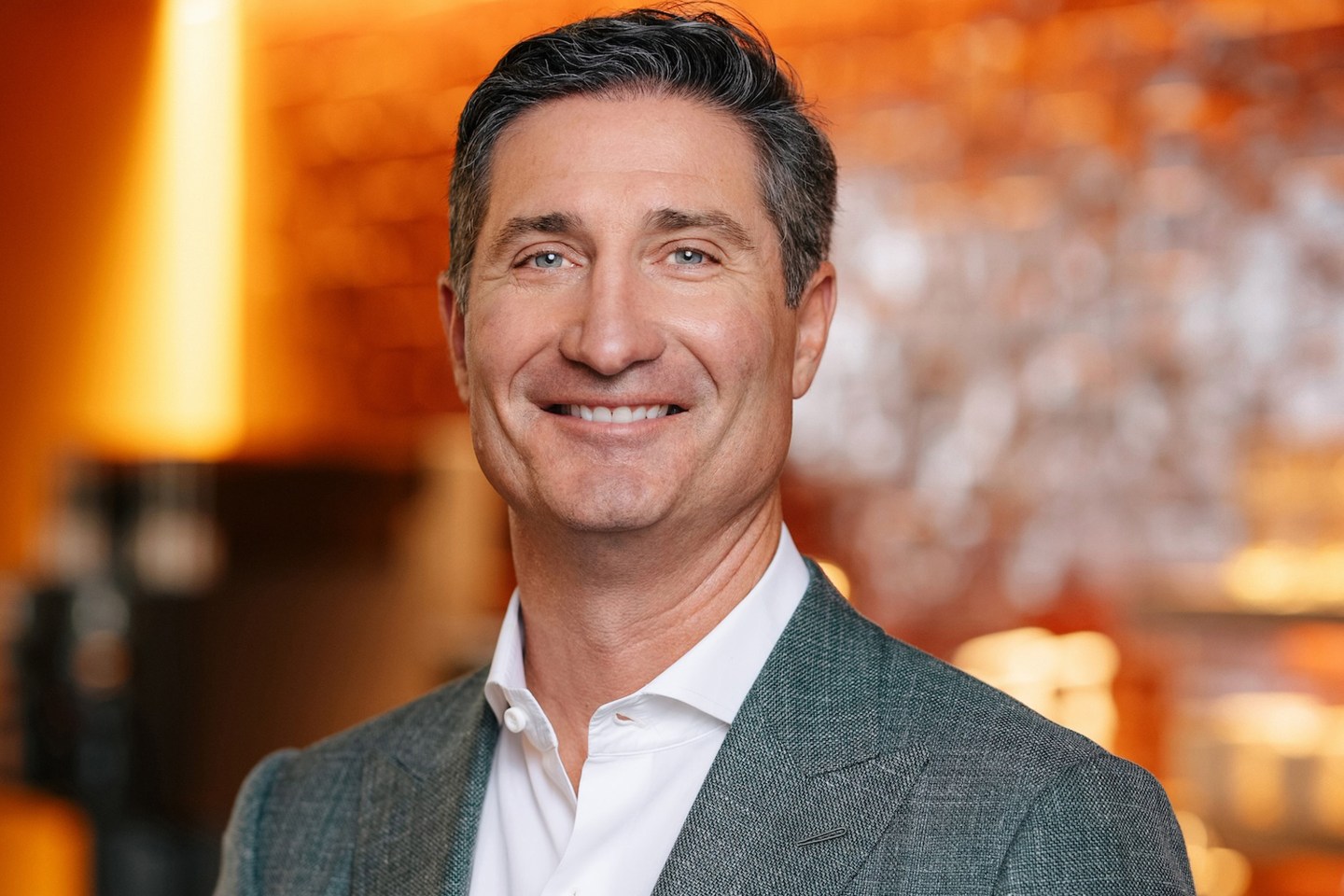
Seattle-based Starbucks is betting new rockstar CEO Brian Niccol can turn things around with a strategic plan called “Back to Starbucks.” Niccol, who was offered a $113 million payday to take the barista-in-chief job, is an outsider to the company, which has had four different CEOs since 2022. Starbucks’ board members are banking on the former Chipotle wunderkind, who took over in September, to fix a slew of operational and labor issues. And analysts and experts say he has one overarching mandate: Make the in-store experience the kind of pleasant yet affordable luxury it once was.
“Starbucks used to have an energy around it,” Sharon Zackfia, an analyst at William Blair & Co., an investment bank and financial services company, tells Fortune. “Starbucks just needs to figure out how to kind of recapture that love and affinity.”
Niccol addressed the issue head-on during the company’s earnings call this week, and discussed getting back to the brand’s “core identity.”
“We have to get back to what has always set Starbucks apart: a welcoming coffee house where people gather.”
The burrito king in coffee land
When it comes to cultivating an ephemeral atmosphere of luxury, the devil’s in the details. Niccol must figure out a way to maintain the revenue of mobile and drive-thru orders while still making the in-store experience something to be desired.
It’s hard to imagine a CEO better suited for the moment, or with as much goodwill behind him. Niccol brings extensive experience in the food and beverage space, with stints at Chipotle and Taco Bell. Wall Street has high hopes for the 50-year-old executive: Starbucks stock popped 25% in September on the news that he would be taking over the company. But his operational chops, and how they could solve Starbucks’ atmosphere problems, will be tested.
Chipotle focuses “relentlessly on fitting cogs into their burrito machine,” Sean Dunlop, an analyst at Morningstar, a financial services company, tells Fortune. On average, the fast-casual Mexican chain can make around 25 entrees in 15 minutes, he says, and some locations can do much more than that. Dunlop also says people are looking at Chipotle’s assembly line and thinking that if Niccol could just do the same thing at Starbucks, “we can solve all the speed of service issues. We can solve the employee dissatisfaction issues.”
Niccol said this week that Starbucks will be slimming down its complex menu, and working on getting every order into the hands of a customer within four minutes. He also envisioned separating the in-store experience from the mobile order pickup experience, taming the mobile app with some “common-sense guardrails,” and reining in highly customized drink orders.
“We kind of incentivize people to customize drinks that probably aren’t the best way to execute the drink,” said Niccol, adding that “we have some clean up to do.”
The love is gone
Starbucks isn’t the same as it used to be, and neither are its customers.
“The Starbucks experience has fundamentally changed over the last five or 10 years,” notes Dunlop.
Mobile purchases now make up more than 30% of all orders, according to the company. Combined with drive-thru orders, they reportedly make up around 70% of sales at American stores run by the company. Roughly 76% of beverages sold are now cold drinks, but the back-of-counter layout is not always equipped for that reality. And the drinks that customers order have also become much more complicated, and sometimes fueled by social-media hijinx.
All of those factors have combined to create longer wait times, and heavier workloads for baristas. Slammed with an incessant stream of drink requests, they don’t have as much bandwidth to spend much quality time or chat with walk-in customers.
A staffing-first approach
Michelle Eisen, 41, has been working at Starbucks for 14 years, and currently works at a location in Buffalo, NY. She’s also a member of the Starbucks Workers United union, serves as a bargaining delegate, and is from the first store to win their union. She says the workload has shifted “monumentally” over the past five years in terms of the “pressure that’s put on the hourly workers, baristas and shift supervisors, who are on the floors of these stores every single day.”
Investing in food quality, making sure there are seating options for walk-in customers, and choosing the right music for the right time of day all play a part in making the stores comfortable—somewhere you actually want to spend time. But those time-stretched baristas are a bigger hindrance to the kind of atmosphere that Starbucks is trying to create than tables and chairs ever could be, says Stephan Meier, an economist and professor at the Columbia Business School. It’s not the art or the furniture that creates a cozy “third space,” he adds—it’s the workers who make the customers feel special.
“The experience of the customer, in my view, has to come through the experience of the employees,” says Meier. “I think they have to figure out how to operationally free up capacity for the baristas to really focus on the human aspect.”
For Starbucks to fix its atmosphere and operations problems, it may have to hire more workers. “I think you could argue that maybe labor productivity is too high and they need to add more labor in order to bring back some of the experiential differentiation that made Starbucks what it is today,” says Zackfia.
Eisen agrees that better scheduling and more workers is key, so that three baristas aren’t bearing the load more appropriate for six people. “It’s additional wages, it’s additional labor costs, but it pays out in the end,” she says. “It creates a positive experience for the barista, and hopefully helps with employee retention. And it creates a much more positive experience for the customer, because they can see that their orders are being taken seriously.”
Over the past few years, 500 Starbucks stores have voted to unionize, representing more than 11,000 baristas. The response from previous CEO Howard Schultz was not always enthusiastic. Niccol has taken a more conciliatory tone with the union. In response to an open letter from the union, Niccol wrote in September that he was “committed to continue to bargain in good faith.”
Starbucks CFO Rachel Ruggeri said in the earnings call this week that the company had increased hours per partner, which was helping with turnover, but that it had more work to do to help with staffing issues. Niccol addressed also the barista experience, and mentioned staffing first in a list of changes the company is making.
“Our efforts to get partners the hours and schedules they want are working,” he said. “Now we need to make sure we have the right number of partners on the floor, particularly during our morning peak and shoulder hours.” He added the company was cultivating leaders from within its own ranks, and planning a conference for store managers in 2025.
Zarian Pouncy, 30, has been a Starbucks employee for 11 years. He is also a union member and a bargaining delegate for Starbucks Workers United. He’d like to see a level of comfort come back to the stores themselves. The location where he works in Las Vegas got rid of its chairs a few years ago, and now has wooden stools instead. It has also removed electrical outlets. But he’s optimistic about the future.
“I am hopeful,” he says. “Once we can kind of slow down, simplify things, go back to what coffee shop culture was, we can get back to a place that baristas might be happy.”