For the past three years, politicians, businesses, and families have been grappling with inflation. Pundits across the political spectrum have argued that dramatically raising taxes on American corporations would be a quick fix to this burden on Americans. The Democratic presidential nominee, Vice President Kamala Harris, has argued that increasing the corporate rate to 28% “is a fiscally responsible way to put money back in the pockets of working people and ensure billionaires and big corporations pay their fair share.” However, the clear economic truth is the opposite: Raising taxes on corporations will raise prices for consumers—and inflation will spike yet again.
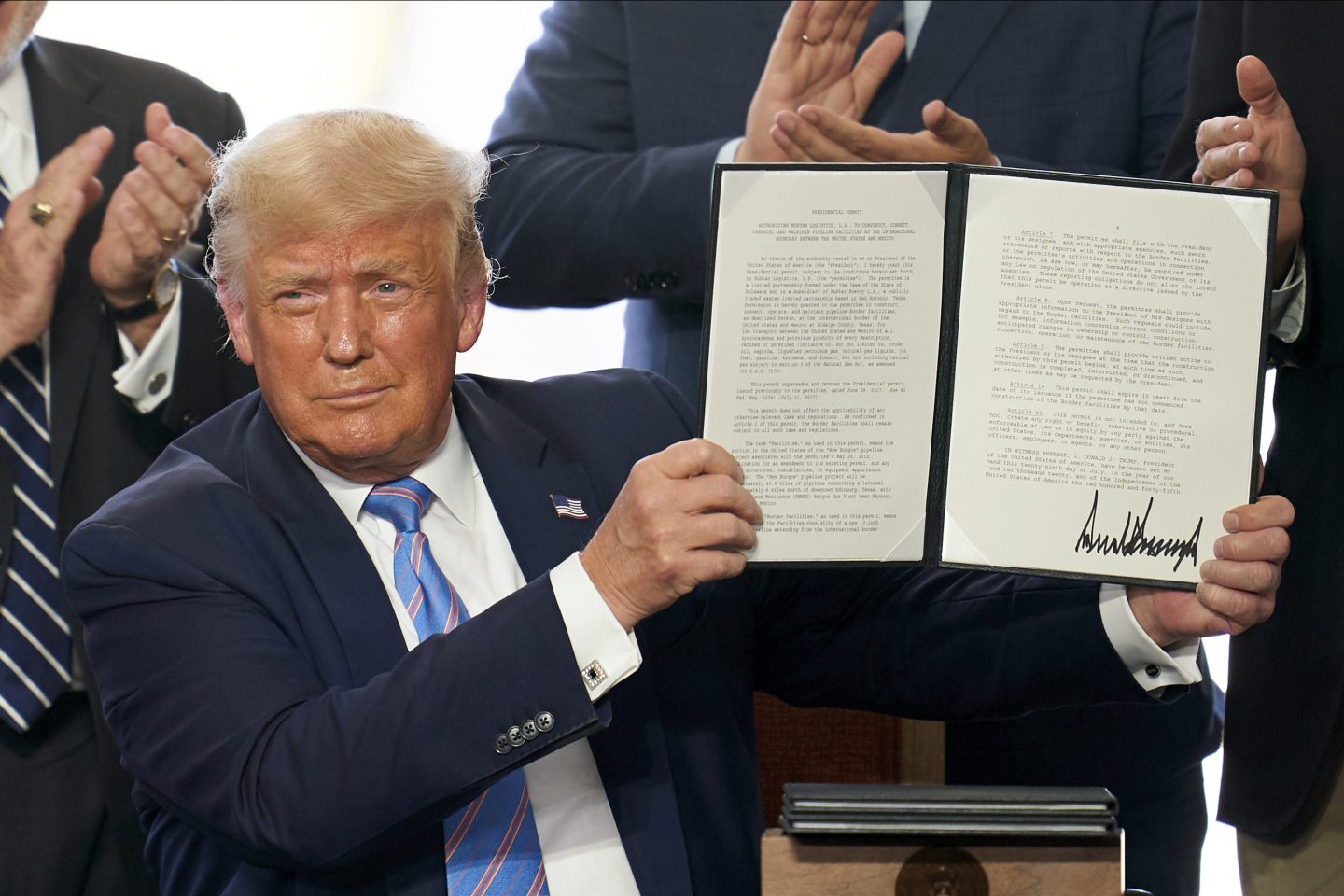
The Tax Cuts and Jobs Act (TCJA) that passed under President Donald Trump in 2017 changed the trajectory of tax policy in the United States. Finally, a policy was enacted that lowered taxes for all Americans and made the United States more competitive globally.
Before the TCJA, America’s corporate tax rate was one of the highest in the world, and American businesses were at a competitive disadvantage in the global market. This hurt companies and workers alike. Lowering the corporate tax rate from 35% to 21% gave every American more opportunities to succeed in business because they weren’t as burdened by unnecessary taxes. The results proved out: In 2018, 263,000 manufacturing jobs were created and wages increased by 3%, according to a National Association of Manufacturers analysis of Bureau of Labor Statistics data. Many economists have credited the TCJA for America’s continued outperformance relative to most of the world’s advanced economies.
Reducing the corporate tax rate was the cornerstone of the TCJA. Today, some in Congress want to raise it in the name of increasing federal revenue. That would be a catastrophic mistake. Raising the corporate rate doesn’t punish companies—it punishes Americans.
Multiple studies show that corporate tax increases are directly passed on to consumers in the form of higher prices. A higher rate will also make American exports more expensive and companies less competitive in the global market. The result will be slower economic growth, fewer jobs, and less innovation.
As the Ways and Means Committee prepares for the reauthorization of the TCJA, Chairman Jason Smith created “tax teams” to evaluate which policies worked well and which could use improvement for the 2025 reauthorization. I am the Chairwoman of the Supply Chains Tax Team, which focuses on the corporate rate, energy tax credits, and capital gains tax. We’ve had many meetings with small businesses, Fortune 100 companies, and economists who have all emphasized the importance of maintaining a corporate rate that is pro-growth and pro-American.
A lower corporate tax rate keeps costs down, leading to lower prices for consumers and more investment in their workers. The reality is that if the corporate rate goes up, the burden will fall on consumers, employees, and retirees. As a small business owner, I know firsthand how important it is to take care of your employees and produce the best possible product. If I suddenly must pay more in taxes, I either have to cut back on investments into the business that create more jobs or pass increased costs onto my customers. This would happen to businesses around the country and would slow economic growth in the U.S. to a grinding halt.
Another key benefit of a low corporate rate is how much more attractive America becomes to investors. When the U.S. corporate tax rate was 35%, it was one of the highest corporate tax rates among developed countries. For any startup or subsidiary company, it made more sense to do business in China, India, or even within the famously high-tax European Union. With the lower rate, the U.S. is more inviting for nearly every industry.
While some may argue that the federal government is leaving money on the table by maintaining or lowering the corporate rate, the opposite is true. The TCJA grew the American economy to the extent that the significantly lower corporate tax rate was offset by increased tax collections.
The U.S. government doesn’t have a revenue problem, it has a spending problem. Thanks to the TCJA, the 21% corporate rate has kept business taxes low, which softened the blow from the Democrats’ ill-advised (and utterly misnamed) Inflation Reduction Act. Without the TCJA, inflation would have been much higher. This is why even Democrats refused to hike the rate or repeal the TCJA when they had full control of the House of Representatives, Senate, and White House.
The solution to inflation isn’t to increase taxes on American business, it’s to get federal spending under control and spur economic growth. Keeping the corporate rate low—or better yet, lowering it, as former President Trump has suggested—gives financial freedom to American consumers and businesses. The one-two punch of lower taxes and a lower debt burden will bring back the strong growth we saw in the first three years of the Trump presidency.
More must-read commentary published by Fortune:
- Inflation, housing, immigration, taxes: The Harris-Walz economic policy scorecard
- The ‘sustainability recession’ will end soon—and not by choice
- AI development is being hijacked by Big Tech and rich nations, UN report warns
- The most underrated leadership skill, according to Jake Sullivan
The opinions expressed in Fortune.com commentary pieces are solely the views of their authors and do not necessarily reflect the opinions and beliefs of Fortune.