Amazon’s new return-to-office ultimatum hasn’t just drawn the ire of employees threatening to jump ship to remote jobs. The mandate has also drawn scrutiny from future-of-work experts who aren’t sold on the benefit of the change to Amazon—and who believe the move could make it harder for the tech giant to attract future employees.
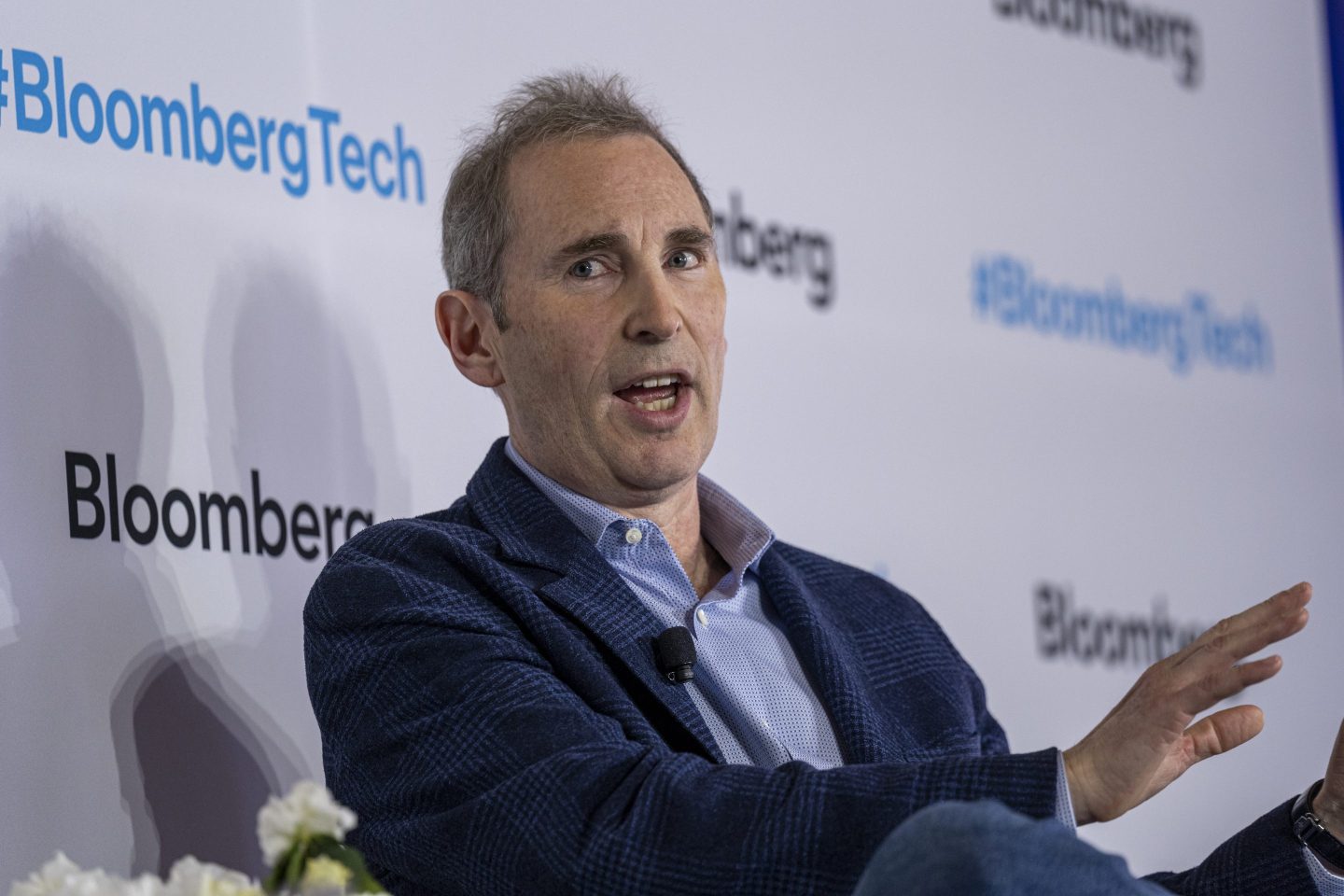
Amazon CEO Andy Jassy said Monday in a company memo employees would be required to return to the office five days a week, beginning in January. The company will also increase the ratio of managers to individual employees to have fewer staff in managerial roles. In February 2023, Amazon required workers to return to the office three days a week. The goal of the mandates have been to enhance teamwork and strengthen company culture, Amazon said.
“When you consider the breadth of our businesses, their associated growth rates, the innovation required across each of them, and the number of people we’ve hired the last 6-8 years to pursue these endeavors, it’s pretty unusual—and will stretch even the strongest of cultures,” Jassy said in the memo.
But Kelly Monahan, managing director of freelance platform Upwork’s Research Institute, doesn’t believe that RTO is a universal balm for company culture and performance. She’s among a horde of experts who aren’t sold on Amazon’s decree.
“We are at a critical point right now within our organizations that we have to start innovating how we’re working,” she told Fortune. “We have a lot of data and research that does support that high-performing organizations today are those that are innovating how they work and not going back to models we know that broke five years ago.”
Noses to the grindstone
While companies like Nike have cited loss of innovation and collaboration as reasons for bringing employees back to the office, there’s little evidence to support RTO being linked with better company operations, Monahan said. A working paper from the Katz Graduate School of Business at the University of Pittsburgh found that when looking at the public RTO data of 137 S&P companies, RTO had no correlation to higher stock returns or profitability, though the paper did not look at the number of days employees were required to go into the office.
That’s because a core foundation of employee performance and innovation is trust, Monahan argued, which is associated with greater confidence among company leaders regarding the future success of the business.
“Leaders who actually enable a level of flexibility through hybrid arrangements feel more confident in their ability to navigate the future and feel much more confident they have the right talent within their organization,” she said.
Strict RTO mandates, meanwhile, can undermine management’s trust and confidence in their employees, argued Brian Elliott, future of work advisor and author of How the Future Works: Leading Flexible Teams to Do the Best Work of Their Lives. It sends a message to employees that management is looking for control, particularly if the company doesn’t have internal data to prove its RTO policy will increase productivity.
“What Amazon’s done by going from three days a week to five days a week for a lot of employees is basically a signal: We don’t trust you to be working effectively when you’re at home,” Elliott told Fortune.
Recruiting fresh blood
Remote work is an emotional issue for employees, who tend to rank their own lifestyles above company-wide success when it comes to picking where to work, Elliott said. Flexible or hybrid work continues to be favored by the majority of white-collar workers. Among Americans who lost their full-time jobs during the pandemic, almost half said they weren’t willing to take another that didn’t have a hybrid option, according to the U.S. Chamber of Commerce 2022 Pandemic Unemployed Survey.
Elliott suggested workers’ strong sentiments toward flexible work could prove to be a headache for Amazon. Not only might the strict RTO policy push employees to leave the company for competitors, it could also make it harder for Amazon to recruit fresh faces.
“If 80% of people want some form of flexibility, then you’ve got a bit of a challenge on your hands, in terms of the talent pool from which you have to recruit,” he said. “We know that these shifts cause you to lose people. It is also much harder to attract people into work.”
A working paper from the University of Chicago’s Harris School of Public Policy found that at large tech companies, RTO policies drove away employees, particularly top talent like senior managers. Strict RTO mandates have also impacted who applies to job openings at companies like Amazon, particularly among women and other marginalized groups. David Hsu, a professor of management at the University of Pennsylvania’s Wharton School, found that the remote status of a job was associated with a 15% increase in female applicants and a 33% increase in underrepresented minority applicants.
Following Amazon’s 2023 move to three days a week in the office, the company said it did not see a significant shift in the proportion of women or ethnic and racial minorities employed.
RTO tipping point?
With a workforce of over 350,000 corporate employees, Amazon’s RTO mandate is likely to spark conversations in boardrooms about how companies shape their own policies, according to Rob Sadow, CEO of remote work platform Scoop. Amazon, long known for its no-nonsense work culture, will be a beacon for some companies, but once the novelty of the policy wears off, managers will likely take time to reflect on what the culture of their own company requires when it comes to flexible work.
“Amazon has always had a pretty hard-charging culture, and some companies may decide that’s what they want,” Sadow told Fortune. “And some companies may decide eventually—relative to their business and culture and the way they engage employees—the right thing. But that discussion will happen.
Sadow was clear, however, that Amazon’s policy shift won’t be a tipping point in the ongoing RTO war that gives the advantage to managers wanting to crack down on remote work. More likely, companies will look to see if Amazon’s performance improves or if a flood of workers leave the company. It could be months before there’s an indication of the policy’s success or failure. It’s a microcosm of the conversation around RTO more broadly, Sadow said. Even four years after the pandemic’s onset, figuring out how to work is a conversation still in its early stages.
“People thought we were like in the eighth inning of this discussion,” he said. “We’re more in, like, the third inning.”