The death of a Wells Fargo employee that went unnoticed for four days late last month has left many in the corporate world questioning how such a tragic event could happen.
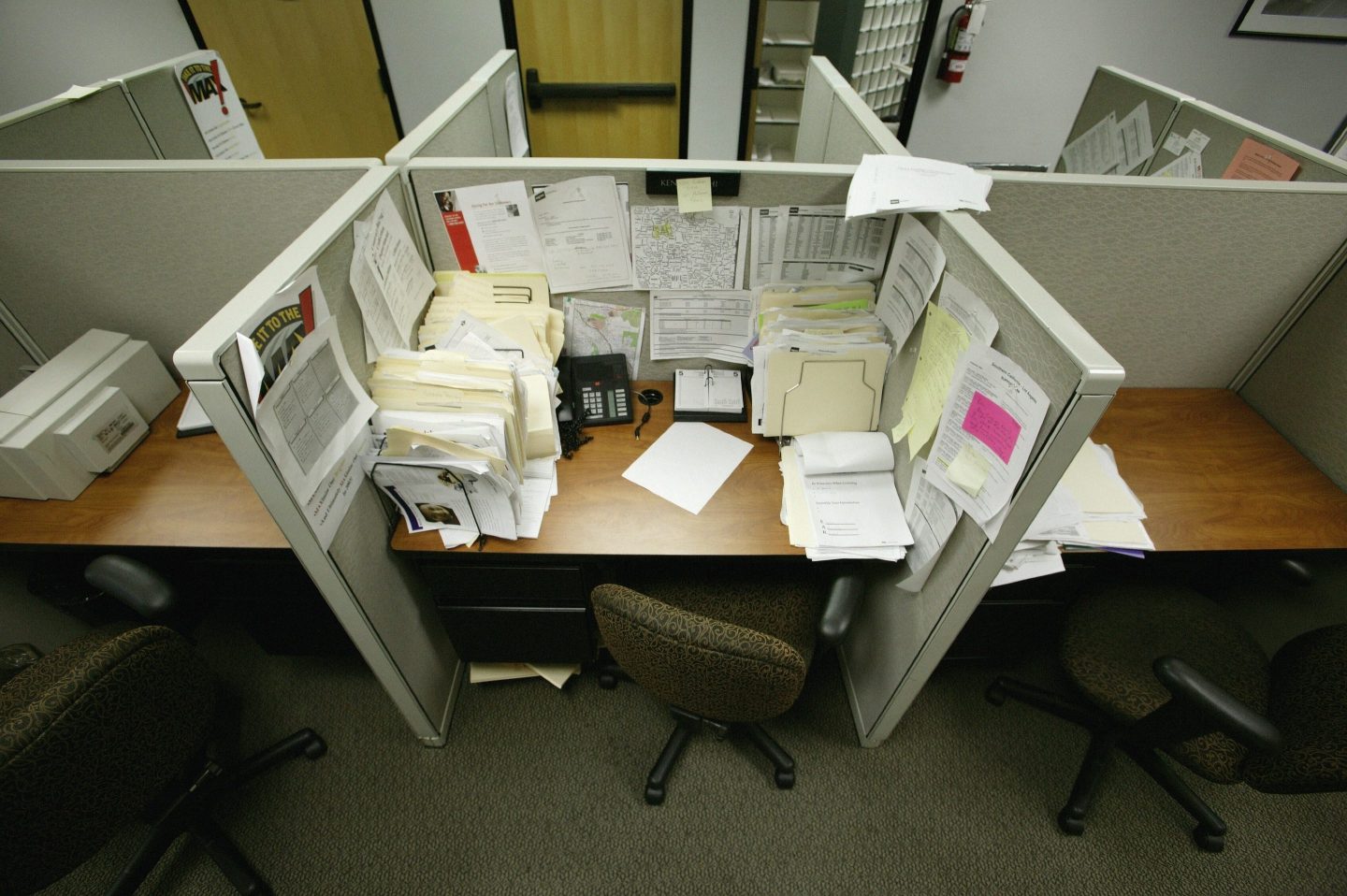
At around 7 a.m. on Friday, August 16, Denise Prudhomme scanned into her job at a Wells Fargo bank branch in Tempe, Arizona. She later died in her cubicle, and wasn’t discovered until the following Tuesday by a security guard, after employees had complained of a foul odor. Her cause of death remains unclear, but authorities suspect no foul play.
“We are deeply saddened by the loss of our colleague, Denise Prudhomme,” Wells Fargo wrote in a statement. “We are committed to the safety and wellness of our workforce.”
Prudhomme died on a Friday—just before the weekend, and on a day when most of the bank’s hybrid workers don’t come into the office. And although such an incident is rare in the working world, experts tell Fortune that it shouldn’t be considered a total aberration. Instead, it illuminates the potentially tragic pitfalls that come with the rise of hybrid and remote work, which can include less communication among coworkers, fewer employee check-ins, and a fuzzy line between transparency and privacy.
“This is unbelievably tragic. It speaks to a broader transformation; when hybrid work was less prevalent, we used to see our colleagues in the office every day. This enabled us to see really clearly if something was wrong, if somebody wasn’t there, if they were acting differently,” Emily Rosado-Solomon, assistant professor of management at Babson College, tells Fortune. “Now that we are in a world of increasingly hybrid and remote work, we don’t see people in front of us. I don’t think the workplace has caught up to the types of communication and support that is required in a remote and hybrid workplace.”
Communication and culture problems
It used to be that colleagues would constantly run into each other in the hallway or by the watercooler. These weren’t necessarily deep interactions, but acted as social touch points throughout the day. But the work from home era has changed all that.
The number of U.S. workers in hybrid roles is significant, and shows no signs of decreasing. About 35% of U.S. workers did all or some of their work from home in 2023, compared to 34% in 2022, according to a 2024 report from the Bureau of Labor Statistics. Companies that offer flexible options often receive a deluge ofquality candidates, and a round 29% of American adults say they prefer hybrid positions, up from 25% in 2023, according to a 2024 study from Morning Consult, a business intelligence company.
Because of this, many workers no longer see their colleagues daily. These passing chit-chats may seem inconsequential, but they were essential to picking up on colleagues’ well-being, Tanya Moore, chief people officer of West Monroe, a management consulting company, tells Fortune.
“There was more ability to be around and notice,” she says. “Whereas when you’re at home working, it’s just harder to notice.”
As communication becomes partly or exclusively virtual, the same kind of status checks that worked in an in-person environment no longer apply, but there is no new protocol to replace it. “We never developed routines in the workplace during non-crisis time,” Rosado-Solomon says. “What does it look like to have healthy communication, support, and check-ins when we’re not seeing our colleagues every day?”
Experts say that cultivating socialization over Zoom and Slack isn’t impossible, but it should feel natural instead of forced. And it can be difficult to have this commingling if connectivity isn’t already baked into company culture.
Finding the right solution to this depends on the individual circumstances of each company, and there’s no one-size-fits all approach that would work for everyone. But Amy Mosher, chief people of isolved, a human capital management company, tells Fortune creating a more formal virtual approach is one option worth considering.
“Within your own infrastructure, there should be a buddy system of making sure somebody checks in with each other everyday,” she says. “A co-worker network for individuals who work from home is great from both an engagement perspective and safety perspective.”
What are managers actually responsible for?
But Purdohomme’s death begs the question: What are business leaders actually responsible for, and how should companies go about monitoring employees?
In some cases, there may be no warning signs that an employee is in distress or needs any kind of check in. But in others, there may be signals that something’s amiss. Susan Stehlik, clinical professor of management at NYU Stern, tells Fortune that checking in on staffers is ultimately the responsibility of bosses. “As a manager, you should know your people,” she says. “If you really know your staff, you know when somebody’s in trouble, you know how to pull them aside.”
But managers are often underprepared when it comes to leading teams in flexible settings, where staffers may be dispersed and rarely gather in person. About 70% of managers say they’ve received no formal training on how to lead hybrid workforces, according to a 2024 report from Gallup. Rosado-Solomon says this lack of coaching can make supervisors pause on following-up in a potentially high-risk situation.
“Oftentimes managers don’t know how to respond if they think there’s a problem with their employee,” she says. “I see a lot of hesitation. People say, ‘Well, maybe it’s not my place. I don’t want to intrude.’ Or, ‘What if I say the wrong thing and I make it worse?’ That stops a lot of well-intentioned people from supporting their colleagues in ways that could be beneficial.”
Co-workers can also play a powerful role—they’re more likely to interact with their peers frequently and have more personal relationships where potential issues are brought up.
“Make sure that employees see something, say something,” says Mosher. “There’s so many different scenarios from a safety or security perspective as to why you would want that.”
Privacy issues
While experts agree that companies should be responsible in ensuring the well-being of their staffers, they also point out that those efforts can go too far, and lead to privacy issues.
Employers can monitor workers through things like badge swipes and laptop activity—in fact, many companies have done this as a way to crack down on workers trying to evade RTO mandates. But taking things too far can make employees uncomfortable. No one wants to work in a surveillance state.
“Some companies have gone to the extreme with things like tracking their employees’ keystrokes. That undermines trust. It doesn’t convey a sense of caring or well being,” says Rosado-Solomon. “That is not something that I think is generally helpful.”
And in cases in which an employee does have some kind of underlying health condition, it’s can be tricky for managers to navigate those conversations.
Experts Fortune spoke say that a robust interpersonal “checks-and-balances” culture can pick up on these risks in a more productive way than surveillance moves like monitoring laptop use.
“More of a natural connection as humans can really help some of this. And then it’s not Big Brother,” says Moore. “That personal care and trust to have open, transparent conversations is really important.”
September 11, 2024: This story has been updated to clarify details about workplace health discussions.