When she was in fifth grade, Scarlett Goddard Strahan started to worry about getting wrinkles.
By the time she turned 10, Scarlett and her friends were spending hours on TikTok and YouTube watching influencers tout products for achieving today’s beauty aesthetic: a dewy, “glowy,” flawless complexion. Scarlett developed an elaborate skin care routine with facial cleansers, mists, hydrating masks and moisturizers.
One night, Scarlett’s skin began to burn intensely and erupted in blisters. Heavy use of adult-strength products had wreaked havoc on her skin. Months later, patches of tiny bumps remain on Scarlett’s face, and her cheeks turn red in the sun.
“I didn’t want to get wrinkles and look old,” says Scarlett, who recently turned 11. “If I had known my life would be so affected by this, I never would have put these things on my face.”
Scarlett’s experience has become common, experts say, as preteen girls around the country throng beauty stores to buy high-end skin care products, a trend captured in viral videos with the hashtag #SephoraKids. Girls as young as 8 are turning up at dermatologists’ offices with rashes, chemical burns and other allergic reactions to products not intended for children’s sensitive skin.
“When kids use anti-aging skin care, they can actually cause premature aging, destroy the skin barrier and lead to permanent scarring,” says Dr. Brooke Jeffy, a Scottsdale, Arizona, dermatologist who has posted her own social media videos rebutting influencers’ advice.
More than the physical harm, parents and child psychologists worry about the trend’s effects on girls’ mental health — for years to come. Extensive data suggests a fixation on appearance can affect self-esteem and body image and fuel anxiety, depression and eating disorders.
The skin care obsession offers a window into the role social media plays in the lives of today’s youth and how it shapes the ideals and insecurities of girls in particular. Girls are experiencing high levels of sadness and hopelessness. Whether social media exposure causes or simply correlates with mental health problems is up for debate. But to older teens and young adults, it’s clear: Extended time on social media has been bad for them, period.
Young girls’ fascination with makeup and cosmetics is not new. Neither are kids who hold themselves to idealized beauty standards. What’s different now is the magnitude, says Kris Perry, executive director of Children and Screens, a nonprofit that studies how digital media impacts child development. In an era of filtered images and artificial intelligence, some of the beautiful faces they encounter aren’t even real.
“Girls are being bombarded with idealized images of beauty that establish a beauty standard that could be very hard — if not impossible — to attain,” Perry says.
Saving allowances for Sephora hauls
The obsession with skin care is about more than the pursuit of perfect skin, explains 14-year-old Mia Hall.
It’s about feeling accepted and belonging to a community that has the lifestyle and look you want, says Mia, a New Yorker from the Bronx.
Skin care was not on Mia’s radar until she started eighth grade last fall. It was a topic of conversation among girls her age — at school and on social media. Girls bonded over their skin care routines.
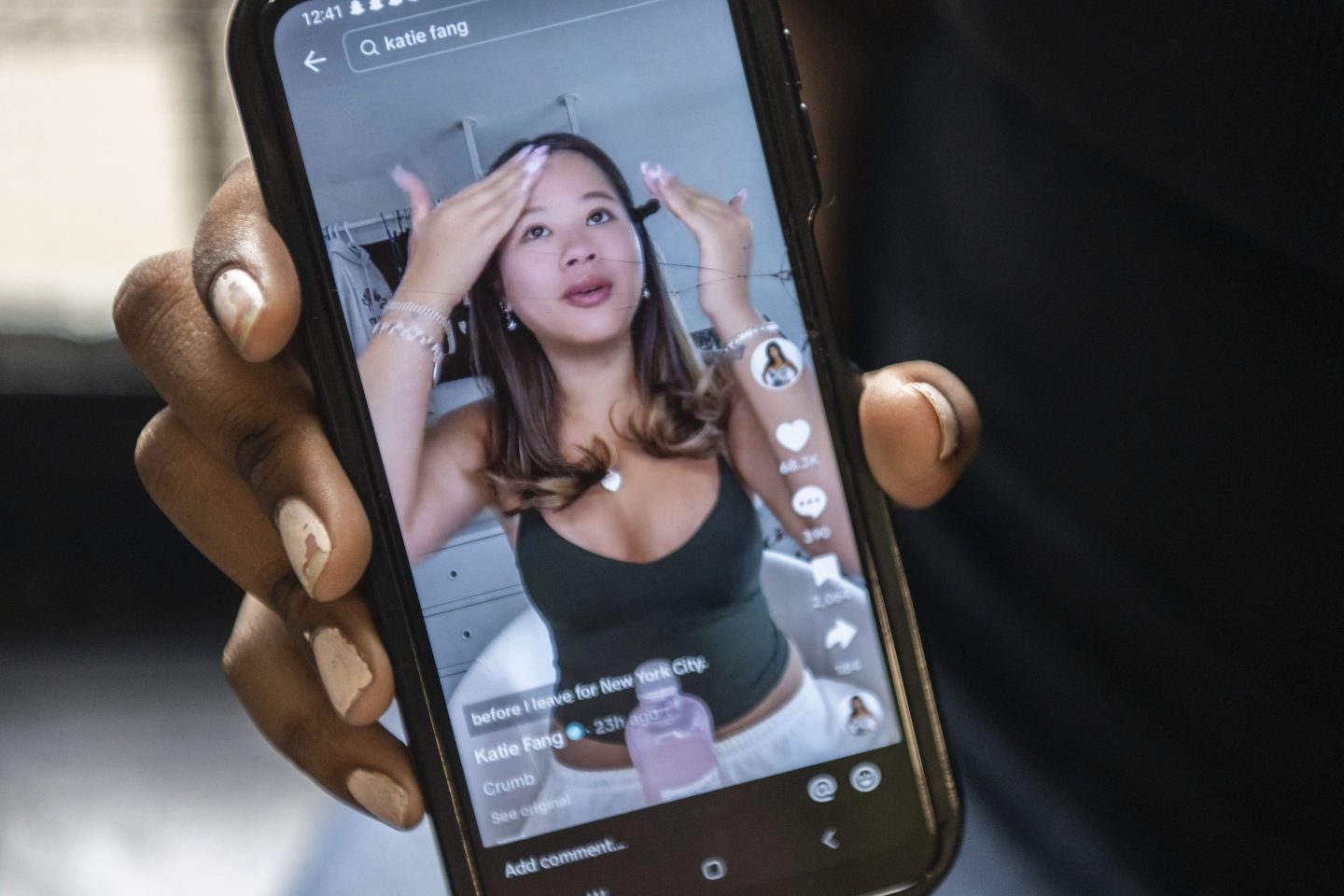
“Everyone was doing it. I felt like it was the only way I could fit in,” says Mia. She started following beauty influencers like Katie Fang and Gianna Christine, who have millions of young followers on TikTok. Some influencers are paid by brands to promote their products, but they don’t always mention that.
Mia got hooked on “Get Ready With Me” videos, where influencers film themselves getting ready — for school, for a night out with friends, packing for a trip. The hashtag #GRWM has over 150 billion views on TikTok.
“It’s like a trance. You can’t stop watching it,” Mia says. “So when they tell me, ‘Go buy this product’ or, ‘I use this and it’s amazing,’ it feels very personal. Getting what they have makes me feel connected to them.”
Mia started saving her $20 weekly allowance for trips with friends to Sephora. Her daily routine included a face wash, a facial mist, a hydrating serum, a pore-tightening toner, a moisturizer and sunscreen. Most were luxury brands like Glow Recipe, Drunk Elephant or Caudalie, whose moisturizers can run $70.
“I get really jealous and insecure a lot when I see other girls my age who look very pretty or have an amazing life,” she says.
The level of detail and information girls are getting from beauty tutorials sends a troubling message at a vulnerable age, as girls are going through puberty and searching for their identities, says Charlotte Markey, a body image expert and Rutgers University psychologist.
“The message to young girls is that, ‘You are a never-ending project to get started on now.’ And essentially: ‘You are not OK the way you are’,”’ says Markey, author of “The Body Image Book for Girls.”
Products promoting youth, purchased by kids
The beauty industry has been cashing in on the trend. Last year, consumers under age 14 drove 49% of drug store skin sales, according to a NielsonIQ report that found households with teens and tweens were outspending the average American household on skin care. And in the first half of 2024, a third of “prestige” beauty sales, at stores like Sephora, were driven by households with tweens and teens, according to market research firm Circana.
The cosmetics industry has acknowledged certain products aren’t suitable for children but has done little to stop kids from buying them. Drunk Elephant’s website, for example, recommends kids 12 and under should not use their anti-aging serums, lotions and scrubs “due to their very active nature.” That guidance is on the site’s FAQ page; there are no such warnings on the products themselves.
Sephora declined to comment for this story.
Ingredients like retinol and chemical exfoliants like hydroxy acids are inherently harsh. For aging skin, they are used to stimulate collagen and cell production. Young or sensitive skin can react with redness, peeling and burning that can lead to infections, acne and hypersensitivity if used incorrectly, dermatologists say.
Dermatologists agree a child’s face typically needs only three items, all found on drugstore shelves: a gentle cleanser, a moisturizer and sunscreen.
A California bill aimed at banning the sale of anti-aging skin care products to children under age 13 failed this spring, but Democratic Assemblymember Alex Lee says he plans to continue pursuing industry accountability. Lee and other critics say popular brands use colorful packaging and product names like “Baby facial” to attract younger buyers in the same way that e-cigarette companies and alcohol brands created fruity flavors that appeal to underage users.
Lee points to Europe as setting the right example. The European Union enacted legislation last year that limits the concentration of retinol in all over-the-counter products. And one of Sweden’s leading pharmacy chains, Apotek Hjartat, said in March it would stop selling anti-aging skin care products to customers under 15 without parental consent. “This is a way to protect children’s skin health, finances and mental well-being,” the company said.
One mother ‘got rid of them all’
Around the country, concerned mothers are visiting dermatologists with their young daughters, carrying bags filled with their child’s skin care products to ask: Are these OK?
“Often the mothers are saying exactly what I am but need their child to hear it from an expert,” says Dr. Dendy Engelman, a Manhattan dermatologist. “They’re like, ‘Maybe she’ll listen to you because she certainly doesn’t listen to me.’”
Mia’s mother, Sandra Gordon, took a different approach. Last spring, she noticed dark patches on Mia’s face and became alarmed. Gordon, a nurse, threw all her daughter’s products into the trash.
“There were Sephora bags on top of bags. Some things were opened, some not opened, some were full. I got rid of them all,” she says.
Mia wasn’t happy. But as she starts high school, she now feels her mother was right. She has switched to a simple routine, using just a face wash and moisturizer, and says her complexion has improved.
In Sacramento, California, Scarlett missed early signs the products were hurting her skin: She developed a rash and felt a stinging sensation, within days of trying out viral skin care products. Scarlett figured she wasn’t using enough, so she layered on more. That’s when her cheeks erupted in blistering pain.
“It was late at night. She came running into my room crying. All of her cheeks had been burned,” recalls Anna Goddard, Scarlett’s mother, who hadn’t realized the extent of Scarlett’s skin care obsession.
When Goddard read the ingredients in each product, she was shocked to find retinol in products that appeared to be marketed to children — including a facial sheet mask with a cat’s face on the packaging.
What worries her mother most is the psychological consequences. Kids’ comments at school have caused lingering anxiety and self-consciousness.
Goddard hopes to see more protections. “I didn’t know there were harmful ingredients being put in skin care that is marketed to kids,” she says. “There has to be some type of warning.”