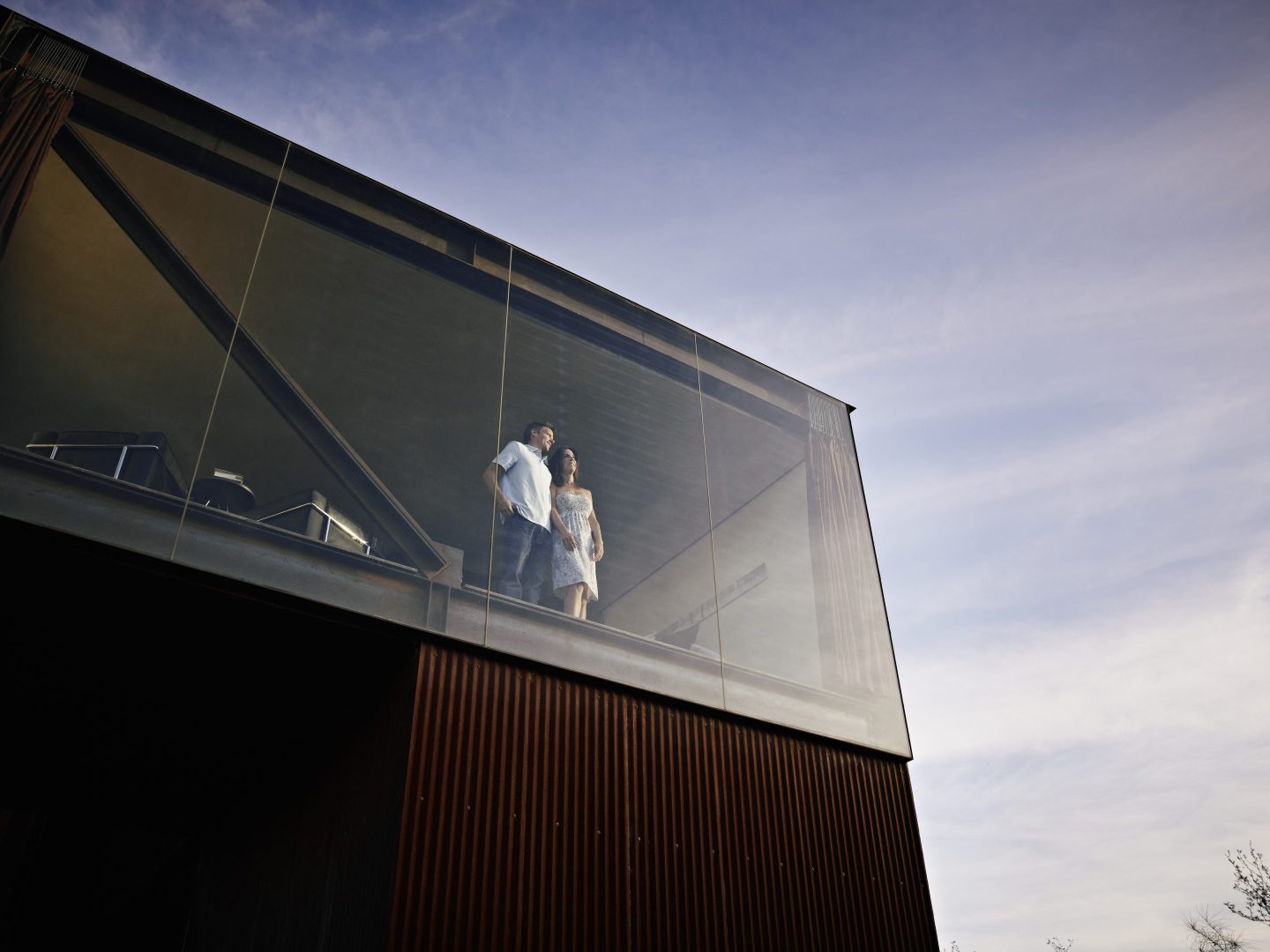
In December last year, Fortune wrote we were in the midst of “a new American era of housing haves and have-nots.” It still seems to hold true today, maybe in a separate context. Luxury-home prices hit an all-time high in the second quarter of the year, and yet people are still buying them.
The typical luxury home sold for a record $1,180,000, an increase of almost 9% from a year earlier, according to Redfin. It was the greatest leap in close to two years, and happens to be more than twice as fast as non-luxury, typical home prices, which only rose under 4% (although still to what Redfin called a record-high median of $342,500).
And still, luxury-home sales rose in the second quarter, albeit slightly, while normal-home sales fell more than 3% to the “lowest second-quarter number in a decade,” the analysis read. In June, according to the National Association of Realtors, sales for million-dollar-plus homes actually rose from a year ago, whereas all other price categories saw their sales decline. Of course, the entire housing world is seeing less bustle than before the pandemic, but the luxury corner looks to be moving faster.
“There is still strong demand for well-priced, high-end properties, especially those which are presented beautifully and [are] move-in ready,” a Redfin agent in Fort Worth said in the analysis. “We had a client recently list a property for $2.4 million that we ended up selling for $2.6 million. We are still seeing multiple offers in situations where a property is priced accurately, [is] visually appealing, and doesn’t need any work.”
And while everyone feels the effects of sky-high home prices, soaring mortgage rates are no obstacle for the wealthy, for a particular reason: all-cash. For most of the second quarter, as Redfin points out, mortgage rates were higher than 7%, but it didn’t matter if you paid in cash. This spring, in the three months ended in May, almost 44% of luxury homes sold were purchased with all cash (not much of a difference from last year, by the way). Separately, according to the National Association of Realtors, all-cash sales accounted for 28% of transactions in June (also not much of change from last year or the prior month).
On a metro level, the median sale price of luxury homes rose most in Providence, followed by San Jose, and Nassau County, N.Y. Meanwhile, luxury-home sales increased the most in Nashville, Tampa, and Seattle. But the two most expensive homes sold in the second quarter were in Glenwood Springs, a resort city in Colorado; one cost as high as $77 million. Los Angeles had the third-most costly sale, at about $63 million.
“The luxury market has withstood the havoc wreaked by high mortgage rates this year, thanks to an abundance of all-cash buyers,” noted Redfin senior economist, Sheharyar Bokhari. “Now that sales are stabilizing and more homes are being listed for sale, it’s unlikely that luxury prices will continue to grow at quite as high a rate.” All inventory is increasing, luxury or not, and homes are staying on the market longer. An Orlando-based Redfin agent said, “international cash buyers are still driving activity, but we have seen a slowdown in local buyers.”
So things are changing, it seems. Another Redfin analysis out Thursday showed typical monthly housing payments fell to their lowest point in four months, and if mortgage rates continue to decline as they have on the back of cooler inflation, payments will, too. The weekly average 30-year fixed mortgage rate came in at 6.78% (daily rates are a bit higher).
Still, it isn’t easy to afford an ordinary home. In June, according to Zillow, the typical mortgage payment increased by more than 112% since before the pandemic. Home prices went up substantially during the pandemic-fueled housing boom and mortgage rates followed, once the Federal Reserve raised interest rates to tame inflation. Starter homes are going extinct, and the salary needed to buy one has almost doubled since the pandemic. So even now that mortgage rates are falling and home prices are rising at a slower pace, we’re nowhere near our pre-pandemic housing market.
Earlier this month, Shaun Donovan, former U.S. Secretary of Housing and Urban Development in the Obama era and chief executive of housing nonprofit Enterprise Community Partners, said in an interview with CNBC: “We’re just coming through the worst housing affordability crisis we’ve ever seen in this country.” Before that, Redfin senior economist, Chen Zhao, said: “Unaffordability is really the story in the housing market right now.”
Just this week, data showed existing-home sales fell on a monthly and annual basis in June; part of that is still the lock-in effect in play, as would-be sellers cling to their homes for their low, or nonexistent, mortgage rates. The other part is that demand is off, and we saw exactly that with new-home sales, as well, which declined to a seven-month low in June. It isn’t that people don’t need homes; they clearly do, but that cost is deterring them from buying, to the extent that some are even backing out of deals. Only that doesn’t seem to be the case for the wealthy.