• Home
  • Latest
  • Fortune 500
  • Finance
  • Tech
  • Leadership
  • Lifestyle
  • Rankings
  • Multimedia
CommentaryLabor

Extreme heat kills more people in the U.S. than hurricanes, floods, and tornadoes combined. We need a federal heat standard to protect workers

By
Jill Rosenthal
Jill Rosenthal
Down Arrow Button Icon
By
Jill Rosenthal
Jill Rosenthal
Down Arrow Button Icon
July 9, 2024, 12:35 PM ET
Jill Rosenthal is the director of public health policy at the Center for American Progress.
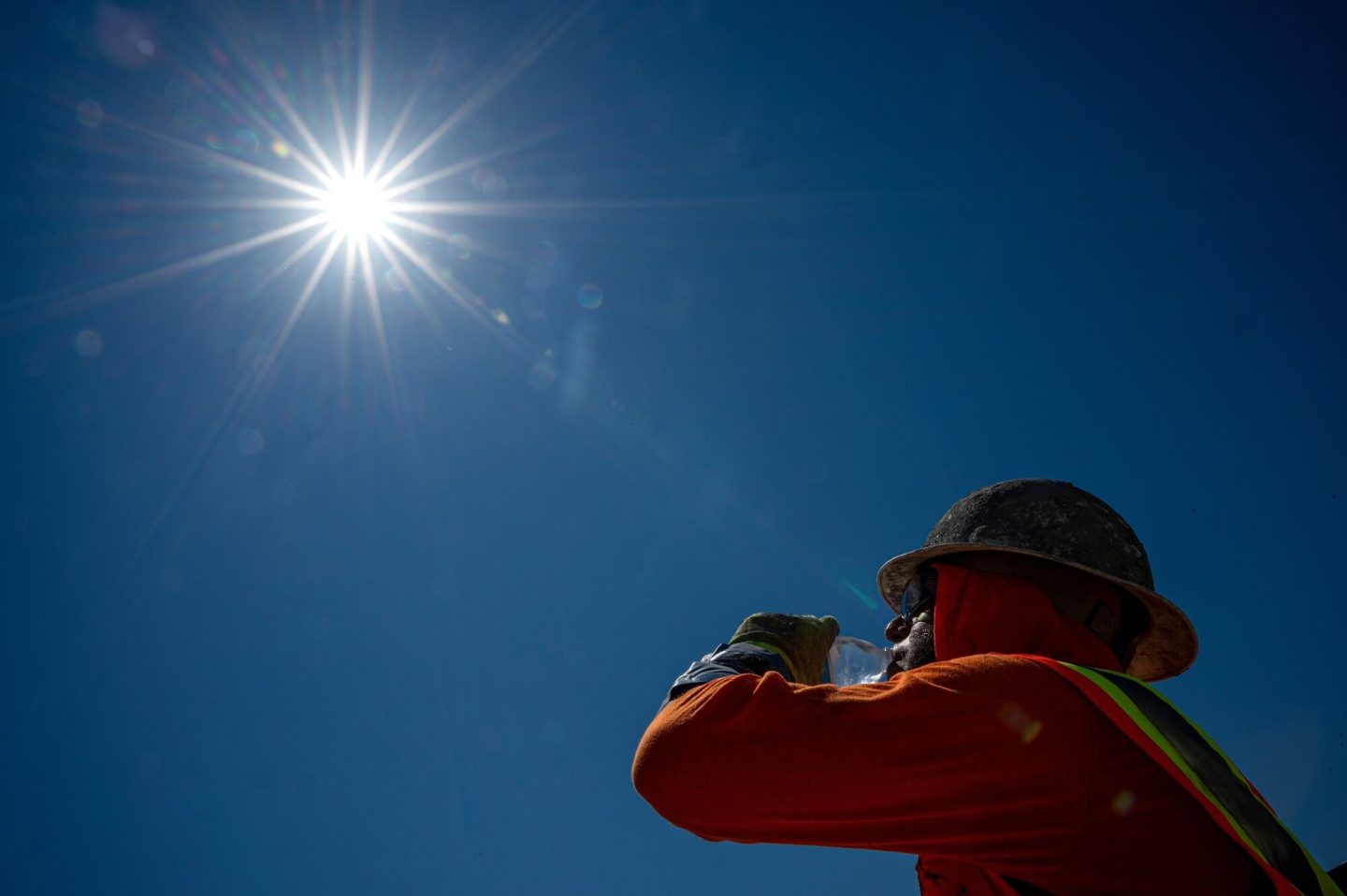
Record high temperatures are becoming the norm—and workers face serious health consequences.
Record high temperatures are becoming the norm—and workers face serious health consequences.David Paul Morris—Bloomberg/Getty Images

Airport workers in Phoenix. Amail carrier and a fiber optic cable installer in California. This summer, workers across the country are staring down the barrel of on-the-job illness, injury, or death due to extreme heat. According to the National Weather Service, heat kills more people each year than hurricanes, floods, and tornadoes combined.

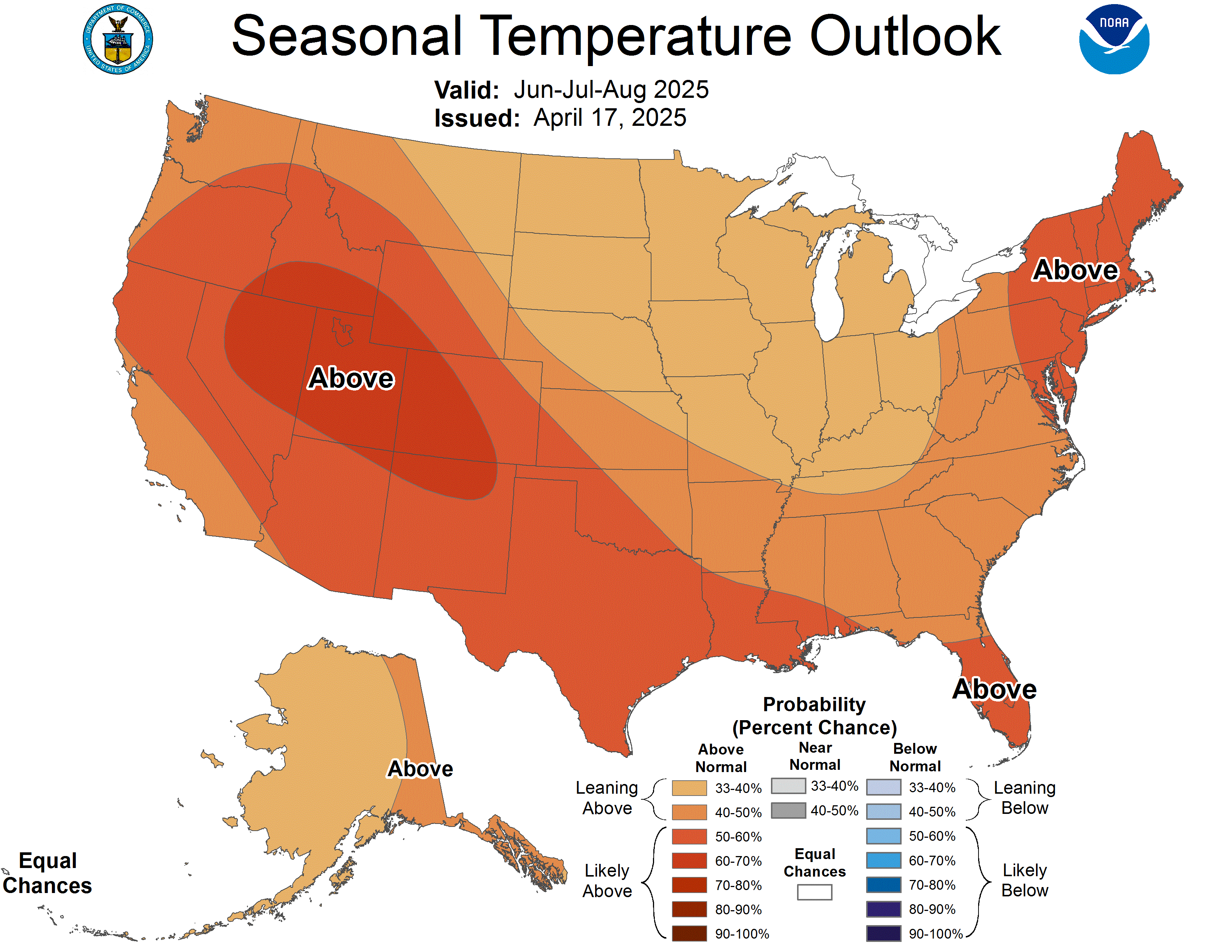
July 2023 was thehottest month ever recorded, and we can already feel theabove-average heat predicted this summer in the United States. Last month, more than 100 million people in 27 states found themselves under heat alerts. Even in my home state of Maine, known for its cold temperatures, some of our northernmost towns broke records for high temperatures in late June. This will only worsen as climate change accelerates.

Shockingly, there’s no federal standard that specifically protects workers in the United States from extreme heat. The Biden administration has proposed a federal heat standard that, if enacted, could improve conditions for millions of workers. During extreme heat events, many indoor and outdoor workers suffer from heat-related illnesses such as heat exhaustion and heat stroke, heat-related injuries like burns or falls due to dizziness, and the worsening of preexisting conditions like asthma, kidney, or heart disease. Not only do workers face serious health consequences but they also stand to suffereconomic loss and threats to financial stability. Their employers also feel the repercussions through lost worker productivity, increased health care costs, and worker compensation claims.

What’s worse, the workers who are most exposed to extreme heat and most in need of protection are disproportionately low-wage earners, people of color, and immigrants—those with the fewest resources for protection.

Without a federal standard defining serious heat hazards, the Occupational Safety and Health Administration (OSHA) is limited in how it can help protect employees from exposure to dangerous levels of heat and hold employers accountable to requirements for preventing heat-related injuries and illness.

State standards can also offer protection to workers, yet onlyfive of them (California, Colorado, Minnesota, Oregon, and Washington) guarantee workers access to rest, shade, and water. Alarmingly, Texas andFlorida have moved in the opposite direction by actually blocking communities from establishing heat protection for outdoor workers.

The proposed changes

The Biden administration hastaken critical actions to protect workers from extreme heat by conducting workplace inspections across the country, beginning the process of developing a heat standard and issuing a heat hazard alert to remind employers of their legal responsibility to protect indoor and outdoor workers from extreme heat.

On July 2, the Biden administration published aproposed federal heat standard that would offer protections for approximately 36 million workers, signaling an effort to speed up a rulemaking process that typically averages over seven years. The proposal is now open for public comment.

The proposed standard would require applicable employers to develop and implement the following policies and provisions:

  • Heat-illness prevention plans.
  • Training and education to help workers and supervisors identify, prevent, counter, and report hazards.
  • Worksite monitoring for extreme heat exposure.
  • Offering preventive measures like water, shade, and paid breaks when employees are exposed to heat at or above a heat trigger.
  • Allocated time for workers to gradually adjust to heat on the job.

The faster this multi-step process takes place, the quicker workers will be protected. As another important step to this end, we must do more to reduce the greenhouse gas emissions that are causing this increase in extreme heat days.

With summer heating up fast, there’s no time to delay. We have to protect our workforce, especially those who are most vulnerable, from the deadly hazards of extreme heat by enacting extreme heat standards. Workers can’t afford to wait.

More must-read commentary published by Fortune:

  • How U.S.-China competition is benefiting the world—and reshaping the global economy
  • ‘A head-in-the-sand approach’: The U.S. strategic drug stockpile is inadequate for a bird flu outbreak
  • The national debt is over $34 trillion. It’s time to tell the truth about the U.S. government’s finances
  • Fearless Fund counsel: The court ruling barring grants to Black women entrepreneurs should terrify CEOs

The opinions expressed in Fortune.com commentary pieces are solely the views of their authors and do not necessarily reflect the opinions and beliefs of Fortune.
Join us at the Fortune Workplace Innovation Summit May 19–20, 2026, in Atlanta. The next era of workplace innovation is here—and the old playbook is being rewritten. At this exclusive, high-energy event, the world’s most innovative leaders will convene to explore how AI, humanity, and strategy converge to redefine, again, the future of work. Register now.
About the Author
By Jill Rosenthal
See full bioRight Arrow Button Icon

Latest in Commentary

Julian Braithwaite is the Director General of the International Alliance for Responsible Drinking
CommentaryProductivity
Gen Z is drinking 20% less than Millennials. Productivity is rising. Coincidence? Not quite
By Julian BraithwaiteDecember 13, 2025
6 hours ago
carbon
Commentaryclimate change
Banking on carbon markets 2.0: why financial institutions should engage with carbon credits
By Usha Rao-MonariDecember 13, 2025
7 hours ago
Dr. Javier Cárdenas is the director of the Rockefeller Neuroscience Institute NeuroPerformance Innovation Center.
Commentaryconcussions
Fists, not football: There is no concussion protocol for domestic violence survivors
By Javier CárdenasDecember 12, 2025
1 day ago
Gary Locke is the former U.S. ambassador to China, U.S. secretary of commerce, and governor of Washington.
CommentaryChina
China is winning the biotech race. Patent reform is how we catch up
By Gary LockeDecember 12, 2025
1 day ago
millennial
CommentaryConsumer Spending
Meet the 2025 holiday white whale: the millennial dad spending $500+ per kid
By Phillip GoerickeDecember 12, 2025
1 day ago
Sarandos
CommentaryAntitrust
Netflix, Warner, Paramount and antitrust: Entertainment megadeal’s outcome must follow the evidence, not politics or fear of integration
By Satya MararDecember 12, 2025
1 day ago

Most Popular

placeholder alt text
Economy
Tariffs are taxes and they were used to finance the federal government until the 1913 income tax. A top economist breaks it down
By Kent JonesDecember 12, 2025
1 day ago
placeholder alt text
Success
Apple cofounder Ronald Wayne sold his 10% stake for $800 in 1976—today it’d be worth up to $400 billion
By Preston ForeDecember 12, 2025
1 day ago
placeholder alt text
Success
40% of Stanford undergrads receive disability accommodations—but it’s become a college-wide phenomenon as Gen Z try to succeed in the current climate
By Preston ForeDecember 12, 2025
1 day ago
placeholder alt text
Economy
The Fed just ‘Trump-proofed’ itself with a unanimous move to preempt a potential leadership shake-up
By Jason MaDecember 12, 2025
22 hours ago
placeholder alt text
Economy
For the first time since Trump’s tariff rollout, import tax revenue has fallen, threatening his lofty plans to slash the $38 trillion national debt
By Sasha RogelbergDecember 12, 2025
1 day ago
placeholder alt text
Success
Apple CEO Tim Cook out-earns the average American’s salary in just 7 hours—to put that into context, he could buy a new $439,000 home in just 2 days
By Emma BurleighDecember 12, 2025
1 day ago
Rankings
  • 100 Best Companies
  • Fortune 500
  • Global 500
  • Fortune 500 Europe
  • Most Powerful Women
  • Future 50
  • World’s Most Admired Companies
  • See All Rankings
Sections
  • Finance
  • Leadership
  • Success
  • Tech
  • Asia
  • Europe
  • Environment
  • Fortune Crypto
  • Health
  • Retail
  • Lifestyle
  • Politics
  • Newsletters
  • Magazine
  • Features
  • Commentary
  • Mpw
  • CEO Initiative
  • Conferences
  • Personal Finance
  • Education
Customer Support
  • Frequently Asked Questions
  • Customer Service Portal
  • Privacy Policy
  • Terms Of Use
  • Single Issues For Purchase
  • International Print
Commercial Services
  • Advertising
  • Fortune Brand Studio
  • Fortune Analytics
  • Fortune Conferences
  • Business Development
About Us
  • About Us
  • Editorial Calendar
  • Press Center
  • Work At Fortune
  • Diversity And Inclusion
  • Terms And Conditions
  • Site Map

© 2025 Fortune Media IP Limited. All Rights Reserved. Use of this site constitutes acceptance of our Terms of Use and Privacy Policy | CA Notice at Collection and Privacy Notice | Do Not Sell/Share My Personal Information
FORTUNE is a trademark of Fortune Media IP Limited, registered in the U.S. and other countries. FORTUNE may receive compensation for some links to products and services on this website. Offers may be subject to change without notice.