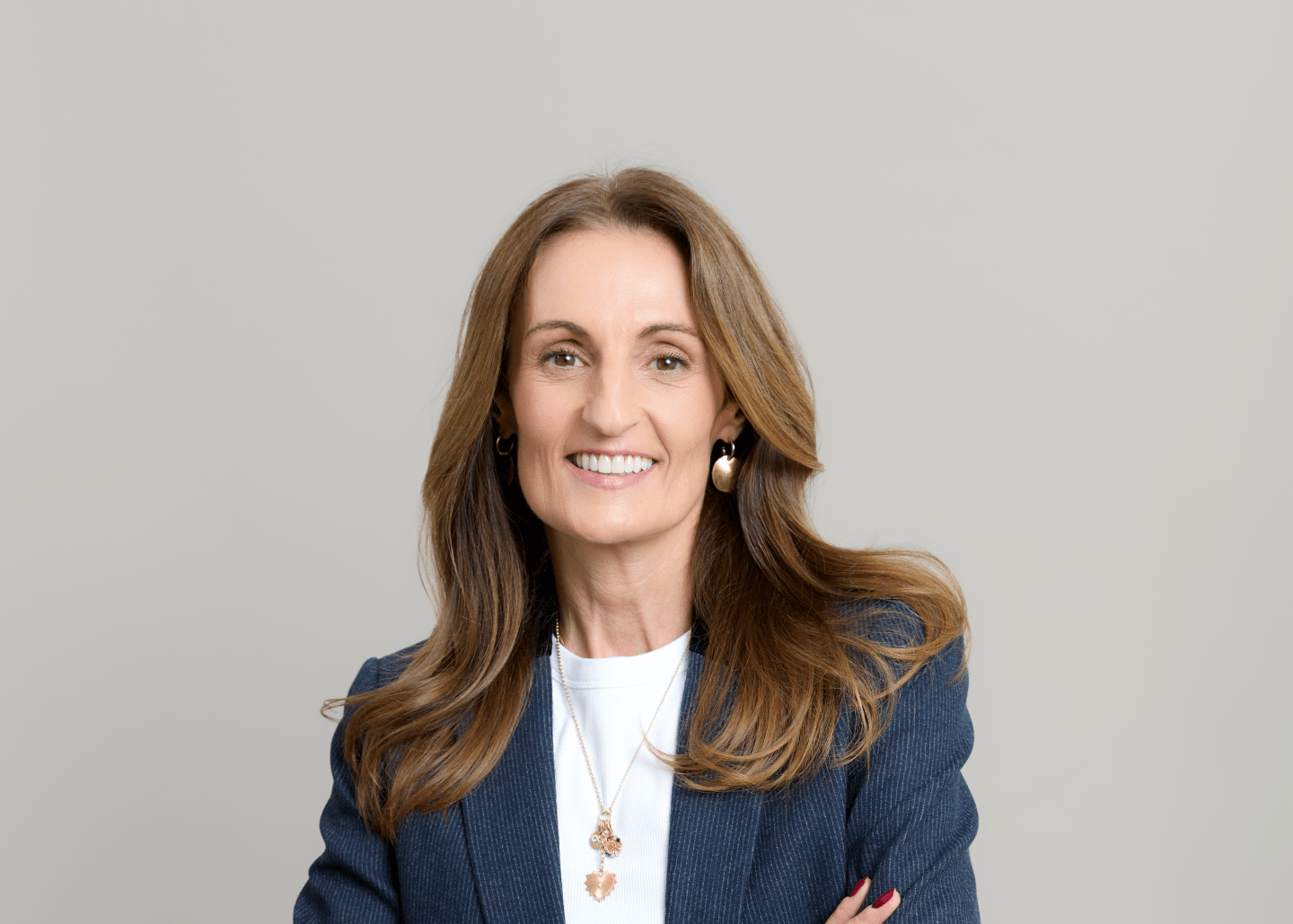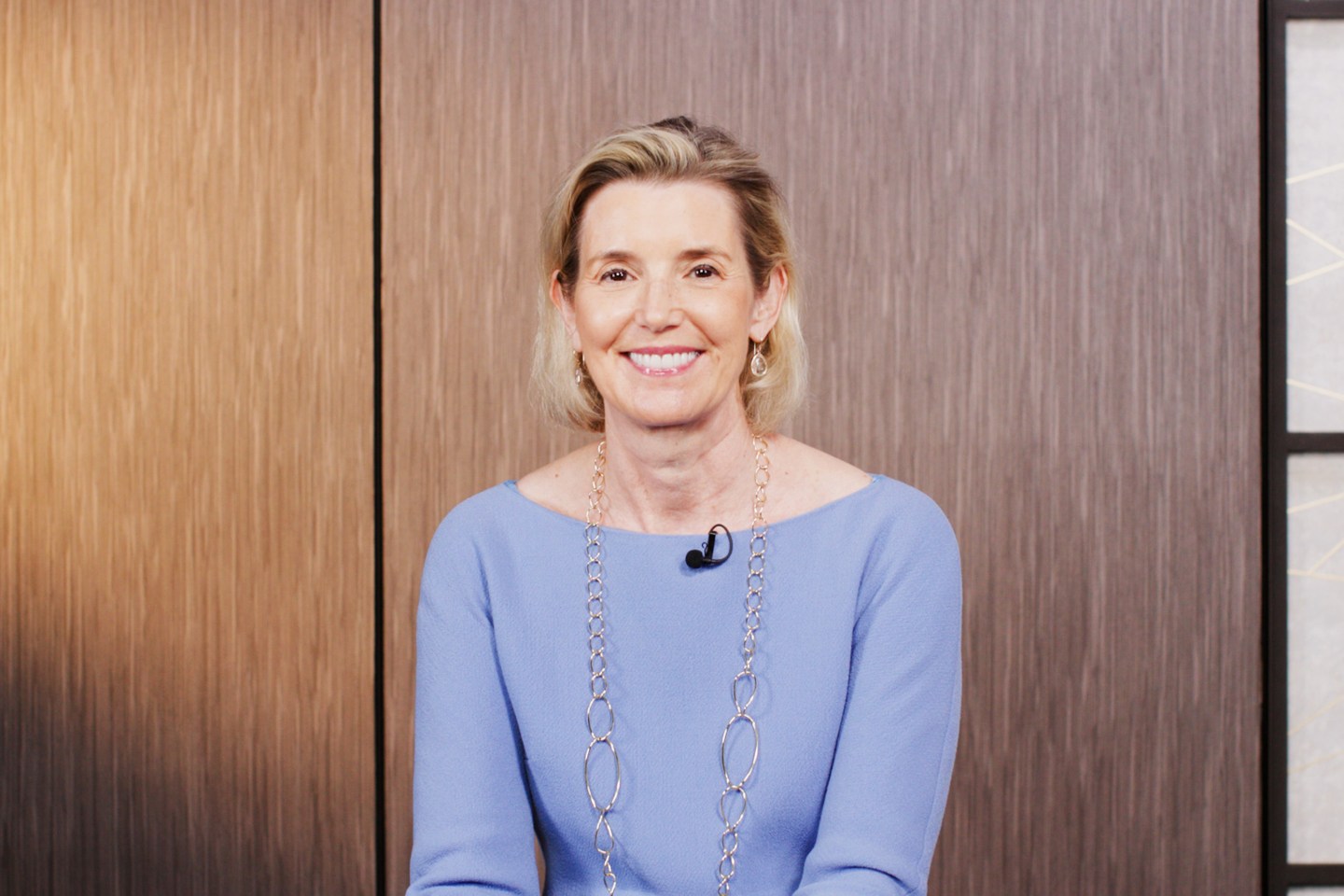
Sallie Krawcheck, founder of Ellevest, a virtual financial advisory geared toward women, grew up in Charleston, S.C., in a household of six with one bathroom. As a young girl, she’d wake up at 5:30 a.m. to carve out some time of her own—and during heatless winter nights, would get fully dressed and then back under the covers to stay warm. Those early days fed into Krawcheck’s dogged pursuit of success, she said, as she walked Fortune through her early career and the building of Ellevest.
“I always wanted money. I had my little savings account, and I could earn 25 cents an hour by filing papers for my father. That’s where I started,” Krawcheck recalled. “I can’t think of a time that I wasn’t working.”
That work has led Krawcheck, 59, to become one of the most powerful women—and people, period—on Wall Street. During her ascent, Krawcheck led Bank of America’s Global Wealth and Investment Management division, and served as CEO of Sanford Bernstein and CFO of Citigroup, among many other plum roles. (In 2002, Fortune even dubbed her “the last honest analyst.”)
The problem: Women don’t have enough money, in Krawcheck’s view, and shrewd investing is the only solution. “The industry tends to look past women and mostly serve men. Maybe there’s an opportunity to build something that can help women invest and make them comfortable investing.”
That opportunity became Ellevest, which Krawcheck launched the day before the 2016 election and which currently boasts a user base of 3 million and $2 billion in assets under management.
Krawcheck told Fortune how she built the firm, why she insists women still need their own platform, and the biggest pitfalls in her career that almost sidelined her.
The following transcript has been lightly edited and condensed for clarity.
Can you give us a little bit of background about where you grew up, what your parents did, and what your childhood was like?
I lost the accent forever ago, but I grew up in downtown Charleston, South Carolina, before Charleston was chic and cool and beautiful and gorgeous. It was a little run-down and still recovering. I have three siblings: We grew up in a home with three bedrooms, which we shared, and one full bath, which I’m still, frankly, a little scarred over. My dad was a lawyer, even in his young twenties. My mother worked within the home. So those early days, when I was younger, things were pretty tight.
I remember sitting in the breakfast room and peeling the wallpaper off the wall, and actually not getting in trouble for it—that’s how run-down the place was at the time. You had to fight to get attention in the household because the kids were so close together [and] because my parents were so young. You know, there’s none of this helicopter parenting. You either had to be loud, or you had to achieve. And for me, the way to get my parents’ attention was to get the best grades in the class.
I would wake up early, because everybody would converge on the bathroom at once. I would wake up around 5:30 in the morning, take my shower, get ready to get dressed, and get back in bed. You may think of Charleston as hot, but it has a chilly winter. My parents, to save money, used to turn off the heat at night. So the mornings were freezing cold. I remember putting on my pants when they were freezing cold and getting back in bed to warm up.
Did you ever have a job in your teenage years?
I always wanted money. I had my little savings account, and I could earn 25 cents an hour by filing papers for my father. That’s where I started. I babysat, of course, for all the neighborhood kids. And then we had a family store, which was on King Street, owned by my grandfather; my grandmother had a women’s store next door. And I think from ninth grade, I worked retail and sold clothes in the store. So I can’t think of a time that I wasn’t working, or earning money.
I managed to save enough to go to Europe when I was a senior in high school on a class trip. When the hot water heater in our home broke, I was able to pay for it. My father paid me back, but I was able to earn some money and do some things that I otherwise couldn’t have done.
What did you study in college?
I was a journalism major in college. I went to the University of North Carolina, because most of my friends went to the College of Charleston or Clemson or South Carolina. I was a journalism and poli-sci major there. I worked at Fortune one summer as a cub reporter. I remember seeing the first fax machine that I’d ever seen when I was there. I didn’t get a full-time job, so I went to Wall Street instead.
When I graduated, Wall Street was going absolute gangbusters. So even though I was a journalism major, [I could] go to Wall Street for a couple of years. It was really the Silicon Valley of its day. I figured, if I can go to Wall Street and learn a lot about business, I can then go back and be a business journalist. So I took some of my first flights to fly to New York to interview. I think I got job offers with Salomon Brothers, Bankers Trust, Goldman Sachs, Morgan Stanley, and J.P. Morgan.
I remember calling my dad, telling him I got these offers, and asking what he thought. “Well, that’s great, but let’s forget about Goldman Sachs,” he said. I asked why, and he said, “Because I’ve never heard of them.” So I said, “Excellent, thank you for that excellent advice, Dad.”
But I chose Salomon Brothers, because [then-CEO] John Gutfreund had just been on the cover of Bloomberg Businessweek as the King of Wall Street. I didn’t know what I was getting into. I didn’t have any idea what a rough-and-tumble environment it was.
I worked on Wall Street essentially for the rest of my career. I was in investment banking for a few years. I did a year in New York, a couple of years in London, and then I came back to go to Columbia Business School with the sole goal of getting out of investment banking. I worked at Time magazine and the business office for the summer so I could get back into media. I thought, “Here comes my dream, with my journalism major and my business degree.” I thought, “I’m going to work at Time magazine.” But I did not get the ongoing job offer. So I ended up right back in investment banking, on Wall Street.
I didn’t last long. I was there for a bit, and then—never, anybody, ever do this!—but I quit my job. I was like, I’ve had it with investment banking. This is not where I want to be. I don’t care if I spent all that money in business school. I’m going to take some time off and figure it out. At some point, right before I turned 30, I had the epiphany, as so many young women at that age do. I wanted to be an equity research analyst—a sell-side research analyst. I don’t know how I did it, but I managed to get a job, without a job, covering life insurance at Sanford Bernstein. And the fit was, I hate to say it, absolutely perfect. I loved the job. I loved the craft. And I was successful very quickly.
How did you come up with the idea for Ellevest?
I was putting on my mascara one morning, and I came up with the idea that led to Ellevest. I was thinking about, as I typically am, women, money, and building wealth. The idea that dawned on me was that there’s a retirement savings shortfall in this country, which we really don’t talk about nearly enough. But if there’s not enough money for retirement, it’s actually a gender issue—a women’s crisis. Why? Because women live six to eight years longer than men, and half of marriages end in divorce.
Think about any nursing home you’ve ever seen. 80% of the people there are women. So I thought, “If you look at this through the lens of gender, what can we do to solve this problem?”
This was during the Lean In moment; there were lots of people out there saying women need to earn more money, and they have to ask for raises. You need to know your worth. I thought, “What can I bring to this party? What do I know?” What I know is investing. What I know is that the really scalable way for individuals to build wealth has been through investing—that the power of compounding, the power of tapping into the markets, has built tremendous amounts of wealth in this country for decades and decades and decades.
So I really began to put together that there’s a problem, at its most simple, that women don’t have enough money. Here’s the solution: investing. The industry tends to look past women and mostly serve men. Maybe there’s an opportunity to build something that can help women invest and make them comfortable investing.
This was about 10 years ago. Then we did about two years’ worth of research before launching the day before the 2016 election. We thought we were going to have a woman president, so we thought it was a perfect time to launch Ellevest.
Did I think Ellevest was going to be successful? Yes. No. Sometimes. It depended on the day and the hour. I’d be out pitching the idea, because we had to raise venture capital money. And I’d be walking through the deck about how women invest less than men do, and share some hypotheses as to why, and showing what the product could look like to fix that.
And I would be talking and then I’d think, “This is not a great idea. Women really don’t need their own thing. Why should they have their own thing?” And I’d sort of gear myself back up. And then there were other times when it was just clear that this is needed. It doesn’t matter what my opinion is about this. The stats are so compelling about how much less wealth women have, and about how women’s wealth has been going backwards in comparison to men, that there simply has to be something that we can build and do in order to solve this big issue.
What was it like working in male-dominated fields?
That’s always a tough question to answer. I was successful. I had great friends. I enjoyed the work. I enjoyed the craft. People were respectful of each other. Was it odd there weren’t other women around, or only a couple other women around? Sure. It was the ’90s. There were other times, of course, in my early days at Salomon Brothers, when that male-dominated environment was openly hostile and biased.
I think it depends on the people, the environment, and the culture. There were places that I couldn’t wait to get out of. But there were places like Sanford Bernstein where they did not have the diversity down by any means, but it was filled with really lovely people from whom I learned a tremendous amount.
Do you think your gender was ever a factor in your successes or challenges?
I think my gender was always a factor in my success. And I think it was a factor in times when I stumbled. I don’t want to paint gender over everything, but it’s so core to who I am. It’s sort of hard to say that no, gender had nothing to do with anything. Because it’s so core, I found, as a research analyst, because I was the only woman, or one of the only two women. Whether I wanted to or not, I stuck out, and I used that to my advantage.
I said, “Rather than try to be in the pack with all the guys and have the same stock calls and the same type of research, I’m going to stand out.”
Of course, sometimes it was great. But if you were wrong, everybody knew you were wrong. But if you were right, everybody knew you were right. So there’s a reason that I was successful very quickly. As a research analyst, I worked hard, and I was very analytical. I also took risks, but part of it was you couldn’t forget me. You just couldn’t forget me.
Why is your company fully remote?
Ellevest is fully remote not because we started that way, but because of the pandemic. When the pandemic hit, our lease was up. As a new company, it made no sense whatsoever to pay the lease on an empty space that we had no idea if we’d be going back to. And a lot of people moved. When we were interviewing and hiring people, we sort of forgot to ask them where they lived.
[We found] when we were out of the office, it was better to get the terrific person wherever they were. During the pandemic, we were hiring people from all over the country without really asking them where they were from. And our productivity was really strong, and we found that we weren’t really losing anything in culture. Our culture is so strong, and our mission is to get more money in the hands of women. So there was nobody in the company who was like, “I’m super confused why I’m here. And if I’m not in the office, I don’t understand what we’re doing.”
We found being remote worked for us and made us productive. On top of that, Ellevest is sort of the inverse of Wall Street in terms of the makeup of our company. We’re about 85% women, whereas it’s the opposite for Wall Street.
It’s true in this country, to this day, that men are more likely to move for a job. And particularly for women who have kids, [it’s valuable to] keep the kids at school in whatever city they’re in. Maybe they live down the street from her parents, who can help, and not having to do the commute—that time when she’s neither working nor with her family—is an enormous perk. We found it’s just a win-win all around.
What time would you say you start working?
I wake up every morning thinking about work. Honest to goodness, it’s whatever that last layer of sleep is. When I come out of sleep, I’m already thinking about work and what the day holds. And I’m already thinking about some new creative idea.
I think I start working at 4 a.m.—whenever I’m in that last phase of sleep. I am typically at my desk by 8:30 or nine o’clock. But that morning walk in the park is an incredibly creative time. And it really is targeted toward the business. I live in New York on the Upper West Side.
What are your thoughts on work-life balance?
I have so many thoughts on work-life balance, and I know I’m supposed to give some trite answer about the importance of balance and maybe say you can’t have it all.
You know, I’ve been a successful business lady, but that’s not enough. Now you need to also have balance. You have to have both of those things. I remember when I was chief financial officer of Citigroup sitting on a panel with other CFOs of companies like IBM and GE. They were asked about balance-sheet management. And they asked me about work-life balance. And I remember thinking, “It’s not enough that I made it to this table as a CFO.”
This is very personal for everyone. For me, there were times in my life, when I was just go-go-go-go-go with my career and did a perfectly adequate job as a mom. I love my kids, but I was not that perfect mom with the homemade cookies. And there were times in my life where my kids needed me and my career took the back seat. I’ve sort of run at each of these. I just don’t love that we put this question down, almost as a gauntlet for women, as another level of success that needs to be achieved.
You previously told Fortune that you were on a glass cliff three times. What were those experiences?
You’ve probably heard of the glass ceiling, which is, as a woman, you’re being promoted, and then you all of a sudden stop, and you’re like, “There’s nothing there. How am I no longer getting promoted?” You just can’t see it. The glass cliff is sort of the same thing. If the middle-aged white guys don’t want the job, companies give it to someone who’s in an underrepresented group and see if they can turn it around. But this is not one we want to touch with a 10-foot pole. Why in the world would you accept a glass-cliff assignment? Because that’s the only opportunity you’re ever really going to have for one of those huge jobs. The CEO jobs. Why not?
I know all the glasses. I know the glass ceilings. I know the glass cliffs. The first time I was on the glass cliff was after the research scandal of the early 2000s and the run-up of the internet bubble. Research analysts really had two jobs. One job was to write research telling individual and institutional investors to buy low and sell high, and the other was to be part-time investment bankers and to advise the corporates to issue the stock high and buy low, which was in direct conflict with job one.
At Sanford Bernstein, we were in those two businesses. But when I had the opportunity to run the business, I took us out of the conflicted investment banking business. The business struggled for a while. But when the internet bubble burst, and it was clear, Eliot Spitzer came in and found out there were these conflicts. And I was on the cover of Fortune as the last honest analyst, which then brought me job offers.
I got a call from Sandy Weill, who was then the Titan of Wall Street, running Citi, which was the largest financial services company at the time, I think, in the world. And the stock was under pressure because of the research scandal and the earnings impact from it—and because people were nervous that Eliot Spitzer would go after Sandy Weill and take him down as CEO.
And so I got a call asking if I would come and turn around Citi’s research business. I said, “I don’t know about that.” But would I run Smith Barney? And for those who don’t know, Smith Barney was a Merrill Lynch of its time. It was a retail brokerage–type of business that was being dragged down by research.
I got the opportunity to be the first woman to ever run that company—maybe the first woman to ever run one of those big retail wire-house businesses. It was a glass cliff, because it was a turnaround. It was a turnaround that I got, in part because I was a woman, and in part because I had a different strategy than others.
The Wall Street Journal was watching. Fortune magazine was watching. Your parents were watching. The world of Wall Street is watching. Can you get this business turned around? And I knew very well that the only reason I got the opportunity was because it was a turnaround. If I had not had this other set of career successes—if I’d started at Smith Barney in the mailroom, and then worked my way up to junior broker and then medium broker and then senior broker and then head of the branch, no way I would have ever made it to the top. It was only through having that glass-cliff moment that I got an opportunity to run a business of that size and scale.
My second glass cliff was during the subprime crisis, when Bank of America bought Merrill Lynch. I got a call from the CEO of Bank of America at the time, saying they were hemorrhaging financial advisors, and they asked if I could come in and turn the business around.
I said, “Oh, look, it’s another glass cliff here. It’s another opportunity to go into a business that is not doing well, in front of everybody, and work to turn it around.” And so of course I said, “Put me in, coach, I think we can do this.” I spent a couple of years working with terrific financial advisors, they’re going from net outflows of financial advisors to net inflows, getting real growth, beating plans, gaining share.
Two years after I got there, I got called in by the new CEO, who essentially said, “Thanks for the turnaround, lady, but we’re going to give it to this gentleman over here who’s never run a wealth management business before.” And I remember just thinking, “You’re reorganizing, and you’re kicking me out.” I wasn’t completely surprised, because I knew we weren’t big buddies. But there is something about being brought in to turn around a business, doing it, and then being told they’re gonna flip it back to the people who represent the majority of the industry, as opposed to allowing you to stay out there. Such is life. What are you gonna do? It made me feel terrible.
But it also was such a gift. Even as it was happening, I was like, “This is literally such a gift. Because if you don’t want me, why would I want to be here?” I did love it there. And I was very comfortable in the cultures of Sanford Bernstein, or Citi, which were very much more entrepreneurial at the time. The big banks were more process-oriented.
I don’t think I danced into work every day, but I never would have left the job. I had a responsibility to the financial advisors, to their families, to shareholders, to clients, so I was never going to leave.
But when I was forced to leave, it was embarrassing and sad and humiliating and unfair. But it was also sort of cool, because I always knew there was going to be a Next. I didn’t know what the Next would be, but I did get a call to turn around another business.
If I could just center myself and spend some time really thinking about and getting clear on what was important to me, and what the opportunities were and where I could have an impact and where I can pull together the team, I knew the next chapter could be even better than the chapters before. And damn it, I was right.
How much venture capital did you raise for Ellevest?
We’ve raised $144 million of venture funding.
One of those investors was Melinda French Gates—Pivotal Ventures. What was that process like?
We’re fortunate because we got a number of prominent women investors, including Melinda French Gates, Mellody Hobson, Penny Pritzker, the folks at Rethink. I’d say with each of them, the process was individualized.
With Penny Pritzker, I remember going to sleep one night and thinking to myself, “If I could have one investor, who would that be?” And I woke up at about three o’clock in the morning like: “Penny Pritzker.” And I was in her office two days later.
Mellody Hobson, I talked to her about investing in Ellevest at Fortune’s Most Powerful Women conference. One year, we were both there, and I approached her to explain Ellevest.
I think for Melinda Gates, I went up to Seattle a couple of times and visited her team there. So each one was individualized, but I was fortunate to be able to know these incredible women and be able to get in front of these incredible women in order to make the case for something important.
What’s the generational breakdown of your customer base?
Ellevest really engages with women who have agency over their money. The truth is, we serve women who are in college, and who have just got their credit card debt paid off and are ready to invest, through to women who’ve got multiple tens of millions of dollars with us. We’re really trying to solve the same problem across the entity. How do we help women build wealth? How do we get more money in the hands of women with different delivery mechanisms and solutions for women who are starting out?
It’s a digital advisor, also known as a robo-advisor. We also have financial planners. So for women who, say, for example, are going through a divorce or have got a big inheritance and are working through that comprehensive plan, we have financial plans to help them with it. We also have a full-time financial advisor with offerings that include not just stocks and bonds, but means of investing in private investments, if that’s something that’s appropriate, often for older women.
Do you see a pattern with Gen Z investing?
What I worry about with Gen Z investing are the influencers. Some of them are excellent, but on average, if you’re taking their advice, you’re underperforming. Influencers tend to want to drive activity, and activity is the enemy of compounding returns. The best way to invest is to choose an asset allocation—Ellevest can help you find an appropriate one—and get that money in there on a recurring basis and just let compounding take over. Adjust, of course, along the way, what doesn’t work, but it’s trading. So I do worry about the influencers. I worry about some of these messages about the “stay at home girlfriend,” which is really ceding power.
Look, money is power. And if you don’t control your own money, you don’t control your own life. So any messages that are counter to that, I think, are pretty disturbing.
How does Ellevest differ from a generic platform where you can invest in a Roth IRA?
Ellevest is the only investing platform that really centers on women. Our investing algorithm is woman-first. It recognizes that women tend to earn less, women tend to take more career breaks, women’s salaries tend to peak sooner, and women die later. So you have to invest differently for retirement based on that.
And then we took into account about 1,000 other differences as we were doing the research. One gender difference we found, for example, is that neither gender really knows what their risk tolerance is. If you’re a gentleman you say, “Huh, that seems like an important question. I don’t know. Let me take an educated guess and continue on.” For women, what we found is: What’s your risk tolerance? “Hmm, I don’t know, that seems important. I’m going to try to figure it out. And I’m going to come back, and then I will input it.”
My friend Reshma Saujani has said that’s because boys are taught to be brave, and girls are taught to be perfect. And so that bravery-versus-perfection was something we had to actually solve for. The way we solved it was to say, “We’re not actually going to ask you your risk tolerance; what we’re going to ask you, and what we’re going to take into account are your characteristics. How old are you? What is your salary curve? What industry are you in? What education level do you have? What do you want to achieve? Do you want to have a baby? Do you want to start a business? Do you want to buy a home? Do you want to retire?”
Then we take what we know about you and what you want to achieve and use the investing algorithm to construct a diversified investment portfolio that gives you a risk budget.
What’s the strategy behind marketing Ellevest to make it seem as if it’s just for women, but it’s actually for everyone?
We love diversity, so we have a number of nonbinary and male clients. But we did think it was important to speak to women and speak with women, as a marketer. Not that I have any background in marketing, but as a marketer, if you’re talking to everybody, you’re talking to nobody. So who is that person you’re speaking with? And what information can you give her? And what can you build for her?
Then if others want to come along, fantastic, happy to have you. But what we’re really doing is just the reverse of what a patriarchal society does. A lot of medical research seems to be for everybody, but all of it is on men. “Oh, you know, we’re gonna treat everybody like this when they have a heart attack”—except all the research is on men. They sort of act like it’s for everybody. So we’re doing the opposite. We’re just more explicit about it, that we really did build this for women.
Do you have any data about your membership?
We saw some research a few years ago that showed that we were the only investing app with majority women clients. Most of them were around 25% women. Off the top of my head, we’re at around 96% women. So we do have some men, but look, you know, this is our society, it’s considered okay for women to use products that are made for men, but we all know it’s not yet okay for men to use products that were made for women.
What investing struggles or barriers have you faced as a woman that men might not experience?
We should call a spade a spade: Women don’t have as much money to invest as men do, because women don’t earn as much as men do. Those 80 cents that she earns to a white man’s dollar—when you take care of all the fixed costs, the Pink Tax, and the fact that women spend more on their kids than men do. Credit card rates are higher for women than for men. Student loan debt is higher for women than for men. When you get through all that, women have less to invest, and on top of that, the industry just wasn’t built for women.
What we found when we were doing the research on women is, if she doesn’t understand the jargon, she turns off, whereas men will really just get through and invest through jargon. So there is less. The combination of the two have been drivers in increasing the gender wealth gap, meaning women’s wealth relative to men has been getting worse, not better, which just feels like it should be the opposite. For goodness’ sake.
What are your thoughts on the gender pay gap?
It’s frustrating. You just feel like, “Okay, it’s gonna get better.” Particularly if you see all these young women who are on the move—like, this generation is so talented, and so driven, and it’s going to be on the move, and we’re going to change that gap. And then you look over any period of time and it gets better by a penny, or it gets worse by a penny.
And yes, I know that some of that is women’s choices, that men choose to work longer hours, or women choose to take more career breaks. But those choices are really driven by societal expectations and the structure of our society. So it’s frustrating.
It’s likewise frustrating when you look at the sliver of venture capital funding that women get, despite the fact that woman-founded companies do as good or better than those founded by men. It’s not fair, so therefore, it should get better.
What would you say to a woman who wants to invest but might be scared to do so?
Please come to Ellevest, we were made for you. Just get started. It is much better to start with a little bit out of every paycheck, just to get the feel of it. And get the feel of the stock market moving up and down—see how it makes you feel. Much better to do that than to just watch from the side. The other thing I would say is that the past may not represent the future. But in the past, investing in the stock market has been much less risky over the long term than you think.
It’s been that if you invested over 10 years, 15 years, 20 years, your chances of a positive return was pretty close to 100%. There has historically been a lot of day-to-day volatility, and some of it can be pretty frightening. But over the course of decades, the U.S. economy is so strong, and the global economy is so strong, and these things tend towards growth. And therefore the market tends to trend upwards.
Ellevest recently hit $2 billion in assets under management. To what would you attribute that success?
The team. We’ve got a great team that cares tremendously about what we’re doing. They’re willing to take the risks and build something that is different than anything else that’s out there in order to meet women’s needs.
$2 billion was a watershed moment for us. I remember, back when we were in beta testing, I gave a journalist the launch details. I think the title of her article was something like, “Investment advice made for women seems like a great idea. Here’s why it’s not.” She wrote that other people have tried and failed and that Ellevest was solving the wrong problem. The problem is the pay gap, she wrote, not the investing gap. And then, at the end of it she said, there’s already an example of a digital advisor who’s successful, and they’ve got $2 billion of assets under management. And so I thought, “Okay, so there is a moment here. If $2 billion is success, then Ellevest just hit $2 billion.”
What’s the worst business advice you’ve ever received?
When we were getting ready to launch Ellevest, I had a venture capitalist tell me to just rush it out the door. “It doesn’t have to be great, just get it out. Because you can pick up a whole bunch of business in January.” And I remember thinking, “You really don’t understand women.” If you rush something out for women, particularly around their money, they are going to stay away in droves and not trust you. So I think that was the worst advice.
The best business advice I ever got was to work hard. Certainly part of it was about bouncing back and resilience. But I think some part of it, too, was not being afraid to stand out. You know, as a research analyst, I remember being told, “If you’re doing great research, and nobody knows, then why bother to do the great research?” When I was growing up, women kept their heads down. Now the advice really is pop your head up, which can be uncomfortable, but certainly in the roles that I was in, it worked for me.
What advice would you have for a young aspiring woman who wants to be seen and make a difference in the world?
Work hard and stand out. If you’re saying, “I agree with everybody in the room,” then why are you bothering to speak? Do the hard work, do the analysis. The other thing I’d say is: “Know where the power is.” On Wall Street, the power is with the numbers. So I went for CEO, CFO.
There are great jobs in HR, and there are great jobs in PR. But if you’re on Wall Street, numbers are where the power is, so go to the power, know the numbers, and do not be afraid to stand out and take a stand.
What are the best investment accounts to have?
The first money account a young person should have is an emergency fund. After you pay off your credit card debt, put three to six months of take-home pay in a bank account. It’s safe, it’s there, you’ve got it. Then, it may not be sexy, but invest in the 401(k) at work, particularly if you get a match. The power of tax deferral historically has been a tremendous way to build wealth.
What’s your opinion on a Roth IRA?
I love all our IRAs. I don’t love one IRA more than the other. These are dependent on your personal circumstances, your tax situation. But as much as you can afford to invest towards retirement, and then in a brokerage account, the better off your future will be.
It’s always tempting to invest in the hot stock and to invest in whatever has been going up. But what has worked, tried and true, over decades and decades, is a diversified investment portfolio. You want your life to be exciting, and you want your investing to be boring. You want to have that diversification. You want to rebalance when it’s out of whack, but other than that, you want to really set it and forget it.