Reports of American consumers’ inability to pay their bills—or their waning interest in shopping—are greatly exaggerated.
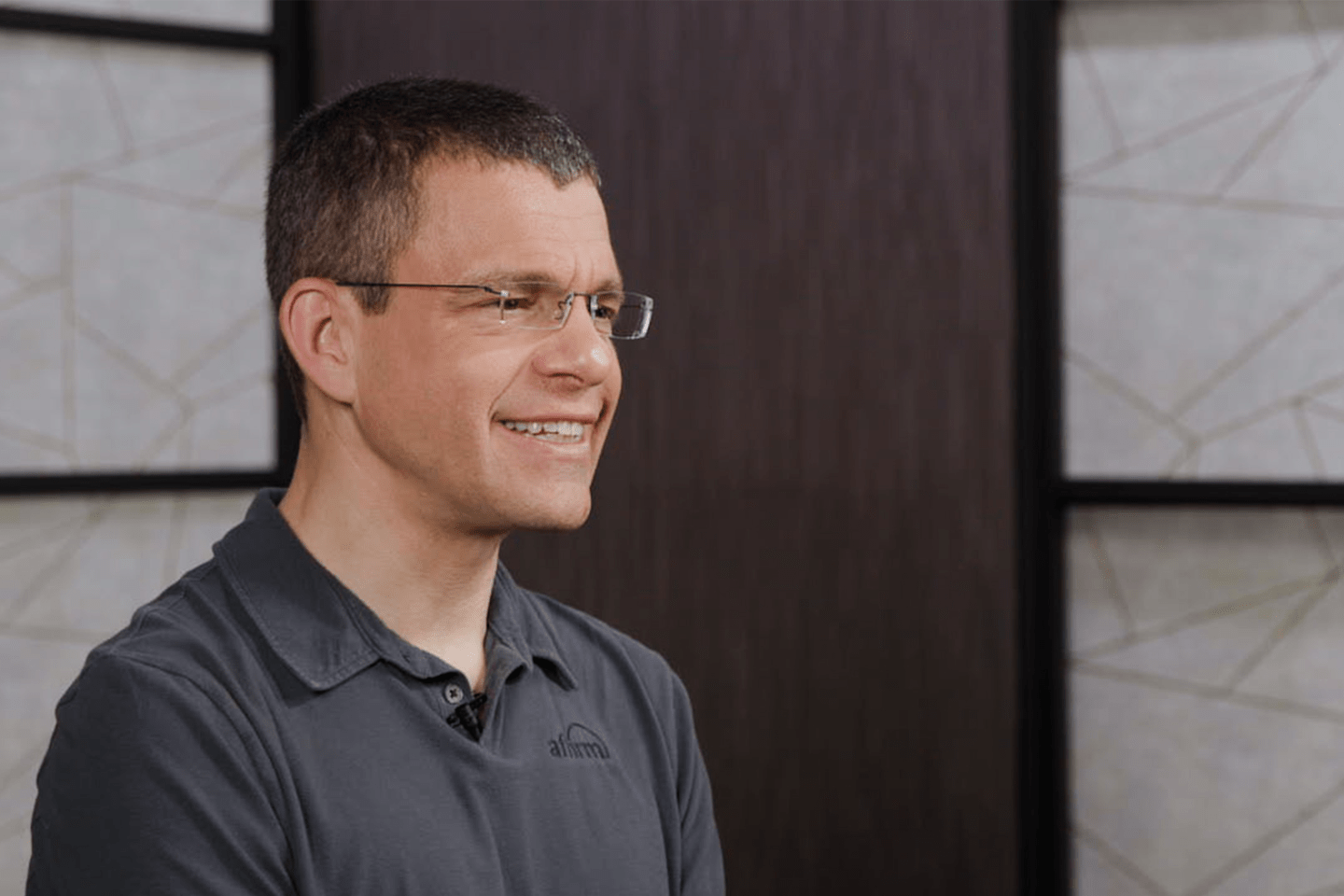
That’s according to one CEO with a sizable stake in the matter: Max Levchin, cofounder and chief executive of Affirm, the publicly held fintech company and reigning champ of the buy now, pay later space. “We’re still growing really well,” Levchin recently told Fortune in an interview. “People are paying our bills well on time.”
He’s not wrong. Per a recent Adobe Analytics report, U.S. consumers spent $331.6 billion shopping online in the first four months of 2024—7% more than last year. And nearly $26 billion of that online spend came via buy now pay later services—an almost 12% year-over-year jump. Indeed, shoppers are “[embracing] more flexible ways to manage their budgets,” the report said.
Levchin has maintained a sunnier-than-average disposition about the state of the American consumer, recently echoing the sentiment to Yahoo Finance. “The economy is in better shape than popular opinion will have you believe,” he said last month. “From where we sit, people are spending.”
They’re also able to pay. After over a decade at Affirm, Levchin told Fortune that most people still don’t believe him when he repeats one particular fact. “The total number of late fees or compounding interest that we charged last quarter was zero,” he said. “It’s been zero since inception. We’ve never charged a penny of late fees—or any other hidden or gimmicky fees—and have no intention to.”
Levchin, who in a previous life was a founder of PayPal, said that fact is “profoundly important” and integral to Affirm’s mission.
“Obviously, you don’t want to take advantage of people when they’re struggling to pay their bills,” the 48-year-old Ukraine-born founder said. “On a more fundamental level, it aligns [Affirm] with customer success. If someone borrows money, and they can pay us back on time, that’s great for us and good for them.”
Plus, they take it personally: Levchin said his company sees a customer’s inability to pay as a weakness on the company’s side. As explained in the company’s Investor FAQs, Affirm primarily earns money through the fees it charges participating merchants and through “simple interest-bearing loans” it facilitates. It also snaps up interchange fees through its virtual card, and through loan services it gives to third-party investors who buy Affirm’s consumer loans.
“Whenever we made an [incorrect] underwriting decision, we had to have been more thoughtful; we should have seen something about [a customer’s] inability to stomach this kind of bill, and so that’s an error for us,” Levchin said. “And they’re not in a good place. But neither are we. And so we learn from that, and we stay aligned with their financial success.”
For better or worse, the buy now, pay later industry is booming—though its days may be numbered, owing to recent regulatory scrutiny. Apple, earlier this month, pulled back on its own contribution to the BNPL market, instead announcing it would integrate Affirm into its upcoming iOS 18 software.
To be sure, BNPL is hardly a get-out-of-debt-free hack for consumers. Research shows using BNPL tech like Klarna, Afterpay, or Affirm doesn’t necessarily make it easier to emerge from debt, and in fact, per the Boston Fed, almost no high earners use BNPL; and the biggest share of customers are those who earn between $50,000 and $75,000 a year. And per the New York Fed, BNPL users with bad credit tend to use the service as they’d use a credit card—which BNPL was meant to replace—which might explain their persistent “phantom debt.”
No more sitting in debt forever and ever?
Levchin, for his part, doesn’t even like the “fancy four-letter acronym” that’s become ubiquitous. “But that’s what the world seems to have settled on.” BNPL is better than credit cards, which Levchin defines as “buy now, pay forever.” If you’re not careful—or don’t have the wherewithal to parse the credit card companies’ terms—“you’re literally going to stay in debt forever and ever and ever, because minimum payments aren’t designed to get you out of whatever balance you’ve created,” Levchin said. “They’re, in fact, designed to kind of keep you sitting there compounding interest.”
That “sitting in debt forever and ever” approach—which credit card companies certainly don’t work against, in Levchin’s view—is what underpins the $1.1 trillion in current outstanding credit card debt that U.S. consumers are saddled with. “There’s no real motivation, on the part of credit card issuers, to tell you, ‘Hey, you got to pay this thing off,’” Levchin said.
“In fact, that balance is sitting there revolving, which means that the interest [is] accrued every day, and goes right into the principal and just spins up and spins up on itself,” he added. It’s often not the consumer’s fault. “People have a very hard time estimating exponential functions, which is compounding interest accrual.” That’s why integral to Affirm’s mission are simplicity and a sense of control. “We will be a little annoying, telling you like, ‘Hey, you’re behind, you’ve really gotta pay your bills, please.’ But we won’t charge you a penny extra.”
That alignment is critical for Levchin’s mission, and he said it’s “also just fundamentally healthier” for the consumer. “I have infinite conviction that if U.S. consumers would just switch entirely to Affirm, [or other] binary affiliate products, instead of credit cards, we would be in a healthier financial position, as a nation.”