• Home
  • Latest
  • Fortune 500
  • Finance
  • Tech
  • Leadership
  • Lifestyle
  • Rankings
  • Multimedia
CommentaryHousing

Housing insurance is melting down in several property markets as climate change renders old assumptions obsolete

By
Spencer Glendon
Spencer Glendon
and
Barney Schauble
Down Arrow Button Icon
June 26, 2024, 10:33 AM ET
Spencer Glendon is the founder of Probable Futures, an executive fellow at Harvard Business School, and a senior fellow at the Woodwell Climate Research Center. Barney Schauble is the chair of the board at Ceres, a non-profit focused on climate risk and capital markets.
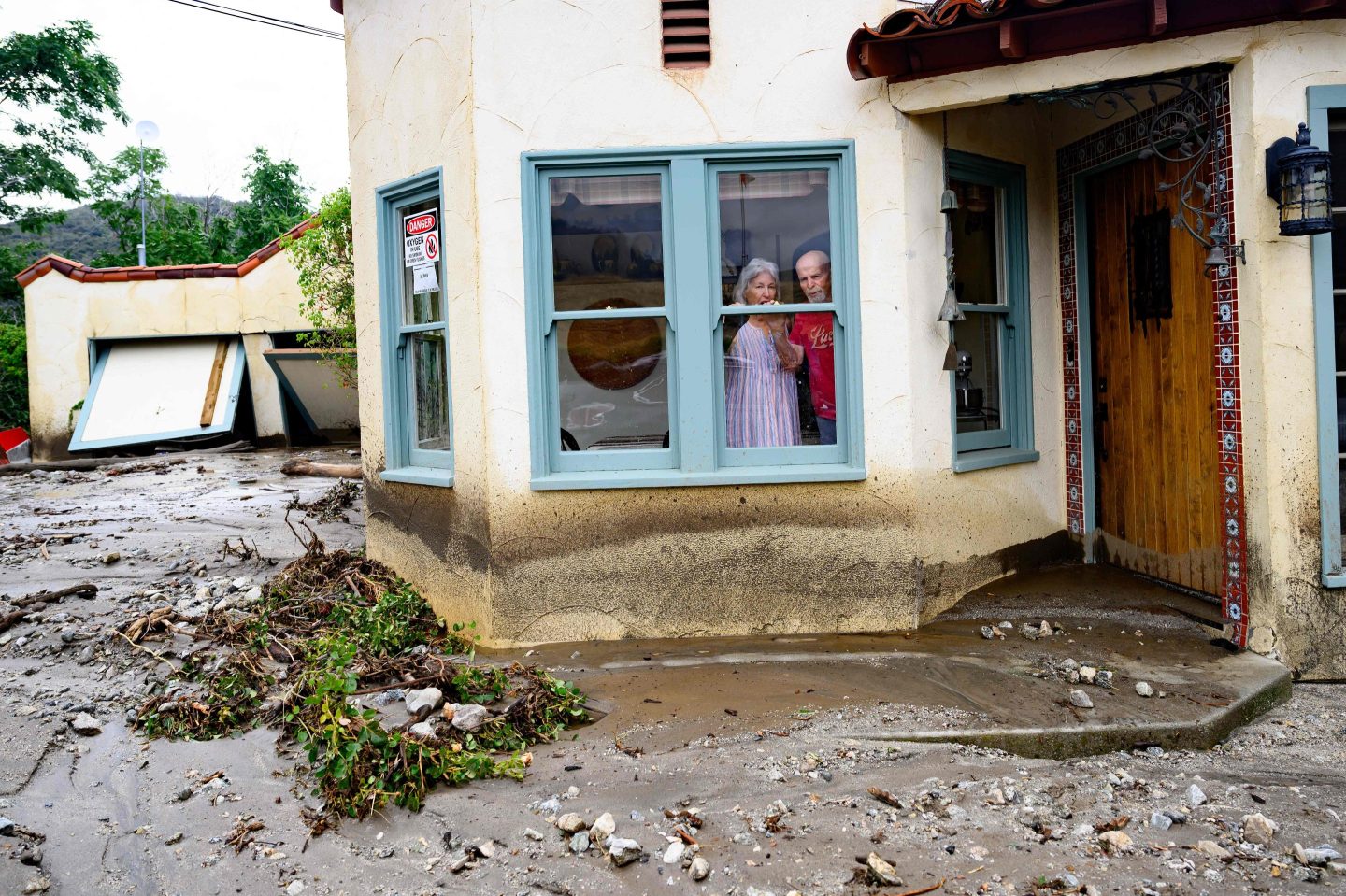
Residents trapped in their home peer out a window while waiting for help in Yucaipa, California in the aftermath of Storm Hilary in August 2023.
Residents trapped in their home peer out a window while waiting for help in Yucaipa, California in the aftermath of Storm Hilary in August 2023.JOSH EDELSON - AFP - Getty Images

The end of climate stability signals the end of the insurance market as we know it. Will it also signal the beginning of a broader understanding of physical risks by equity and debt holders, regulators, and citizens? The answer to that question will determine whether climate risk changes capital markets forever. Put succinctly: The first time a property floods, it’s an insurance problem, and maybe the second time, but after that, it’s an equity and debt problem.

It’s important to understand that insurance isn’t protection against hazards like flooding, wind, fire, or hail. It’s a financial contract to reimburse property owners for the cost of repairing structures only after events that are predictably rare. If hazards stop being rare, stop being predictable, and/or produce damages that aren’t easily reparable (or suggest that a building should not be rebuilt in that location), the existing market structures for both property insurance and property more broadly won’t work.

Climate stability underpins a myriad of assumptions. Farmers could plant the same crops decade after decade. Architects, builders, engineers, and city planners could follow building codes and engineering standards based on past ranges of temperature and rainfall without learning about local climates. Real estate became an asset class valued on spreadsheets and two-dimensional databases. The weather was so well-behaved that only a few specialists concerned themselves with it.

Past patterns and ranges of weather that repeated over time enabled a huge, reliable property insurance market that relieved asset owners and lenders of estimating and preparing for events with low probabilities. Not only could specialists assess which events had a 1% probability in a given year (“1-in-100 year events”), they could anticipate the damage those events would cause.

Unfortunately, historical weather data is no longer a good guide even to our present, let alone the future. The atmosphere is warmer than it has been since the dawn of civilization and is continuing to warm. Here is a graph of average atmospheric temperature going back 100 million years. The green band shows the narrow range that enabled civilization.
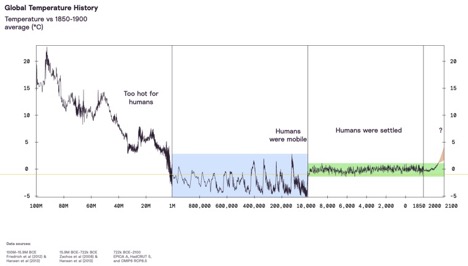
Courtesy of Probable Futures

Today’s insurance markets are full of quirks that derive from assumed stability:

  • Virtually all property insurance is annual. There is no term structure.
  • After a claim, the insured is expected to rebuild the same building in the same place.
  • Insurance is only available for damages to a structure, not to the value of the land.
  • Regulators often insist on the use of backward-looking data, prohibiting the use of climate models and climate-aware catastrophe models.
  • Regulators also regularly limit the amount by which insurance rates can rise year-to-year.

Climate change undermines all of these assumptions.

Investors largely (and logically) assume that insurance markets are pricing physical risks, so pension funds, investment managers, banks, and even real estate companies have historically not researched climate risk. For example, mortgage loans often require borrowers to have insurance, yet a 30-year loan doesn’t need to be matched with a 30-year insurance policy: A one-year policy is treated as a sufficient signal that insurance will be available at roughly the same cost over the duration of the loan.

A few years ago, sophisticated users of climate and weather models (notably, reinsurers and insurance-linked investment funds) began withdrawing from some markets. Their retreat left insurers unable to off-load tail risks just as the tails were getting bigger. In turn, insurers–most of whom are prohibited by regulators from rapidly increasing rates–have begun to retreat from markets, especially in Florida and California. In response, governments have stepped in to provide coverage.

Government insurance plans were set up decades ago in nearly every coastal state to bolster property markets during periods of market dislocation. Such interventions were intended to be temporary, as risks would–naturally–return to their historical ranges and market dislocations would end. Unfortunately, the insurance markets are unlikely to view the current dislocation as temporary, and will not “come back” to bail out governments that are implicitly assuring their residents that they are entitled to affordable insurance no matter what. Without explicitly saying so–and without citizens voting–governments are turning property insurance from a financial product priced by markets into an implicit right. This quiet transfer of risk should worry everyone.

Reassessing the assumptions on which we built society will be challenging, but climate science can help us figure out how to live well in a warmer world. The same models that accurately anticipated rising heat and humidity, increased drought and deluge, rising oceans, bigger tropical storms, elevated wildfire risk, and weakening jet streams warned sophisticated investors away from insuring the fattening tails. The same research and data can help decision-makers of all kinds integrate this information into processes as diverse as city planning, building codes, mortgage underwriting (including by FNME and FMCC), and REIT valuation. Free educational, mapping, and risk tools such as those offered by Probable Futures, Climate Central, and FirstStreet are good places to start. 

Almost 12,000 years ago, our hunting and gathering ancestors noticed that the climate had stopped changing. In response, they stopped wandering, settled in communities, and began developing the complex, specialized civilization we have today. If we keep assuming that risk is only the responsibility of insurance markets, the strains of increasing heat, drought, storms, etc. will be compounded by increasingly dysfunctional markets and ballooning government balance sheets. 

Thankfully, unlike our ancestors, we not only know why the climate is changing but can also anticipate where and how much. If we become climate literate, society can begin assessing current and future risks and figure out how to make sure financial markets reflect them.

More must-read commentary published by Fortune:

  • Booz Allen Hamilton CEO: America needs a whole-of-nation approach in its great power competition with China
  • ‘A head-in-the-sand approach’: The U.S. strategic drug stockpile is inadequate for a bird flu outbreak
  • The national debt is over $34 trillion. It’s time to tell the truth about the U.S. government’s finances
  • ‘Sometimes, the facts don’t matter’: Attacks on DEI are an anti-capitalist war on American prosperity

The opinions expressed in Fortune.com commentary pieces are solely the views of their authors and do not necessarily reflect the opinions and beliefs of Fortune.

Join us at the Fortune Workplace Innovation Summit May 19–20, 2026, in Atlanta. The next era of workplace innovation is here—and the old playbook is being rewritten. At this exclusive, high-energy event, the world’s most innovative leaders will convene to explore how AI, humanity, and strategy converge to redefine, again, the future of work. Register now.
About the Authors
By Spencer Glendon
See full bioRight Arrow Button Icon
By Barney Schauble
See full bioRight Arrow Button Icon

Latest in Commentary

Finance
Lorem ipsum dolor sit amet, consectetur adipiscing elit, sed do eiusmod tempor incididunt ut labore et dolore magna aliqua. Ut enim ad minim veniam
By Fortune Editors
October 20, 2025
Finance
Lorem ipsum dolor sit amet, consectetur adipiscing elit, sed do eiusmod tempor incididunt ut labore et dolore magna aliqua. Ut enim ad minim veniam
By Fortune Editors
October 20, 2025
Finance
Lorem ipsum dolor sit amet, consectetur adipiscing elit, sed do eiusmod tempor incididunt ut labore et dolore magna aliqua. Ut enim ad minim veniam
By Fortune Editors
October 20, 2025
Finance
Lorem ipsum dolor sit amet, consectetur adipiscing elit, sed do eiusmod tempor incididunt ut labore et dolore magna aliqua. Ut enim ad minim veniam
By Fortune Editors
October 20, 2025
Finance
Lorem ipsum dolor sit amet, consectetur adipiscing elit, sed do eiusmod tempor incididunt ut labore et dolore magna aliqua. Ut enim ad minim veniam
By Fortune Editors
October 20, 2025
Finance
Lorem ipsum dolor sit amet, consectetur adipiscing elit, sed do eiusmod tempor incididunt ut labore et dolore magna aliqua. Ut enim ad minim veniam
By Fortune Editors
October 20, 2025

Most Popular

Finance
Lorem ipsum dolor sit amet, consectetur adipiscing elit, sed do eiusmod tempor incididunt ut labore et dolore magna aliqua. Ut enim ad minim veniam
By Fortune Editors
October 20, 2025
Finance
Lorem ipsum dolor sit amet, consectetur adipiscing elit, sed do eiusmod tempor incididunt ut labore et dolore magna aliqua. Ut enim ad minim veniam
By Fortune Editors
October 20, 2025
Finance
Lorem ipsum dolor sit amet, consectetur adipiscing elit, sed do eiusmod tempor incididunt ut labore et dolore magna aliqua. Ut enim ad minim veniam
By Fortune Editors
October 20, 2025
Finance
Lorem ipsum dolor sit amet, consectetur adipiscing elit, sed do eiusmod tempor incididunt ut labore et dolore magna aliqua. Ut enim ad minim veniam
By Fortune Editors
October 20, 2025
Finance
Lorem ipsum dolor sit amet, consectetur adipiscing elit, sed do eiusmod tempor incididunt ut labore et dolore magna aliqua. Ut enim ad minim veniam
By Fortune Editors
October 20, 2025
Finance
Lorem ipsum dolor sit amet, consectetur adipiscing elit, sed do eiusmod tempor incididunt ut labore et dolore magna aliqua. Ut enim ad minim veniam
By Fortune Editors
October 20, 2025
Rankings
  • 100 Best Companies
  • Fortune 500
  • Global 500
  • Fortune 500 Europe
  • Most Powerful Women
  • Future 50
  • World’s Most Admired Companies
  • See All Rankings
Sections
  • Finance
  • Leadership
  • Success
  • Tech
  • Asia
  • Europe
  • Environment
  • Fortune Crypto
  • Health
  • Retail
  • Lifestyle
  • Politics
  • Newsletters
  • Magazine
  • Features
  • Commentary
  • Mpw
  • CEO Initiative
  • Conferences
  • Personal Finance
  • Education
Customer Support
  • Frequently Asked Questions
  • Customer Service Portal
  • Privacy Policy
  • Terms Of Use
  • Single Issues For Purchase
  • International Print
Commercial Services
  • Advertising
  • Fortune Brand Studio
  • Fortune Analytics
  • Fortune Conferences
  • Business Development
About Us
  • About Us
  • Editorial Calendar
  • Press Center
  • Work At Fortune
  • Diversity And Inclusion
  • Terms And Conditions
  • Site Map

© 2025 Fortune Media IP Limited. All Rights Reserved. Use of this site constitutes acceptance of our Terms of Use and Privacy Policy | CA Notice at Collection and Privacy Notice | Do Not Sell/Share My Personal Information
FORTUNE is a trademark of Fortune Media IP Limited, registered in the U.S. and other countries. FORTUNE may receive compensation for some links to products and services on this website. Offers may be subject to change without notice.


Latest in Commentary

unemployed
CommentaryLayoffs
The AI efficiency illusion: why cutting 1.1 million jobs will stifle, not scale, your strategy
By Katica RoyDecember 18, 2025
7 hours ago
Muddu
CommentaryIT
IT service is reaching its breaking point. At Salesforce, we see 3 tipping points
By Muddu SudhakarDecember 18, 2025
12 hours ago
small business
CommentaryLayoffs
Our data shows that companies of 500 and fewer workers mostly avoided the AI layoffs. They’re making AI work for them
By Gabby BurlacuDecember 18, 2025
12 hours ago
Sophia Romee is the General Manager of the GenAI Studio at the College Board
CommentaryEducation
Gen Z is on the fence about AI in the classroom. That’s a good thing
By Sophia RomeeDecember 18, 2025
12 hours ago
Tim Parker
CommentaryAutos
How Bentley’s brand is creating business advantage in disruptive times 
By Tim ParkerDecember 18, 2025
15 hours ago
layoffs
CommentaryLayoffs
The AI layoff wave is just beginning — and it’s by design
By Kevin OakesDecember 17, 2025
1 day ago

Most Popular

placeholder alt text
Economy
The $38 trillion national debt is to blame for over $1 trillion in annual interest payments from here on out, CRFB says
By Nick LichtenbergDecember 17, 2025
1 day ago
placeholder alt text
AI
'Robots are going to be amongst us': Qualcomm exec says buckle up for the next 5 years. Your car is going to be the first shoe to drop
By Nino PaoliDecember 17, 2025
2 days ago
placeholder alt text
C-Suite
Red Lobster CEO Damola Adamolekun says the key to being a better leader is being a better person: ‘Leadership is self-improvement’
By Sydney LakeDecember 17, 2025
1 day ago
placeholder alt text
Success
As millions of Gen Zers face unemployment, McDonald's CEO dishes out some tough love career advice for navigating the market: ‘You've got to make things happen for yourself’
By Preston ForeDecember 16, 2025
2 days ago
placeholder alt text
AI
Amazon CEO Andy Jassy announces departure of AI exec Rohit Prasad in leadership shake-up
By Sharon GoldmanDecember 17, 2025
1 day ago
placeholder alt text
Success
Britain’s defense chief calls on Gen Z grads leaving university to skip corporate jobs and join the military as war with Russia becomes a growing risk
By Emma BurleighDecember 17, 2025
1 day ago