At the end of February 2022—a few days after cofounders Luke Allen and Steven Simoni sold their 90-person restaurant-tech startup to DoorDash—Russia invaded Ukraine.
Allen, who, like Simoni, had served in the Navy, immediately pivoted and started designing virtual-reality headset software that would help train Ukrainian soldiers in the use of Javelin anti-tank weapons provided by the U.S. military. Soon his focus turned to the drones deployed in the conflict.
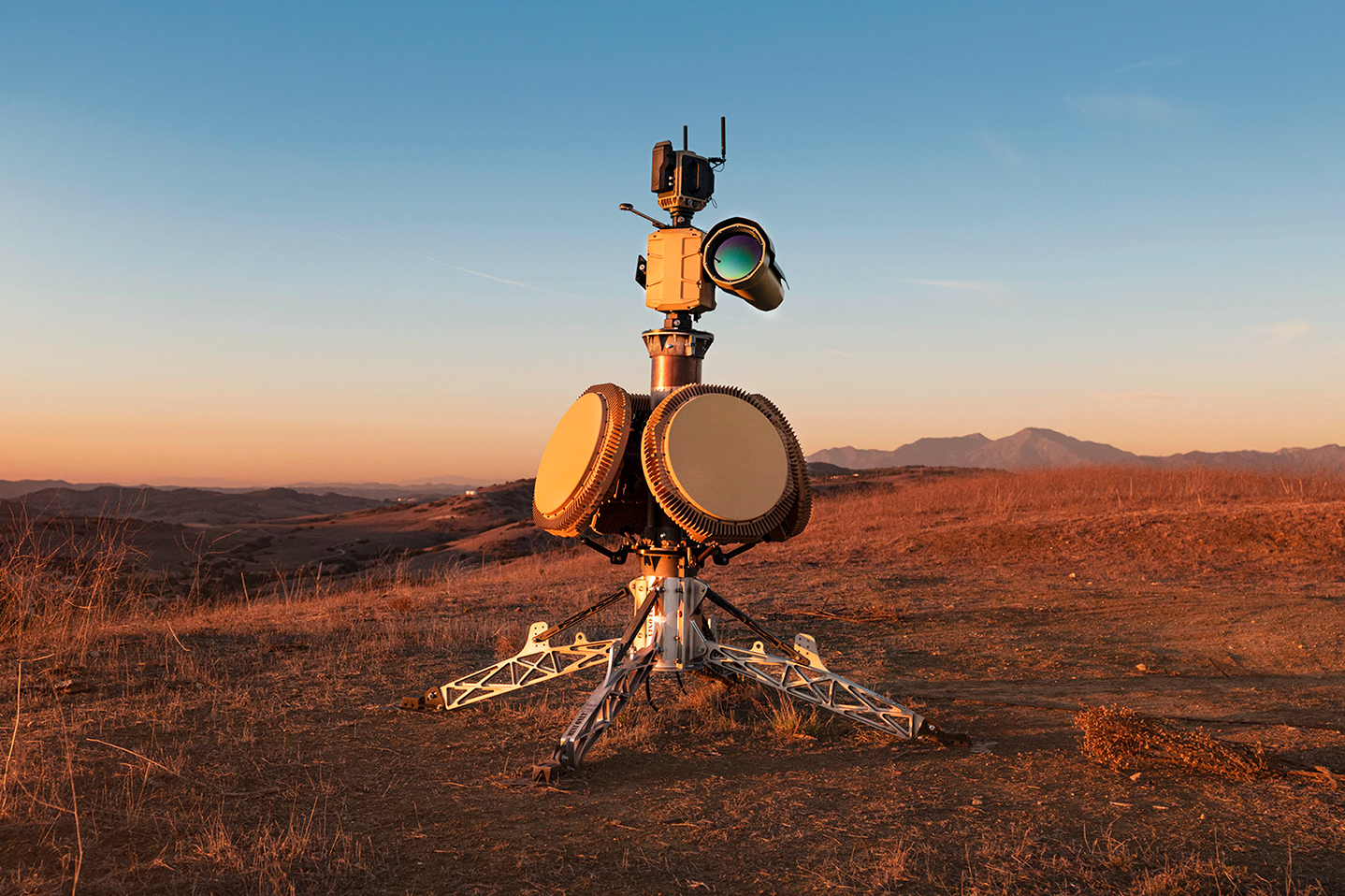
Allen persuaded Simoni to leave DoorDash earlier this year and work with him at his new company, Allen Control Systems, to build a gun turret that uses computer vision to blast drones out of the sky. The goal was to create something affordable that could stop the HESA Shahed-136 drones Russia was sending to attack Ukraine’s infrastructure. “Right now, cheap drones like that are a weapon without a countermeasure,” Allen says.
The former restaurant-tech entrepreneurs are among a new breed of founders bringing the startup playbook to the staid defense industry. With wars raging in Europe and the Middle East, the need—and opportunity—for innovation are on display every day as drones, AI, and other commercially available technologies reshape reality on the battlefield.
Hostile territory
Silicon Valley and the military have a complicated history. While Cold War military contracts helped create the U.S. tech industry, many of today’s techies consider the defense sector anathema—workers at Google, Microsoft, and Amazon have staged multiple protests in recent years to oppose their employers’ business ties with the Pentagon and the Israeli military.
As a result, the defense sector has primarily been embraced in recent years by a small cohort of politically outspoken tech founders and investors, including Palmer Luckey, creator of the Oculus virtual-reality headset, and venture capitalist Peter Thiel. But there are signs that the military taboo in Silicon Valley is starting to wear off among startups and investors.
When Brian MacCarthy, who runs defense consultancy Booz Allen’s corporate venture fund, first moved to Silicon Valley in 2015, there were a couple of companies that didn’t want to work with the Department of Defense or weapons platforms. “The sentiment has absolutely changed,” he says.
In some cases, companies with “dual-use” products—meaning they make commercial technologies that could be adapted for defense purposes—are opening up to the martial market.
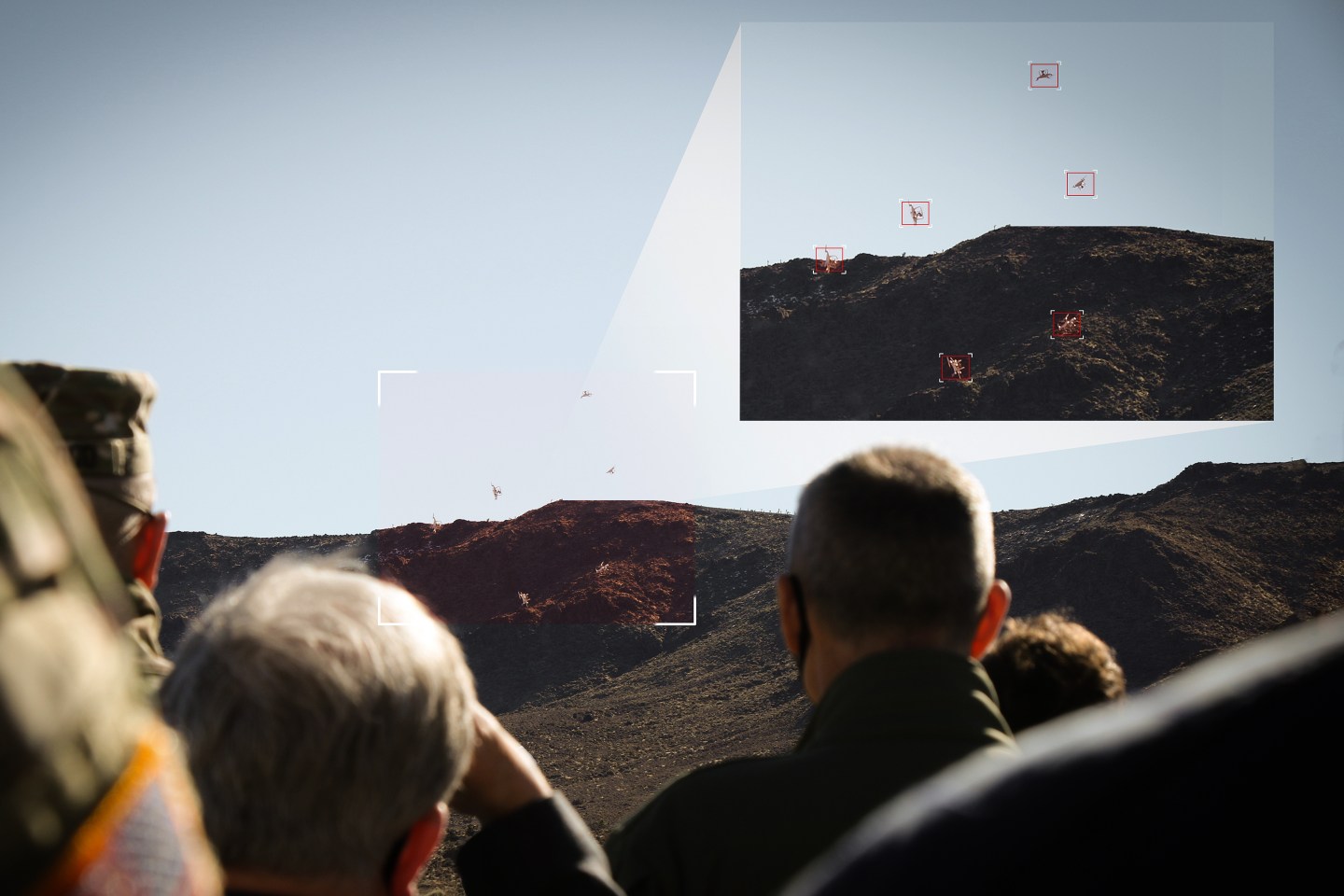
Dedrone, for example, which was founded 10 years ago and recently acquired by Axon, makes software and hardware to detect and track unauthorized drone activity. The company’s technology was initially used to detect drones at airports, stadiums, and correctional facilities. But a few years ago it began focusing on its work with the Department of Defense and U.S. allies, signing 16 defense contracts worldwide in 2023 alone. “That was not the original idea,” says Venky Ganesan, an investor at Menlo Ventures who backs Dedrone.
More than $2 billion in venture capital funding was deployed into startups building products particularly in the global drone, aerospace, and satellite sectors in 2022, according to Crunchbase data. Last year, while funding levels tumbled across most sectors, these startups still managed to raise more than $1 billion.
Many of them are specifically working on technologies to counter drone attacks, which have become more widespread thanks to inexpensive China- and Iran-manufactured drones that are easily armed with bombs. Anduril, the defense company cofounded by Luckey in 2017, was one of the first startups to home in on the drone threat. The company’s Anvil interceptor drones can ram into hostile drones in the sky.
Epirus, an L.A.-area startup valued at $1.35 billion, is working with the U.S. Army to test its high-power microwave counter-drone system, called Leonidas, to fire rapidly against drones (or swarms of them). The company was cofounded by venture capitalist Joe Lonsdale through a program within his firm, 8VC.
Defensive versus offensive tech
Some VC funds steer clear of investing in tech with military business, as a result of agreements with some of their own investors—who may restrict the backing of companies that make weapons or related software—or sometimes on principle. Simoni, the Allen Control Systems cofounder, says defense-tech investments appear to have become less controversial with VCs. The change is showing up in the agreements that VC firms strike with their limited partners, according to Simoni. “You’ve seen a lot of those charters get amended—or I have, because I’ve been out there pitching and talking with the venture community,” he says, noting that he has also spoken with venture capitalists who are interpreting limited partnership agreements, or LPAs, with their investors more loosely.
Still, there are lines. Building a weapon to shoot a drone out of the sky is different from building a weapon that will kill human beings. What is explicitly permitted or disallowed within a VC firm’s portfolio will vary, as will attitudes among Silicon Valley techies about how far to take the relationship with the military industry.
Some investors who have backed defense-tech companies talk about investing in this sector as almost an American responsibility. “The reality is we live in a very fraught geopolitical world,” Menlo Ventures’ Ganesan says, pointing to China, Russia, and North Korea. “We need to collaborate and cooperate with our government. And you can’t be neutral on this.”
This article appears in the June/July 2024 issue of Fortune.