There are those who believe artificial intelligence is here to automate the economy, displace jobs, and wreak social havoc. I understand those fears, but in the aviation industry, AI is having the exact opposite effect. Hear me out.
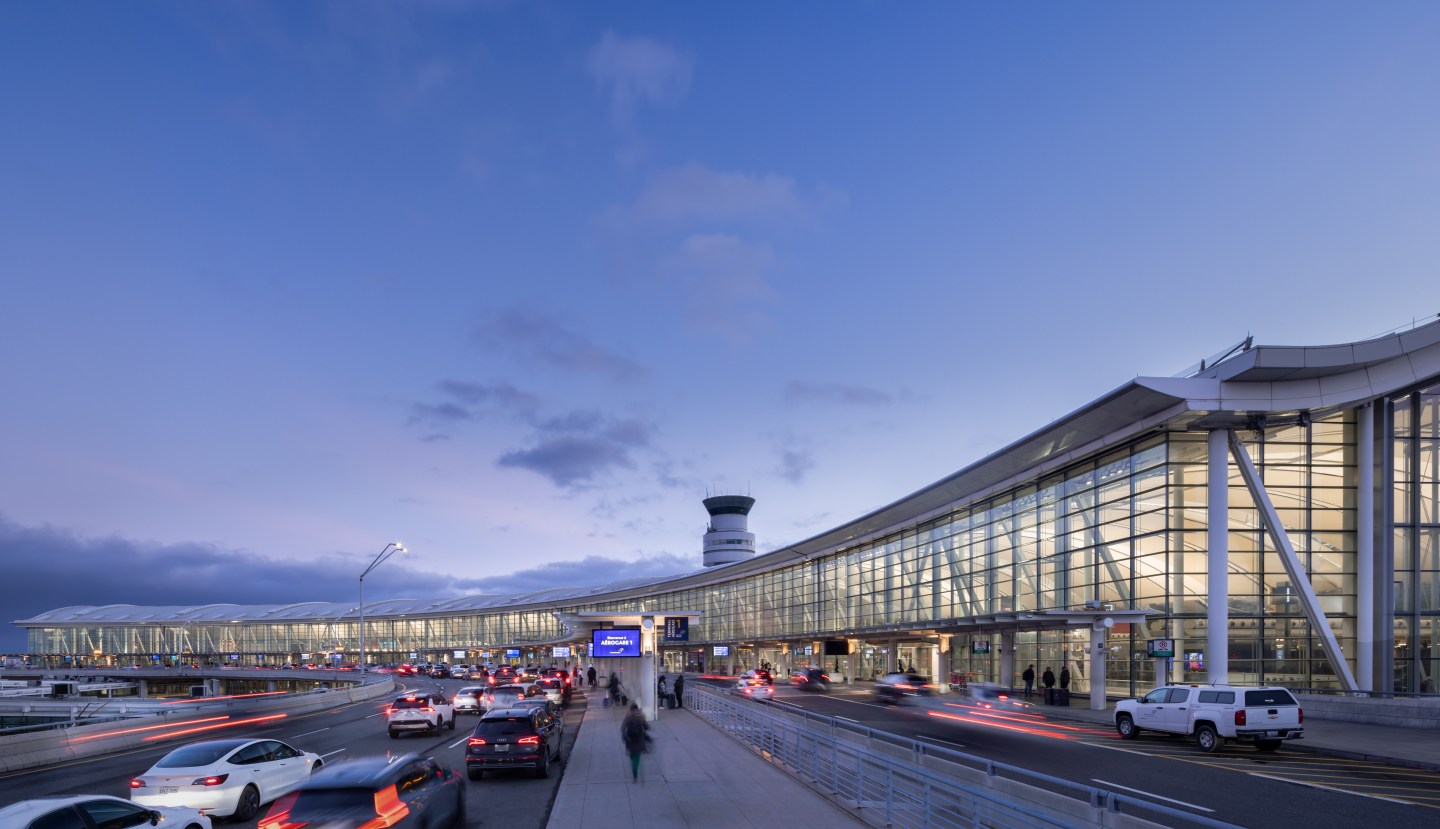
Air travel volume is bouncing back and surpassing pre-pandemic levels. Global air passenger traffic is expected to double between 2019 and 2040, according to the International Air Transport Association. My airport, Toronto Pearson, is forecasting a jump from 45 million passengers last year to 65 million by the mid-2030s. We’re seeing fewer short-haul business flights than before, but more passengers heading off to conferences, leisure, and sun destinations.
Increasing demand means new and more frequent peaks for airport workforces. Staffing levels are returning to—and in some cases surpassing—pre-pandemic levels. But physical expansions and enhancements have long lead times: Infrastructure often takes years to plan, build, and operationalize. Toronto Pearson just announced a plan to invest billions of dollars into new terminal infrastructure—both physical and digital—over the next 10 years, joining big North American hubs such as JFK, LaGuardia, and Chicago O’Hare in renovating for the future.
For these airports and others who are gearing up to meet new demand, AI will enable workers to operate more efficiently with less burnout. More efficient movement of aircraft, people, and baggage will help everyone operate more resiliently and sustainably.
Ground operations often start not just with airports and passengers, but with the evolving needs of airlines, which are always trying to drive down costs and optimize their passenger mix. The trend toward larger aircraft, a strategy known as “upgauging,” has advantages for airlines, but from an airport perspective, it can add to the pressure on operational staff to manage higher volumes during peak times.
AI-enhanced airport
So, how is AI helping?
Let’s first consider baggage handling, where AI-driven scheduling software is revolutionizing staff allocation. Airline baggage handlers are typically dispatched to flights as they arrive. But plane arrivals are always shifting due to hundreds of variables; it’s challenging to schedule and prioritize the handlers across dozens of aircraft movements per hour. AI models can be trained on operational data, identify pragmatic patterns, and optimize the work in a way humans cannot, getting teams and bags where they need to be, safely, with minimal passenger wait times and efficiency.
AI also helps the airport’s baggage-handling system perform at its best to avoid delays and congestion. Toronto Pearson uses it for predictive maintenance, which helps us anticipate breakdowns before they happen and schedule work during off hours to minimize disruption. Last year, our AI-enhanced system routinely provided better than 99.5% uptime availability.
How about on-time performance for flights? We are one of a growing number of airports using AI-driven software to optimize gate turnaround time. Cameras and various sensors watch aircraft turn around at each gate, flagging delays, updating departure times, and cutting the amount of idle time and emissions the next plane might waste sitting at an apron or taxiway.
Of course, AI, with its real-time data and predictive analytics, does not automate work that ground staff need to do—it just makes them better at it. And because airport operations are so tightly interconnected, one significant improvement in one part of the system causes a positive ripple effect, creating many downstream micro-improvements throughout.
Real-time digital twin models are another example. They provide precise insights into fuel usage and distribution that feed into AI-enhanced route planning and traffic management systems. This results in shortened taxiway times, improved aircraft fuel efficiency, and reduced emissions. Global airlines are also finding endless operational use cases to leverage the power of AI optimization.
Lufthansa has been using AI to forecast wind patterns, reportedly achieving up to 40% improvements in accuracy. This helps to reduce flight delays and cancellations while refining flight routes and schedules. By integrating a wider range of data, AI equips airlines to discover the most fuel- and time-efficient route planning for their fleets.
More efficient air travel
AI has also been a game-changer in cybersecurity, helping to identify anomalies, threats, and patterns and allowing cyber centers to proactively lock down vulnerabilities. Technologies such as single-use digital tokens and facial recognition are used to verify passengers’ identities, aiming to make airport journeys faster and more secure, with less physical contact.
In aviation and airport security, advanced technologies are reshaping operational efficiency and passenger screening. Generative AI processes vast amounts of operational data to provide tailored improvement recommendations based on daily variations, seasonal demands, and specific airline fleet needs.
Meanwhile, our partnership with Liberty Defense’s Hexwave AI screening technology has demonstrated the future of security scanning. Hexwave accurately detects metallic objects without inconveniencing passengers to remove items from their pockets. These innovations enhance airport operations and security protocols while offering a more seamless and efficient travel experience for passengers.
It’s also crucial to balance the pace of innovation with the need for robust protection, ensuring that AI and other emerging technologies are managed with care and accountability. Headlines about wrongful arrests based on facial recognition—or chatbots not properly protecting customer data via encryption—highlight the need for holistic AI governance within aviation. This governance must be crafted in partnership with airports, airlines, businesses, and government officials, as these emerging technologies rapidly shape expectations in our daily lives.
From my vantage point, AI isn’t killing jobs and creating social havoc in airports and aviation. In fact, quite the contrary. When developed and deployed responsibly, AI is giving our operational teams superpowers that drive system-wide efficiencies, improve customer experiences scaled to millions of travelers, and accelerate more secure and greener air travel.
Brian Tossan is the Chief Technology Officer of Greater Toronto Airport Authority.
More must-read commentary:
- Fannie Mae CEO: Beyoncé is right. Climate change has already hit the housing market—and homeowners aren’t prepared
- I couldn’t make a living wage when I was released from prison. Now I run a successful business
- Americans need more exercise—and should be able to tap FSA and HSA funds to pay for gyms, studios, and sports leagues
- No, combustion engines won’t be supplanted by electric vehicles—and they’re critical for sustainable transport
The opinions expressed in Fortune.com commentary pieces are solely the views of their authors and do not necessarily reflect the opinions and beliefs of Fortune.











