• Home
  • Latest
  • Fortune 500
  • Finance
  • Tech
  • Leadership
  • Lifestyle
  • Rankings
  • Multimedia
Financejerome powell

Jerome Powell pumped the brakes on rate cuts, but Goldman still eyes a soft landing because of the strong job market

Paolo Confino
By
Paolo Confino
Paolo Confino
Reporter
Down Arrow Button Icon
Paolo Confino
By
Paolo Confino
Paolo Confino
Reporter
Down Arrow Button Icon
April 17, 2024, 4:45 PM ET
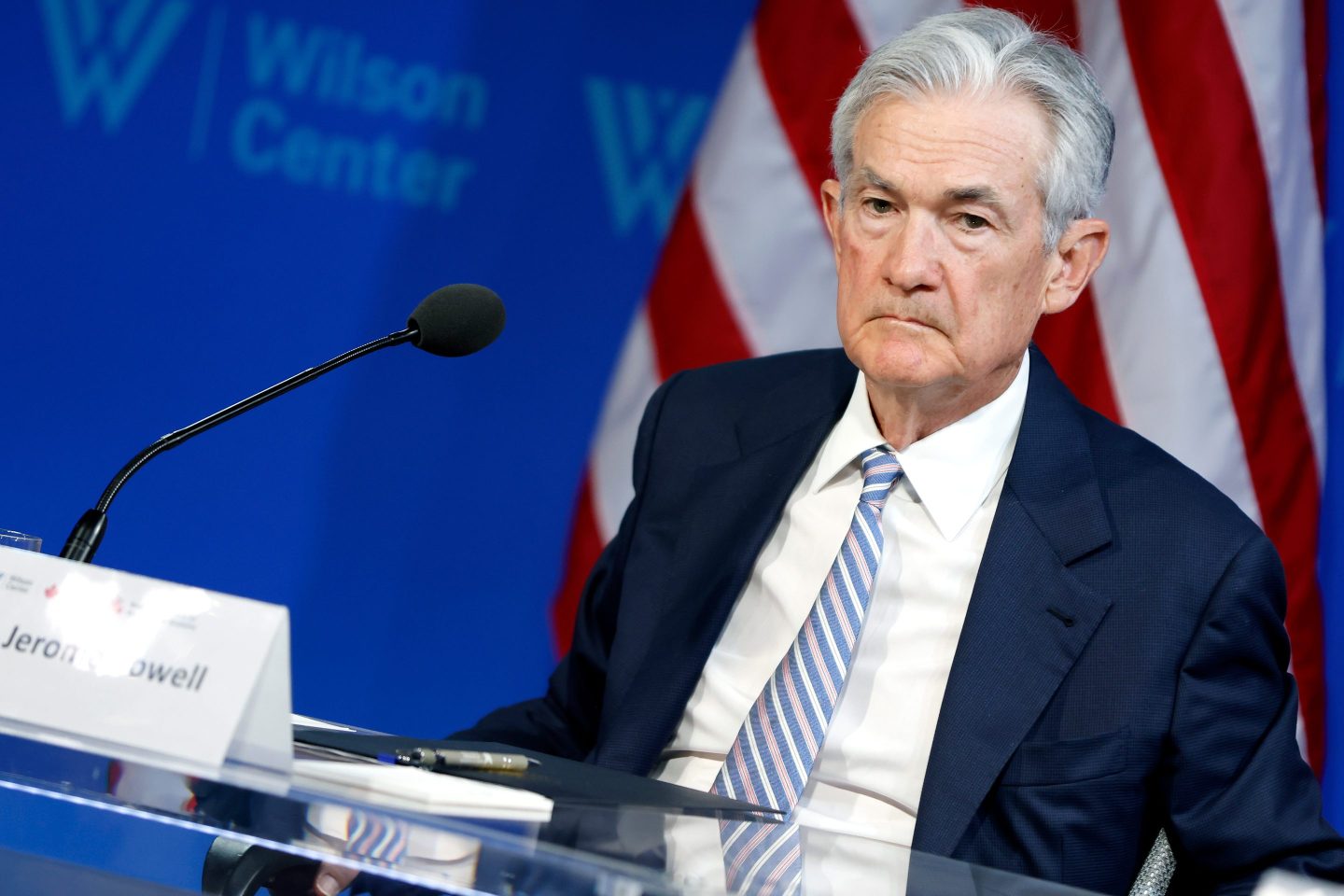
Federal Reserve chair Jerome Powell
Federal Reserve Chair Jerome Powell urged patience regarding rate cuts, which many investors had been planning for this year. Samuel Corum—Bloomberg/Getty Images

Jerome Powell this week made official what most of Wall Street and the investment community already knew: that inflation was still too high for rate cuts. 

Recommended Video

On Tuesday, during a public appearance with Bank of Canada governor Tiff Macklem in Washington, D.C., Powell said it was too early for the Federal Reserve to consider rate cuts because inflation hasn’t been low enough, for long enough.  

“Right now, given the strength of the labor market and the progress on inflation, it’s appropriate to allow restrictive policy further time to work and let the data and evolving outlook guide us,” Powell said. 

Powell’s remarks came after a third straight higher-than-expected inflation report that scuttled many Wall Street predictions of upcoming rate cuts. The economy remains resilient, fighting through the high interest rate environment, but with inflation refusing to budge, economists and analysts started to wonder if the soft landing would happen. Maybe unemployment would have to go up for inflation to come down to the Fed’s 2% target? 

Not for Goldman Sachs, though. Despite the pessimism caused by March’s inflation figures, the bank remains steadfast in predicting a soft landing. Inflation in March was 3.5%, but Goldman believes that high rate resulted from “an unusually large number of special factors,” chief economist Jan Hatzius wrote in an analyst note Tuesday. 

Specifically, Hatzius was referring to the January effect, a phenomenon where stock prices tend to rise in January more than in any other month, as well as a blip in the home rental market that made it seem as though rents were poised to shoot up. Both of these have since proved to be temporary. “As the special factors unwind, we expect sequential inflation to slow anew,” Hatzius wrote. 

More important, though, Goldman doesn’t see signs of imminent layoffs, which would certainly be a red flag that the soft landing was turning into a crash landing. To support his theory, Hatzius points to the number of new jobs the economy added in March and the fact that multiple data sources don’t show rampant layoffs. In short, Goldman is sticking with its soft landing call because it believes stubborn inflation was a several-months-long anomaly and the labor market is showing no signs of precarity. 

The latest employment data smashed expectations when it showed the U.S. added 303,000 jobs last month, while economists expected only 200,000. At the same time, Hatzius points out that widespread job cuts “remain muted,” citing data from the Labor Department, the research firm Challenger, Gray & Christmas, and WARN notices, which are legal documents employers must file in the lead-up to a mass layoff. 

Hatzius has long supported the view that the U.S. is heading toward a soft landing. In March, he told CNN the U.S. was “nowhere near a recession,” because prices had come down without any meaningful slowdown in spending. 

Despite recent bumps, inflation continues heading in the right direction, mostly thanks to continued consumer spending, precisely because the labor market is stabilizing. In 2020, employment went through the shocks of the pandemic, and countless workers in hospitality and travel found themselves out of a job. Then the market overcorrected with employers barely able to find enough employees, forcing them to offer eye-popping salaries to recruit talent. 

Now, though, the job market is relatively stable, according to Hatzius’s analysis. Unemployment rate has been below 4% for 26 months, the longest streak since the 1960s. Powell, too, seemed confident in the labor market, saying it had “solid growth and continued strength” on Tuesday. 

In contrast with the post-pandemic period, more workers today are staying put. Economists could debate whether that’s a sign that fear is creeping in or that things are finally back to normal. Quit rates are down, but employers are filling more jobs than they have in years. On balance, though, a less frothy job market means workers won’t be able to find a new job as easily as in the past. “New entrants into the workforce may have to search longer before they find a job,” Hatzius wrote. 

Ultimately, Goldman does expect inflation to continue to fall, estimating that it will stall out at around 2.5% by the end of the year. However, the economy won’t hit the 2% number the Fed is eyeing until 2025. Across Wall Street, analysts still forecast lingering inflation. JPMorgan, for example, expects it to hover around 3% all year, according to a February report. For the most part, even the most concerned economists who adjusted their forecasts upward after the March inflation data still see it coming down overall. Meaning inflation will drop, just not as fast as hoped.


Join us at the Fortune Workplace Innovation Summit May 19–20, 2026, in Atlanta. The next era of workplace innovation is here—and the old playbook is being rewritten. At this exclusive, high-energy event, the world’s most innovative leaders will convene to explore how AI, humanity, and strategy converge to redefine, again, the future of work. Register now.
About the Author
Paolo Confino
By Paolo ConfinoReporter

Paolo Confino is a former reporter on Fortune’s global news desk where he covers each day’s most important stories.

See full bioRight Arrow Button Icon

Latest in Finance

broker
BankingData centers
AI data center boom sparks fears of glut amid lending frenzy
By Neil Callanan, Paula Seligson and BloombergDecember 12, 2025
20 minutes ago
Donald Trump
AIElections
AI is powering Trump’s economy, but American voters are getting worried
By Mark Niquette, Nancy Cook and BloombergDecember 12, 2025
24 minutes ago
Steve Jobs, Steve Wozniak, and Ronald Wayne's signatures on the bottom of Apple's founding contract.
SuccessWealth
Apple cofounder Ronald Wayne sold his 10% stake for $800 in 1976—today it’d be worth up to $400 billion
By Preston ForeDecember 12, 2025
1 hour ago
A pile of gold bars.
Personal Financegold prices
Current price of gold as of December 12, 2025
By Danny BakstDecember 12, 2025
2 hours ago
NewslettersCFO Daily
SEC chair moves to boost IPO momentum: ‘Make it cool to be a public company’
By Sheryl EstradaDecember 12, 2025
2 hours ago
Amtrak
PoliticsAmtrak
Amtrak is slashing executive bonuses to give out $900 apiece to over 18,000 rank-and-file workers
By Safiyah Riddle and The Associated PressDecember 12, 2025
2 hours ago

Most Popular

placeholder alt text
Success
At 18, doctors gave him three hours to live. He played video games from his hospital bed—and now, he’s built a $10 million-a-year video game studio
By Preston ForeDecember 10, 2025
2 days ago
placeholder alt text
Success
Palantir cofounder calls elite college undergrads a ‘loser generation’ as data reveals rise in students seeking support for disabilities, like ADHD
By Preston ForeDecember 11, 2025
24 hours ago
placeholder alt text
Investing
Baby boomers have now 'gobbled up' nearly one-third of America's wealth share, and they're leaving Gen Z and millennials behind
By Sasha RogelbergDecember 8, 2025
4 days ago
placeholder alt text
Economy
‘We have not seen this rosy picture’: ADP’s chief economist warns the real economy is pretty different from Wall Street’s bullish outlook
By Eleanor PringleDecember 11, 2025
1 day ago
placeholder alt text
Uncategorized
Transforming customer support through intelligent AI operations
By Lauren ChomiukNovember 26, 2025
16 days ago
placeholder alt text
Economy
Tariffs are taxes and they were used to finance the federal government until the 1913 income tax. A top economist breaks it down
By Kent JonesDecember 12, 2025
5 hours ago
Rankings
  • 100 Best Companies
  • Fortune 500
  • Global 500
  • Fortune 500 Europe
  • Most Powerful Women
  • Future 50
  • World’s Most Admired Companies
  • See All Rankings
Sections
  • Finance
  • Leadership
  • Success
  • Tech
  • Asia
  • Europe
  • Environment
  • Fortune Crypto
  • Health
  • Retail
  • Lifestyle
  • Politics
  • Newsletters
  • Magazine
  • Features
  • Commentary
  • Mpw
  • CEO Initiative
  • Conferences
  • Personal Finance
  • Education
Customer Support
  • Frequently Asked Questions
  • Customer Service Portal
  • Privacy Policy
  • Terms Of Use
  • Single Issues For Purchase
  • International Print
Commercial Services
  • Advertising
  • Fortune Brand Studio
  • Fortune Analytics
  • Fortune Conferences
  • Business Development
About Us
  • About Us
  • Editorial Calendar
  • Press Center
  • Work At Fortune
  • Diversity And Inclusion
  • Terms And Conditions
  • Site Map

© 2025 Fortune Media IP Limited. All Rights Reserved. Use of this site constitutes acceptance of our Terms of Use and Privacy Policy | CA Notice at Collection and Privacy Notice | Do Not Sell/Share My Personal Information
FORTUNE is a trademark of Fortune Media IP Limited, registered in the U.S. and other countries. FORTUNE may receive compensation for some links to products and services on this website. Offers may be subject to change without notice.