• Home
  • News
  • Fortune 500
  • Tech
  • Finance
  • Leadership
  • Lifestyle
  • Rankings
  • Multimedia
EnvironmentAI

The U.S. could need the equivalent of 40 new nuclear plants in the next 5 years—blame power hogs AI and cannabis

Irina Ivanova
By
Irina Ivanova
Irina Ivanova
Deputy US News Editor
Down Arrow Button Icon
Irina Ivanova
By
Irina Ivanova
Irina Ivanova
Deputy US News Editor
Down Arrow Button Icon
March 22, 2024, 5:14 PM ET
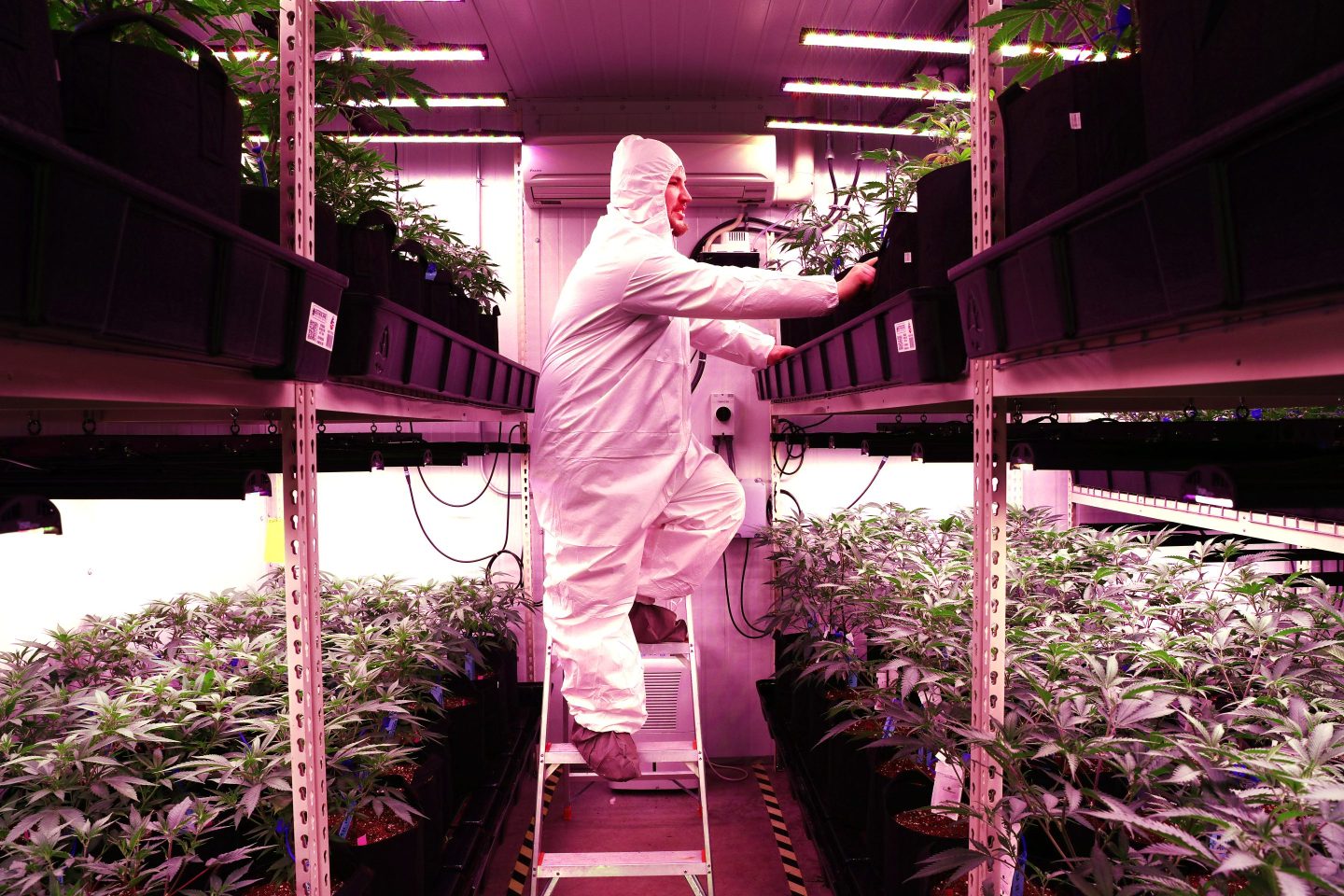
Man in white overalls in cannabis greenhouse
Massachusetts' first cannabis 'microbusiness' opened in 2020.Pat Greenhouse—The Boston Globe/Getty Images

After being flat for nearly two decades, demand for power in the U.S. is soaring. A recent report by Grid Strategies, a power sector consulting company, estimated that yearly electricity demand is set to grow by 0.9%, while the capacity added to the grid is planned to increase by just 0.5%.

Recommended Video

What’s the cause of this crunch? First, a boom in domestic industry, and growing need for AI-driven computing power which is projected to increase the amount of data centers across the country. 

But there are a few lesser-known factors that could push America’s grid over the edge. The AI boom, the ongoing popularity of crypto mining, and legalized marijuana are all adding potential strain to the grid at a time when extreme weather is making it more vulnerable.

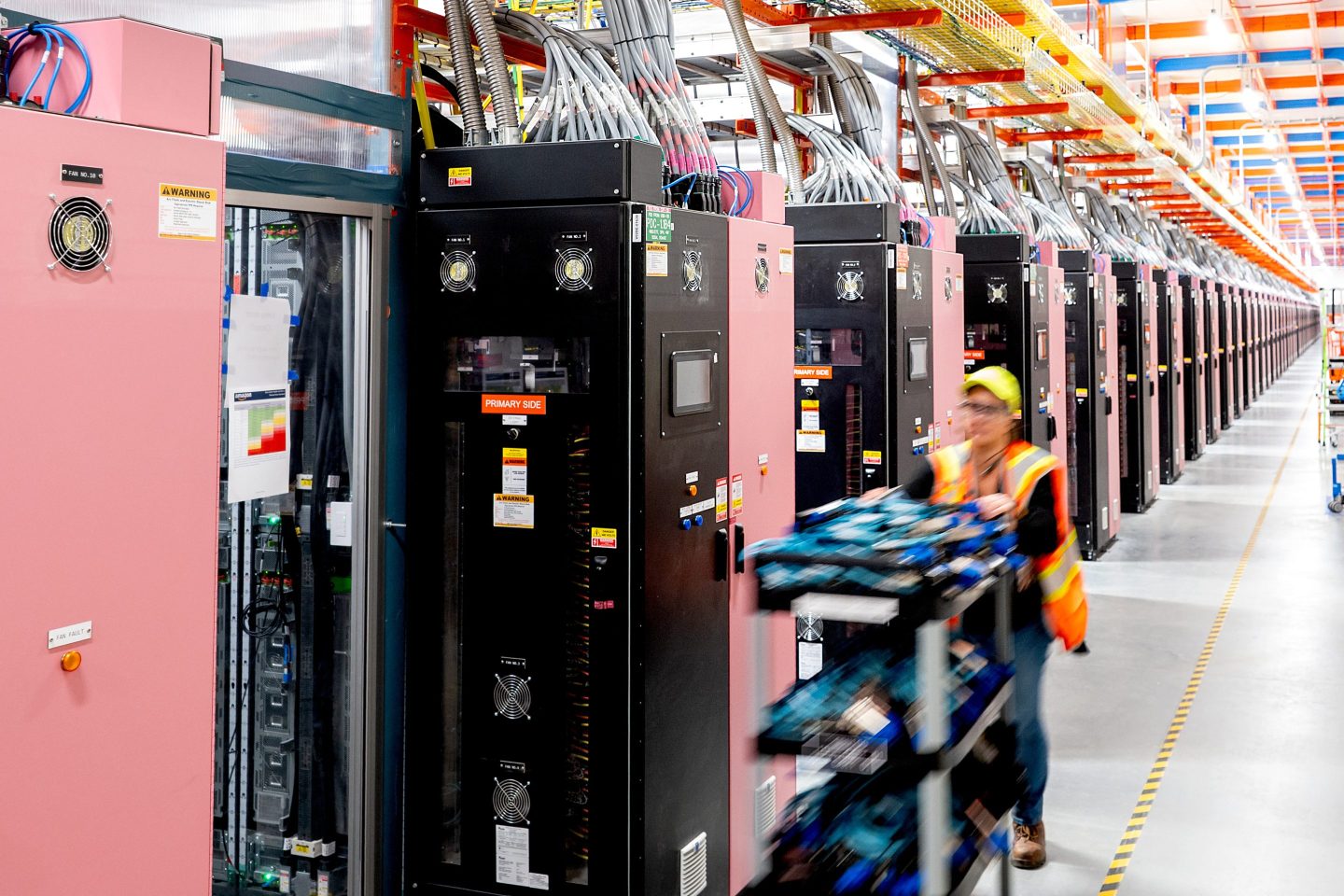
Data centers—essential for cloud computing—today make up about 2.5% of the nation’s energy consumption. By the end of the decade, their power use is expected to triple, according to Boston Consulting Group, boosted by the growth in AI applications as well as cryptocurrency mines. The International Energy Agency had a similar take, projecting that data centers’ power demands would double between 2023 and 2026. In the U.S., the growth in data centers is responsible for one-third of the added demand in that time period. PJM, an interconnection utility that covers parts of 13 states, from Ohio to Virgiania, has “observed unprecedented data center load growth,” according to Grid Strategies. Virginia contains the U.S.’ largest concentration of data centers, with Loudoun County nicknamed “Data Center Alley.,” The state’s utility, Dominion Energy, has delayed or turned away centers saying it can’t meet power demand, according to industry publication Data Center Dynamics.

AI and crypto are both energy-intensive activities. Training an AI model on terabytes of data as well as feeding it prompts are data-dense processes that use much more power than, say, an equivalent Google search. One study in Joule projected that, globally, AI applications could use as much power as the entire nation of the Netherlands by 2027.

Crypto is a power hog for a similar reason. Miners compete to be the first to solve complex problems that are rewarded with crypto; because the chances of solving it first are infinitesimally small, miners have an advantage by using more and faster computers, which translates into intense energy demands. 

“It really is just a matter of luck,” Samantha Robertson, a member of the strategy team at the Bitcoin company Bitdeer, told the Texas Tribune. “In order to increase your chances, it makes sense to have these computers running at scale.”

Nationwide, crypto mining claims as much as 2.3% of America’s energy use, according to the Energy Information Administration. In Texas, a popular destination for crypto mining operations, miners have requested the equivalent of 41 new nuclear reactors’ worth of power, according to the Guardian. Texas’ grid “has experienced continued rapid load growth” since last summer, according to Grid Strategies. 

Then there’s another burgeoning, power-hungry industry: Marijuana. The rapid decriminalization and legalization of the drug, not to mention younger Americans’ preference for bud over booze, has created tremendous growth in the weed market. Half of U.S. states now have some form of legal cannabis, either recreational or medical, and all that weed needs to be grown somewhere. 

And growing the plant, it turns out, is an electricity-intensive undertaking. Cannabis plants demand lighting as intense as you’d see in a hospital operating room, fans for air circulation, and frequent temperature changes. More than a decade ago, the National Conference of State Legislatures estimated that the marijuana industry used about 1% of the nation’s electricity. Today that number is surely larger based on its explosive popularity. In Massachusetts, marijuana today accounts for 10% of the state’s indoor energy use; in Colorado, one of the first states to legalize weed in 2014, it now emits as much carbon as mining, according to a letter from two members of Congress to the Energy Department, who wrote with concerns about the “industry’s rapidly growing demands on our country’s energy systems.” 
All this means that, after decades of America’s electricity demands being flat—thanks to economic shifts and more efficient power generation—it’s set to boom again. And the nation’s regulators may not be prepared. The nonprofit North American Energy Reliability Council recently said that energy demand was “rising faster than at any time in the past five or more years,” and estimated that 13 of the continent’s 20 power interconnection areas are at risk of a power shortfall this summer.

Fortune Brainstorm AI returns to San Francisco Dec. 8–9 to convene the smartest people we know—technologists, entrepreneurs, Fortune Global 500 executives, investors, policymakers, and the brilliant minds in between—to explore and interrogate the most pressing questions about AI at another pivotal moment. Register here.
About the Author
Irina Ivanova
By Irina IvanovaDeputy US News Editor

Irina Ivanova is the former deputy U.S. news editor at Fortune.


See full bioRight Arrow Button Icon

Latest in Environment

Four years ago, BKV started buying up the two Temple power plants in Texas—located between Austin and Dallas—which now total 1.5 gigawatts of electricity generation capacity—enough to power more than 1.1 million homes, or a major data center campus. There is room to expand.
Energypower
How a Texas gas producer plans to exploit the ‘mega trend’ of power plants for AI hyperscalers
By Jordan BlumDecember 5, 2025
4 hours ago
satellite
AIData centers
Google’s plan to put data centers in the sky faces thousands of (little) problems: space junk
By Mojtaba Akhavan-TaftiDecember 3, 2025
2 days ago
claude
EnvironmentSan Francisco
San Francisco mourns its albino alligator, Claude, dead at 30 years old
By Janie Har and The Associated PressDecember 3, 2025
2 days ago
AIAmazon
More than 1,000 Amazon employees sign open letter warning the company’s AI ‘will do staggering damage to democracy, our jobs, and the earth’
By Nino PaoliDecember 2, 2025
3 days ago
Brazil
EnvironmentBrazil
Why the world’s top coffee producer is switching up its beans
By Renata Carlos Daou and BloombergNovember 30, 2025
5 days ago
EuropeSwitzerland
Swiss voters reject tax of up to 50% on large donations or inheritances, fearing exodus of wealthy instead of fighting climate change
By Jamey Keaten and The Associated PressNovember 30, 2025
5 days ago

Most Popular

placeholder alt text
Economy
Two months into the new fiscal year and the U.S. government is already spending more than $10 billion a week servicing national debt
By Eleanor PringleDecember 4, 2025
1 day ago
placeholder alt text
Success
‘Godfather of AI’ says Bill Gates and Elon Musk are right about the future of work—but he predicts mass unemployment is on its way
By Preston ForeDecember 4, 2025
20 hours ago
placeholder alt text
Success
Nvidia CEO Jensen Huang admits he works 7 days a week, including holidays, in a constant 'state of anxiety' out of fear of going bankrupt
By Jessica CoacciDecember 4, 2025
19 hours ago
placeholder alt text
Success
Nearly 4 million new manufacturing jobs are coming to America as boomers retire—but it's the one trade job Gen Z doesn't want
By Emma BurleighDecember 4, 2025
20 hours ago
placeholder alt text
North America
Jeff Bezos and Lauren Sánchez Bezos commit $102.5 million to organizations combating homelessness across the U.S.: ‘This is just the beginning’
By Sydney LakeDecember 2, 2025
3 days ago
placeholder alt text
Economy
Tariffs and the $38 trillion national debt: Kevin Hassett sees ’big reductions’ in deficit while Scott Bessent sees a ‘shrinking ice cube’
By Nick LichtenbergDecember 4, 2025
18 hours ago
Rankings
  • 100 Best Companies
  • Fortune 500
  • Global 500
  • Fortune 500 Europe
  • Most Powerful Women
  • Future 50
  • World’s Most Admired Companies
  • See All Rankings
Sections
  • Finance
  • Leadership
  • Success
  • Tech
  • Asia
  • Europe
  • Environment
  • Fortune Crypto
  • Health
  • Retail
  • Lifestyle
  • Politics
  • Newsletters
  • Magazine
  • Features
  • Commentary
  • Mpw
  • CEO Initiative
  • Conferences
  • Personal Finance
  • Education
Customer Support
  • Frequently Asked Questions
  • Customer Service Portal
  • Privacy Policy
  • Terms Of Use
  • Single Issues For Purchase
  • International Print
Commercial Services
  • Advertising
  • Fortune Brand Studio
  • Fortune Analytics
  • Fortune Conferences
  • Business Development
About Us
  • About Us
  • Editorial Calendar
  • Press Center
  • Work At Fortune
  • Diversity And Inclusion
  • Terms And Conditions
  • Site Map

© 2025 Fortune Media IP Limited. All Rights Reserved. Use of this site constitutes acceptance of our Terms of Use and Privacy Policy | CA Notice at Collection and Privacy Notice | Do Not Sell/Share My Personal Information
FORTUNE is a trademark of Fortune Media IP Limited, registered in the U.S. and other countries. FORTUNE may receive compensation for some links to products and services on this website. Offers may be subject to change without notice.