• Home
  • Latest
  • Fortune 500
  • Finance
  • Tech
  • Leadership
  • Lifestyle
  • Rankings
  • Multimedia
Economynational debt

The national debt just crossed $39 trillion—almost doubling since Trump vowed to erase it

Nick Lichtenberg
By
Nick Lichtenberg
Nick Lichtenberg
Business Editor
Down Arrow Button Icon
Nick Lichtenberg
By
Nick Lichtenberg
Nick Lichtenberg
Business Editor
Down Arrow Button Icon
March 18, 2026, 4:13 PM ET
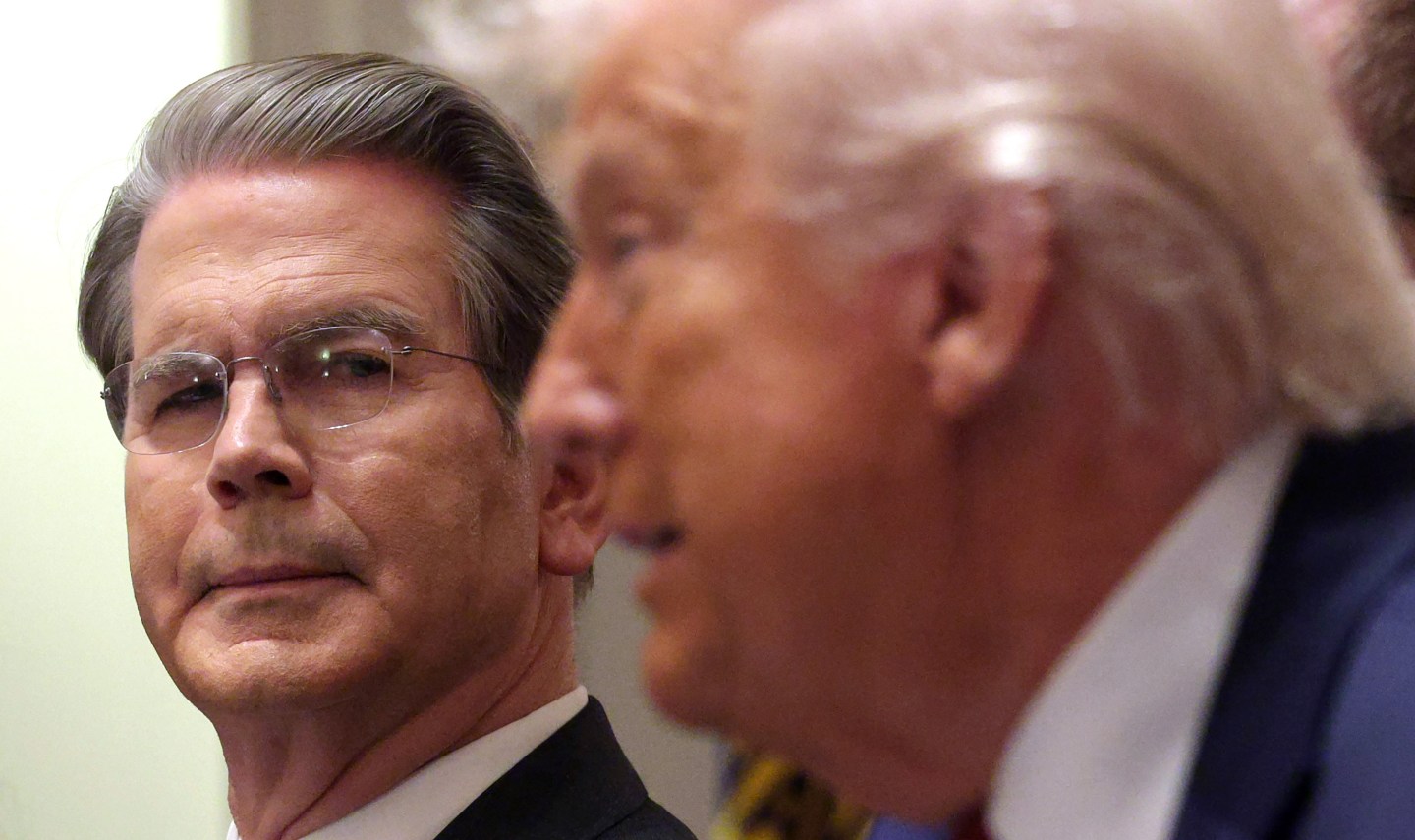
bessent
U.S. Treasury Secretary Scott Bessent looks on as U.S. President Donald Trump delivers remarks during a roundtable discussion with farmers in the Cabinet Room of the White House on December 08, 2025 in Washington, DC. President Trump is expected to announce a $12 billion farm aid package, which includes one-time payments to those affected by the administration’s trade policies. Alex Wong/Getty Images

The United States national debt crossed $39 trillion for the first time Tuesday, arriving at the grim milestone less than five months after it first hit $38 trillion in late October—a pace of accumulation that budget watchdogs and academic economists are now calling, with unusual unanimity, “unsustainable.”​

Recommended Video

The milestone, confirmed in Wednesday’s Daily Treasury Statement, lands amid a politically charged moment: it comes roughly two weeks before the ten-year anniversary of President Trump’s 2016 campaign promise to eliminate the national debt within eight years. Instead, the gross national debt has roughly doubled since Trump first took office—it was $19.9 trillion in January 2017.​

“Our moral duty to the taxpayer requires us to make our Government leaner and more accountable,” President Trump wrote in March 2017, as he issued an executive order directing OMB Director Mick Mulvaney to submit a comprehensive plan to reorganize Executive Branch departments and agencies in order to keep his promise to put in place common sense reforms to eliminate waste so that the Government better serves all Americans. “We’re going to do more with less,” Trump said at the time.

“As America soars past $39 trillion in debt, we must recognize this alarming rate of growth and the significant financial burden we are putting on the next generation,” Michael A. Peterson, CEO of the Peter G. Peterson Foundation, told Fortune in a statement. “Borrowing trillion after trillion at this rapid pace with no plan in place is the definition of unsustainable.”​

A clock that doesn’t stop

At the current rate of growth, the Peterson Foundation projects that the debt will hit $40 trillion before this fall’s elections—another trillion-dollar jump in roughly the same compressed timeframe. Michael Peterson called the figure “staggering.” The speed of accumulation has accelerated sharply: the debt added its latest trillion in what the foundation estimates is less than five months, a rate of fiscal expansion that has few modern precedents outside of wartime or acute financial crisis.​

The milestone arrives as the Congressional Budget Office, in its February 2026 outlook, projected that the federal deficit will reach $1.9 trillion in fiscal year 2026 and swell to $3.1 trillion by 2036 under current law. Over that same decade, debt held by the public is projected to surge from 101% of GDP today to 120% of GDP by 2036, eclipsing the previous all-time record of 106% set just after World War II. The long-term picture is even bleaker: CBO’s extended baseline now shows debt rising to 175% of GDP over the next 30 years, according to the Committee for a Responsible Federal Budget.

The $1 trillion interest bill

Perhaps the most alarming dimension of the crossing is what it costs just to carry the debt. Net interest payments on the national debt are projected to exceed $1 trillion in fiscal year 2026—nearly triple the $345 billion in interest the government paid in 2020, at the onset of the pandemic. In the first three months of the current fiscal year alone, net interest payments reached $270 billion, already surpassing the nation’s defense spending for the same period.

Peterson’s statement underscored just how persistent that interest burden will be: over the next 30 years, the government is projected to spend nearly $100 trillion on interest alone—an amount that dwarfs every major federal program. For individual Americans, the Peterson Foundation puts the interest tab at an average of at least $47,000 per person over the next decade.​

“Interest is the fastest-growing ‘program’ in the federal budget,” Peterson said.​

What the numbers actually mean

Not all economists view the headline $39 trillion figure with equal alarm—though almost all agree the trajectory is dangerous. Kent Smetters, director of the Penn Wharton Budget Model and one of the nation’s foremost fiscal economists, argued that the gross debt number is actually less economically meaningful than debt held by the public, which now stands at $31.3 trillion. The gross figure of $39 trillion, he explained to Fortune, is intragovernmental debt, basically “the left hand of government owing the right hand.” Examples include the Social Security trust fund, and there’s no independent economic significance to this beyond its role as a political signaling device.​ Still, he added with his trademark understatement, “the fact that debt held by the public has now exceeded $31 trillion is not great.”

“The real problem,” Smetters said, agreeing with Peterson, “is that we are on an upward debt path that is unsustainable.” When you account for both explicit debt held by the public and the implicit liabilities buried in Social Security, Medicare, and other long-term obligations, Smetters’ model puts the true fiscal gap closer to $100 trillion.​

The Penn Wharton Budget Model has previously estimated that, without major policy changes, U.S. Treasury debt will become unable to roll over its accumulated obligations within roughly 20 years—a scenario that would force either explicit default on interest payments or an implicit default through inflation.​

A Credibility Gap in Washington

Smetters has also previously raised pointed concerns about the budgeting apparatus that’s supposed to help lawmakers navigate the crisis. Under rules dating to the Gramm-Rudman-Hollings Act, the Congressional Budget Office is legally prohibited from projecting discretionary spending growth faster than inflation over its 10-year window—an assumption that both the CBO and outside analysts agree bears no resemblance to historical reality. The result, Smetters argued, is that official projections “constantly underestimate the growth in the debt,” creating a feedback loop in which lawmakers are lulled into false confidence by numbers their own budget office knows are too optimistic.​

The CBO’s current projections, for instance, still assume Social Security will pay full benefits even after its trust fund is expected to deplete around 2032—effectively hiding a major future spending shock from the official forecast.​

Politics and the Public

The milestone arrives at a moment of acute public anxiety about federal finances. Nine in 10 Americans say the rising debt is driving up the cost of living and contributing to higher borrowing costs, according to a survey by the Peterson Foundation—a cross-partisan concern that has yet to produce cross-partisan legislative action.​

The U.S. fiscal position has deteriorated to what the Peterson Foundation now describes as the worst among peer nations. President Trump’s budget proposal is expected to be released during the week of March 30, setting up a political battle over spending and revenue that will play out against the backdrop of a debt counter that, by Peterson’s clock, will already be ticking toward $40 trillion.​

“America faces complex and critical challenges, both at home and abroad,” Peterson said, “and putting our debt on a sustainable path will support a stronger, more secure future.” The good news, he added, is that solutions exist. The harder news is that in the 10 years since the last major political promise to fix this, the debt has only grown.​

The Fortune 500 Innovation Forum will convene Fortune 500 executives, U.S. policy officials, top founders, and thought leaders to help define what’s next for the American economy, Nov. 16-17 in Detroit. Apply here.
About the Author
Nick Lichtenberg
By Nick LichtenbergBusiness Editor
LinkedIn icon

Nick Lichtenberg is business editor and was formerly Fortune's executive editor of global news.

See full bioRight Arrow Button Icon

Latest in Economy

Finance
Lorem ipsum dolor sit amet, consectetur adipiscing elit, sed do eiusmod tempor incididunt ut labore et dolore magna aliqua. Ut enim ad minim veniam
By Fortune Editors
October 20, 2025
Finance
Lorem ipsum dolor sit amet, consectetur adipiscing elit, sed do eiusmod tempor incididunt ut labore et dolore magna aliqua. Ut enim ad minim veniam
By Fortune Editors
October 20, 2025
Finance
Lorem ipsum dolor sit amet, consectetur adipiscing elit, sed do eiusmod tempor incididunt ut labore et dolore magna aliqua. Ut enim ad minim veniam
By Fortune Editors
October 20, 2025
Finance
Lorem ipsum dolor sit amet, consectetur adipiscing elit, sed do eiusmod tempor incididunt ut labore et dolore magna aliqua. Ut enim ad minim veniam
By Fortune Editors
October 20, 2025
Finance
Lorem ipsum dolor sit amet, consectetur adipiscing elit, sed do eiusmod tempor incididunt ut labore et dolore magna aliqua. Ut enim ad minim veniam
By Fortune Editors
October 20, 2025
Finance
Lorem ipsum dolor sit amet, consectetur adipiscing elit, sed do eiusmod tempor incididunt ut labore et dolore magna aliqua. Ut enim ad minim veniam
By Fortune Editors
October 20, 2025

Most Popular

Finance
Lorem ipsum dolor sit amet, consectetur adipiscing elit, sed do eiusmod tempor incididunt ut labore et dolore magna aliqua. Ut enim ad minim veniam
By Fortune Editors
October 20, 2025
Finance
Lorem ipsum dolor sit amet, consectetur adipiscing elit, sed do eiusmod tempor incididunt ut labore et dolore magna aliqua. Ut enim ad minim veniam
By Fortune Editors
October 20, 2025
Finance
Lorem ipsum dolor sit amet, consectetur adipiscing elit, sed do eiusmod tempor incididunt ut labore et dolore magna aliqua. Ut enim ad minim veniam
By Fortune Editors
October 20, 2025
Finance
Lorem ipsum dolor sit amet, consectetur adipiscing elit, sed do eiusmod tempor incididunt ut labore et dolore magna aliqua. Ut enim ad minim veniam
By Fortune Editors
October 20, 2025
Finance
Lorem ipsum dolor sit amet, consectetur adipiscing elit, sed do eiusmod tempor incididunt ut labore et dolore magna aliqua. Ut enim ad minim veniam
By Fortune Editors
October 20, 2025
Finance
Lorem ipsum dolor sit amet, consectetur adipiscing elit, sed do eiusmod tempor incididunt ut labore et dolore magna aliqua. Ut enim ad minim veniam
By Fortune Editors
October 20, 2025
Fortune Secondary Logo
Rankings
  • 100 Best Companies
  • Fortune 500
  • Global 500
  • Fortune 500 Europe
  • Most Powerful Women
  • Future 50
  • World’s Most Admired Companies
  • See All Rankings
Sections
  • Finance
  • Fortune Crypto
  • Features
  • Leadership
  • Health
  • Commentary
  • Success
  • Retail
  • Mpw
  • Tech
  • Lifestyle
  • CEO Initiative
  • Asia
  • Politics
  • Conferences
  • Europe
  • Newsletters
  • Personal Finance
  • Environment
  • Magazine
  • Education
Customer Support
  • Frequently Asked Questions
  • Customer Service Portal
  • Privacy Policy
  • Terms Of Use
  • Single Issues For Purchase
  • International Print
Commercial Services
  • Advertising
  • Fortune Brand Studio
  • Fortune Analytics
  • Fortune Conferences
  • Business Development
  • Group Subscriptions
About Us
  • About Us
  • Editorial Calendar
  • Press Center
  • Work At Fortune
  • Diversity And Inclusion
  • Terms And Conditions
  • Site Map
  • About Us
  • Editorial Calendar
  • Press Center
  • Work At Fortune
  • Diversity And Inclusion
  • Terms And Conditions
  • Site Map
Fortune Secondary Logo
Rankings
  • 100 Best Companies
  • Fortune 500
  • Global 500
  • Fortune 500 Europe
  • Most Powerful Women
  • Future 50
  • World’s Most Admired Companies
  • See All Rankings
Sections
  • Finance
  • Fortune Crypto
  • Features
  • Leadership
  • Health
  • Commentary
  • Success
  • Retail
  • Mpw
  • Tech
  • Lifestyle
  • CEO Initiative
  • Asia
  • Politics
  • Conferences
  • Europe
  • Newsletters
  • Personal Finance
  • Environment
  • Magazine
  • Education
Customer Support
  • Frequently Asked Questions
  • Customer Service Portal
  • Privacy Policy
  • Terms Of Use
  • Single Issues For Purchase
  • International Print
Commercial Services
  • Advertising
  • Fortune Brand Studio
  • Fortune Analytics
  • Fortune Conferences
  • Business Development
  • Group Subscriptions
About Us
  • About Us
  • Editorial Calendar
  • Press Center
  • Work At Fortune
  • Diversity And Inclusion
  • Terms And Conditions
  • Site Map
  • About Us
  • Editorial Calendar
  • Press Center
  • Work At Fortune
  • Diversity And Inclusion
  • Terms And Conditions
  • Site Map
  • Facebook icon
  • Twitter icon
  • LinkedIn icon
  • Instagram icon
  • Pinterest icon

Latest in Economy

EuropeLetter from London
An AI jobs apocalypse? The CEO of Tech Mahindra is not so sure
By Kamal AhmedMarch 19, 2026
57 minutes ago
US Federal Reserve Chair Jerome Powell speaks during a press conference following the Federal Open Market Committee meeting at the Federal Reserve Board Building in Washington, DC, on March 18, 2026.
EconomyFed
Trump started a battle with Jerome Powell, but the Fed chairman is winning the war: He won’t leave until probe is ‘well and truly over’
By Eleanor PringleMarch 19, 2026
1 hour ago
EconomyMalaysia
Sunway Healthcare surges in first trading day, with hospital demand set to rise in a wealthier and older Malaysia
By Angelica AngMarch 19, 2026
3 hours ago
InvestingFinance
‘Say thank you and get out’: Why one top strategist says to dump Magnificent 7 stocks now
By Shawn TullyMarch 19, 2026
5 hours ago
Ted Cruz stands and looks down at Donald Trump sitting at his desk in the Oval Office.
EconomyTaxes
The Trump Administration’s proposed capital gains tax cut could add nearly $1 trillion to the national debt within the decade, think tank warns
By Sasha RogelbergMarch 19, 2026
5 hours ago
AIJobs
Fortune 500 firm updates AI price tag to $4.5 trillion, estimating 93% of jobs vulnerable to disruption
By Jake AngeloMarch 19, 2026
6 hours ago

Most Popular

placeholder alt text
Success
Only one couple out of 250 billionaires has kept their promise to give away their fortune—and a philanthropy CEO says Elon Musk is right about why
By Orianna Rosa RoyleMarch 18, 2026
1 day ago
placeholder alt text
Personal Finance
Current price of silver as of Tuesday, March 17, 2026
By Joseph HostetlerMarch 17, 2026
2 days ago
placeholder alt text
Commentary
The U.S. attacked Iran to show its power but the war is already lost. Epic Fury looks like an Epic Fail
By Guillaume LongMarch 18, 2026
22 hours ago
placeholder alt text
Economy
The national debt just crossed $39 trillion—almost doubling since Trump vowed to erase it
By Nick LichtenbergMarch 18, 2026
17 hours ago
placeholder alt text
Economy
‘This is the way’: Elon Musk endorses Warren Buffett’s famed 5-minute plan to fix the national debt
By Jacqueline MunisMarch 17, 2026
2 days ago
placeholder alt text
Economy
McDonald's newest $3 value menu is sounding an alarm about America's K-shaped economy
By Marco Quiroz-GutierrezMarch 17, 2026
2 days ago

© 2026 Fortune Media IP Limited. All Rights Reserved. Use of this site constitutes acceptance of our Terms of Use and Privacy Policy | CA Notice at Collection and Privacy Notice | Do Not Sell/Share My Personal Information
FORTUNE is a trademark of Fortune Media IP Limited, registered in the U.S. and other countries. FORTUNE may receive compensation for some links to products and services on this website. Offers may be subject to change without notice.