
• Home
  • Latest
  • Fortune 500
  • Finance
  • Tech
  • Leadership
  • Lifestyle
  • Rankings
  • Multimedia
RetailFashion

Abercrombie’s stock has been riding a nearly 400% surge for 12 months now but it just had its toughest one-week setback as investors chew over millennial interest in the brand

Sasha Rogelberg
By
Sasha Rogelberg
Sasha Rogelberg
Reporter
Down Arrow Button Icon
Sasha Rogelberg
By
Sasha Rogelberg
Sasha Rogelberg
Reporter
Down Arrow Button Icon
March 12, 2024, 4:45 PM ET
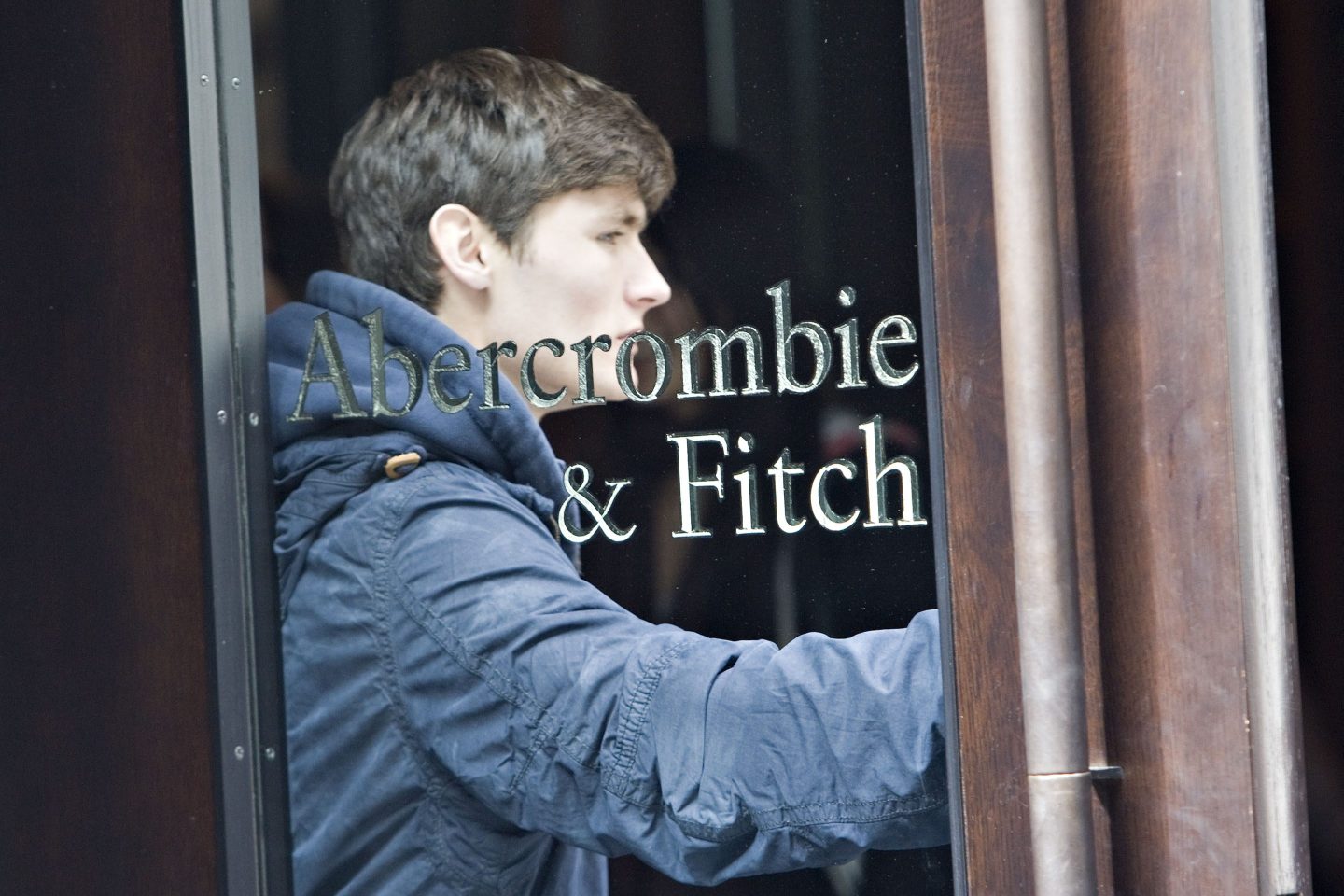
A man with a navy jacket stands in the window of a store with "Abercrombie & Fitch" embossed on it.
Abercrombie & Fitch succeeded in recapturing millennial customers in recent years.Daniel Acker/Bloomberg—Getty Images

Abercrombie & Fitch is “no longer a jeans and T-shirt brand,” CEO Fran Horowitz boasted on Wednesday’s fourth-quarter earnings call. The apparel retailer soared on a 21% increase in 2023 sales of $1.45 billion—up from $1.2 billion the year before—but tepid sales growth predictions for 2024 have halted its skyrocketing stock. Following the earnings report, shares fell 9.7% in Abercrombie’s worst week since August 2022.

Recommended Video

The retailer expects net sales growth from 4% to 6% for fiscal 2024, in line with estimates but lower than last year. Concerns over Abercrombie’s ability to sustain revenue growth have caused shares to sink, Bloomberg reported. 

Morgan Stanley analyst Alex Straton said in a March 7 note that Abercrombie’s profitability expectations could be too optimistic. Fashion brands, which rely on cyclical seasons and trends, are vulnerable to missteps, should they miss the mark on product rollout. 

“The risk-reward skews to the downside from current levels… We caution current growth and profitability levels could be difficult to maintain heading into [the second half of the year],” she said.

Abercrombie reached high highs in 2023, with its performance landing it at the top of the S&P 1500 Index. In 2023, it gained 285%, higher than AI darling Nvidia’s 239% surge, and has gained closer to 400% over the past 12 months. The retailer owes its sales success to revamping its inventory to appeal to younger shoppers, as well as customers who don’t mind inflation-induced higher prices.

Horowitz said the company intends to continue to lean on its expanding audience of both older Gen Zers and young millennials for future growth.

“The addressable market has gone from customers in their early twenties to late thirties, and we’ve broadened all the offerings from a category perspective,” Horowitz said. Abercrombie has launched both special occasion, casual, and activewear lines to dress young people for their weekend endeavors.

Young generations have a strong interest in clothing with 87% of Gen Z, as well as 82% of millennials, planning to buy fashion items over the next six months, according to a February UNiDays survey of over 5,000 UK students. While Gen Z is cost-conscious and thrifty, they also don’t mind splurging a little extra on luxury goods. Gen Z and millennials are the generations most likely to make splurge purchases, including pricier fashion items. A June 2023 Harris Poll of over 2000 U.S. adults found that 75% of Gen Z and 68% of millennials made splurge purchases last year.

But even young fashion enthusiasts may not be able to reverse the trends of uncertainty in the fashion industry. McKinsey & Company’s State of Fashion 2024 report predicts a 2% to 4% “slower but normalized” growth in the industry as a result of inflation and lack of consumer confidence. The Bureau of Labor Statistics noted a 0.6% uptick this month in CPI for urban consumers in apparel.

The fashion industry may have an uncertain future, but Abercrombie has built back from hardships in the past. A decade ago, the company was struggling to remain relevant and liked.

How Abercrombie reclaimed the hearts—and wallets—of millennials

Only eight years before being the highest-performing stock, Abercrombie earned the 2016 superlative of most hated retailer. Previously the company leaned on the appeal of low-rise jeans and hypersexualized models, but its image soured after a slate of controversies, including a class-action racial discrimination lawsuit and comments by former CEO Mike Jeffries calling the retailer “exclusionary” in a 2006 interview.

Horowitz, who became Abercrombie’s CEO in 2017, actively worked to change the company’s cliquey reputation perpetuated by her predecessor.

“We are a positive, inclusive brand, with a nice sensibility, very different from what they encountered in the past,” Horowitz said in 2016.

By 2019, Abercrombie had completely overhauled its inventory and expanded its sizes. Stores ditched the loud music and thick clouds of perfume. In a bid to separate itself from sister brand Hollister, it moved away from dressing teens in favor of pursuing young graduates and adults entering the workforce.

The strategy worked. In November 2022, the company posted an expectation-exceeding profit, even in the aftershocks of the pandemic and high inflation. Over the past five years, it has more than tripled its market capitalization, which grew from $1.83 billion in March 2019 to nearly $6 billion.


“We grew up Abercrombie,” Horowitz said in a 2022 Fortune interview. “We really focused on this young millennial, this young, mid-twenties consumer, and we got the response that we were hoping for.”


Join us at the Fortune Workplace Innovation Summit May 19–20, 2026, in Atlanta. The next era of workplace innovation is here—and the old playbook is being rewritten. At this exclusive, high-energy event, the world’s most innovative leaders will convene to explore how AI, humanity, and strategy converge to redefine, again, the future of work. Register now.
About the Author
Sasha Rogelberg
By Sasha RogelbergReporter
LinkedIn iconTwitter icon

Sasha Rogelberg is a reporter and former editorial fellow on the news desk at Fortune, covering retail and the intersection of business and popular culture.

See full bioRight Arrow Button Icon

Latest in Retail

millennial
CommentaryConsumer Spending
Meet the 2025 holiday white whale: the millennial dad spending $500+ per kid
By Phillip GoerickeDecember 12, 2025
2 days ago
McDonald
RetailRetail
Lululemon CEO Calvin McDonald to step down as quarterly profit dips 13%
By Anne D'Innocenzio and The Associated PressDecember 12, 2025
2 days ago
Sarandos
CommentaryAntitrust
Netflix, Warner, Paramount and antitrust: Entertainment megadeal’s outcome must follow the evidence, not politics or fear of integration
By Satya MararDecember 12, 2025
2 days ago
InvestingMarkets
Retail investors drive stocks to a pre-Christmas all-time high—and Wall Street sees a moment to sell
By Jim EdwardsDecember 12, 2025
2 days ago
Five panelists seated; two women and five men.
AIBrainstorm AI
The race to deploy an AI workforce faces one important trust gap: What happens when an agent goes rogue?
By Amanda GerutDecember 11, 2025
2 days ago
Oreo
RetailFood and drink
Zero-sugar Oreos headed to America for first time
By Dee-Ann Durbin and The Associated PressDecember 11, 2025
3 days ago

Most Popular

placeholder alt text
Success
Apple cofounder Ronald Wayne sold his 10% stake for $800 in 1976—today it’d be worth up to $400 billion
By Preston ForeDecember 12, 2025
2 days ago
placeholder alt text
Economy
Tariffs are taxes and they were used to finance the federal government until the 1913 income tax. A top economist breaks it down
By Kent JonesDecember 12, 2025
2 days ago
placeholder alt text
Success
40% of Stanford undergrads receive disability accommodations—but it’s become a college-wide phenomenon as Gen Z try to succeed in the current climate
By Preston ForeDecember 12, 2025
1 day ago
placeholder alt text
Economy
The Fed just ‘Trump-proofed’ itself with a unanimous move to preempt a potential leadership shake-up
By Jason MaDecember 12, 2025
1 day ago
placeholder alt text
Economy
For the first time since Trump’s tariff rollout, import tax revenue has fallen, threatening his lofty plans to slash the $38 trillion national debt
By Sasha RogelbergDecember 12, 2025
1 day ago
placeholder alt text
Success
Apple CEO Tim Cook out-earns the average American’s salary in just 7 hours—to put that into context, he could buy a new $439,000 home in just 2 days
By Emma BurleighDecember 12, 2025
1 day ago
Rankings
  • 100 Best Companies
  • Fortune 500
  • Global 500
  • Fortune 500 Europe
  • Most Powerful Women
  • Future 50
  • World’s Most Admired Companies
  • See All Rankings
Sections
  • Finance
  • Leadership
  • Success
  • Tech
  • Asia
  • Europe
  • Environment
  • Fortune Crypto
  • Health
  • Retail
  • Lifestyle
  • Politics
  • Newsletters
  • Magazine
  • Features
  • Commentary
  • Mpw
  • CEO Initiative
  • Conferences
  • Personal Finance
  • Education
Customer Support
  • Frequently Asked Questions
  • Customer Service Portal
  • Privacy Policy
  • Terms Of Use
  • Single Issues For Purchase
  • International Print
Commercial Services
  • Advertising
  • Fortune Brand Studio
  • Fortune Analytics
  • Fortune Conferences
  • Business Development
About Us
  • About Us
  • Editorial Calendar
  • Press Center
  • Work At Fortune
  • Diversity And Inclusion
  • Terms And Conditions
  • Site Map

© 2025 Fortune Media IP Limited. All Rights Reserved. Use of this site constitutes acceptance of our Terms of Use and Privacy Policy | CA Notice at Collection and Privacy Notice | Do Not Sell/Share My Personal Information
FORTUNE is a trademark of Fortune Media IP Limited, registered in the U.S. and other countries. FORTUNE may receive compensation for some links to products and services on this website. Offers may be subject to change without notice.