• Home
  • News
  • Fortune 500
  • Tech
  • Finance
  • Leadership
  • Lifestyle
  • Rankings
  • Multimedia
FinanceMarkets

NYU Stern’s ‘Dean of Valuation’ doesn’t see ‘what’s so bad about bubbles,’ saying they’re how humans cope with change—and they boost innovation

Will Daniel
By
Will Daniel
Will Daniel
Down Arrow Button Icon
Will Daniel
By
Will Daniel
Will Daniel
Down Arrow Button Icon
March 5, 2024, 3:12 PM ET
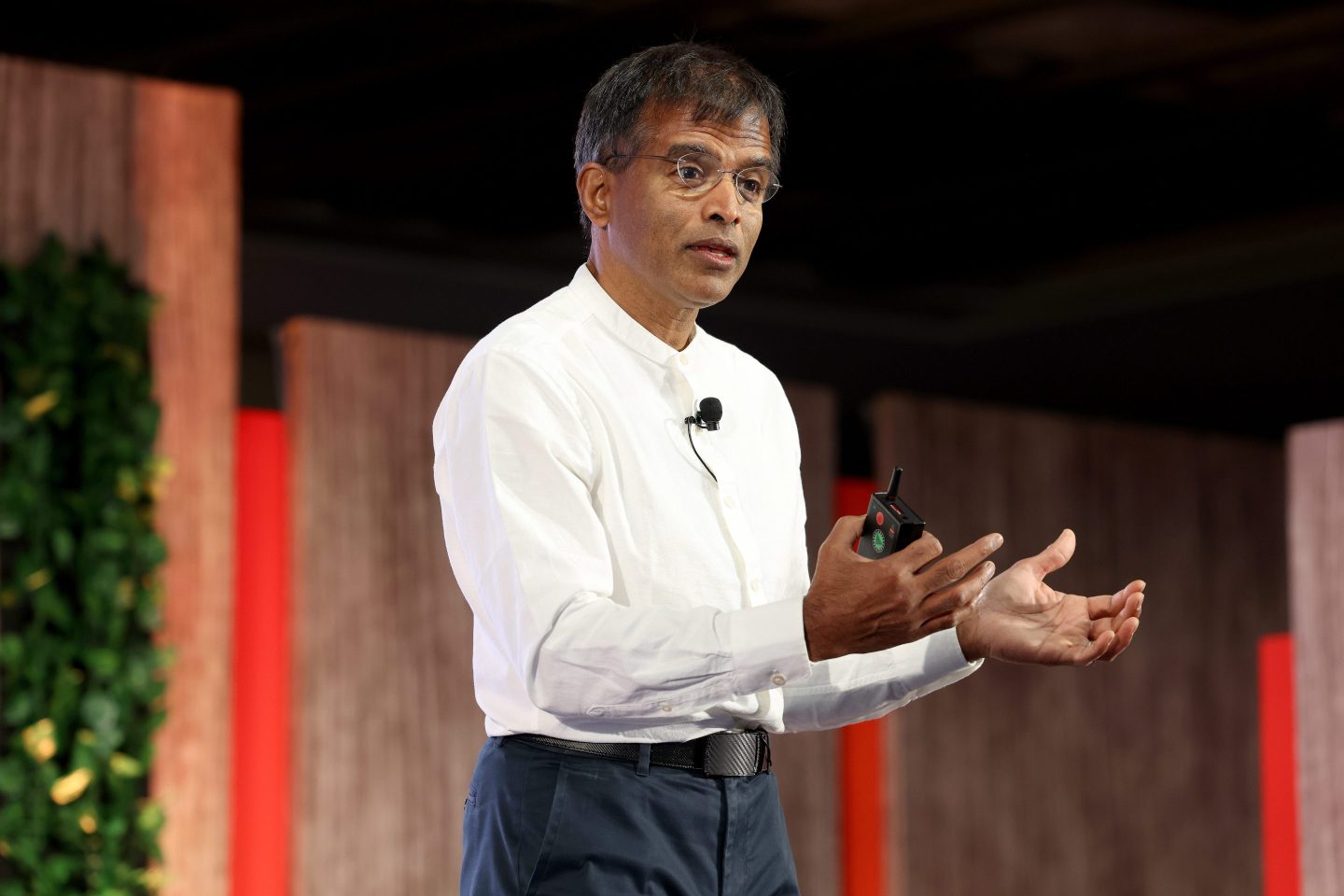
NYU Finance Professor Aswath Damodaran speaks on stage at Pivot MIA at 1 Hotel South Beach on February 15, 2022 in Miami, Florida.
NYU Finance Professor Aswath Damodaran speaks on stage at Pivot MIA at 1 Hotel South Beach on February 15, 2022 in Miami, Florida. Photo by Alexander Tamargo/Getty Images for Vox Media

With investor enthusiasm over AI reaching a fever pitch this year and leading stocks ever higher, there have been some concerns about valuations. Most experts have told Fortune that they don’t believe we’re in a bubble yet—from the billionaire entrepreneur Mark Cuban to some of Goldman Sachs’ top analysts. But it might not be so bad even if we were, says Aswath Damodaran, a finance professor at NYU’s Stern School of Business.

Recommended Video

“I’m going to raise a point that sounds weird, but humor me,” Damodaran, who is known as the ‘dean of valuation’ for his research and books on valuing securities, told CNBC Tuesday. “I don’t see what’s so bad about bubbles. I think bubbles are how markets deal with change.”

Damodaran argued that throughout the history of the U.S. stock market, investors have “tended to overdo it” when a new technology or innovation appears. From the rise of the internet in the dot-com era to social media’s dominance in the early 2000s, bubbles are a natural part of market behavior, according to the professor, and they aren’t always a bad thing.

“That’s the way human beings get change. They get over-optimistic, they overreach, there’s a correction. But every bubble leaves change that’s long term,” he said.

A look at the dean’s bubble research

Damodaran went on to reference his 2019 paper, “The Big Market Delusion: Valuation and Investment Implications,” which studied the market bubbles of modern American history and found that they might be a net positive for economic innovation.

“In the aftermath of every correction, there are many who look back at the bubble as an example of irrational exuberance. A few have gone further and argued that such episodes are bad for markets, and suggested fixes. We believe that these critics are missing the point,” Damodaran and his colleague, professor Bradford Cornell of UCLA, wrote in the paper. “Not only are bubbles part and parcel of markets, they are not necessarily a negative.”

Damodaran and Cornell pointed to the impact of the dot-com era on every facet of American life, from how we shop to our transportation methods, and noted that giant multinational firms like Amazon also rose from the dust when the bubble of that era burst, driving economic and market growth for years to come. The pair then came to the conclusion that politicians, regulators and investors should actually “stop trying to make bubbles go away” because they boost innovation. “The benefits of that innovation, in our view, outweigh the costs of the Volatility,” Damodaran and Cornell wrote.

The dean of valuation reiterated this point in his interview with CNBC Tuesday, discussing the last major market bubble. “The dot-com bubble that burst, it changed the way we live, right?” he said. “Every bubble leaves residue.”

To his point, Goldman Sachs’ chief macro strategist and head of research in Europe, recently told Fortune about how the rise of canals in the U.K. during the 18th helped to usher in a new age of productivity and trade—even though canal stocks ended up in a bubble that eventually burst. And in his influential 1999 book Devil Take the Hindmost: A History of Financial Speculation, the financial historian Edward Chancellor delves into the history of investors’ love for speculation and how it has always created market bubbles in the U.S. and abroad, giving the example of the railway mania of the 1840s. 

Lax regulation and the thirst for outsized profits led to a railroad boom in the 1840s in the U.K. that saw some towns connected by multiple private lines which competed for customers. The enthusiasm eventually made its way to the stock market, where a bubble developed and then quickly popped. But although the railway bubble led to misfortune for some unlucky, or unwise investors, Chancellor noted that it also “represented a transfer of wealth from middle class speculators to needy labourers” and left the country with a robust railway network.

Ignore market bubbles?

In his conversation with CNBC on Tuesday, Damodaran went on to question what investors who do believe the stock market is in a bubble today would do with that information, and whether or not it would actually be useful. “I mean, if you say: ‘Look I’m going to sell short on every stock in the bubble.’ You’re going to go bankrupt, perhaps before the bubble bursts,” he said.

The professor argued that investors tend to waste time worrying about market bubbles when valuations rise, when they could be using their energy on something more productive. “There are actionable things you could be doing in the market right now that are not in a bubble,” he noted.

Damodaran had a message for critics of current stock market valuations as well, particularly those of AI-linked companies like the chip designer Nvidia: “If you don’t want to buy Nvidia, don’t buy Nvidia. But don’t wag your finger at people who do and say you deserve to be in some kind of investment hell because you broke the rules that I’ve set.”
Join us at the Fortune Workplace Innovation Summit May 19–20, 2026, in Atlanta. The next era of workplace innovation is here—and the old playbook is being rewritten. At this exclusive, high-energy event, the world’s most innovative leaders will convene to explore how AI, humanity, and strategy converge to redefine, again, the future of work. Register now.
About the Author
Will Daniel
By Will Daniel
LinkedIn iconTwitter icon
See full bioRight Arrow Button Icon

Latest in Finance

Databricks CEO speaking on stage.
AIBrainstorm AI
Databricks CEO Ali Ghodsi says his company will be worth $1 trillion by doing these three things
By Beatrice NolanDecember 9, 2025
4 minutes ago
Jerome Powell, chairman of the US Federal Reserve, during the Hoover Institution's George P. Shultz Memorial Lecture Series in Stanford, California, US, on Monday, Dec. 1, 2025.
EconomyJobs
‘Fodder for a recession’: Top economist Mark Zandi warns about so many Americans ‘already living on the financial edge’ in a K-shaped economy 
By Eva RoytburgDecember 9, 2025
3 hours ago
A man and robot sitting opposite each other.
AIEye on AI
The problem with ‘human in the loop’ AI? Often, it’s the humans
By Jeremy KahnDecember 9, 2025
4 hours ago
Photo of Jamie Dimon
BankingJPMorgan Chase
Jamie Dimon taps Jeff Bezos, Michael Dell, and Ford CEO Jim Farley to advise JPMorgan’s $1.5 trillion national security initiative
By Nino PaoliDecember 9, 2025
5 hours ago
Personal FinanceSavings
Best money market accounts of December 2025
By Glen Luke FlanaganDecember 9, 2025
6 hours ago
Personal Financechecking accounts
Best checking account bonuses for December 2025
By Glen Luke FlanaganDecember 9, 2025
7 hours ago

Most Popular

placeholder alt text
Success
When David Ellison was 13, his billionaire father Larry bought him a plane. He competed in air shows before leaving it to become a Hollywood executive
By Dave SmithDecember 9, 2025
13 hours ago
placeholder alt text
Real Estate
The 'Great Housing Reset' is coming: Income growth will outpace home-price growth in 2026, Redfin forecasts
By Nino PaoliDecember 6, 2025
3 days ago
placeholder alt text
Investing
Baby boomers have now 'gobbled up' nearly one-third of America's wealth share, and they're leaving Gen Z and millennials behind
By Sasha RogelbergDecember 8, 2025
1 day ago
placeholder alt text
Success
Craigslist founder signs the Giving Pledge, and his fortune will go to military families, fighting cyberattacks—and a pigeon rescue
By Sydney LakeDecember 8, 2025
1 day ago
placeholder alt text
Uncategorized
Transforming customer support through intelligent AI operations
By Lauren ChomiukNovember 26, 2025
13 days ago
placeholder alt text
Success
‘Godfather of AI’ says Bill Gates and Elon Musk are right about the future of work—but he predicts mass unemployment is on its way
By Preston ForeDecember 4, 2025
5 days ago
Rankings
  • 100 Best Companies
  • Fortune 500
  • Global 500
  • Fortune 500 Europe
  • Most Powerful Women
  • Future 50
  • World’s Most Admired Companies
  • See All Rankings
Sections
  • Finance
  • Leadership
  • Success
  • Tech
  • Asia
  • Europe
  • Environment
  • Fortune Crypto
  • Health
  • Retail
  • Lifestyle
  • Politics
  • Newsletters
  • Magazine
  • Features
  • Commentary
  • Mpw
  • CEO Initiative
  • Conferences
  • Personal Finance
  • Education
Customer Support
  • Frequently Asked Questions
  • Customer Service Portal
  • Privacy Policy
  • Terms Of Use
  • Single Issues For Purchase
  • International Print
Commercial Services
  • Advertising
  • Fortune Brand Studio
  • Fortune Analytics
  • Fortune Conferences
  • Business Development
About Us
  • About Us
  • Editorial Calendar
  • Press Center
  • Work At Fortune
  • Diversity And Inclusion
  • Terms And Conditions
  • Site Map

© 2025 Fortune Media IP Limited. All Rights Reserved. Use of this site constitutes acceptance of our Terms of Use and Privacy Policy | CA Notice at Collection and Privacy Notice | Do Not Sell/Share My Personal Information
FORTUNE is a trademark of Fortune Media IP Limited, registered in the U.S. and other countries. FORTUNE may receive compensation for some links to products and services on this website. Offers may be subject to change without notice.