
• Home
  • Latest
  • Fortune 500
  • Finance
  • Tech
  • Leadership
  • Lifestyle
  • Rankings
  • Multimedia
FinanceAI

AI’s winners and losers have a clear precedent you’ve never thought about, Goldman strategy guru says: The canal boom of the 18th century

Will Daniel
By
Will Daniel
Will Daniel
Down Arrow Button Icon
Will Daniel
By
Will Daniel
Will Daniel
Down Arrow Button Icon
February 10, 2024, 6:00 AM ET
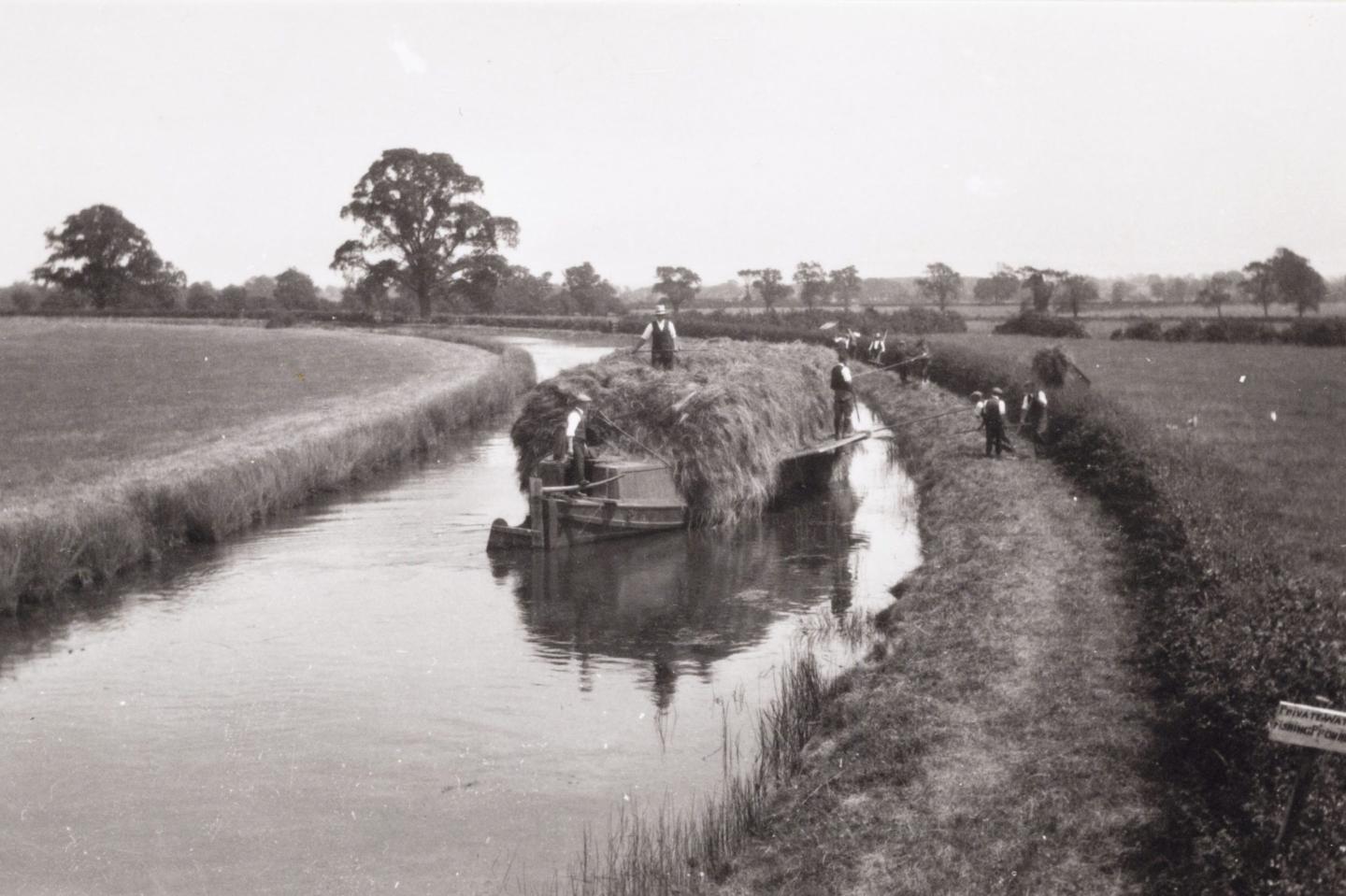
Black and white photo of a hay bale on a boat on a canal
A snapshot photograph of a narrowboat heavily laden with hay, taken by an unknown photographer in about 1905 on the Bridgewater and Taunton canal.Science & Society Picture Library/Getty Images

With Wall Street lauding artificial intelligence as a driver of the “fourth industrial revolution,” and pushing investors to take advantage of the “gold rush” as soon as possible, there’s been a veritable hype cycle for AI-linked tech stocks in recent years. AI leaders like Microsoft and Nvidia are soaring amid the enthusiasm, and earnings boost, but some experts still fear that the AI hype is overblown, if not an outright bubble. 

With all this in mind, investors are surely wondering: Just how long can AI stocks’ run last?

To answer that question, Peter Oppenheimer, Goldman Sachs’ chief global equity strategist and head of macro research in Europe, looks to history, which offers plenty of lessons on how past technological advancements have helped, or tricked, investors. 

Oppenheimer spoke with Fortune about his new book, Any Happy Returns, which details the rise of a number of groundbreaking technologies, and how investors have navigated the upheaval they’ve created. The discussion even included one under-the-radar, and somewhat unexpected, technological marvel: canals.

Now largely forgotten, canals revolutionized transportation, allowing for quick transport of goods to ports and creating tremendous profits to boot—at least initially.

The first canals in the U.K. were built in the mid-1700s to ferry heavy cargo, such as coal and iron ore, as well as fresh produce around the country. The new infrastructure shortened shipping times and its popularity allowed investors who financed canals to make strong returns. Their success drew in crowds of new investors, and by the 1790s, a bubble developed in canal stocks on the London Stock Exchange. As is typically the case, that bubble eventually burst, and canal stocks turned out to be a bad investment for many. But the canals themselves remained, helping to drive industrial output and productivity growth for years to come. 

This rise and decline has a parallel in today’s AI boom, with two key lessons for investors.

Lesson 1: Networking effects take time—but maybe less time with AI

First, while canals were a revolution that enabled heavy cargo to be transported faster and more affordably than the horses and carts before them, their impact wasn’t felt right away. “Innovation that spurs change typically takes quite a long time to fully impact the real economy and boost productivity,” Oppenheimer said, arguing “networking effects” need to work their magic first.

“In other words, things like canal and steam technology were hugely transformative, but it wasn’t until you actually built enough steam engines and dug enough canals, and then built factories by the canals, and so on and so forth, that you really saw the impact coming through,” he explained.
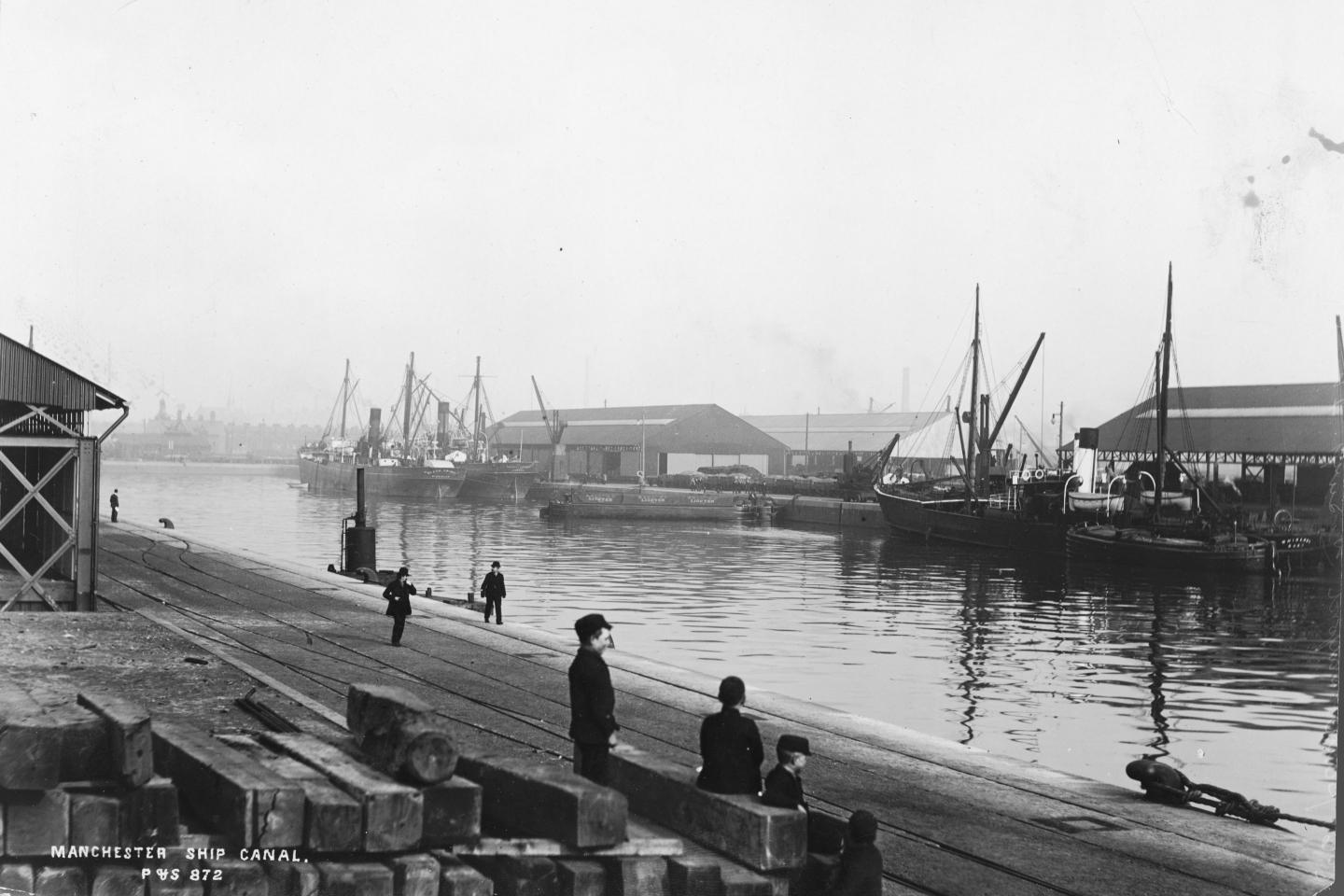
The Manchester Ship Canal, circa 1895.
Photo by Priestley & Sons Egremont/Hulton Archive/Getty Images

So for all the hype about AI’s ability to boost worker productivity and reduce costs for businesses, the reality is, change takes time after a technological revolution. 

But there is some good news for AI investors hoping to see the technology used effectively as soon as possible. “I think with AI, the gap between the technology being developed and its real impact on the economy may be a lot shorter,” Oppenheimer said.

AI already sits on the back of existing technologies, like the internet, cloud computing, and smartphones, which means it can “probably be employed very quickly, and have quite a big impact quite rapidly on productivity,” he argued.

Like canals (and, later, the steam engine), AI has the potential to radically boost productivity. In a 1904 book titled The Canal System of England, Hubert Gordon Thompson detailed the cost savings and production increases that new canals brought to England during the 18th century. In the middle of the century, he noted, trade was “greatly hindered by the heavy expense and the lack of adequate means of conveying” products to ports. Canals solved that problem. 

Take the route between Manchester and Liverpool as an example. When the Mersey and Irwell canals were created in 1724 and 1734, connecting the two cities, the cost of transporting goods between them plummeted by 70%. And once the larger and more direct Bridgewater canal was completed in 1761, Gordon Thompson wrote, transportation costs were cut in half again—all with “a better service was given than that provided by either of the forementioned routes.”

Gordon Thompson also put some facts behind the increase in overall trade due to the canals. In 1761, it “was estimated” that the total quantity of goods carried between Manchester and Liverpool was just 2,000 tons per year, with an average cost of 1 pound sterling per mile over the roughly 35-mile trip, he wrote. A century later, volume had increased by a factor of 5,000. “For 1890…it was estimated that the traffic was not less than 10,000,000 tons, and the cost of transit from 3/- to 8/- per ton for the whole distance,” Gordon Thompson noted.
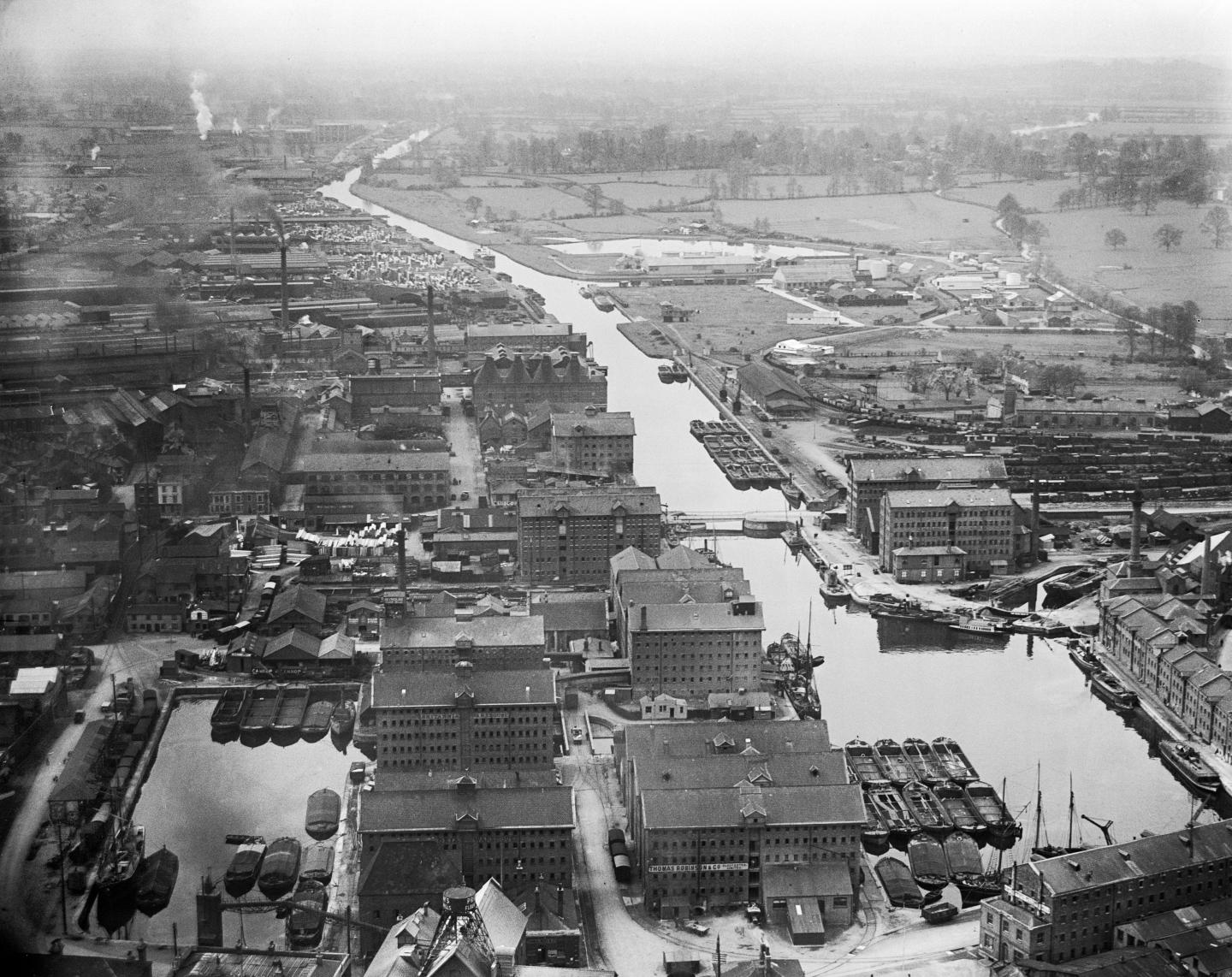
Aerial view of warehouses around a canal
Docks and adjoining warehouses by the Gloucester and Sharpness Canal in Gloucester, England, 1932.
English Heritage/Heritage Images/Getty Images

Lesson 2: The long-term winners might not be AI-specific companies

The second lesson Oppenheimer drew from the canal stock saga is that the companies that benefit the most in the long run after the rollout of revolutionary new technologies aren’t typically the ones investors have their eyes on in the short term.

He noted that people often get “excited” about the first-mover companies that they imagine profiting from a new technological innovation. These are the firms that are spending to commercialize the technology, or creating what some analysts have labeled the “picks and shovels” of the revolution. “But often, ultimately, they’re not the biggest winners,” Oppenheimer said. “The biggest winners are the people that can use the technologies to develop new products and services.”

Oppenheimer gave an example from the 1990s to prove the point. During that decade’s tech bubble, he said, excitement over the rise of the internet led investors to flock to telephone companies that were laying the actual “pipes,” or cables that would enable the internet to roll out to consumers.

“It was considered that these [telephone companies] would own a lot of the revenues from transporting data at very high speeds,” he explained. 

But as it turned out, telephone companies “didn’t really end up benefiting” very much from the internet, he said. They spent too much money and time laying the groundwork for it, and, by the time they sold their bandwidth, prices had fallen considerably 

“They didn’t really get a very good return on the capital,” Oppenheimer explained. “The people that really benefited from the internet were companies that could utilize the technology once it was in place, like platform companies or online retailers.”

So what does this mean for the average investor? Well, Microsoft, Nvidia, and other tech giants that are currently benefiting from the AI boom because they are laying the groundwork for the technology to function may not be the long-term winners. Instead, it could be companies that use AI to create new products and services.

But here’s the trick: no one really knows which companies will utilize AI the best over the long-term. And Oppenheimer didn’t offer any stock picks, instead arguing that investors should diversify their holdings. So if you’re trying to learn from history, when it comes to AI, it may make sense to proceed with caution. Picking winners and losers during periods of technological revolution has always been easier said than done—and the early winners are sometimes the wrong call.

Join us at the Fortune Workplace Innovation Summit May 19–20, 2026, in Atlanta. The next era of workplace innovation is here—and the old playbook is being rewritten. At this exclusive, high-energy event, the world’s most innovative leaders will convene to explore how AI, humanity, and strategy converge to redefine, again, the future of work. Register now.
About the Author
Will Daniel
By Will Daniel
LinkedIn iconTwitter icon
See full bioRight Arrow Button Icon

Latest in Finance

Finance
Lorem ipsum dolor sit amet, consectetur adipiscing elit, sed do eiusmod tempor incididunt ut labore et dolore magna aliqua. Ut enim ad minim veniam
By Fortune Editors
October 20, 2025
Finance
Lorem ipsum dolor sit amet, consectetur adipiscing elit, sed do eiusmod tempor incididunt ut labore et dolore magna aliqua. Ut enim ad minim veniam
By Fortune Editors
October 20, 2025
Finance
Lorem ipsum dolor sit amet, consectetur adipiscing elit, sed do eiusmod tempor incididunt ut labore et dolore magna aliqua. Ut enim ad minim veniam
By Fortune Editors
October 20, 2025
Finance
Lorem ipsum dolor sit amet, consectetur adipiscing elit, sed do eiusmod tempor incididunt ut labore et dolore magna aliqua. Ut enim ad minim veniam
By Fortune Editors
October 20, 2025
Finance
Lorem ipsum dolor sit amet, consectetur adipiscing elit, sed do eiusmod tempor incididunt ut labore et dolore magna aliqua. Ut enim ad minim veniam
By Fortune Editors
October 20, 2025
Finance
Lorem ipsum dolor sit amet, consectetur adipiscing elit, sed do eiusmod tempor incididunt ut labore et dolore magna aliqua. Ut enim ad minim veniam
By Fortune Editors
October 20, 2025

Most Popular

Finance
Lorem ipsum dolor sit amet, consectetur adipiscing elit, sed do eiusmod tempor incididunt ut labore et dolore magna aliqua. Ut enim ad minim veniam
By Fortune Editors
October 20, 2025
Finance
Lorem ipsum dolor sit amet, consectetur adipiscing elit, sed do eiusmod tempor incididunt ut labore et dolore magna aliqua. Ut enim ad minim veniam
By Fortune Editors
October 20, 2025
Finance
Lorem ipsum dolor sit amet, consectetur adipiscing elit, sed do eiusmod tempor incididunt ut labore et dolore magna aliqua. Ut enim ad minim veniam
By Fortune Editors
October 20, 2025
Finance
Lorem ipsum dolor sit amet, consectetur adipiscing elit, sed do eiusmod tempor incididunt ut labore et dolore magna aliqua. Ut enim ad minim veniam
By Fortune Editors
October 20, 2025
Finance
Lorem ipsum dolor sit amet, consectetur adipiscing elit, sed do eiusmod tempor incididunt ut labore et dolore magna aliqua. Ut enim ad minim veniam
By Fortune Editors
October 20, 2025
Finance
Lorem ipsum dolor sit amet, consectetur adipiscing elit, sed do eiusmod tempor incididunt ut labore et dolore magna aliqua. Ut enim ad minim veniam
By Fortune Editors
October 20, 2025
Fortune Secondary Logo
Rankings
  • 100 Best Companies
  • Fortune 500
  • Global 500
  • Fortune 500 Europe
  • Most Powerful Women
  • Future 50
  • World’s Most Admired Companies
  • See All Rankings
Sections
  • Finance
  • Fortune Crypto
  • Features
  • Leadership
  • Health
  • Commentary
  • Success
  • Retail
  • Mpw
  • Tech
  • Lifestyle
  • CEO Initiative
  • Asia
  • Politics
  • Conferences
  • Europe
  • Newsletters
  • Personal Finance
  • Environment
  • Magazine
  • Education
Customer Support
  • Frequently Asked Questions
  • Customer Service Portal
  • Privacy Policy
  • Terms Of Use
  • Single Issues For Purchase
  • International Print
Commercial Services
  • Advertising
  • Fortune Brand Studio
  • Fortune Analytics
  • Fortune Conferences
  • Business Development
  • Group Subscriptions
About Us
  • About Us
  • Editorial Calendar
  • Press Center
  • Work At Fortune
  • Diversity And Inclusion
  • Terms And Conditions
  • Site Map
  • About Us
  • Editorial Calendar
  • Press Center
  • Work At Fortune
  • Diversity And Inclusion
  • Terms And Conditions
  • Site Map
  • Facebook icon
  • Twitter icon
  • LinkedIn icon
  • Instagram icon
  • Pinterest icon

Latest in Finance

Signs opposing a proposed data center in Monterey Park, CA.
AIData centers
Half of all new electricity demand in the U.S. last year came from data centers—just as public opinion of them plummets
By Tristan BoveApril 20, 2026
4 minutes ago
electrician
EconomyJobs
This talent CEO says laid-off tech workers are ignoring a $300K ‘white-collar trade job’ with 81K openings a year
By Jake AngeloApril 20, 2026
3 hours ago
UAE officials reportedly warned they may be forced to use yuan or other currencies if they run low on dollars amid the Iran war
EconomyCurrency
UAE officials reportedly warned they may be forced to use yuan or other currencies if they run low on dollars amid the Iran war
By Jason MaApril 20, 2026
3 hours ago
A Spirit Airlines plane flies over a highway
EnergyAirline industry
Spirit Airlines looked like it was in the clear but rising fuel costs are threatening its bankruptcy its exit
By Jacqueline MunisApril 20, 2026
5 hours ago
Top CD rates from major banks April 20, 2026: Chase CDs, Bank of America CDs, Citibank CDs, and more
BankingCertificates of Deposit (CDs)
Top CD rates from major banks on April 20, 2026: Chase CDs, Bank of America CDs, Citibank CDs, and more
By Danny BakstApril 20, 2026
6 hours ago
Kevin Warsh, former governor of the US Federal Reserve, during the International Monetary Fund (IMF) and World Bank Spring meetings at the IMF headquarters in Washington, DC, US, on Friday, April 25, 2025.
EconomyKevin Warsh
It’s crunch time for Kevin Warsh: Here’s how he might begin selling the idea of rate cuts. It requires some complex economic gymnastics
By Eleanor PringleApril 20, 2026
6 hours ago

Most Popular

Thousands of CEOs admit AI had no impact on employment or productivity—and it has economists resurrecting a paradox from 40 years ago
AI
Thousands of CEOs admit AI had no impact on employment or productivity—and it has economists resurrecting a paradox from 40 years ago
By Sasha RogelbergApril 19, 2026
1 day ago
Markets shudder as Strait of Hormuz starts resembling a combat zone. 'We're prepared to subject you to disabling fire'
Energy
Markets shudder as Strait of Hormuz starts resembling a combat zone. 'We're prepared to subject you to disabling fire'
By Jason MaApril 19, 2026
20 hours ago
The explosion of U.S. debt is wiping out the 'safety premium' of Treasury bonds, and time is running out for an orderly fiscal solution, IMF warns
Economy
The explosion of U.S. debt is wiping out the 'safety premium' of Treasury bonds, and time is running out for an orderly fiscal solution, IMF warns
By Jason MaApril 19, 2026
24 hours ago
Elon Musk bans résumés and cover letters in hiring for his chip team. These are the 3 bullet points he’s looking for instead
Future of Work
Elon Musk bans résumés and cover letters in hiring for his chip team. These are the 3 bullet points he’s looking for instead
By Jake AngeloApril 19, 2026
1 day ago
'We should absolutely be concerned about non-college-educated men today': higher rents, living at home, falling out of the labor market
Economy
'We should absolutely be concerned about non-college-educated men today': higher rents, living at home, falling out of the labor market
By Catherina GioinoApril 18, 2026
2 days ago
The $6 billion Vatican Bank was beset by scandals, disastrous investments—and ties to the Mafia. How Pope Francis tried to fix it
Banking
The $6 billion Vatican Bank was beset by scandals, disastrous investments—and ties to the Mafia. How Pope Francis tried to fix it
By Marco Quiroz-GutierrezApril 18, 2026
2 days ago

© 2026 Fortune Media IP Limited. All Rights Reserved. Use of this site constitutes acceptance of our Terms of Use and Privacy Policy | CA Notice at Collection and Privacy Notice | Do Not Sell/Share My Personal Information
FORTUNE is a trademark of Fortune Media IP Limited, registered in the U.S. and other countries. FORTUNE may receive compensation for some links to products and services on this website. Offers may be subject to change without notice.