• Home
  • Latest
  • Fortune 500
  • Finance
  • Tech
  • Leadership
  • Lifestyle
  • Rankings
  • Multimedia
FinanceFederal Reserve

Jerome Powell is vague on rate cuts because he’s ‘petrified’ of repeating the mistakes of one predecessor, says ‘Big Short’ investor Steve Eisman

Will Daniel
By
Will Daniel
Will Daniel
Down Arrow Button Icon
Will Daniel
By
Will Daniel
Will Daniel
Down Arrow Button Icon
February 6, 2024, 1:19 PM ET
Jerome Powell
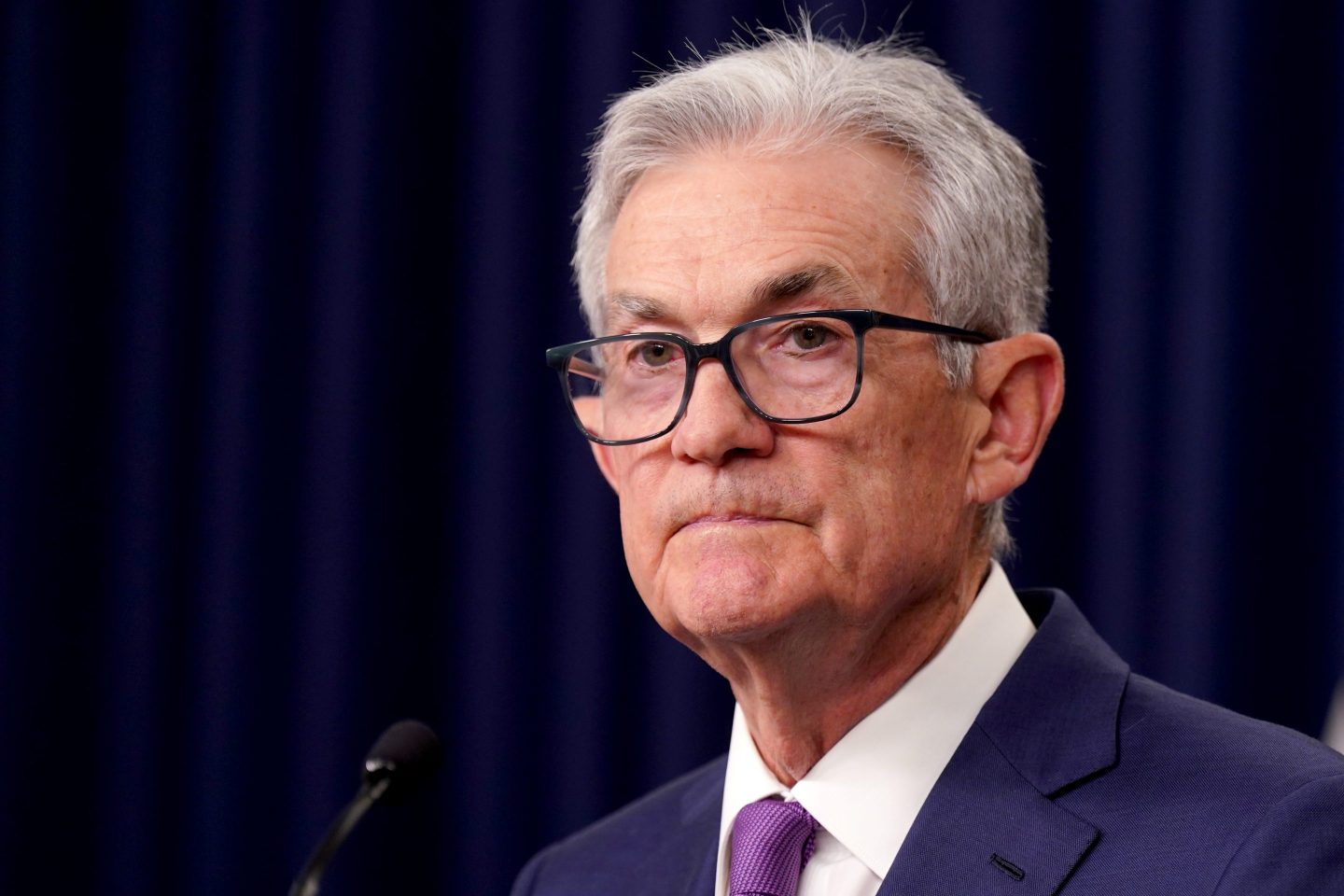
Fed Chair Jerome Powell at a news conference following a Federal Open Market Committee meeting in Washington, D.C., on Jan. 31, 2024.Al Drago—Bloomberg/Getty Images

Federal Reserve Chairman Jerome Powell has avoided announcing interest rate cuts in recent months despite a steady drop in U.S. inflation, and Steve Eisman, a senior portfolio manager at Neuberger Berman, has a theory about why. 

The veteran investor who rose to fame after he was portrayed predicting and profiting from the 2007–08 supreme mortgage crisis in the 2010 book, The Big Short, and a subsequent film of the same name, believes that Powell has learned from history, particularly the history of Paul Volcker, the Fed chair known for defeating inflation in the 1980s and sparking a recession in the process. 

“I actually think, deep down, Powell is petrified of redoing Volcker again,” Eisman told CNBC Monday.

To understand what Eisman is getting at, we have to delve into some 1970s and ’80s economic history, including the tenures of former Fed chairs Volcker and Arthur Burns, and the pivotal moment of that era which resembles the early 2020s.

Avoiding a ‘Volcker shock’—by doing nothing

Paul Volcker is probably the most famous Fed chairman of all time. “Tall Paul,” known for his height, his dour demeanor, and his habit of chomping on an unlit cigar while testifying to Congress, has gone down in history as a visionary. He’s often praised for combating the rampant inflation of the 1970s by raising interest rates at an unprecedented speed in the early ‘80s. His success in the role paved the way for the eventual triumph of Ronald Reagan on the back of an economic recovery, and the birth of a whole financial regime that lasted until at least the Great Recession of 2008.

On the other hand, Volcker’s predecessor, Burns, is lambasted in the history books as a passive chair who failed to take action as inflation ran up and away, setting the stage for Volcker’s emergency surgery. But what often gets lost in the history of that era—and what Eisman is referring to—is that it took multiple rounds of rate hikes and a short but nasty recession for Volcker to truly defeat inflation.

After what is now called the first “Volcker shock”—where Volcker raised rates to over 18% to fight inflation quickly after taking office in August 1979—rates were actually slashed to around 9% by the summer of 1980 because the economy was stumbling.

Then, with inflation proving persistent, Volcker raised interest rates again to a peak of roughly 20% by January 1981. The policy amounted to a whipsaw for the economy and sparked a serious recession in 1981 and 1982, where the unemployment rate surged to a peak of 11%—the highest level in post-WWII history, barring the brief, COVID-induced spike in 2020.

Eisman believes it’s this fate that Fed Chair Powell is hoping to avoid today. With inflation fading, instead of cutting interest rates right away, Powell is attempting to slowly lower rates over time to avoid the type of whipsaw monetary policy that can spark recessions.

“Put it this way, they’ve engineered what looks to be a soft landing. Inflation is coming down, the economy is still strong, why would you waste rate cuts now and risk a resurgence of inflation?” Eisman argued.

With inflation fading and the economy proving it can withstand the current level of interest rates in recent months, Fed Chair Powell’s best option might be to simply do nothing, instead of opting for economy and market-juicing rate cuts.

Eisman argued that the Fed can already “declare victory” over inflation and that it has “engineered something really pretty fantastic.” That means, unlike Paul Volcker, who was faced with persistent inflation and a weakening economy in the early 1980s that in some ways forced him to choose between inflation or a recession, Powell has the luxury of simply waiting to see how the economic data looks in coming months before altering policy.

According to Eisman, the Fed should just say something like: “We will wait to see some data. If the economy really starts to weaken, we will hold [rate cuts] in reserve, and until then we’ll just leave things the way they are—they seem to be pretty good.”

“What’s the matter with that?” he added.

Eisman’s remarks contrast with earlier analysis of Powell’s tenure, with many financial observers claiming that the Fed chair was trying for the exact opposite: to draw comparisons to Volcker and avoid any with Burns.

Join us at the Fortune Workplace Innovation Summit May 19–20, 2026, in Atlanta. The next era of workplace innovation is here—and the old playbook is being rewritten. At this exclusive, high-energy event, the world’s most innovative leaders will convene to explore how AI, humanity, and strategy converge to redefine, again, the future of work. Register now.
About the Author
Will Daniel
By Will Daniel
LinkedIn iconTwitter icon
See full bioRight Arrow Button Icon

Latest in Finance

Finance
Lorem ipsum dolor sit amet, consectetur adipiscing elit, sed do eiusmod tempor incididunt ut labore et dolore magna aliqua. Ut enim ad minim veniam
By Fortune Editors
October 20, 2025
Finance
Lorem ipsum dolor sit amet, consectetur adipiscing elit, sed do eiusmod tempor incididunt ut labore et dolore magna aliqua. Ut enim ad minim veniam
By Fortune Editors
October 20, 2025
Finance
Lorem ipsum dolor sit amet, consectetur adipiscing elit, sed do eiusmod tempor incididunt ut labore et dolore magna aliqua. Ut enim ad minim veniam
By Fortune Editors
October 20, 2025
Finance
Lorem ipsum dolor sit amet, consectetur adipiscing elit, sed do eiusmod tempor incididunt ut labore et dolore magna aliqua. Ut enim ad minim veniam
By Fortune Editors
October 20, 2025
Finance
Lorem ipsum dolor sit amet, consectetur adipiscing elit, sed do eiusmod tempor incididunt ut labore et dolore magna aliqua. Ut enim ad minim veniam
By Fortune Editors
October 20, 2025
Finance
Lorem ipsum dolor sit amet, consectetur adipiscing elit, sed do eiusmod tempor incididunt ut labore et dolore magna aliqua. Ut enim ad minim veniam
By Fortune Editors
October 20, 2025

Most Popular

Finance
Lorem ipsum dolor sit amet, consectetur adipiscing elit, sed do eiusmod tempor incididunt ut labore et dolore magna aliqua. Ut enim ad minim veniam
By Fortune Editors
October 20, 2025
Finance
Lorem ipsum dolor sit amet, consectetur adipiscing elit, sed do eiusmod tempor incididunt ut labore et dolore magna aliqua. Ut enim ad minim veniam
By Fortune Editors
October 20, 2025
Finance
Lorem ipsum dolor sit amet, consectetur adipiscing elit, sed do eiusmod tempor incididunt ut labore et dolore magna aliqua. Ut enim ad minim veniam
By Fortune Editors
October 20, 2025
Finance
Lorem ipsum dolor sit amet, consectetur adipiscing elit, sed do eiusmod tempor incididunt ut labore et dolore magna aliqua. Ut enim ad minim veniam
By Fortune Editors
October 20, 2025
Finance
Lorem ipsum dolor sit amet, consectetur adipiscing elit, sed do eiusmod tempor incididunt ut labore et dolore magna aliqua. Ut enim ad minim veniam
By Fortune Editors
October 20, 2025
Finance
Lorem ipsum dolor sit amet, consectetur adipiscing elit, sed do eiusmod tempor incididunt ut labore et dolore magna aliqua. Ut enim ad minim veniam
By Fortune Editors
October 20, 2025
Fortune Secondary Logo
Rankings
  • 100 Best Companies
  • Fortune 500
  • Global 500
  • Fortune 500 Europe
  • Most Powerful Women
  • Future 50
  • World’s Most Admired Companies
  • See All Rankings
Sections
  • Finance
  • Fortune Crypto
  • Features
  • Leadership
  • Health
  • Commentary
  • Success
  • Retail
  • Mpw
  • Tech
  • Lifestyle
  • CEO Initiative
  • Asia
  • Politics
  • Conferences
  • Europe
  • Newsletters
  • Personal Finance
  • Environment
  • Magazine
  • Education
Customer Support
  • Frequently Asked Questions
  • Customer Service Portal
  • Privacy Policy
  • Terms Of Use
  • Single Issues For Purchase
  • International Print
Commercial Services
  • Advertising
  • Fortune Brand Studio
  • Fortune Analytics
  • Fortune Conferences
  • Business Development
  • Group Subscriptions
About Us
  • About Us
  • Editorial Calendar
  • Press Center
  • Work At Fortune
  • Diversity And Inclusion
  • Terms And Conditions
  • Site Map
  • About Us
  • Editorial Calendar
  • Press Center
  • Work At Fortune
  • Diversity And Inclusion
  • Terms And Conditions
  • Site Map
  • Facebook icon
  • Twitter icon
  • LinkedIn icon
  • Instagram icon
  • Pinterest icon

Latest in Finance

Gen Z is ‘Chinamaxxing’—and it’s less a love letter to Beijing than an indictment of America
EconomyGen Z
Gen Z is ‘Chinamaxxing’—and it’s less a love letter to Beijing than an indictment of America
By Nick LichtenbergApril 19, 2026
2 hours ago
For wealthy buyers, Mar-a-Lago’s security perimeter is Palm Beach’s hottest amenity
Real EstateHousing
For wealthy buyers, Mar-a-Lago’s security perimeter is Palm Beach’s hottest amenity
By Sydney LakeApril 19, 2026
2 hours ago
stressed student and parent
SuccessCareers
Parents are so panicked about the job market they’re paying career coaches $15,000 years before their kids graduate from college
By Jake AngeloApril 19, 2026
3 hours ago
A woman kneels on the floor next to an older woman sitting down.
HealthLabor
‘The current system right now is unsustainable’: top economist sees a crucial crack in the economy
By Sasha RogelbergApril 19, 2026
3 hours ago
imas
AIdisruption
The economist who was terrified of AI just found a rare reason for hope
By Nick LichtenbergApril 19, 2026
4 hours ago
trump
CommentaryZoom
The U.S. has a $282 billion trade surplus you’ve never heard of — and it’s at risk
By Josh KallmerApril 19, 2026
4 hours ago

Most Popular

'We should absolutely be concerned about non-college-educated men today': higher rents, living at home, falling out of the labor market
Economy
'We should absolutely be concerned about non-college-educated men today': higher rents, living at home, falling out of the labor market
By Catherina GioinoApril 18, 2026
1 day ago
MacKenzie Scott has donated more than $26 billion—but it's barely made a dent in her net worth because of the power of Amazon shares
Success
MacKenzie Scott has donated more than $26 billion—but it's barely made a dent in her net worth because of the power of Amazon shares
By Sydney LakeApril 18, 2026
22 hours ago
Older millennials are starting to act like boomers in the housing market—and pulling away from the pack
Real Estate
Older millennials are starting to act like boomers in the housing market—and pulling away from the pack
By Nick LichtenbergApril 17, 2026
2 days ago
The power has swung back to employers—and workers are paying for it in benefits, flexibility, and leverage
Workplace Culture
The power has swung back to employers—and workers are paying for it in benefits, flexibility, and leverage
By Marco Quiroz-GutierrezApril 17, 2026
2 days ago
Putin finally admits Russia's economy is in trouble and grasps for answers, after warnings about a financial crisis have been piling up
Economy
Putin finally admits Russia's economy is in trouble and grasps for answers, after warnings about a financial crisis have been piling up
By Jason MaApril 18, 2026
16 hours ago
Meet the AI founders using agents to build instantly profitable 3-person companies
AI
Meet the AI founders using agents to build instantly profitable 3-person companies
By Nick LichtenbergApril 18, 2026
1 day ago

© 2026 Fortune Media IP Limited. All Rights Reserved. Use of this site constitutes acceptance of our Terms of Use and Privacy Policy | CA Notice at Collection and Privacy Notice | Do Not Sell/Share My Personal Information
FORTUNE is a trademark of Fortune Media IP Limited, registered in the U.S. and other countries. FORTUNE may receive compensation for some links to products and services on this website. Offers may be subject to change without notice.