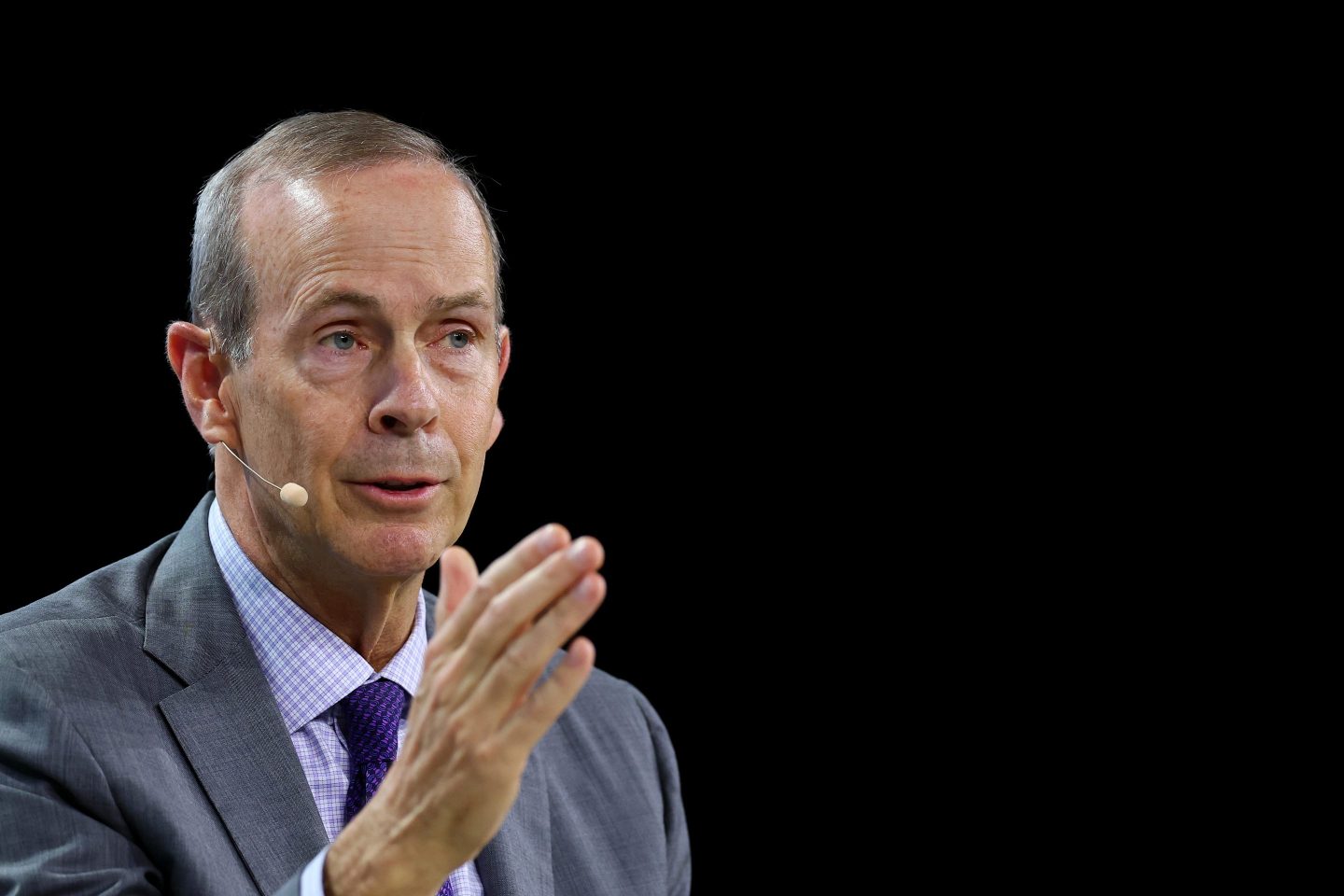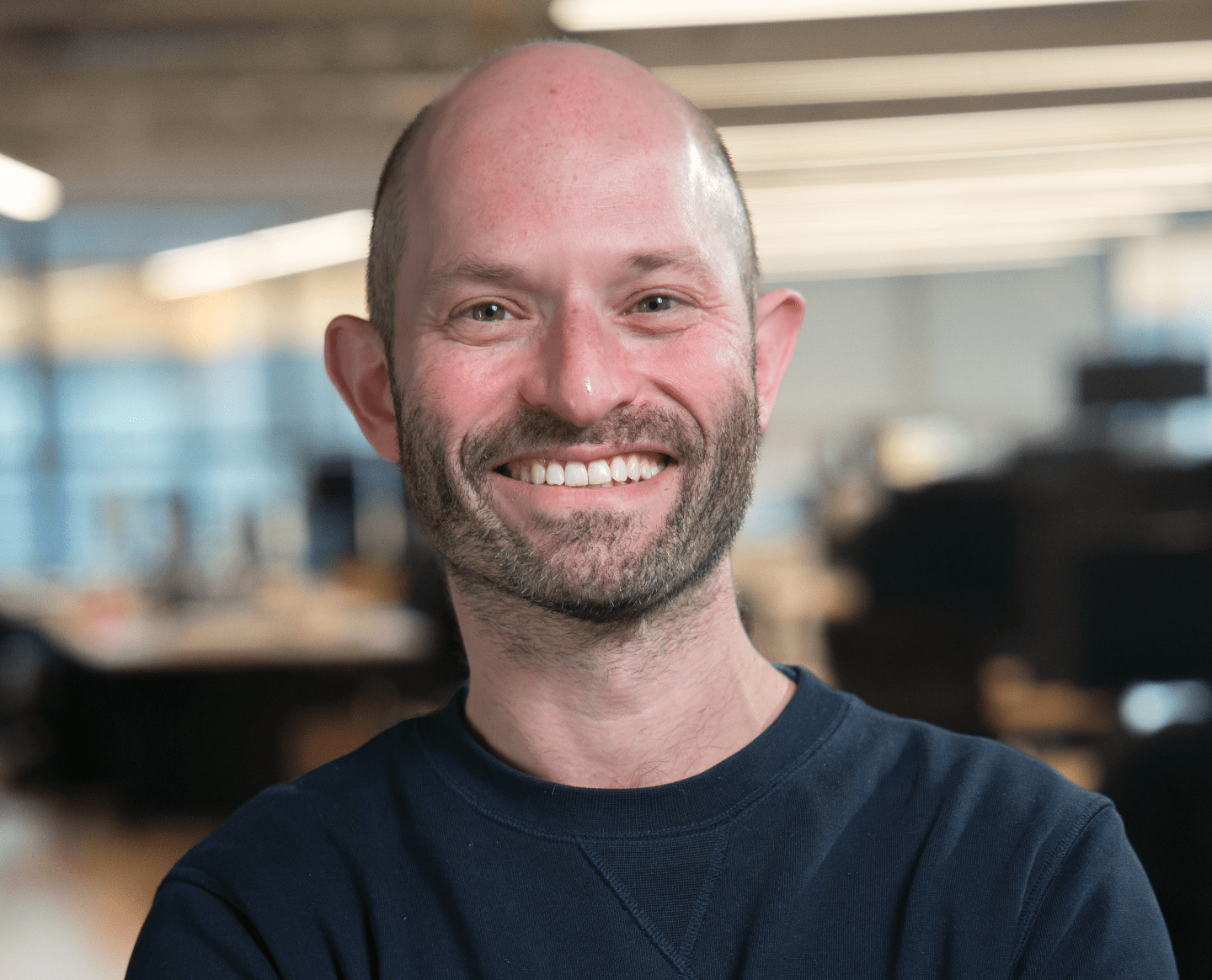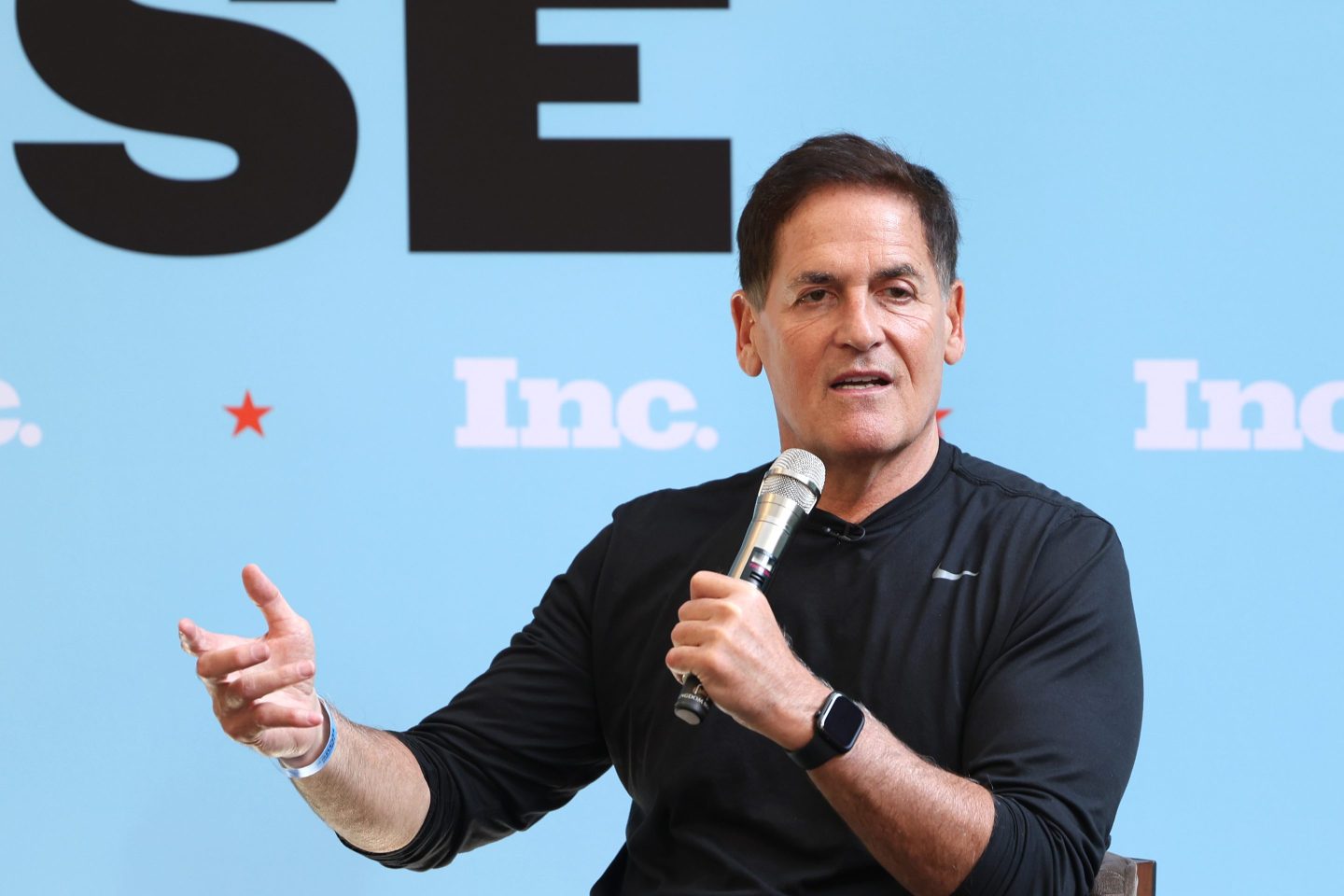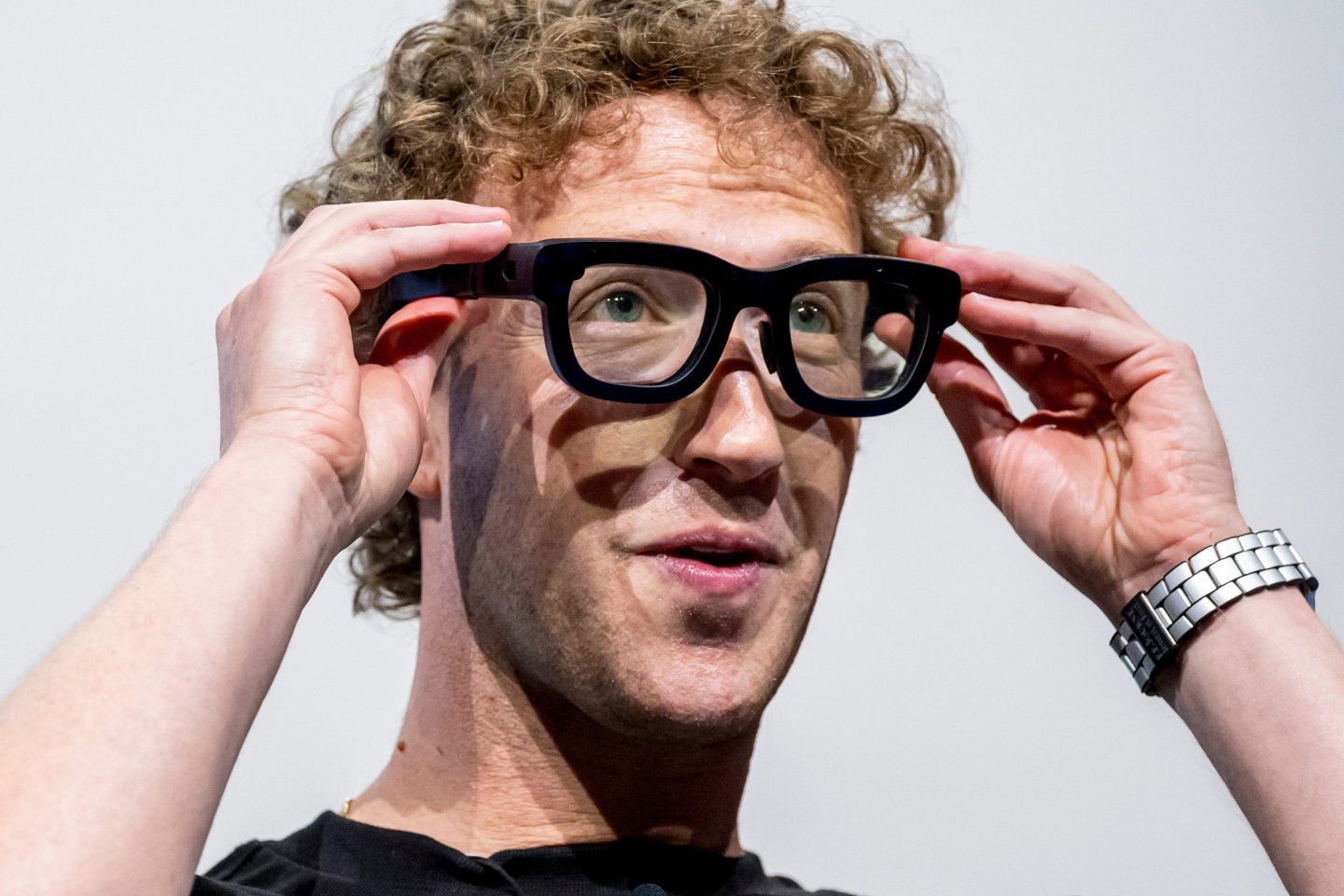
On the first episode of the fifth season of Fortune’s Leadership Next podcast, co-host Alan Murray sits down with some of the world’s most powerful CEOs for dinner at Davos.
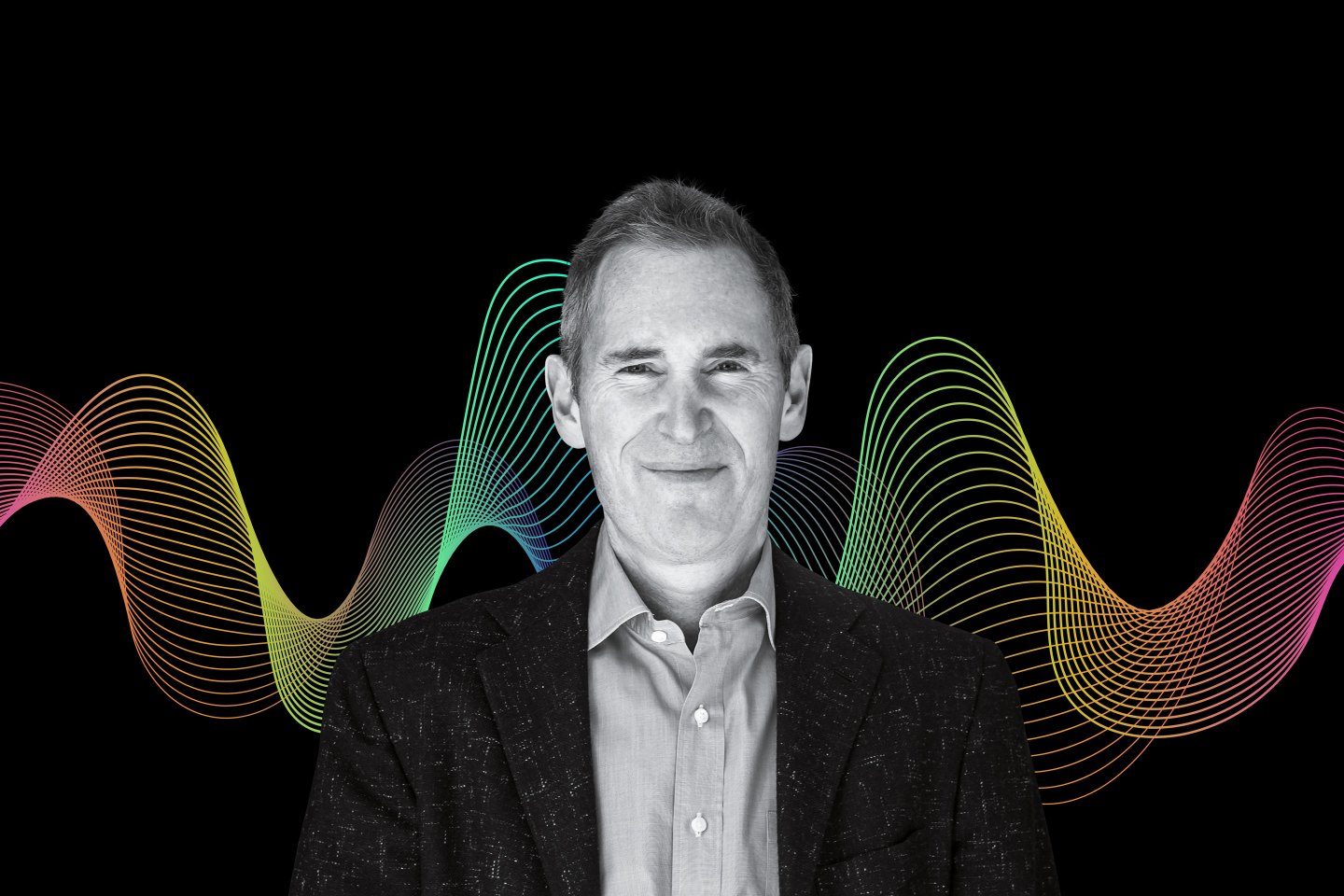
The opening interview for the evening was with Amazon CEO Andy Jassy. During their conversation, Murray and Jassy talked about 2024’s biggest opportunities and risks. There was one topic that stood out above all others, just as it did for all the other CEOs at the dinner: generative AI. The one question Jassy wouldn’t answer: How his leadership style differs from Amazon founder Jeff Bezos.
Leadership Next co-host Michal Lev-Ram joins Murray for the pre-interview chat.
Listen to the episode or read the transcript below.
Transcript
Alan Murray: I can’t believe this crowd has this much energy this late in the week after a full Davos. [Applause from the crowd.] So, congrats. Yeah. I want to thank all of you for coming to the best dinner in Davos. [More applause.] This has been proven by AI [laughter from crowd]: Best dinner, best people, best conversation. So, I’m really glad that you’ve given us some of your time.
[Music.]
Leadership Next is powered by the folks at Deloitte who, like me, are exploring the changing rules of business leadership and how CEOs are navigating this change.
Welcome to Leadership Next.
Michal Lev-Ram: The podcast about the changing rules of business leadership.
Murray: I’m Alan Murray and…
Lev-Ram: I’m Michal Lev-Ram.
Murray: Welcome to the fifth season of Leadership Next, Michal. I can’t believe we’ve been doing this for four years and have a fifth to go.
Lev-Ram: We’re so old. [Laughter.] That’s pretty awesome.
Murray: We’ve had a lot of CEOs from a lot of the best-known companies in the world on over the course of those four years. But one thing we have never had, until this episode, is the CEO of Amazon, the number two company on the Fortune 500 list, vying for one of the most valuable companies in the world. Jeff Bezos alluded us, but recently Andy Jassy joined Fortune at our annual CEO dinner in Davos.
Lev-Ram: Speaking of Bezos, by the way, I think he only talks space these days. So, unless we do an episode devoted to that, we’re not getting him.
Murray: I’m in.
Lev-Ram: It would be cool. It would be cool. In your view, what was different about Bezos as a leader and Jassy? And obviously it’s a different era now for Amazon.
Murray: What I’ve been told and what I’ve observed is Bezos is famous for his customer obsession. Everything was about the customer. You read the letter that he wrote every year, it’s customer, customer, customer. And I think he reached the point where employees started to feel like they were chopped liver saying, “Hey, wait a minute.” Yeah, the customer is important, but what about us? And I do think Jassy has changed the approach a little bit, is perceived as a little more employee friendly, a little more focused on a variety of stakeholders and not relentlessly focused on technology and customers at the cost of everything else. But what was interesting in the interview, I made several attempts to get him to compare himself to his predecessor. He absolutely refused to take the bait. He was not going to play that game no matter how hard I tried.
Lev-Ram: Tell us about Davos. How was it this year? What was different? What stood out?
Murray: You know, it’s such a strange experience because you get this incredible concentration of CEOs and other prominent people. The president of Poland was there, President Zelensky from Ukraine was there, the secretary of state from the U.S., the premier from China, all in this tiny little ski town in Switzerland. And you know, you run into them walking across the street, etc. We, for nine years, have gathered together the CEOs who were in town for a dinner on the Thursday night of the event. Andy Jassy has attended a couple of times in the past. He agreed to come and be the opening interview and then we had table discussions with all of the CEOs where they talked about the same thing that Andy did, which was what are the big opportunities and the big risks that lie ahead in 2024? And what you’re going to hear is that number one on that list and probably number two, number three and number four on that list is AI.
Lev-Ram: Well, I know he also brought up beef tournedos. Can you explain what that is?
Murray: There was a menu on the seats in front of us and he saw beef tournedos and was trying to figure out what that meant. Thought it must be beef twisted like a tornado here. I’m Googling it right now. It’s just pan-seared beef.
Lev-Ram: Okay. I thought it…
Murray: …dressed in a red wine mushroom sauce.
Lev-Ram: So your challenge now is…
Murray: I don’t know.
Lev-Ram: So your challenge now is to work this into some kind of metaphor for the economy. The economy is in a beef tournedo. You know, it’s interesting, Amazon, obviously, I mean, we think of it as the everything store. It’s the everything company, right? It is just mind boggling how much we interact with Amazon and its various brands.
Murray: He talked about that. He talked about different tentacles. He talked about what they’re doing in medicine. You know, they bought a company called One Medical. I think any company that wants to try and transform medicine in the United States deserves our support.
Lev-Ram: Good luck to them.
Murray: It’s a massive company that touches our lives in so many ways, which is why this interview was so much fun. I’m really, really sorry you weren’t there, Michal. But let’s dive in and remind everyone that this is in a tight room in a tiny little ski village in the Swiss Alps with about 80 CEOs of big global companies. So it’s a different context than our normal Leadership Next.
[Music.]
Andy Jassy, why don’t you come up here and join me? [Applause.] I think he needs no introduction. You guys have heard of Amazon. One-and-a-half million people, one-and-a-half trillion dollars in market cap. But I learned something really interesting tonight for the first time—that you almost came to work for Fortune. You want to you want to share that story?
Andy Jassy: Well, I had. First of all, it’s great to be here with all of you. I was telling Alan that I thought you were going to talk about the beef tournedos. I was hoping…
Murray: We will get to that.
Jassy: In between my first job and going to graduate school, when I was applying, I had this recruiter call me about Fortune magazine, and I had a lot of friends I’d worked with before who were there. I had a lot of respect for Time Inc. I got the offer, and I almost did the job instead of going to business school, and then I decided to go to graduate school.
Murray: It’s like Fortune, Amazon, Fortune, Amazon.
Jassy: It was business school.
Murray: You made a good decision.
Jassy: It was just luck. Total luck.
Murray: You got it right. I want to start by asking you the question that everybody in this room is going to be asked to address tonight, because this is where we really get value out of this dinner. Look at the year ahead. What do you see as the single biggest opportunity facing business and the single biggest risk facing business?
Jassy: Well, of course, everything we think we know today may be different three months from now. So take this with a grain of salt. I would say that to me, I think the opportunity and risk is pretty similar in that there is this wildly transformative, disruptive technology in generative AI, that you can’t get through any conversation without talking about. And I think people, as they, you know, people were on this march pre-pandemic to modernize their technology. You know, it’s just part of, you know, I used to manage this business, this AWS business, our cloud computing business. And people were on this march to modernize their technology, to be able to have a lower cost structure, and have better developer productivity, and innovate at a faster clip. And then the pandemic happened. And then we had this economy where everyone, you know, most enterprises tried to figure out how they could save money in any way they could, ours included. And a lot of the low-hanging fruit and cost optimization has attenuated over the last several months, and we’re back to starting to invest. I just see companies really battling with the prioritization between are they better off continuing with that modernization of their technology platform or should they spend all their new engineering resources on generative AI?
In my opinion, you have to think, again, it’s prioritization. Everyone will decide differently. I think you have to think about it in a balanced way because, to me, if you don’t set, basically, if you don’t have your technology infrastructure foundation right, you are going to have a hard time being successful with generative AI. And actually it’s such a sure win to be able to modernize your technology and move to the cloud that, to me, it has a very predictable payback. And yet at the same time, I think you would be foolish not to figure out how to use generative AI successfully. I think everyone is trying to figure out how to be successful in a cost effective and higher ROI way. And so I think that, to me, a lot of companies will end up deciding to take the sure successful win of modernizing their technology platform and setting their foundation right, and then picking at least one or two generative AI initiatives where they can learn how to run it. They can learn how to be successful, they can figure out what you got to do to get the right ROI and right customer experience for your business. But it’s got to be a balance, in my opinion.
Murray: Do you think Davos has overdone the AI thing a bit?
Jassy: I mean, I don’t think Davos is unique to that. Yeah, I think it is so exciting. It’s really, it has the chance to transform virtually every customer experience. I mean, we’re building 60-ish applications right now.
Murray: Yeah, yeah. Let me ask you about that because, yes, every conversation for the last four days has been about AI and particularly generative AI. But when you talk to people about it, they generally talk about Open AI and Microsoft. Maybe they talk about Google, maybe they bring in Meta, but they don’t talk about Amazon. I mean, do you feel like you have missed, been behind the braid a little bit on this or what? Why are we not hearing Amazon in the same sense?
Jassy: I don’t. Know who you’re talking to Alan. [Laughter from crowd.] Not our customers.
But, you know, I think that most of the conversation, in my opinion, on generative AI so far has really been at the application layer. So, things like ChatGPT, which is by the way, a really remarkable application. But the way that we think about AI is it has three layers of the stack, and all three are massive, and we’re investing very heavily in all three. But you know, at the bottom layer, if you’re going to build your own large language models, you’re going to have to train the models. And the key to training is compute, and the key to compute is the chip in the compute, and today there’s really been one GPU chip provider, and many of you probably know it’s hard to get capacity right now. And people are wondering, you know, what the cost structure is really going to be like.
And so, you know, about five years ago we invested in building our own custom AI chips, and we have a chip that we’ve built for training called Training, and one that we built for inference called Inferential. And we’re on the second version of those chips, and they’re going to be meaningfully more price performant than what you see elsewhere. And so, you know, when you get into, I think customers who build models are starting to figure out the cost equation is maybe a little bit different than they thought. And then the dirty little secret—if you have generative AI apps in production at scale like we do in a bunch of areas like Alexa—is that almost all the cost ends up being in the inference. You know, you train, take Alexa, you train periodically, but we have billions of predictions or inferences coming, you know, every day. And so people are going to really care about that price performance. So that bottom layer is an area I think people are going to care about.
And then at that middle layer, it’s really for companies that don’t want to build their own large language models. They want to use somebody else’s and customize it with their own data. And, you know, we built a service called Bedrock there that does just that. It basically takes our own large language models, and then Anthropic’s and Meta’s with Llama 2 and Cohere and Stability AI. And you know, it takes whatever hard language models you think you want to use, you can customize it with your own data, not leak it back into the general model, and they have the same security and access control and features that you run in the platform. And that also, like, what you’re learning, when you actually talk to companies or if you have your own experience building generative AI apps, you realize that it’s not going to be one model to rule the world. It’s going to be lots of different models that are better at different things. And then, you know, to try to get the quality that you need for your customers and your reputation at the cost structure and the latency you need for the customer experience, it’s actually not simple. And so one of the attractive parts of something like Bedrock is you can move between models and between sizes and models to experiment and find the right experience.
And, you know, and then there’s that top layer which are the applications. And you know, there’s, there’s ChatGPT. But I think another really compelling application in the early days is the Coding Companion. And, you know, we launched a single months ago called Queue that writes code for you, it debugs the code and tests the code, it does transformations in both versions of Java to the new versions, and it looks at your data repositories and lets you answer questions. So all three layers of those stacks. Now that stack is important, and we’re making big investments in all those areas, and I think it’s still quite early days, but…
Murray: But you feel comfortable with where you are now?
Jassy: It is so early. This is like three steps into a marathon, but our customers really like what we’re building.
Murray: Well let me ask you, in my house and many of our houses, the first time we started talking to the furniture was Alexa, as you mentioned. So how does Alexa fit in to this process?
Jassy: Yeah, well, you know, Alexa, like a number of different areas inside our company, is one of the many businesses that is building a significant large language model. And, you know, Alexa as you know, you’ve used Alexa for lots of different things, but we’re building a much more expansive, large language model that is aimed to fulfill our broader vision, which has always been the vision for Alexa, which is to be, you know, the world’s best personal assistant.
[Music starts.]
Murray: I’m here with Jason Girzadas, the CEO of Deloitte U.S., the sponsor of this podcast. Thanks for sponsoring and thanks for joining me, Jason.
Jason Girzadas: It’s a pleasure to be with you, Alan, and our privilege to sponsor this important podcast.
Murray: It’s great to have you. This whole notion of generative AI is really exploded onto the scene and into our consciousness in the last year. It’s the fastest introduction of a new technology in history. How do business leaders deal with that and how do they separate the hype from the opportunity?
Girzadas: It’s a great question, Alan. The hype is real, but we also think the opportunity is more real and in fact an imperative for all businesses. The opportunity right now for businesses is around taking advantage of generative AI and other digital technologies for efficiency and productivity gains, with the belief they will continue to evolve and mature, such that there’s other opportunities for value creation and that new disruptions and innovations that we haven’t even seen the possibilities of. The challenge just to balance this opportunity. As a result, businesses have to diversify their approaches. It’s a CEO level priority, but an understanding of where and how these models are being put to use in your business operations. What are the controls put around data and data quality, as well as ensuring that the models are tested and actually validated like you would do any other customer facing or highly sensitive system in an enterprise environment.
Murray: Jason, thanks for your perspective and thanks for sponsoring Leadership Next.
Girzadas: Thank you.
[Music ends.]
Murray: So, I want to talk to…you’ve been in this job for two years now, right?
Jassy: Two and a half.
Murray: Two and a half. Okay. So you’ve learned a lot. You’ve experienced a lot. How would you say your leadership style is different than your predecessor?
You can do this, Andy. Come on.
Jassy: Well, I mean, you know, it’s a trick question, but then, you know, look, I grew up at Amazon. You know, I’ve been in Amazon for 26-and-a-half years, and I’ve done so many different jobs there, and I’ve been lucky enough to work closely with Jeff. I worked directly for Jeff for 20 years. So, you know, I feel like I learned from somebody who’s arguably the most unusual business leader of our era. So, you know, I’m lucky that way. But I do think that every era of business leadership, I think everybody knows this in this room is different. When I started the job, nobody really predicted that the pandemic would last that long, and Omicron would come, and the war in Ukraine would come, and the inflation. I mean, you know, there’s lots of things that happened throughout, and you have to just keep adjusting. And that’s what we tried to do as a team.
Murray: But when you now, you have two and a half years to look back, how is it different? Granted, anybody in the job would have changed. But how do you think the leadership at Amazon is different than it…?
Jassy: Well, I don’t, you know, we have a very, yeah, we have a set of leadership principles, there are 16 leadership principles that we, you know, carefully crafted and recrafted over the years. I think the leadership principles are quite consistent. I think the leaders are very consistent culturally. It’s just we have different, we have some different folks leading the businesses at this point.
Murray: Yeah, I could keep trying, but you probably don’t want me to.
[Laughter from audience.]
Jassy: You have to decide how long you want to go on.
[More laughter.]
Murray: Okay, let’s see. Where can we go from there? One of the things that has come up in a number of conversations over the course of the last week is with everyone imagining these incredible options for using AI, there is a question about where does the compute power and where does the electricity come from to run all these massive applications? Amazon has been early and strong on sustainability, but how does this explosion in interest in complicated, massive compute power make you think about sustainability?
Jassy: Well, you know, I think we all I’ve been in the Fortune dinner business, maybe my third or fourth year, and we always talk about how important the environment is and how critical it is. And like a lot of you know, we have this thing called the Climate Pledge where we’ve, you know, pledged to be carbon zero by 2040. And for a company like ours, it’s different than most technology companies. We’re already well over 90% renewable energy now. We’ll be 100% in 2025. But to get all the way there, when you have to ship as many products as we do with as many trucks and you know, the packaging and all the buildings, it’s quite difficult.
And I think it’s interesting what’s happened with power. I think that a lot of the municipalities around the world underestimated how much power was required. In fact, several of them told us they just took our estimates and cut them by a third. They just didn’t believe them. And that was during the pandemic and that was before, you know, generative AI came about. You know, generative AI and these large language models are so power hungry that it’s been an explosion in demand, and there’s not enough energy right now. And so, we’re going to have the dual challenge as a group to find a lot more energy to satisfy what people want to do and what we can get done for society with generative AI. But we’ve got to do it in a renewable way, in a carbon neutral or zero way. It can’t be going back to coal. So that that will require a lot of development, and we’ll have to be part of that.
Murray: So what’s the next big thing to come from Amazon? I mean, is it health? You made this investment in One Medical. What’s the thing that excites you that could be a fourth pillar for Amazon?
Jassy: Well, there are so many things that I’m excited about. This is a hard, this is not a soup question. You know, I think that I’m very bullish on what we’re doing with Prime Video. You know, I think the combination of the customer experience, the content we build ourselves, you know, the sports that we have and then all of our third-party media partners who are part of our channels program, we’re trying to build the place as the best selection of streaming video. And I think that customers, you know, the growth that we’ve had there, the growth in engagement, the growth in customers, the marketplace, I’m very bullish about that business and how it’s progressing. I also think, you know, there’s still 400 to 500 million households around the world that don’t have broadband connectivity. And so they can’t do the things we take for granted. They can’t do education online. They can’t do their jobs online. They can’t watch entertainment, they can’t buy. And so we’re pursuing this Earth orbit satellite that we call Kuiper that we think will have a real meaningful impact on a lot of people around the world, particularly in rural areas that I also think will be… it’s a big capital investment, but I think it will help a lot of people and it will be a good business as well.
Murray: When will you start to roll that out?
Jassy: We’ll start to roll it out this year. You know, we did our first two big end-to-end test satellites in October that really performed very well. So there’s a lot of demand for that. There’s demand on the government and the enterprise side, and consumers are excited about it too.
Murray: Health care? There are a lot of people curious about where you’re going in health care.
Jassy: You know, I feel like when my parents tell me that they didn’t have color TV, you know, I just kind of roll my eyes. Like my kids, you know, roll their eyes when I said we didn’t have the internet when I was growing up or mobile phones. But I think that my kids’ kids will not believe what the health care experience was for us. Like the fact that if you want to go see a doctor, you got to make an appointment three or four weeks out, you got to drive 20 minutes and park. You have to wait in the waiting room for 15 minutes. Then they put you in an exam room. You go, wait 10 minutes for the doctor. Doctor sees you for 10 minutes and you drive 20 minutes to the pharmacy, I mean, that experience is just kind of nutty. And that that will completely go away with the way the future of health care is. And so One Medical is a different way of doing primary care. It has an amazing digital interface. You can chat with doctors, you can do video conferences, you can make appointments same day or next day. You can get into specialists same day or next day. All the reservations are integrated. And then if you whatever pharmaceutical needs you have, they’re connected to Amazon Pharmacy and to a bunch of others that you just get sent to your house within a day. So it’s a very different experience and, you know, pharmacy for us was not a big extension. We’ve been asked by customers for so long to do that, and that business has grown really quickly, and I think will be big as well. But we’re really trying to get at changing the core health care experience, starting in the U.S., which I think has not been a happy place for a lot of people.
Murray: We’re just about out of time here. But you’ve got this massive antitrust case against you from the FTC. I mean, anything to that.
[Jassy laughs.]
I’m trying to make it easy for you.
Jassy: Well, what I would say to that is I am aware of it and…
[Laughter from crowd.]
Murray: I’ll ask you another question. Have you watched the video of Bill Gates being deposed in the 1990s in his antitrust case?
Jassy: No, I haven’t.
Murray: You haven’t? You should.
Jassy: Okay.
Murray: Yeah, I would strongly recommend you do.
Jassy: You know, I think all I can say about that is I think that I think they’re wrong on the facts and the law. I think that will be borne out over time. How they go in general, we need to be careful in in Western countries not to kill innovation and not, you know, there’s a lot of consolidate in various industries, and if we only, you know, have strong regulations in Western countries, you’ll leave the playing field open in other spots you don’t mean to.
Murray: Is there anything that I haven’t asked you that I should have?
Jassy: Not that I’m aware of.
Murray: Good.
Jassy: If I knew what beef tournedos….
Murray: You’re going to find out in just a minute. Go ahead. Take your seat. Thank you for doing this. It was great talking to you.
Leadership Next is edited by Nicole Vergara.
Lev-Ram: Our executive producer is Chris Joslin.
Murray: Our theme is by Jason Snell.
Lev-Ram: Leadership Next is a production of Fortune Media.
Murray: Leadership Next episodes are produced by Fortune’s editorial team. The views and opinions expressed by podcast speakers and guests are solely their own and do not reflect the opinions of Deloitte or its personnel. Nor does Deloitte advocate or endorse any individuals or entities featured on the episodes.