Last year’s best performing asset class wasn’t tech stocks or derivatives: It was so-called catastrophe bonds, a little-known class of financial instruments that protect against losses from natural disasters.
After years of slow growth, experts say a breakout 2023 will push the $40 billion cat bond market closer to its “Holy Grail” of finally reaching the mainstream. Lucky weather patterns helped yield roughly 20% returns for cat bond holders, who like them as a hedge because their performance has little correlation with broader financial markets. New money is expected to pour in this year as investors chase those big yields—but while that’s good for the overall market, it could backfire on the uninitiated.
“It does offer a real diversification tool,” Florida State University insurance professor Charles Nyce told Fortune. “If my shares of Google go down or my shares of Apple go down because of an economic downturn, that shouldn’t have a big effect on my cat bonds.”
And the tough state of the environment, to say the least, means cat bonds aren’t going anywhere. As they work in symbiosis with the $120 billion climate-related insurance market, both are poised to just keep growing as natural disasters get stronger and more frequent. A new Aon report found, for instance, that climate catastrophes caused $380 billion in economic losses last year, and climate scientists warn of a “new normal” in multibillion-dollar disasters of this type. So what’s the problem for investors seeking a hedge?
“2023 was an outstanding year, with almost a 20% return on some of the indices,” says Nyce, who also holds master’s and doctoral degrees in insurance and risk management from the University of Pennsylvania’s Wharton School, but “[that was] well above what we’ve seen in the past. I don’t expect that to repeat itself.”
An all-time year
Another catastrophe insurance expert, Steve Evans, founder of industry publication Artemis, who’s been covering cat bonds for over two decades, says that this unique asset class started coming of age before the new millennium.
“It became very clear around the mid-’90s that if you had the Miami Category 5 hurricane, or if you had the San Francisco or Los Angeles earthquake … the insurance industry was going to actually struggle to have the capital to absorb a loss of that size,” Evans said. For insurance companies covering these events, claims for a single massive storm could threaten to wipe out all of their capital.
That’s where the reinsurance market comes in. For years, specialized providers have offered policies that provide insurance for other insurance companies. But as climate risks continue to grow, traditional policies just aren’t offering enough coverage. That’s why cat bonds have emerged as an alternative form of insurance where a larger pool of investors, not just a few reinsurance companies, can absorb some of the risk.
“A $50 billion loss can be catastrophic to an insurer,” explains Nyce. “The difference is, when you think about capital markets, a $50 [billion] swing … is something they could lose in a day and make up the next day. The Holy Grail has always been, ‘Let’s get to the capital markets, where the magnitude of these losses is not as significant.’”
How cat bonds work
Insurance companies can issue cat bonds, which promise a regular coupon and full repayment at a specified date just like any other bond, to anyone who will buy them. But the difference is that a natural disaster which causes big insurance losses can “trigger” the cat bond and let the issuing insurance company claim its full value to cover itself. That elevated risk means yields can be high—nearly 20% last year.
Those juicy yields have made cat bonds a prime target for a few niche hedge funds. Connecticut-based Fermat Capital Management just had its best year ever with a cat bond–heavy strategy that yielded roughly 20% returns.
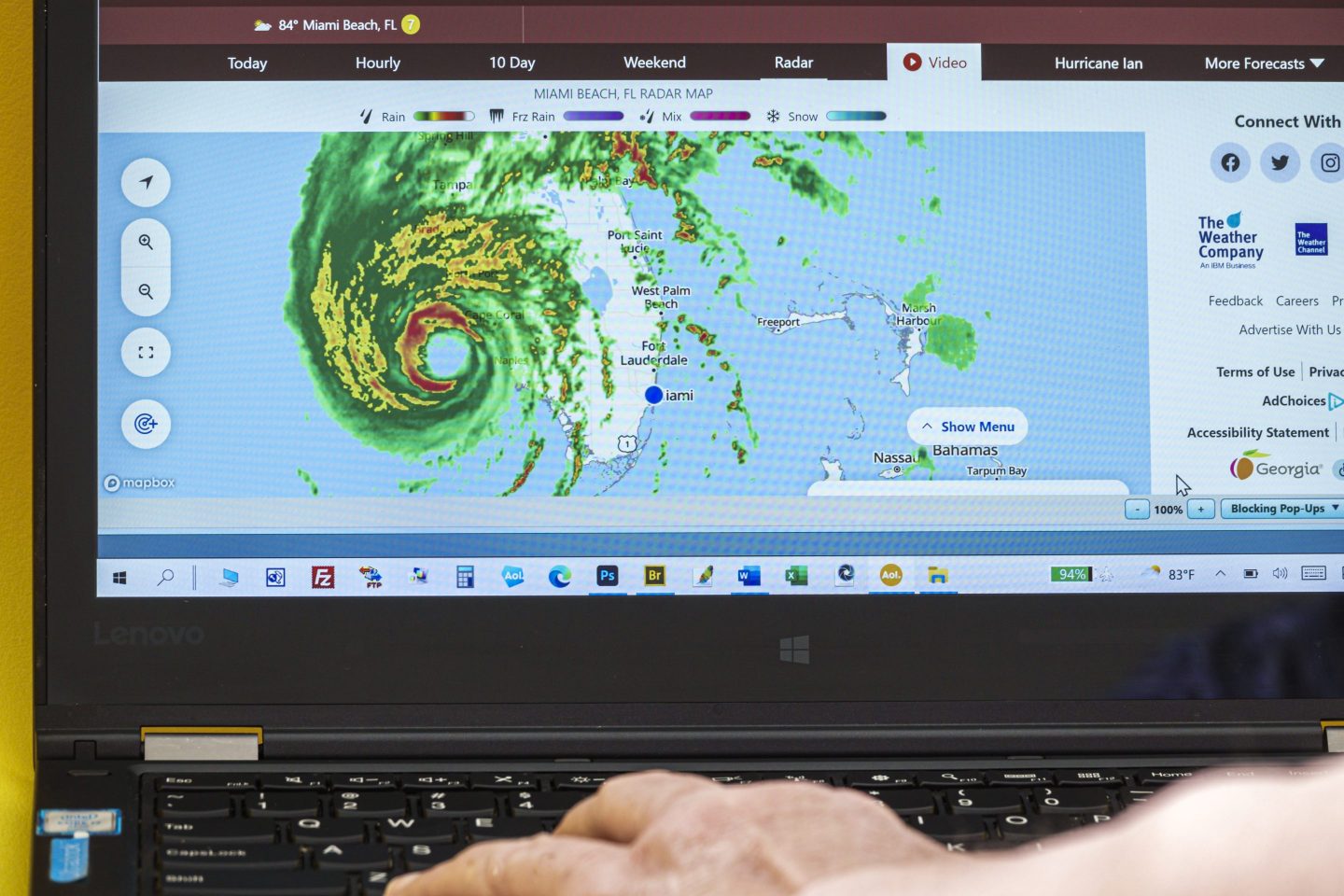
Cat bond investors’ balance sheets benefited in 2023 from strong market conditions and a healthy amount of good luck. For one, Hurricane Ian, which caused nearly $13 billion in insurance losses after it hit Florida in 2022, scared the market and pushed rates up. Those high yields were only increased by rising construction costs that made it more costly to rebuild after a natural catastrophe. And although major disasters did strike in 2023—earthquakes in Turkey and Syria and wildfires on Maui, for example—they didn’t trigger significant losses in the cat bond market, so investors were able to cash in their bets with barely any losses.
Uncorrelated risks, uncorrelated returns
One of the key draws of investing in cat bonds is that weather events have little correlation with financial markets, which means investors can buy up cat bonds to be less vulnerable to overall economic swings.
That diversification potential and last year’s record returns are drawing more and more investors into the cat bond market—Evans says he’s already seeing the difference. But a flood of new capital doesn’t help everybody.
On one hand, more money flowing into bond issuers’ pockets means broader coverage and greater access to the massive capital markets they’ve been trying to get to for years.
“I think the big thing for cat bonds is piercing $50 billion [in market capitalization],” said Nyce. “These need to be scaled up more … [Big returns] are the kind of stuff that will draw interest from investors.”
Waiting for the Big One
Of the roughly 280 cat bonds currently tradable, approximately half have exposure to the most dangerous natural disaster on any insurer’s mind—a Category 5 hurricane hitting Miami. But as the market grows and climate disasters become more common elsewhere, insurers are issuing bonds that focus on more niche, regional events, too. That’s a key source of the cat bond industry’s growth.
“Between 40% and 60% of the market is exposed to a major, Category 5 U.S. hurricane,” said Evans. “The market began very much focused on [those] ‘peak perils,’ and has then expanded out a little bit more to include other types of perils as well. We’ve seen everything from wildfire to meteorite impact risk transferred now.”
But there could be a cost to a flood of investors buying up cat bonds in search of high yields—in terms of diminishing value and ground-floor buyers losing their edge.
“If you flood the market with capital … that typically results in more competition and typically pressures pricing a bit. I think there’s a bit of a desire to just be a bit more cautious about capital raising and how much actually comes in over the next year,” said Evans.