I was fortunate to start my career in the mid-80s when the industrial world was experiencing a massive transformation. Virtually every industry, from manufacturing to aerospace to buildings, experienced significant productivity gains by switching from obsolete pneumatic, analog, and hydraulic systems to modern digital technologies enabled by microprocessors and software.
Since then, industry has continued to evolve. Those microprocessors and software have improved, and in recent years the Industrial Internet of Things has come to the fore. That has created the connected workplace, enabling predictive maintenance, remote monitoring, and even further automation (aka “smart factories”).
Today, the world is understandably fascinated by the potential for artificial intelligence to revolutionize many aspects of our life, but it’s important that we separate the marketing hype from the business value. I firmly believe in the problem-solving potential of applying AI to the Industrial world at scale. In my world, however, autonomy is not a simple switch from current state to fully autonomous operations. Because of the importance of resiliency and safety in many industrial applications, the path to autonomy is about climbing steps; with each one, you move closer to full autonomy.
Think of mission-critical activities like flying planes or running a mining operation. We’re simply not at the stage where functions like that can operate fully autonomously without humans making final decisions. However, in both of those cases and numerous others, AI promises to address an acute set of interrelated challenges in the industrial world: the declining availability of skilled labor, the loss of institutional knowledge as an aging workforce retires, and the need for organizations to speed the decision-making process while ensuring accuracy and quality.
In the case of aviation, the need is critical. The International Air Transport Association anticipates a global pilot shortage of 85,000 by 2032. Not only will there be a lack of pilots, but this will also be coupled with a drain on institutional and industry knowledge that has been built over decades.
AI can change that. Instead of having two human pilots in the front seats, AI increasingly makes it possible for one to do the job. Over time, a co-pilot will be able to work on the ground while their piloting partner is in the cockpit. While commercial passengers may be a long way off from stepping onto a plane fully piloted from the ground, eventually AI can ensure that cargo planes are pilotless, or at least are flown remotely, with a pilot on board to take over in case of emergency. AI will also play a major role in enhancing safety, both in the air and on the ground.
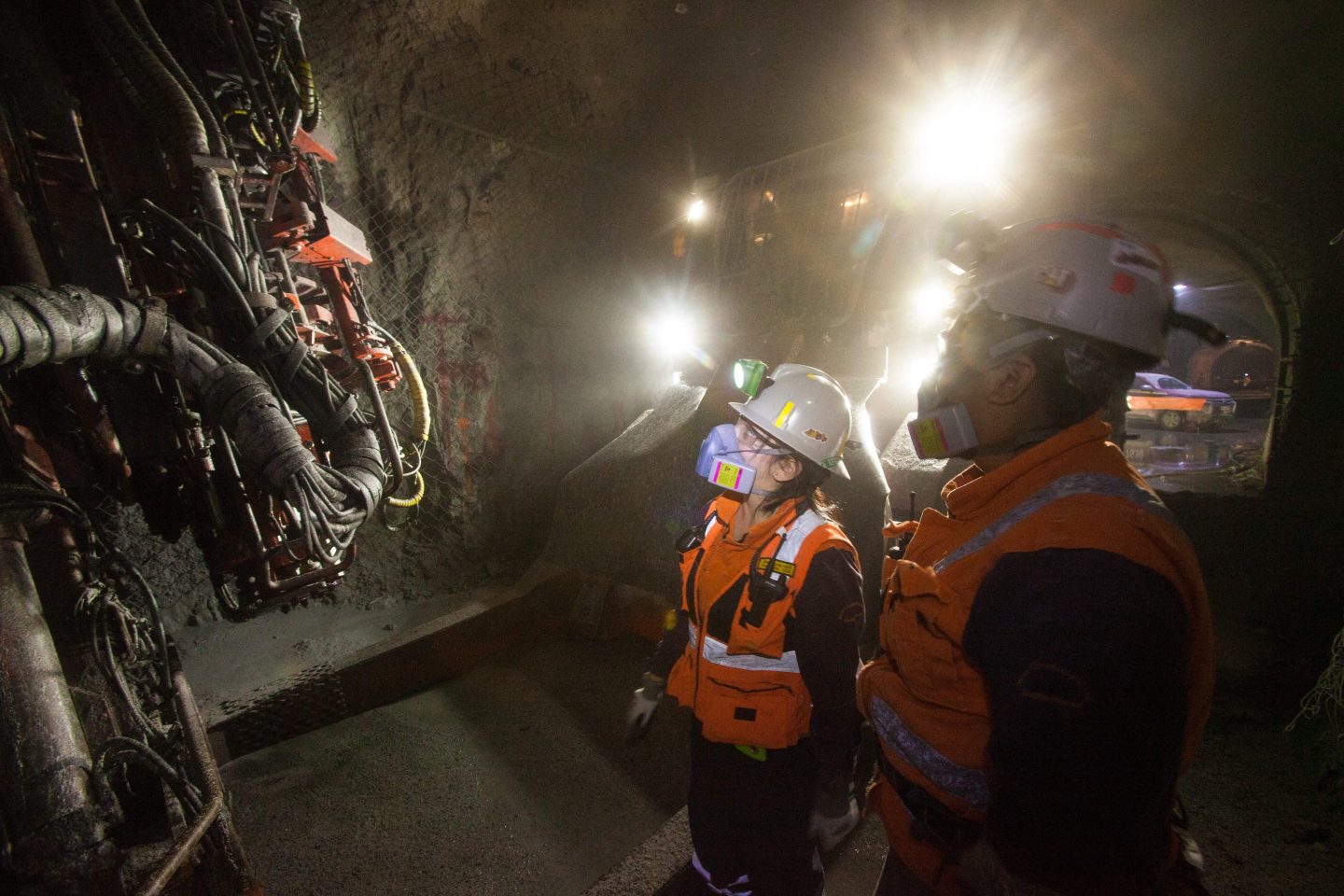
In mining, Honeywell and the Chilean copper mining giant Codelco have long been partners in an effort to address the shortage of skilled labor, to improve safety, and to increase business efficiency through a comprehensive application of automation. This led to the creation of a state-of-the-art, Honeywell-run remote operations center in Santiago that uses data, analytics, and predictive maintenance to improve the company’s mining capabilities. With the abundance of data and connectivity, we are now piloting an AI solution intended to further enhance productivity, safety, and product quality at the mines, which in some cases are more than 1,000 miles from the operations center.
We’re also seeing signs of promising progress in multiple other sectors. For example, Globalworth, a leading commercial real estate owner/operator in Central and Eastern Europe, is using the power of data and AI to make its operations more sustainable and energy efficient while enhancing the occupant experience by adjusting comfort controls based on real-time building data within its commercial facilities in Poland and Romania.
For Honeywell, AI is a natural fit. We’ve built a strong foundation of connected offerings, such as technologies enabling process and building industry efficiency, worker productivity in warehouses, quality assurance in the life sciences industry, and emissions management for buildings and industrial plants, all powered by our Honeywell Forge software. We see AI as a natural extension of automation, building a pathway to autonomy in the industrial sector.
We’re certainly not alone. Leaders of businesses across multiple industries see AI as the path forward. According to a recent Honeywell-sponsored survey of decision-makers at multinational businesses, 85% of companies “mostly” or “fully” trust automation to meet their strategic goals, and 69% believe the hype is real about the future of AI. But the path to get there will be an iterative one. For 2024 and beyond, organizations looking to harness the power of AI as part of their journey to autonomy need to assess and prioritize data, design, and people:
- Taking advantage of AI’s ability to unlock the flood of data that any complex operation creates to enable predictive maintenance, energy management, data security, improved safety and product or service quality.
- Designing with the use of AI in mind, whether it’s a factory, an airplane cockpit, or a skyscraper. Today’s designs may not be compatible with AI, and it’s necessary to figure out what changes will be needed to maximize the benefits of the technology.
- Identifying where AI can deliver data and actions that make your people faster, more efficient, and accurate – and ensure this is deployed in a thoughtful way.
As a leader evaluating how to fully tap into the full potential of AI in your organization, consider these three foundational areas against your own operation. That will enable you to strategically navigate the path from where you are today to where you want to be.
The velocity at which innovation is occurring across industry is already breathtaking—and, thanks to the continuing evolution of AI, it will only get faster. The key is assessing where your organization stands today, the direction you need to go, and the capital and human investments you need to make to get you there. The leaders who recognize this will be the ones best positioned to match that speed and seize the opportunities that continue to unfold.
Vimal Kapur is the chief executive officer of Honeywell.