After an extended period of gloom, Americans are starting to feel better about inflation and the economy — a trend that could sustain consumer spending, fuel economic growth and potentially affect President Joe Biden’s political fortunes.
A measure of consumer sentiment by the University of Michigan has jumped in the past two months by the most since 1991. A survey by the Federal Reserve Bank of New York found that Americans’ inflation expectations have reached their lowest point in nearly three years. And the same survey, released last week, found that the proportion who expect their own finances to improve a year from now is at its highest level since June 2021.
Economists say consumers appear to be responding to steadily slower inflation, higher incomes, lower gas prices and a rising stock market. Inflation has tumbled from a peak of around 9% in June 2022 to 3.4%. According to the Federal Reserve’s preferred price gauge, inflation has reached the Fed’s annual 2% target when measured over the past six months.
What’s more, paychecks have outpaced inflation over the past year, thereby easing Americans’ adjustment to a higher cost of living. Weekly earnings for the typical worker — halfway between the highest and lowest earners — rose 2.2% last year after adjusting for inflation, the government reported last week. By that measure, inflation-adjusted pay is 2.5% higher than before the pandemic.
“While falling inflation took some time to feed through to consumer sentiment, it appears the good news is finally getting through,” said Grace Zwemmer, an analyst at Oxford Economics.
Even with the steady slowdown in inflation, prices are still nearly 17% higher than they were three years ago, a source of discontent for many Americans. Though some individual goods are becoming less expensive, overall prices will likely remain well above their pre-pandemic levels.
That dichotomy — a rapid fall in inflation with a still-elevated cost of living — will likely set up a key question in the minds of voters, many of whom are still feeling the lingering financial and psychological effects of the worst bout of inflation in four decades. Which will carry more weight in the presidential election: The dramatic decline in inflation or the fact that most prices are much higher than they were three years ago?
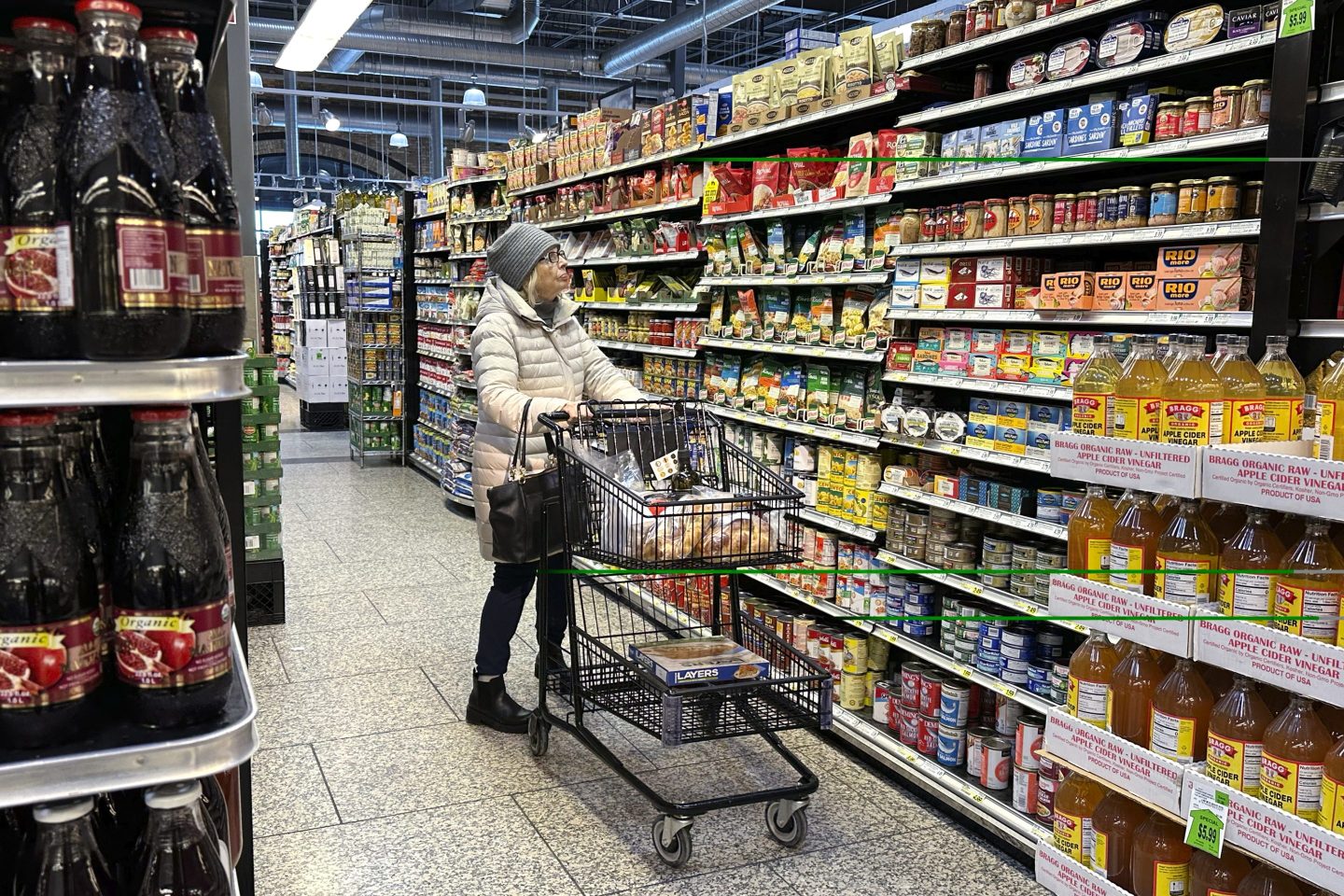
Consider the price of food, one of the items people encounter most frequently. Grocery inflation has plummeted from a year-over-year peak of 13.5% in August 2022 to just 1.3%. Yet a typical basket of groceries still costs 20% more than it did in February 2021, just before inflation began to accelerate. On average, chicken prices are up 25%. So, too, is bread. Milk is 18% more expensive than it was before the pandemic.
The cost to rent an apartment has also soared and is still rising faster than before the pandemic. Rental costs are up 6.5% from a year earlier, nearly twice the pre-pandemic pace. At their peak in early 2023, rents were rising nearly 9% annually.
Sharply higher costs for such necessities as food and rent still represent a heavy burden for people like Romane Marshall, a 30-year-old software engineer who lives on the outskirts of Atlanta.
In late 2020, Marshall took computer coding classes to try to move beyond the warehouse and customer service jobs he had previously held. When he was hired by a professional services consulting firm in April 2021, he was “ecstatic.” After he completed an apprenticeship program the next year, his pay jumped from $50,000 to $60,000.
Yet his expenses kept rising, too. When he moved to a new apartment to be closer to work as his company shifted from full-time remote work to a hybrid schedule, his rent doubled to $1,475 a month, from the $700 he’d paid for a room in a friend’s house.
Marshall says his typical grocery bill is now about $120 to $130, up from just $70 to $80 three years ago. To keep his electricity costs down, he only occasionally turns on the heat in his apartment.
“There have been some positive changes, it’s just that things got expensive,” he said. “The only thing I notice is that the price of food is still high.”
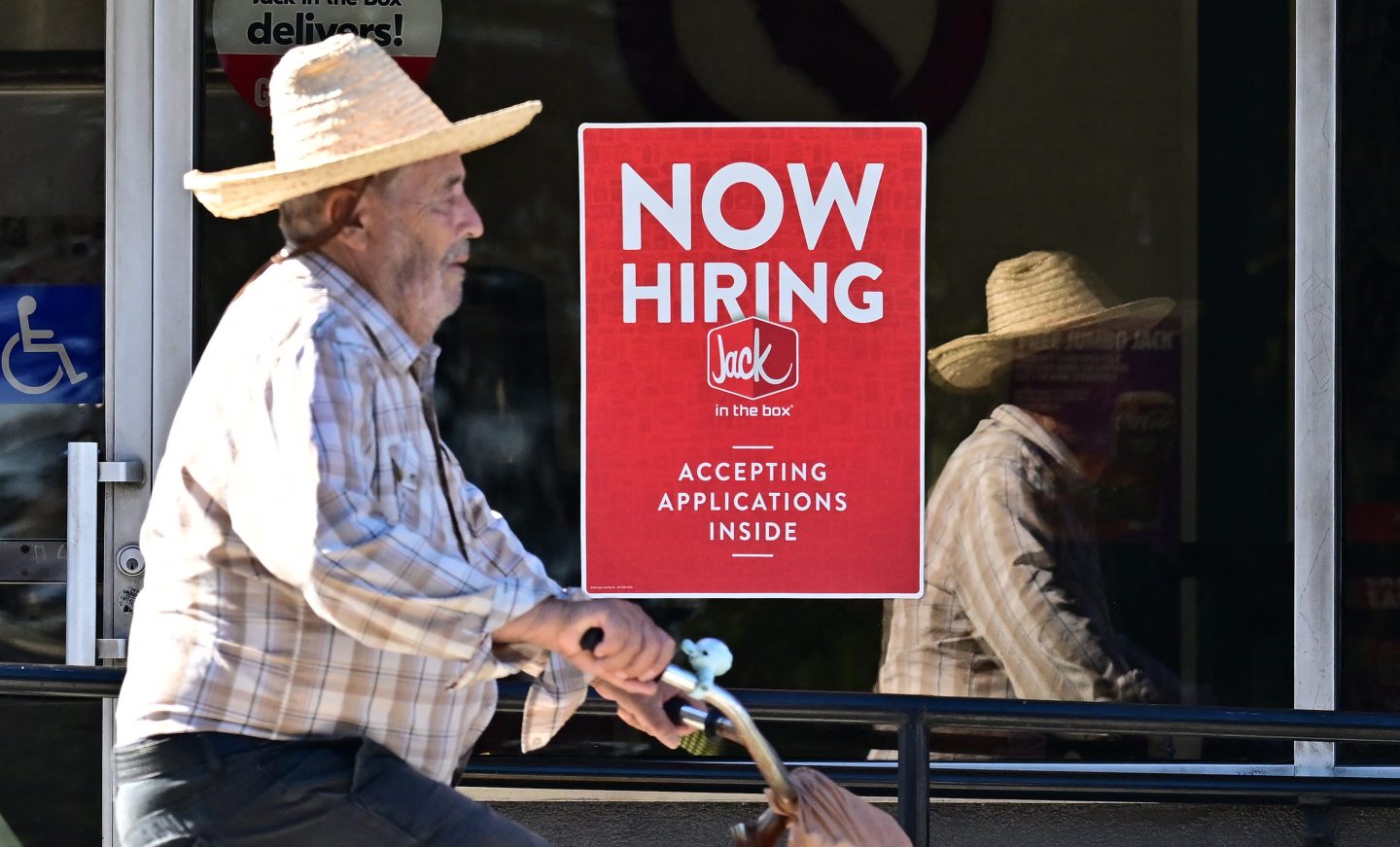
Some Americans do have a cheerier outlook now. Hiring has remained solid, with the unemployment rate remaining below 4% for nearly two years, the longest such stretch since the 1960s.
Dana Smith, a software developer, says she’s optimistic that the economy is improving. He and his wife have both received pay raises that have helped offset the price spikes of the past three years.
Smith, 40, lives in Matthews, North Carolina, about a half-hour from Charlotte, where he and his wife bought a home about three years ago. It has since risen about 30% in value, boosting their household wealth.
“My perception,” he said, “is that the economy is getting better and better.”
The public’s growing optimism about the economy could point to newfound enthusiasm for Biden’s candidacy this year, after weak polling has defined much of his time in office. Still, Ryan Cummings, an economist who has analyzed consumer confidence and how it’s affected by political views, cautioned that politics might limit how much public sentiment can improve.
Americans’ economic outlooks, he said, are increasingly driven by political partisanship rather than by the economy’s underlying performance.
“As the election goes on,” Cummings said, “and it becomes more clear that the 2024 race will be Trump vs. Biden, Republicans might dial up their pessimism more than Democratic sentiment is increasing, pulling sentiment back down, regardless of economic fundamentals.”
The University of Michigan survey found that consumer sentiment among Democrats jumped a sharp 11.8% in January, the second-largest such increase on record. (The biggest increase among Democrats occurred immediately after Biden’s presidential victory in 2020.)
Many Americans might still favor having the government take steps not only to slow inflation but also to try to reduce overall prices to where they were before the pandemic. In a classic 1997 research paper, the Nobel Prize-winning economist Robert Shiller found that two-thirds of respondents to a survey he conducted agreed that the government should try to reverse a 20% spike in prices.
Economists, though, uniformly caution that any attempt to do so would require a significant weakening of the economy, resulting from either sharp interest rate hikes by the Fed or tax increases. The likely consequence could be a recession that would cost millions of jobs.
David Andolfatto, an economist at the University of Miami and a former Fed economist, said it is better for wages to rise over time to allow people to adjust to higher prices.
“The cost of living is higher, the wages are higher,” he said. “Let’s just move ahead. There’s no need for (the government) to bring the price level back down. It would be too painful.”
Claudia Sahm, founder of Sahm Consulting and also a former Fed economist, acknowledged that “people are angry” about higher prices.
“But then, the next question is, can you afford it?” she asked. “Not everybody can say yes to that question. But over time, more and more people will be able to say yes.”