
• Home
  • Latest
  • Fortune 500
  • Finance
  • Tech
  • Leadership
  • Lifestyle
  • Rankings
  • Multimedia
FinanceEconomy

The vibecession is in recession as cooling inflation and rising wages have Americans feeling better about the economy in the new year

Will Daniel
By
Will Daniel
Will Daniel
Down Arrow Button Icon
Will Daniel
By
Will Daniel
Will Daniel
Down Arrow Button Icon
January 19, 2024, 4:16 PM ET
Jerome Powell
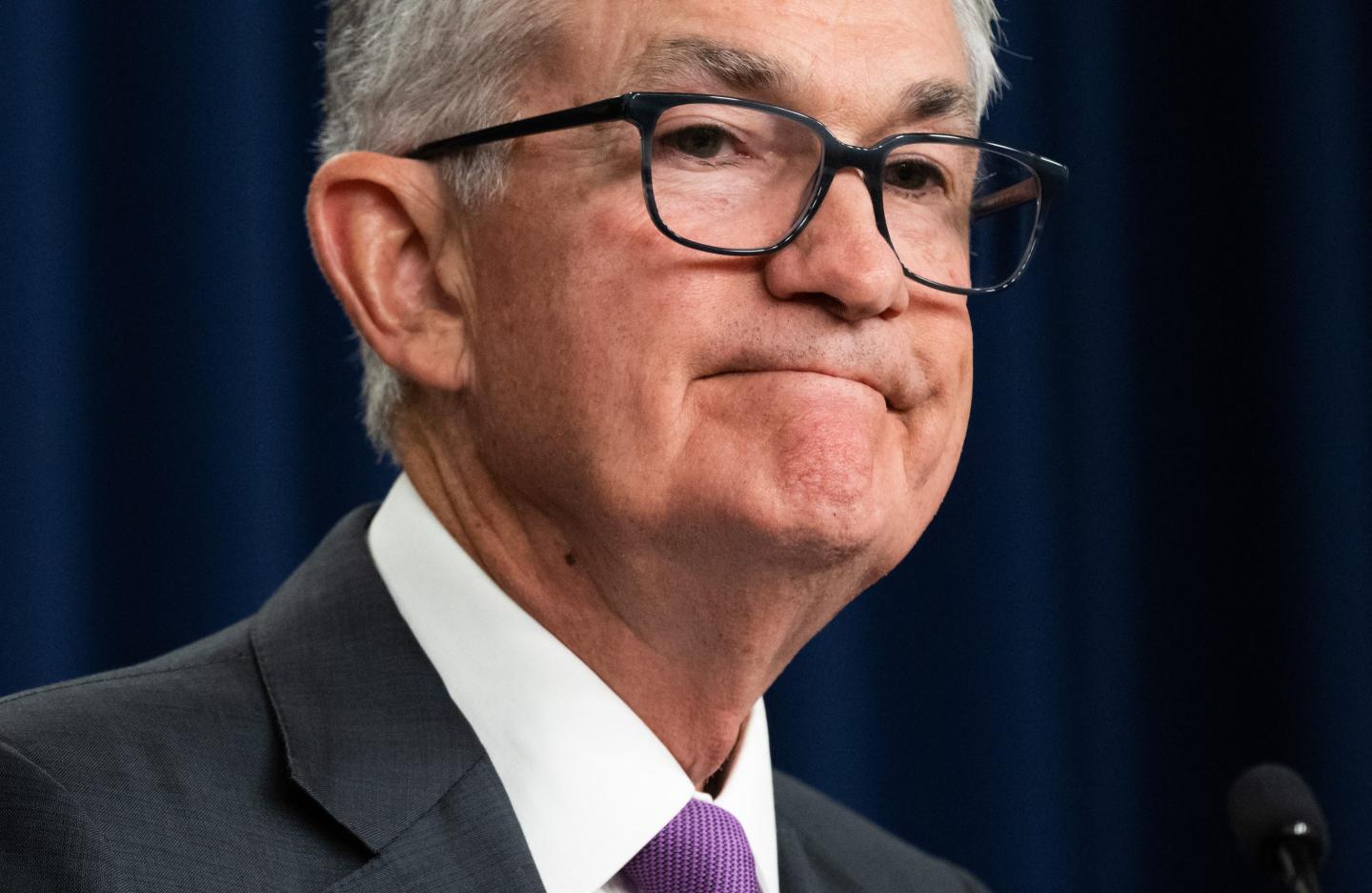
The vibecession appears to be in recession itself.SAUL LOEB/AFP via Getty Images

Back in the summer of 2022, Kyla Scanlon, a former options trader who has earned a reputation as a prescient, social-media savvy financial pundit, put a word to what everyone was feeling: the economy wasn’t in recession, but rather a “vibecession.” First in her popular Substack newsletter, and then in a subsequent New York Times article, Scanlon detailed her simple, yet insightful idea. Soon, all of Wall Street, and even the Federal Reserve, were embracing the millennial lingo of “vibes.”

Essentially, she argued that consumers just don’t feel good about the economy, even though a wealth of hard economic data shows things are going pretty well on paper. The vibes, you might say, are off.

Scanlon, who also founded the financial education company Bread, detailed some of the factors driving the “vibecession,” from high gas and rent prices to surging borrowing costs. At the time, Americans certainly were facing a long and undeniably ugly list of economic issues. But Scanlon noted that, even back in 2022, the economy’s health was improving, with supply chains unsnarling and inflation fading post-pandemic—and further normalization has only continued over the past 18 months. 

Now, as more favorable economic data comes in each day, the bad vibes appear to be fading. Consumer sentiment readings that languished throughout most of 2023 have perked up. It’s no wonder why—stocks are at all-time highs; retail sales are rising; GDP continues to grow; and inflation has fallen from 9.1% in June 2022 to just 3.4%. All the while, unemployment has stuck near 50-year lows, a remarkable achievement for an economy that was locked down by a pandemic not long ago.

As Arindrajit Dube, provost professor of economics at University of Massachusetts Amherst, who is known for his work studying inequality and the economic impact of minimum wages, put it in a Friday post: “The vibes are catching up with the hard data on the economy, and the Great Vibecession is looking increasingly … transitory.” 

Sentiment surveys are catching up with hard economic data

Even though hard economic data, from inflation indices to retail sales reports, have repeatedly proved favorable over the past year, even in the face of the Federal Reserve’s interest rate hiking campaign, consumers have refused to believe the economy was as good as the data indicated.

That began to change in December when the Conference Board’s consumer confidence index surged nearly 10% in a single month. The non-profit think tank discovered more positive ratings of current business conditions and job availability, on the one hand, and less pessimistic views of business, the labor market, and personal income prospects, on the other, looking out over the next six months. This was true across all age and income categories, Dana Peterson, chief economist at The Conference Board, explained in a statement.

Then, on Friday, the University of Michigan released the preliminary reading for its own Index of Consumer Sentiment, and it shocked many Wall Street experts. As measured by the university’s long-running index, consumer sentiment surged 13% in January alone, coming in at 78.8 compared to Wall Street’s consensus estimate for 70.1.

All five of the index’s components rose this month, including a 27% surge in the near-term business conditions outlook and a 14% rise in current personal finances conditions. And like The Conference Board’s measure of sentiment, the University of Michigan saw a broad consensus of improved sentiment across age, income, education, and geographic categories.

Inflation expectations for the next 12 months, which the Fed has been carefully watching for signs of entrenched inflation, also sank 2.9% in January to their lowest level since 2020. Jeffrey Roach, chief economist for LPL Financial, told Fortune that the data is evidence “consumers feel more comfortable about where the economy is heading.” 

And Capital Economics argued in a Friday note that fading inflation expectations and rising consumer sentiment are yet “another sign that the economy is on track for a soft landing.” Bank of America Research’s Global Economics team, led by Claudio Irigoyen, went a step further, writing on Friday that this week’s data shows the U.S. economy continuing to head to a “very soft landing.”

Why did it take so long for sentiment to recover—and will it continue?

Consumer sentiment has clearly lagged behind relatively optimistic hard economic data over the past few years. But Wells Fargo’s chief economist Jay Bryson told Fortune that there are a few logical reasons why this was the case.

First, in 2021 and throughout most of 2022, real wage growth—nominal wage growth adjusted for inflation—sank for the first time since 2014 as consumer prices soared. The reality was, at least for a few years, Americans’ wages simply didn’t keep pace with soaring goods and services prices.

But real wage growth returned in the fourth quarter of 2022 and has been maintained ever since. Bryson argued that people will “start to feel better about the economy” throughout this year as a result of this trend.

The other key reason that consumer sentiment was so low for so long was Americans’ inexperience with inflation. “My hypothesis on that is, we really haven't had inflation to speak of for a long time … so many people alive today have not experienced inflation until the last few years,” Bryson said, arguing that this meant it has taken Americans “a few years to get their minds around the fact that prices aren’t going to go back down.”

When many consumers hear that inflation is fading, Bryson explained, they believe that this means prices are falling. But in reality, inflation is a measure of the change in prices, so fading inflation merely means that prices aren’t increasing as rapidly as they were.

Now, though, consumers will begin to get accustomed to higher, but more stable prices, Bryson believes, and that should lead to improved sentiment surveys—a.k.a. the end of the vibecession.

“They’ll say: ‘Okay, prices aren't going up anymore. And four years ago, I was making $18 an hour. Now, I'm making $23 an hour, so I'm doing okay,’” the veteran economist argued. “But it takes a while for that to happen.”

Join us at the Fortune Workplace Innovation Summit May 19–20, 2026, in Atlanta. The next era of workplace innovation is here—and the old playbook is being rewritten. At this exclusive, high-energy event, the world’s most innovative leaders will convene to explore how AI, humanity, and strategy converge to redefine, again, the future of work. Register now.
About the Author
Will Daniel
By Will Daniel
LinkedIn iconTwitter icon
See full bioRight Arrow Button Icon

Latest in Finance

Finance
Lorem ipsum dolor sit amet, consectetur adipiscing elit, sed do eiusmod tempor incididunt ut labore et dolore magna aliqua. Ut enim ad minim veniam
By Fortune Editors
October 20, 2025
Finance
Lorem ipsum dolor sit amet, consectetur adipiscing elit, sed do eiusmod tempor incididunt ut labore et dolore magna aliqua. Ut enim ad minim veniam
By Fortune Editors
October 20, 2025
Finance
Lorem ipsum dolor sit amet, consectetur adipiscing elit, sed do eiusmod tempor incididunt ut labore et dolore magna aliqua. Ut enim ad minim veniam
By Fortune Editors
October 20, 2025
Finance
Lorem ipsum dolor sit amet, consectetur adipiscing elit, sed do eiusmod tempor incididunt ut labore et dolore magna aliqua. Ut enim ad minim veniam
By Fortune Editors
October 20, 2025
Finance
Lorem ipsum dolor sit amet, consectetur adipiscing elit, sed do eiusmod tempor incididunt ut labore et dolore magna aliqua. Ut enim ad minim veniam
By Fortune Editors
October 20, 2025
Finance
Lorem ipsum dolor sit amet, consectetur adipiscing elit, sed do eiusmod tempor incididunt ut labore et dolore magna aliqua. Ut enim ad minim veniam
By Fortune Editors
October 20, 2025

Most Popular

Finance
Lorem ipsum dolor sit amet, consectetur adipiscing elit, sed do eiusmod tempor incididunt ut labore et dolore magna aliqua. Ut enim ad minim veniam
By Fortune Editors
October 20, 2025
Finance
Lorem ipsum dolor sit amet, consectetur adipiscing elit, sed do eiusmod tempor incididunt ut labore et dolore magna aliqua. Ut enim ad minim veniam
By Fortune Editors
October 20, 2025
Finance
Lorem ipsum dolor sit amet, consectetur adipiscing elit, sed do eiusmod tempor incididunt ut labore et dolore magna aliqua. Ut enim ad minim veniam
By Fortune Editors
October 20, 2025
Finance
Lorem ipsum dolor sit amet, consectetur adipiscing elit, sed do eiusmod tempor incididunt ut labore et dolore magna aliqua. Ut enim ad minim veniam
By Fortune Editors
October 20, 2025
Finance
Lorem ipsum dolor sit amet, consectetur adipiscing elit, sed do eiusmod tempor incididunt ut labore et dolore magna aliqua. Ut enim ad minim veniam
By Fortune Editors
October 20, 2025
Finance
Lorem ipsum dolor sit amet, consectetur adipiscing elit, sed do eiusmod tempor incididunt ut labore et dolore magna aliqua. Ut enim ad minim veniam
By Fortune Editors
October 20, 2025
Fortune Secondary Logo
Rankings
  • 100 Best Companies
  • Fortune 500
  • Global 500
  • Fortune 500 Europe
  • Most Powerful Women
  • World's Most Admired Companies
  • See All Rankings
  • Lists Calendar
Sections
  • Finance
  • Fortune Crypto
  • Features
  • Leadership
  • Health
  • Commentary
  • Success
  • Retail
  • Mpw
  • Tech
  • Lifestyle
  • CEO Initiative
  • Asia
  • Politics
  • Conferences
  • Europe
  • Newsletters
  • Personal Finance
  • Environment
  • Magazine
  • Education
Customer Support
  • Frequently Asked Questions
  • Customer Service Portal
  • Privacy Policy
  • Terms Of Use
  • Single Issues For Purchase
  • International Print
Commercial Services
  • Advertising
  • Fortune Brand Studio
  • Fortune Analytics
  • Fortune Conferences
  • Business Development
  • Group Subscriptions
About Us
  • About Us
  • Press Center
  • Work At Fortune
  • Terms And Conditions
  • Site Map
  • About Us
  • Press Center
  • Work At Fortune
  • Terms And Conditions
  • Site Map
  • Facebook icon
  • Twitter icon
  • LinkedIn icon
  • Instagram icon
  • Pinterest icon

Latest in Finance

trump
Personal Financenational debt
The national debt is the same size as the economy. It’s a ‘disturbing warning and a call to action,’ watchdog says
By Nick LichtenbergMay 1, 2026
14 minutes ago
Current refi mortgage rates report for May 1, 2026
Personal FinanceReal Estate
Current refi mortgage rates report for May 1, 2026
By Glen Luke FlanaganMay 1, 2026
22 minutes ago
Current ARM mortgage rates report for May 1, 2026
Personal FinanceReal Estate
Current ARM mortgage rates report for May 1, 2026
By Glen Luke FlanaganMay 1, 2026
22 minutes ago
Mortgage rates today, May 1, 2026
Personal Financemortgages
Mortgage rates today, May 1, 2026
By Glen Luke FlanaganMay 1, 2026
22 minutes ago
Tim Cook reveals the advice he gave Apple’s next CEO: The most important decision he’ll make is ‘where he spends his time’
Big TechApple
Tim Cook reveals the advice he gave Apple’s next CEO: The most important decision he’ll make is ‘where he spends his time’
By Alexei OreskovicApril 30, 2026
7 hours ago
Moreno gestures with his hand
PoliticsU.S. Senate
A ‘no-brainer’: Senate unanimously bans members and staff from using prediction markets
By Mary Clare Jalonick and The Associated PressApril 30, 2026
10 hours ago

Most Popular

Apple cofounder Ronald Wayne—whose stake would be worth up to $400 billion had he not sold it in 1976—says that at 91, he has no regrets
Success
Apple cofounder Ronald Wayne—whose stake would be worth up to $400 billion had he not sold it in 1976—says that at 91, he has no regrets
By Preston ForeApril 27, 2026
4 days ago
Google Cloud revenue is now 18% of Alphabet's business. Is this the beginning of the end of Google's search identity?
Big Tech
Google Cloud revenue is now 18% of Alphabet's business. Is this the beginning of the end of Google's search identity?
By Alexei OreskovicApril 29, 2026
1 day ago
China dominates the world's lithium supply. The U.S. just found 328 years' worth in its own backyard
North America
China dominates the world's lithium supply. The U.S. just found 328 years' worth in its own backyard
By Jake AngeloApril 30, 2026
13 hours ago
Accenture's Julie Sweet blew up 50 years of company history. She says the hardest part is still ahead
Conferences
Accenture's Julie Sweet blew up 50 years of company history. She says the hardest part is still ahead
By Nick LichtenbergApril 29, 2026
2 days ago
With no end in sight, Trump considers new options in Iran war—including the ‘Dark Eagle’ hypersonic missile
Big Tech
With no end in sight, Trump considers new options in Iran war—including the ‘Dark Eagle’ hypersonic missile
By Jim EdwardsApril 30, 2026
21 hours ago
‘The cost of compute is far beyond the costs of the employees’: Nvidia executive says right now AI is more expensive than paying human workers
AI
‘The cost of compute is far beyond the costs of the employees’: Nvidia executive says right now AI is more expensive than paying human workers
By Sasha RogelbergApril 28, 2026
3 days ago

© 2026 Fortune Media IP Limited. All Rights Reserved. Use of this site constitutes acceptance of our Terms of Use and Privacy Policy | CA Notice at Collection and Privacy Notice | Do Not Sell/Share My Personal Information
FORTUNE is a trademark of Fortune Media IP Limited, registered in the U.S. and other countries. FORTUNE may receive compensation for some links to products and services on this website. Offers may be subject to change without notice.