Economic data is always offering us signals. Often, these signals tell a cohesive story about America–who is doing well and why. But today, that’s not happening. The macro and micro realities have never been more out of sync. Welcome to the Great Economic Mismatch. Many economists are saying that America is objectively doing great–but many others fundamentally disagree.
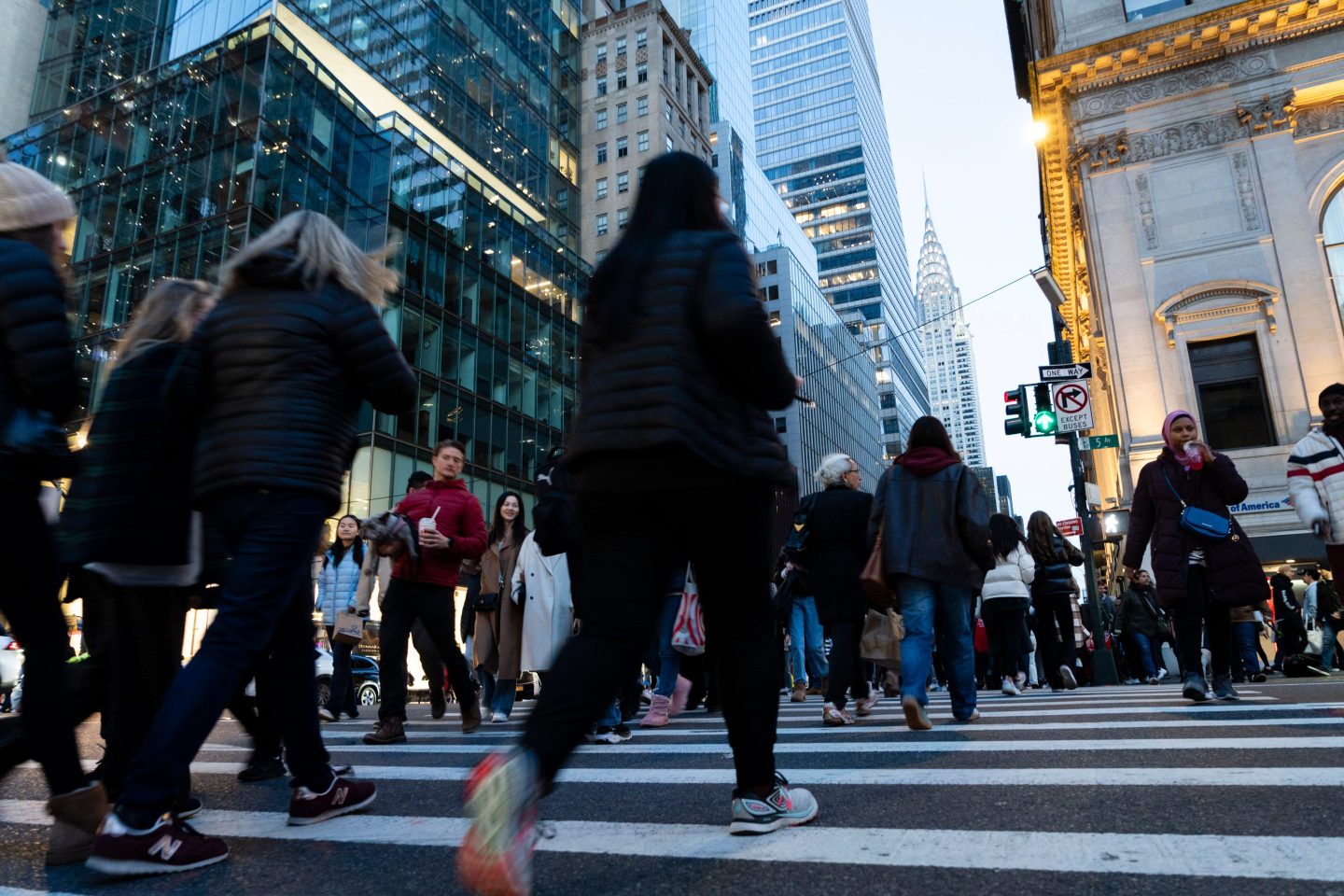
Headlines are trumpeting robust economic growth and the strength of the labor market, but polls show that most Americans are deeply pessimistic about today’s economy. GDP growth remains strong, despite interest rates increasing at their steepest in decades. Inflation has caused prices to rise, but per capita personal consumption continues to soar. We are in the midst of the hottest labor market in recent memory, but borrower defaults have been on the rise across all consumer segments and products.
We need these paths to converge, not grow further apart, which is why, in 2024, we have to reduce our consumption as a country. Indeed, some might use the word “recession” to describe this need. Yet viewed through the broader lens of the facts at play, the central problem is that we are consuming too much stuff relative to our paychecks. The “r-word” may be scary, but a slowdown or mild contraction of GDP may offer something Americans crave: Stability.
Mixed signals
During the pandemic, the government injected a massive amount of money into the system. Inflation shouldn’t have come as a surprise–a 40% increase in the money supply will usually impact prices.
The subsequent windfall of the stimulus induced Americans to work less–particularly older workers closer to retirement. Meanwhile, we used stimulus money to buy things like Teslas, Wayfair sofas, and Pelotons (what economists call “durable goods”), a habit we now seem loath to abandon.
High interest rates have done little to dull our new spending habits–because we haven’t needed much credit (yet) to sustain them. The excess cash from the stimulus has lingered in the economy, but that extra cushion so many Americans enjoyed is now largely gone.
At the same time, structural labor shortages were accelerated. By the time the pandemic rolled around, America was already in a position of needing more workers than it had. When many older workers simply did not return from lockdown, it exacerbated our labor shortage, leaving us today with almost 9 million unfilled jobs.
Relative to pre-pandemic numbers, income growth has not kept up with our torrid pace of consumption. Workforce gains have been lethargic, and any wage gains from the hot labor market have been offset by the combined headwinds of rising consumer prices and stimulus continuing to slowly drain from the economy.
We don’t need to look back far to see what happens if these trends hold. The growing imbalance between our consumption and our income has strained savings rates to their lowest point in 65 years. The only other prior comparable period was in the wake of the Global Financial Crisis. Back then, the root cause of our precarious fiscal health was the stress of 10% unemployment. Today, it is self-wrought from consuming beyond our means.
One half-step backward may be the key to sticking a soft landing
Overall, Americans have consumed much more than we have been earning and saving, contributing to increasing levels of default on what we owe. GDP growth is running hotter than we can handle. We need a balm to cool it off a touch. A spoonful of macro anxiety could convince the economy’s consumers to get their fiscal house into better shape and return to a healthier and more sustainable level of consumption.
By creating the conditions for brief economic cooling, the softening of consumption (and therefore production) is unlikely to tip the current supply-constrained labor market into significant unemployment. It is more likely to nudge the current severe worker imbalance closer to equilibrium. And of course, the government will almost certainly respond to any whiff of economic malaise with lower interest rates, which will benefit the fiscal health of all consumers.
We’ve been taught that more is almost always better with the economy. While that can be true, fast growth is not always sustainable or equitably distributed. In the weeks ahead, when the pundits are debating how to interpret the latest holiday spending numbers, keep in mind that one half-step backward may be the key to sticking a soft landing. If we can do that, we may find ourselves the fortunate beneficiaries of a better economy for everyone.
Sanjay Datta is the CFO of Upstart, the AI lending marketplace.
More must-read commentary published by Fortune:
- Economic pessimists’ bet on a 2023 recession failed. Why are they doubling down in 2024?
- COVID-19 v. Flu: A ‘much more serious threat,’ new study into long-term risks concludes
- Access to modern stoves could be a game-changer for Africa’s economic development–and help cut the equivalent of the carbon dioxide emitted by the world’s planes and ships
- The U.S.-led digital trade world order is under attack–by the U.S.
The opinions expressed in Fortune.com commentary pieces are solely the views of their authors and do not necessarily reflect the opinions and beliefs of Fortune.