• Home
  • Latest
  • Fortune 500
  • Finance
  • Tech
  • Leadership
  • Lifestyle
  • Rankings
  • Multimedia
CommentaryBrain

Poor brain health costs the world economy $5 trillion a year. The world is waking up to the crisis

By
George Vradenburg
George Vradenburg
Down Arrow Button Icon
By
George Vradenburg
George Vradenburg
Down Arrow Button Icon
March 5, 2026, 3:00 AM ET
George Vradenburg is Founding Chairman of the Davos Alzheimer’s Collaborative, the disease-focused flagship of the brain capital movement working to prevent the $16 trillion dementia crisis while unlocking human productivity.
vradenburg
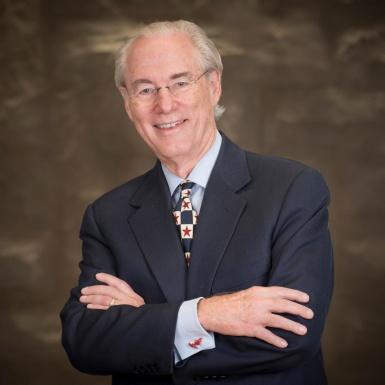
George Vradenburg, founding chairman of the Davos Alzheimer’s Collaborative.courtesy of the Davos Alzheimer’s Collaborative

Brain health disorders including Alzheimer’s, dementia, depression, and stroke-related cognitive decline currently cost the global economy $5 trillion a year. By 2030, that figure is projected to reach $16 trillion. And yet, until recently, this crisis barely registered in the rooms where economic policy gets made.

Recommended Video

That changed at Davos this January. On the sidelines of the World Economic Forum, conversations connected brain health not just to healthcare budgets but also to workforce productivity and to the competitive positioning of companies and nations in the age of AI. Much of it coalesced around a new report from the World Economic Forum and the McKinsey Health Institute. Three threads from those conversations deserve a much wider audience.

1. The AI Economy Runs on Healthy Brains

The paradox at the heart of the AI revolution: the more artificial intelligence automates routine work, the more valuable human intelligence and creativity become. 21st century jobs will demand higher-order thinking, creativity, and adaptive problem-solving. The age of AI is simultaneously the age of brain capital.

Dr. Harris Eyre, neuroscientist and co-author of the Davos report, puts it plainly: companies and nations that invest in brain health will have workforces capable of thriving in the AI transition. By 2050, the ratio of working-age adults to retirees will drop globally from roughly 8:1 to 4:1. We need every brain working at full capacity. Unhealthy brains caused by Alzheimer’s and mental health conditions don’t just steal individual futures, they diminish the capacity of current workers, turning many into caregivers. A company’s focus on the brain health and resilience of its workforce is not health philanthropy or just another HR issue. It is a strategic imperative for Boards and CEOs navigating the era of AI.

The Global Brain Capital Index, launched at Davos, maps cognitive health investment against economic productivity in terms finance ministers and development banks can act on. It offers a common language for translating a health crisis into economic policy and it is already shifting how governments frame their obligations to aging populations.

2. Women Are Both the Most Affected and the Most Powerful Force for Change

Almost two-thirds of people living with Alzheimer’s are women, who also provide more than 60 percent of unpaid dementia caregiving globally, sacrificing wages, career progression, and their own health. If you want to understand why the gender pay gap persists and why female workforce participation plateaus in midlife, dementia is part of the answer.

But there is another dimension rarely told alongside it. An estimated $84 trillion in assets will transfer between generations in the United States alone over the next two decades. Because women outlive men by several years, much of that wealth will move through female hands. McKinsey projects American women will control much of the Baby Boomers’ $30 trillion by 2030. Women are simultaneously the primary victims of Alzheimer’s, the primary caregivers, and the emerging primary holders of the private capital that could fund the next generation of research and prevention. Engaging them as economic decision-makers and impact investors is one of the most underleveraged opportunities in brain health.

3. The Global South Can Leapfrog, If We Build the Infrastructure Now

By 2050, India will see its over-60 population grow by 300 million or more and Africa alone will account for over 200 million dementia cases. 70 percent of all global cases will occur in low- and middle-income countries. But LMICs are not just the future epicenter of dementia burden; they are also home to the fastest-growing working-age populations on earth. A brain health crisis left unaddressed in these regions doesn’t stay there. It suppresses productivity, strains caregiving systems, and constrains the very economic growth that global supply chains, investment portfolios, and development strategies depend on. Investing in early detection and prevention infrastructure in the Global South is not charity. It is a hedge against the most predictable workforce disruption of the next half-century

Yet 90 percent of current genetic studies occur in just 10 percent of the world’s population, which means the treatments being developed today may not work for the communities facing the largest burden tomorrow. Countries in the Global South have a genuine chance to leapfrog the fragmented, reactive healthcare systems developed nations built in the 20th century, integrating early detection into primary care and building clinical trial capacity from the ground up. Lower-cost, non-therapeutic prevention solutions being developed in the Global South can also help the Global North address its own Alzheimer’s burden: ultimately, treatments that work for everyone require data from everyone. 

Davos talked about brain health this year in a way it never has before. The harder work of broadening those conversations from health ministries to include finance ministries, CEOs, insurance and pension fund boardrooms, and corporate and national AI strategies is what comes next. The question is whether enough people inside boardrooms and national cabinet positions understand what is at stake.

Join us at the Fortune Workplace Innovation Summit May 19–20, 2026, in Atlanta. The next era of workplace innovation is here—and the old playbook is being rewritten. At this exclusive, high-energy event, the world’s most innovative leaders will convene to explore how AI, humanity, and strategy converge to redefine, again, the future of work. Register now.
About the Author
By George Vradenburg
See full bioRight Arrow Button Icon

Latest in Commentary

Finance
Lorem ipsum dolor sit amet, consectetur adipiscing elit, sed do eiusmod tempor incididunt ut labore et dolore magna aliqua. Ut enim ad minim veniam
By Fortune Editors
October 20, 2025
Finance
Lorem ipsum dolor sit amet, consectetur adipiscing elit, sed do eiusmod tempor incididunt ut labore et dolore magna aliqua. Ut enim ad minim veniam
By Fortune Editors
October 20, 2025
Finance
Lorem ipsum dolor sit amet, consectetur adipiscing elit, sed do eiusmod tempor incididunt ut labore et dolore magna aliqua. Ut enim ad minim veniam
By Fortune Editors
October 20, 2025
Finance
Lorem ipsum dolor sit amet, consectetur adipiscing elit, sed do eiusmod tempor incididunt ut labore et dolore magna aliqua. Ut enim ad minim veniam
By Fortune Editors
October 20, 2025
Finance
Lorem ipsum dolor sit amet, consectetur adipiscing elit, sed do eiusmod tempor incididunt ut labore et dolore magna aliqua. Ut enim ad minim veniam
By Fortune Editors
October 20, 2025
Finance
Lorem ipsum dolor sit amet, consectetur adipiscing elit, sed do eiusmod tempor incididunt ut labore et dolore magna aliqua. Ut enim ad minim veniam
By Fortune Editors
October 20, 2025

Most Popular

Finance
Lorem ipsum dolor sit amet, consectetur adipiscing elit, sed do eiusmod tempor incididunt ut labore et dolore magna aliqua. Ut enim ad minim veniam
By Fortune Editors
October 20, 2025
Finance
Lorem ipsum dolor sit amet, consectetur adipiscing elit, sed do eiusmod tempor incididunt ut labore et dolore magna aliqua. Ut enim ad minim veniam
By Fortune Editors
October 20, 2025
Finance
Lorem ipsum dolor sit amet, consectetur adipiscing elit, sed do eiusmod tempor incididunt ut labore et dolore magna aliqua. Ut enim ad minim veniam
By Fortune Editors
October 20, 2025
Finance
Lorem ipsum dolor sit amet, consectetur adipiscing elit, sed do eiusmod tempor incididunt ut labore et dolore magna aliqua. Ut enim ad minim veniam
By Fortune Editors
October 20, 2025
Finance
Lorem ipsum dolor sit amet, consectetur adipiscing elit, sed do eiusmod tempor incididunt ut labore et dolore magna aliqua. Ut enim ad minim veniam
By Fortune Editors
October 20, 2025
Finance
Lorem ipsum dolor sit amet, consectetur adipiscing elit, sed do eiusmod tempor incididunt ut labore et dolore magna aliqua. Ut enim ad minim veniam
By Fortune Editors
October 20, 2025
Fortune Secondary Logo
Rankings
  • 100 Best Companies
  • Fortune 500
  • Global 500
  • Fortune 500 Europe
  • Most Powerful Women
  • World's Most Admired Companies
  • See All Rankings
  • Lists Calendar
Sections
  • Finance
  • Fortune Crypto
  • Features
  • Leadership
  • Health
  • Commentary
  • Success
  • Retail
  • Mpw
  • Tech
  • Lifestyle
  • CEO Initiative
  • Asia
  • Politics
  • Conferences
  • Europe
  • Newsletters
  • Personal Finance
  • Environment
  • Magazine
  • Education
Customer Support
  • Frequently Asked Questions
  • Customer Service Portal
  • Privacy Policy
  • Terms Of Use
  • Single Issues For Purchase
  • International Print
Commercial Services
  • Advertising
  • Fortune Brand Studio
  • Fortune Analytics
  • Fortune Conferences
  • Business Development
  • Group Subscriptions
About Us
  • About Us
  • Press Center
  • Work At Fortune
  • Terms And Conditions
  • Site Map
  • About Us
  • Press Center
  • Work At Fortune
  • Terms And Conditions
  • Site Map
  • Facebook icon
  • Twitter icon
  • LinkedIn icon
  • Instagram icon
  • Pinterest icon

Latest in Commentary

anis
CommentaryVenture Capital
AI, robotics, climate tech: How VCaaS helps corporations enter deep tech safely
By Anis UzzamanMay 6, 2026
4 hours ago
mckinsey
CommentaryProductivity
The U.S. leads in 14 of 18 industries shaping the future economy — but the lead isn’t guaranteed
By Kevin Russell, Chris Bradley and Kweilin EllingrudMay 6, 2026
5 hours ago
EQ
CommentaryPsychology
EQ training is failing leaders in the AI era. Here’s the brain science concept that can replace it
By David RockMay 6, 2026
6 hours ago
melania
CommentaryEducation
Teachers union chief: Melania Trump’s robot reveals what this administration really thinks of children
By Randi WeingartenMay 6, 2026
8 hours ago
ludwig
CommentaryInflation
Former Comptroller: the cost of living has risen 106% since 2001. Government inflation data doesn’t show it
By Gene LudwigMay 6, 2026
8 hours ago
theo
CommentaryManufacturing
The hidden bottleneck holding back American manufacturing isn’t machines — it’s knowledge
By Theo SavilleMay 6, 2026
11 hours ago

Most Popular

A Michigan farm town voted down plans for a giant OpenAI-Oracle data center. Weeks later, construction began
Magazine
A Michigan farm town voted down plans for a giant OpenAI-Oracle data center. Weeks later, construction began
By Sharon GoldmanMay 6, 2026
11 hours ago
Tokyo is throwing out its strict office dress code and asking workers to wear shorts amid the war in Iran energy crisis
Success
Tokyo is throwing out its strict office dress code and asking workers to wear shorts amid the war in Iran energy crisis
By Emma BurleighMay 5, 2026
1 day ago
Economists have found an answer to slowing cognitive decline: avoid retiring early, study finds
Economy
Economists have found an answer to slowing cognitive decline: avoid retiring early, study finds
By Sasha RogelbergMay 5, 2026
1 day ago
Current price of oil as of May 5, 2026
Personal Finance
Current price of oil as of May 5, 2026
By Joseph HostetlerMay 5, 2026
1 day ago
Clean energy's winning argument is the one it refuses to make
Commentary
Clean energy's winning argument is the one it refuses to make
By David CraneMay 5, 2026
1 day ago
Coinbase didn't just lay off 14% of its staff due to AI. It replaced managers with ‘player-coaches’ and turned its org chart upside down
Crypto
Coinbase didn't just lay off 14% of its staff due to AI. It replaced managers with ‘player-coaches’ and turned its org chart upside down
By Marco Quiroz-GutierrezMay 5, 2026
1 day ago

© 2026 Fortune Media IP Limited. All Rights Reserved. Use of this site constitutes acceptance of our Terms of Use and Privacy Policy | CA Notice at Collection and Privacy Notice | Do Not Sell/Share My Personal Information
FORTUNE is a trademark of Fortune Media IP Limited, registered in the U.S. and other countries. FORTUNE may receive compensation for some links to products and services on this website. Offers may be subject to change without notice.