• Home
  • Latest
  • Fortune 500
  • Finance
  • Tech
  • Leadership
  • Lifestyle
  • Rankings
  • Multimedia

Trendingnow

1

Pentagon accuses Alibaba, Baidu and BYD, three of China's biggest companies, of supporting the Chinese military

2

'We are rapidly running out of time': Watchdog sounds Social Security alarm after 22% cut confirmed for 2032

3

Trump, who has repeatedly called climate change fake, is now threatening Brazil with tariffs over the deforestation of the Amazon

1

Pentagon accuses Alibaba, Baidu and BYD, three of China's biggest companies, of supporting the Chinese military

2

'We are rapidly running out of time': Watchdog sounds Social Security alarm after 22% cut confirmed for 2032

3

Trump, who has repeatedly called climate change fake, is now threatening Brazil with tariffs over the deforestation of the Amazon
CommentaryTech

The U.S.-led digital trade world order is under attack–by the U.S.

By
Susan Ariel Aaronson
Down Arrow Button Icon
By
Susan Ariel Aaronson
Down Arrow Button Icon
December 13, 2023, 7:25 AM ET
The U.S. has long championed the free flow of data at the World Trade Organization (WTO).
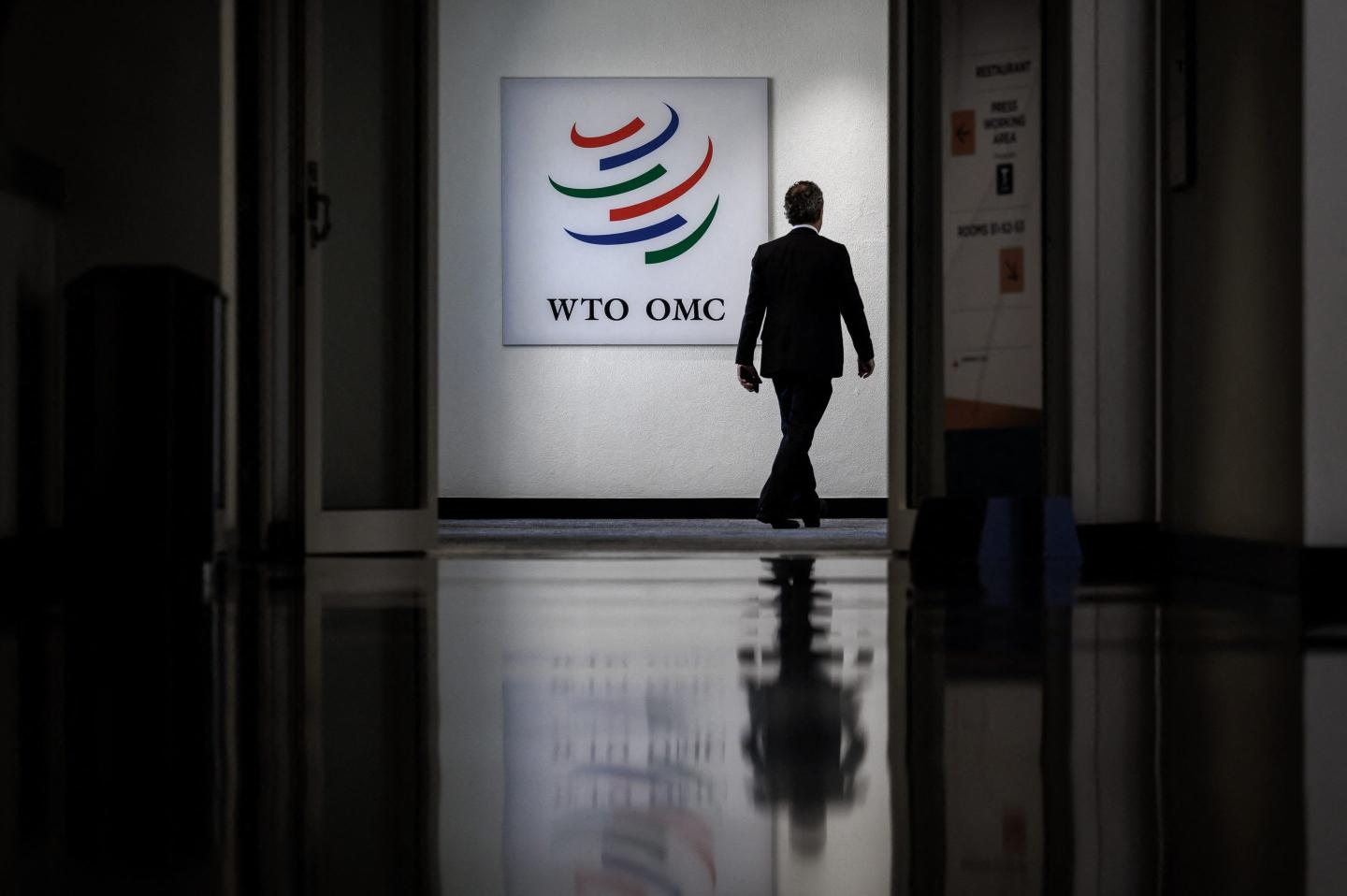
The U.S. has long championed the free flow of data at the World Trade Organization (WTO).FABRICE COFFRINI - AFP - Getty Images

This year, America’s digital trade negotiator made a startling announcement at the World Trade Organization (WTO). The negotiator spoke at the behest of U.S. Trade Representative Ambassador Kathrine Tai. At the time, Congress and various U.S. regulatory agencies were considering new regulations for large tech companies, which meant that the U.S. would no longer support language at the WTO related to cross-border data flows. In the words of the Office of the U.S. Trade Representative (USTR), the U.S. now needs “policy space” to regulate the tech giants.

Although the USTR stressed that the U.S. would continue to participate in the trade talks to set rules on e-commerce, the arguments sent shock waves through the trade, tech, human rights, and diplomatic communities. Such a policy reversal might affect U.S. credibility as a negotiating partner. Moreover, the policy reversal does not make sense given America’s dominant position as a leader of the democratic open world as well as the data-driven global economy.

Today, most economies are built on a foundation of data. Where nations once grew rich solely from their natural resources and human capital, nations today also rely on their citizens’ ability to collect, analyze, and create goods and services built on large pools of data. Data is multidimensional—the same dataset can be both a commercial asset and a public good, which governments should provide and regulate effectively.

Data also underpins the global internet. The U.S. has long led efforts to encourage the cross-border data flows that sustain the internet. In 1997, then-president Bill Clinton announced the Framework for Global E-Commerce which stated “The US government supports the broadest possible free flow of information across international borders [. . .] The Administration [. . .] will develop an informal dialogue with key trading partners [. . .] to ensure that differences in national regulation [. . .] do not serve as disguised trade barriers.” The framework was later adopted by the members of the OECD and it served as the basis for language in early bilateral and regional e-commerce agreements. At the beginning of discussions regarding e-commerce at the WTO, the U.S. drafted a 2019 white paper outlining the economic, social, and political benefits of the free flow of data

For the past 15 years, the U.S. has included language in trade agreements calling for the free flow of data/information as well as language limiting how and when other nations can erect barriers to digital trade. For example, the Japan-U.S. Commercial and Industrial Partnership issued on Nov. 14 notes, “we will continue collaborating to facilitate cross-border data flows and effective data and privacy protections globally, in support of our efforts to enable cross-border data flows and operationalize Data Free Flow with Trust.” The U.S. has also drafted and supported language at the most recent G7 and G20 meetings–and for good economic reason: Digital trade underpins traditional trade in goods and services but digital trade is growing faster than traditional trade.

Support for the free flow of data is not just integral to trade policy–it is also essential to the open internet and America’s support for democracy around the world. The U.S.-led Declaration on the Future of the Internet commits signatories to “[p]romote our work to realize the benefits of data free flows with trust based on our shared values as like-minded, democratic, open, and outward-looking partners.” In its 2022 National Security Strategy, the Biden White House asserted that the United States is “rallying like-minded actors to advance an international technology ecosystem that … promotes the free flow of data and ideas with trust, while protecting our security, privacy, and human rights, and enhancing our competitiveness.”  

The free flow of information is also essential to U.S. competitiveness in various forms of artificial intelligence (AI). America’s openness to cross-border data flows has powered new types of data-driven innovation including new platforms to receive information such as Bing Chat, a browser powered by Chat-GPT 4. But that same openness has also brought new competitors to keep America’s data giants on their toes. For example, TikTok, a platform operated by the Chinese company ByteDance, has been for the last two years the world’s most downloaded app, 

The free flow of information will also help these firms improve their AI. AI chatbots such as Chat-GPT are widely used by individuals and firms around the world, even though they often spout inaccurate or incomplete information. These chatbots are built on two main sources of data: proprietary data (collected, developed, or purchased by firms) and web-scraped data.  However, web-scraped data is essentially a snapshot of the internet, which can be inaccurate, biased, and incomplete. America’s generative AI firms can only improve these models with access to more and better data, which is only possible if many nations agree to rules governing the free flow of data at the WTO.

Meanwhile, our allies are confused by the decision to abandon America’s longstanding support of the open digital economy. They are also concerned about what this decision could signal about  U.S. accountability and reliability. After hearing concerns from U.S. business leaders, many members of Congress, and U.S. allies, the  National Security Council is holding a series of stakeholder meetings at the White House in December 2023 to rethink this decision.

Finally, as the Clinton administration noted more than 26 years ago, there is no data-driven economy without trust. But the policy reversal has undermined trust. Although the Biden administration meant well, this decision was a mistake. America can regulate Big Tech without disrupting the cross-border data flows that underpin our economy and society.

Susan Ariel Aaronson is a senior fellow at the Centre for International Governance Innovation, a professor at George Washington University, and the co-principal investigator with the National Institute of Standards and Technology/National Science Foundation Institute for Trustworthy AI in Law & Society.

More must-read commentary published by Fortune:

  • Bosses thought they won the return-to-office wars by imposing rigid policies. Now they’re facing a wave of legal battles
  • Inside long COVID’s war on the body: Researchers are trying to find out whether the virus has the potential to cause cancer
  • Access to modern stoves could be a game-changer for Africa’s economic development–and help cut the equivalent of the carbon dioxide emitted by the world’s planes and ships
  • Melinda French Gates: ‘It’s time to change the face of power in venture capital’

The opinions expressed in Fortune.com commentary pieces are solely the views of their authors and do not necessarily reflect the opinions and beliefs of Fortune.

About the Author
By Susan Ariel Aaronson
See full bioRight Arrow Button Icon

Latest in Commentary

Finance
Lorem ipsum dolor sit amet, consectetur adipiscing elit, sed do eiusmod tempor incididunt ut labore et dolore magna aliqua. Ut enim ad minim veniam
By Fortune Editors
October 20, 2025
Finance
Lorem ipsum dolor sit amet, consectetur adipiscing elit, sed do eiusmod tempor incididunt ut labore et dolore magna aliqua. Ut enim ad minim veniam
By Fortune Editors
October 20, 2025
Finance
Lorem ipsum dolor sit amet, consectetur adipiscing elit, sed do eiusmod tempor incididunt ut labore et dolore magna aliqua. Ut enim ad minim veniam
By Fortune Editors
October 20, 2025
Finance
Lorem ipsum dolor sit amet, consectetur adipiscing elit, sed do eiusmod tempor incididunt ut labore et dolore magna aliqua. Ut enim ad minim veniam
By Fortune Editors
October 20, 2025
Finance
Lorem ipsum dolor sit amet, consectetur adipiscing elit, sed do eiusmod tempor incididunt ut labore et dolore magna aliqua. Ut enim ad minim veniam
By Fortune Editors
October 20, 2025
Finance
Lorem ipsum dolor sit amet, consectetur adipiscing elit, sed do eiusmod tempor incididunt ut labore et dolore magna aliqua. Ut enim ad minim veniam
By Fortune Editors
October 20, 2025

Most Popular

Finance
Lorem ipsum dolor sit amet, consectetur adipiscing elit, sed do eiusmod tempor incididunt ut labore et dolore magna aliqua. Ut enim ad minim veniam
By Fortune Editors
October 20, 2025
Finance
Lorem ipsum dolor sit amet, consectetur adipiscing elit, sed do eiusmod tempor incididunt ut labore et dolore magna aliqua. Ut enim ad minim veniam
By Fortune Editors
October 20, 2025
Finance
Lorem ipsum dolor sit amet, consectetur adipiscing elit, sed do eiusmod tempor incididunt ut labore et dolore magna aliqua. Ut enim ad minim veniam
By Fortune Editors
October 20, 2025
Finance
Lorem ipsum dolor sit amet, consectetur adipiscing elit, sed do eiusmod tempor incididunt ut labore et dolore magna aliqua. Ut enim ad minim veniam
By Fortune Editors
October 20, 2025
Finance
Lorem ipsum dolor sit amet, consectetur adipiscing elit, sed do eiusmod tempor incididunt ut labore et dolore magna aliqua. Ut enim ad minim veniam
By Fortune Editors
October 20, 2025
Finance
Lorem ipsum dolor sit amet, consectetur adipiscing elit, sed do eiusmod tempor incididunt ut labore et dolore magna aliqua. Ut enim ad minim veniam
By Fortune Editors
October 20, 2025
Fortune Secondary Logo
Rankings
  • 100 Best Companies
  • Fortune 500
  • Global 500
  • Fortune 500 Europe
  • Most Powerful Women
  • World's Most Admired Companies
  • See All Rankings
  • Lists Calendar
Sections
  • Finance
  • Fortune Crypto
  • Features
  • Leadership
  • Health
  • Commentary
  • Success
  • Retail
  • Mpw
  • Tech
  • Lifestyle
  • CEO Initiative
  • Asia
  • Politics
  • Conferences
  • Europe
  • Newsletters
  • Personal Finance
  • Environment
  • Magazine
  • Education
Customer Support
  • Frequently Asked Questions
  • Customer Service Portal
  • Privacy Policy
  • Terms Of Use
  • Single Issues For Purchase
  • International Print
Commercial Services
  • Advertising
  • Fortune Brand Studio
  • Fortune Analytics
  • Fortune Conferences
  • Business Development
  • Group Subscriptions
About Us
  • About Us
  • Press Center
  • Work At Fortune
  • Terms And Conditions
  • Site Map
  • About Us
  • Press Center
  • Work At Fortune
  • Terms And Conditions
  • Site Map
  • Facebook icon
  • Twitter icon
  • LinkedIn icon
  • Instagram icon
  • Pinterest icon

Latest in Commentary

tim
CommentaryAirline industry
Merlin CTO: autonomy can rebuild the foundation of aviation — and national security
By Tim BurnsJune 9, 2026
18 hours ago
dewar
CommentaryLeadership
I founded McKinsey’s CEO practice: Here’s why operational excellence is a liability right now
By Carolyn DewarJune 9, 2026
19 hours ago
250
Commentary250 Years of Innovation
America turns 250. Its greatest innovation was never a product — it was a system that let anyone build one
By Keith KrachJune 7, 2026
3 days ago
retirement
CommentaryRetirement
Retiring at 62 costs the average American $250,000. Here’s the math (and the neuroscience) that explain why
By Jon SabesJune 7, 2026
3 days ago
da
CommentaryIPOs
The short seller’s argument nobody on the coming mega IPO roadshow wants you to make
By Bhaskar ChakravortiJune 7, 2026
3 days ago
bs
CommentaryCalifornia
I’ve sold property on California’s Central Coast for decades. The buyers chasing ranch and winery estates are after more than a lifestyle
By Lindsey HarnJune 6, 2026
4 days ago

Most Popular

Pentagon accuses Alibaba, Baidu and BYD, three of China's biggest companies, of supporting the Chinese military
Asia
Pentagon accuses Alibaba, Baidu and BYD, three of China's biggest companies, of supporting the Chinese military
By Kate O'Keeffe and BloombergJune 8, 2026
1 day ago
'We are rapidly running out of time': Watchdog sounds Social Security alarm after 22% cut confirmed for 2032
Economy
'We are rapidly running out of time': Watchdog sounds Social Security alarm after 22% cut confirmed for 2032
By Nick LichtenbergJune 9, 2026
14 hours ago
Trump, who has repeatedly called climate change fake, is now threatening Brazil with tariffs over the deforestation of the Amazon
Environment
Trump, who has repeatedly called climate change fake, is now threatening Brazil with tariffs over the deforestation of the Amazon
By Sasha RogelbergJune 8, 2026
1 day ago
Costco CEO Ron Vachris rose from forklift driver to the C-suite without a college degree: ‘Don’t chase a title’ is the career advice that got him there
Success
Costco CEO Ron Vachris rose from forklift driver to the C-suite without a college degree: ‘Don’t chase a title’ is the career advice that got him there
By Preston ForeJune 8, 2026
2 days ago
Current price of oil as of June 8, 2026
Personal Finance
Current price of oil as of June 8, 2026
By Joseph HostetlerJune 8, 2026
2 days ago
Gen Zers are arriving at college unable to even read a sentence—professors warn it could lead to a generation of anxious and lonely graduates
Success
Gen Zers are arriving at college unable to even read a sentence—professors warn it could lead to a generation of anxious and lonely graduates
By Preston ForeJune 7, 2026
3 days ago

© 2026 Fortune Media IP Limited. All Rights Reserved. Use of this site constitutes acceptance of our Terms of Use and Privacy Policy | CA Notice at Collection and Privacy Notice | Do Not Sell/Share My Personal Information
FORTUNE is a trademark of Fortune Media IP Limited, registered in the U.S. and other countries. FORTUNE may receive compensation for some links to products and services on this website. Offers may be subject to change without notice.