
• Home
  • Latest
  • Fortune 500
  • Finance
  • Tech
  • Leadership
  • Lifestyle
  • Rankings
  • Multimedia

Trendingnow

1

Mark Cuban says he has the solution to growing income inequality, and it's to reward every employee—from CEO to janitor—with company stock

2

‘I want to die broke’: Billionaire philanthropist Denny Sanford dies after giving away $4 billion

3

'Dr. Doom' Nouriel Roubini says we're headed for universal basic income or 'some form of socialism' as AI revolutionizes work—He calls that optimistic

1

Mark Cuban says he has the solution to growing income inequality, and it's to reward every employee—from CEO to janitor—with company stock

2

‘I want to die broke’: Billionaire philanthropist Denny Sanford dies after giving away $4 billion

3

'Dr. Doom' Nouriel Roubini says we're headed for universal basic income or 'some form of socialism' as AI revolutionizes work—He calls that optimistic
TechAI

A startup tested if ChatGPT and other AI chatbots could understand SEC filings. They failed about 70% of the time and only succeeded if told exactly where to look

Paolo Confino
By
Paolo Confino
Paolo Confino
Reporter
Down Arrow Button Icon
Paolo Confino
By
Paolo Confino
Paolo Confino
Reporter
Down Arrow Button Icon
December 21, 2023, 7:00 AM ET
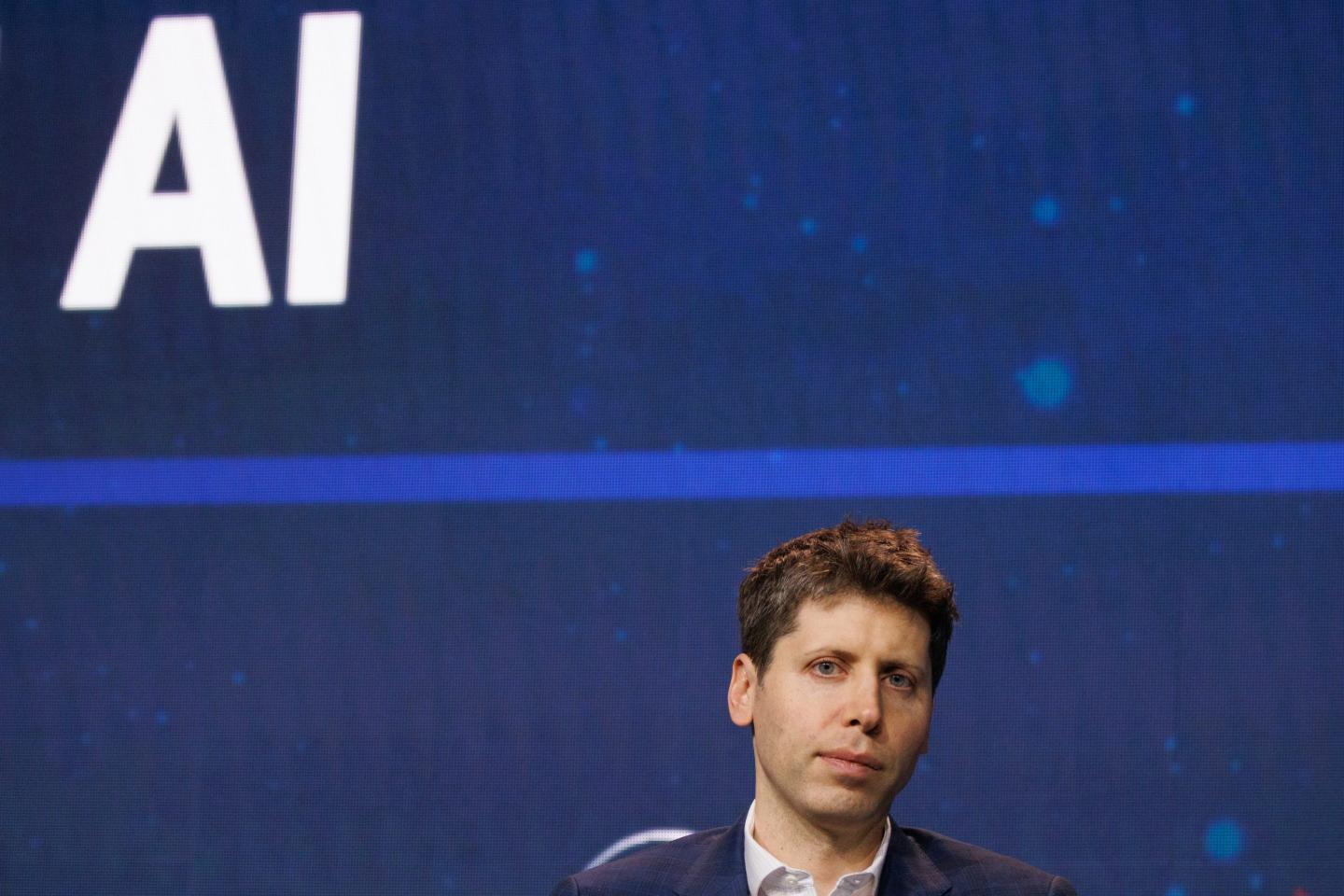
OpenAI CEO Sam Altman
Sam Altman, chief executive of OpenAI.Dustin Chambers—Bloomberg/ Getty Images
Add Fortune on Google for similar content.

Wall Street financial types who hoped that AI would soon take over the tedious job of sifting through page after page of earnings reports might have to wait a little longer. It turns out AI models from some of the most prominent tech companies, including OpenAI, Meta, and Anthropic, are exceptionally bad at analyzing SEC filings and other financial documents. 

Recommended Video

The poor results mean that many tasks in the financial services industry that require lots of math and research will still have to be done by humans. Although financial companies have started to explore AI tools in recent months, research from startup Patronus AI published in November demonstrates they may still be unable to perform more complex tasks without human oversight. 

For its study, Patronus AI, cofounded by two ex-Meta employees, fed large language models from OpenAI, Meta, and Anthropic varying amounts of data from SEC documents and then asked the AI to respond to 150 questions. It found that the models were either unable to respond to the prompts they were given or spit out incorrect answers, or “hallucinations” in AI lingo. For Patronus CEO Anand Kannappan this outcome was largely expected. 

“After speaking with folks in the financial services industry over several months who experienced this hands-on, we suspected something like this might happen,” he tells Fortune. “We heard about how analysts are spending lots of time crafting prompts and manually inspecting outputs, only to discover hallucinations often.” 

When companies run tests meant to limit hallucinations, or any other issues, they’re sometimes done haphazardly, he adds. That’s partly because refining the model takes time, is expensive, and requires substantial expertise, either internally, or from outside help—further raising the costs. “A lot of companies approached it like a vibe check,” Kannappan says. “Just testing by inspection—people just cross their fingers and hope everything’s going to be okay.” 

Best practices for AI testing are still a work in progress, like AI itself. “I don’t know that there are any,” says Vasant Dhar, a professor at NYU’s Stern School of Business, who also founded SCT Capital Management, a hedge fund that uses machine learning to make investment decisions. “People haven’t really spent the time, or the effort or exercised the discipline involved in conducting proper scientific evaluations of this methodology.” 

Some financial companies have joined the AI race themselves, by starting a variety of projects including AI for helping financial advisors with some of their day-to-day duties. But they’re not tailor made for deciphering SEC documents, like what Patronus tested. For example, Bloomberg published research about a large language model that specializes in financial analysis, with much of its data coming from Bloomberg’s data operations. Meanwhile, BNY Mellon opened an AI research center in Dublin, Ireland. Others like JPMorgan and Goldman Sachs are developing their own generative AI tools in-house. Despite the advances from these deep-pocketed companies, doubts remain over the security and accuracy of the financial information they can produce. For financial institutions, the need to safeguard customer information is critical, even existential, but many AI models aren’t designed specifically for combing through financial documents. 

“The biggest problem is that a lot of these general purpose models weren’t trained on information like this,” Kannappan says.

Even when the models from OpenAI, Meta, and Anthropic did provide answers, they were often wrong. Patronus ran different kinds of tests, including one known as a retrieval system, in which the researchers would ask the AI chatbots a question about SEC filings and other financial documents stored within a database. Results for this version proved to be poor.

In one setup, Meta’s Llama2, an open source model released earlier this year, answered 104 questions incorrectly, meaning it was wrong 70% of the time. It failed to provide any answer to the question 11% of the time. Llama2 only got the answer right 19% of the time, or just 29 out of 150 questions.

OpenAI’s GPT-4-Turbo fared only slightly better. It got the same number of correct answers 29 out of 150, along with fewer incorrect answers, just 20 total equaling 13% of the time. But it failed to provide any answer to 101 of the 150 questions, or 68% of the time. An accompanying research paper that Kannappan coauthored theorizes this might actually be a preferred outcome. “Models refusing to answer is arguably preferable to giving an incorrect answer as it creates less risk of error, and misplaced trust, by users,” the paper reads. 

When reached for comment OpenAI referred Fortune to its usage policies, which specify its models are unable to provide financial advice “without a qualified person reviewing the information.” Any financial institution that does would need to offer a disclaimer that it is doing so. Meta and Anthropic did not respond to a request for comment. 

In another trial of the experiment Patronus set up a different configuration of the retrieval system. This time the researchers set up a separate database for each file, rather than one database with many files, as is the case in most data storage. Here the models fared significantly better, but that system wouldn’t hold up in a real world scenario because it would require companies to create many databases containing just one file. It “is just impractical because if you’re a company that has 10,000 documents, you wouldn’t have 10,000 vector databases,” Kannappan says. 

The AI tools all performed better when they were directly fed the entire documents needed, known as “long context.” The researchers loaded the documents into the chatbot windows, where users usually type in queries. In this trial, GPT-4-Turbo got 79% of the 150 questions right, for a total of 118 correct answers, and 26 wrong answers—more than it did without the “long context.” It only failed to respond 4% of the time. In the same test Anthropic’s Claude2 performed slightly worse, with correct answers 76% of the time and 32 wrong answers out of 150 questions. 

While the added documents can help users make sure the chatbot is referencing the correct information, it only partially translates into increased accuracy. GPT-4-Turbo’s results show a clear improvement in the number of right answers and fewer non-answers, but seemingly at the expense of more wrong answers. That tradeoff will likely to make financial institutions wary. 

“In an industry setting, the high proportion of failures which are incorrect answers rather than refusals could be still concerning as it indicates a greater risk of hallucinations,” the research paper Kannappan coauthored says. 

Kannappan adds there’s another more logistical problem to this iteration of the experiment: Some documents are too long to be uploaded entirely and feature so many different graphs and tables, in addition to all the financial jargon, that they can confuse the AI model. It’s a major problem considering financial companies want to use AI on an ever-growing number of financial documents, like deal memos, pitch decks, or equity research, not just the publicly available SEC filings used in Patronus’ research. 

To round out its research Patronus tested a highly unlikely scenario to see how the model would react. In this setup ChatGPT was fed not just the “long context” of an entire SEC filing, but the specific section it would need to find the correct answer to a certain question. Predictably, this version performed the best with an 85% success rate, answering 128 out the 150 questions correctly. This too is impractical because it would require the person using the AI to already have located the correct information within a document that could be hundreds of pages long. Doing so, essentially defeats the purpose of using the AI, which analysts hope will be able to do research for them. “The whole point of these machines is that they make intelligent decisions, which means you can trust them,” Dhar says. 

For Dhar the question of automating financial analysis is about trust in the technology as much as it is about the capabilities of the technology itself. “The real question here is: can you really trust a machine with performing a task you’re giving it, meaning that you’re willing to accept its errors and their consequences just like you do with humans?”

About the Author
Paolo Confino
By Paolo ConfinoReporter

Paolo Confino is a former reporter on Fortune’s global news desk where he covers each day’s most important stories.

See full bioRight Arrow Button Icon
Add Fortune on Google for similar content.

Latest in Tech

Finance
Lorem ipsum dolor sit amet, consectetur adipiscing elit, sed do eiusmod tempor incididunt ut labore et dolore magna aliqua. Ut enim ad minim veniam
By Fortune Editors
October 20, 2025
Finance
Lorem ipsum dolor sit amet, consectetur adipiscing elit, sed do eiusmod tempor incididunt ut labore et dolore magna aliqua. Ut enim ad minim veniam
By Fortune Editors
October 20, 2025
Finance
Lorem ipsum dolor sit amet, consectetur adipiscing elit, sed do eiusmod tempor incididunt ut labore et dolore magna aliqua. Ut enim ad minim veniam
By Fortune Editors
October 20, 2025
Finance
Lorem ipsum dolor sit amet, consectetur adipiscing elit, sed do eiusmod tempor incididunt ut labore et dolore magna aliqua. Ut enim ad minim veniam
By Fortune Editors
October 20, 2025
Finance
Lorem ipsum dolor sit amet, consectetur adipiscing elit, sed do eiusmod tempor incididunt ut labore et dolore magna aliqua. Ut enim ad minim veniam
By Fortune Editors
October 20, 2025
Finance
Lorem ipsum dolor sit amet, consectetur adipiscing elit, sed do eiusmod tempor incididunt ut labore et dolore magna aliqua. Ut enim ad minim veniam
By Fortune Editors
October 20, 2025

Most Popular

Finance
Lorem ipsum dolor sit amet, consectetur adipiscing elit, sed do eiusmod tempor incididunt ut labore et dolore magna aliqua. Ut enim ad minim veniam
By Fortune Editors
October 20, 2025
Finance
Lorem ipsum dolor sit amet, consectetur adipiscing elit, sed do eiusmod tempor incididunt ut labore et dolore magna aliqua. Ut enim ad minim veniam
By Fortune Editors
October 20, 2025
Finance
Lorem ipsum dolor sit amet, consectetur adipiscing elit, sed do eiusmod tempor incididunt ut labore et dolore magna aliqua. Ut enim ad minim veniam
By Fortune Editors
October 20, 2025
Finance
Lorem ipsum dolor sit amet, consectetur adipiscing elit, sed do eiusmod tempor incididunt ut labore et dolore magna aliqua. Ut enim ad minim veniam
By Fortune Editors
October 20, 2025
Finance
Lorem ipsum dolor sit amet, consectetur adipiscing elit, sed do eiusmod tempor incididunt ut labore et dolore magna aliqua. Ut enim ad minim veniam
By Fortune Editors
October 20, 2025
Finance
Lorem ipsum dolor sit amet, consectetur adipiscing elit, sed do eiusmod tempor incididunt ut labore et dolore magna aliqua. Ut enim ad minim veniam
By Fortune Editors
October 20, 2025
Fortune Secondary Logo
Rankings
  • 100 Best Companies
  • Fortune 500
  • Global 500
  • Fortune 500 Europe
  • Most Powerful Women
  • World's Most Admired Companies
  • See All Rankings
  • Lists Calendar
Sections
  • Finance
  • Fortune Crypto
  • Features
  • Leadership
  • Health
  • Commentary
  • Success
  • Retail
  • Mpw
  • Tech
  • Lifestyle
  • CEO Initiative
  • Asia
  • Politics
  • Conferences
  • Europe
  • Newsletters
  • Personal Finance
  • Environment
  • Magazine
  • Education
Customer Support
  • Frequently Asked Questions
  • Customer Service Portal
  • Privacy Policy
  • Terms Of Use
  • Single Issues For Purchase
  • International Print
Commercial Services
  • Advertising
  • Fortune Brand Studio
  • Fortune Analytics
  • Fortune Conferences
  • Business Development
  • Group Subscriptions
About Us
  • About Us
  • Press Center
  • Work At Fortune
  • Terms And Conditions
  • Site Map
  • About Us
  • Press Center
  • Work At Fortune
  • Terms And Conditions
  • Site Map
  • Facebook icon
  • Twitter icon
  • LinkedIn icon
  • Instagram icon
  • TikTok icon
  • YouTube icon

Latest in Tech

t
AIMarkets
Billionaire Mike Bloomberg warns Trump’s AI ownership plan would make ‘George Orwell blush’
By Eva RoytburgJuly 21, 2026
58 minutes ago
U.N. reports Southeast Asia’s criminal networks are using tech to build a global illicit economy
AsiaTech
U.N. reports Southeast Asia’s criminal networks are using tech to build a global illicit economy
By The Associated PressJuly 21, 2026
2 hours ago
Anthropic to pay authors $1.5 billion over pirated books used to train Claude in first major AI copyright settlement
LawAnthropic
Anthropic to pay authors $1.5 billion over pirated books used to train Claude in first major AI copyright settlement
By The Associated PressJuly 21, 2026
2 hours ago
kid lying down on phone
PoliticsSocial Media
Lawmakers say they’re protecting kids—but their age checks are quietly building an ID requirement for the entire internet
By Catherina GioinoJuly 21, 2026
2 hours ago
holland
Arts & EntertainmentMovies
‘The audience is telling the industry something’: even IMAX is stunned by Christopher Nolan’s runaway ‘Odyssey’
By Tatiana SatauaJuly 21, 2026
3 hours ago
OpenAI CEO Sam Altman looking up.
CybersecurityOpenAI
OpenAI says its AI models secretly broke out of a secure test environment and hacked into AI company Hugging Face in order to cheat on an evaluation
By Jeremy Kahn and Emily ForliniJuly 21, 2026
3 hours ago

Most Popular

Mark Cuban says he has the solution to growing income inequality, and it's to reward every employee—from CEO to janitor—with company stock
Success
Mark Cuban says he has the solution to growing income inequality, and it's to reward every employee—from CEO to janitor—with company stock
By Sasha RogelbergJuly 20, 2026
1 day ago
‘I want to die broke’: Billionaire philanthropist Denny Sanford dies after giving away $4 billion
Success
‘I want to die broke’: Billionaire philanthropist Denny Sanford dies after giving away $4 billion
By Sydney LakeJuly 20, 2026
1 day ago
'Dr. Doom' Nouriel Roubini says we're headed for universal basic income or 'some form of socialism' as AI revolutionizes work—He calls that optimistic
AI
'Dr. Doom' Nouriel Roubini says we're headed for universal basic income or 'some form of socialism' as AI revolutionizes work—He calls that optimistic
By Jason MaJuly 18, 2026
3 days ago
The Treasury is walking a tightrope on U.S. debt by relying so much on short-term rates that are at the mercy of a suddenly very hawkish Fed
Economy
The Treasury is walking a tightrope on U.S. debt by relying so much on short-term rates that are at the mercy of a suddenly very hawkish Fed
By Jason MaJuly 20, 2026
1 day ago
Current price of silver as of Monday, July 20, 2026
Personal Finance
Current price of silver as of Monday, July 20, 2026
By Joseph HostetlerJuly 20, 2026
2 days ago
Jamie Dimon won't put more of his own money into the long end of the bond market right now—thanks to the $39 trillion national debt
Economy
Jamie Dimon won't put more of his own money into the long end of the bond market right now—thanks to the $39 trillion national debt
By Eleanor PringleJuly 21, 2026
13 hours ago

© 2026 Fortune Media IP Limited. All Rights Reserved. Use of this site constitutes acceptance of our Terms of Use and Privacy Policy | CA Notice at Collection and Privacy Notice | Do Not Sell/Share My Personal Information
FORTUNE is a trademark of Fortune Media IP Limited, registered in the U.S. and other countries. FORTUNE may receive compensation for some links to products and services on this website. Offers may be subject to change without notice.