• Home
  • News
  • Fortune 500
  • Tech
  • Finance
  • Leadership
  • Lifestyle
  • Rankings
  • Multimedia
ConferencesBrainstorm AI

GenAI is turning the cybersecurity landscape—and the CISO role—on its head

Sage Lazzaro
By
Sage Lazzaro
Sage Lazzaro
Contributing writer
Down Arrow Button Icon
Sage Lazzaro
By
Sage Lazzaro
Sage Lazzaro
Contributing writer
Down Arrow Button Icon
December 14, 2023, 2:21 PM ET
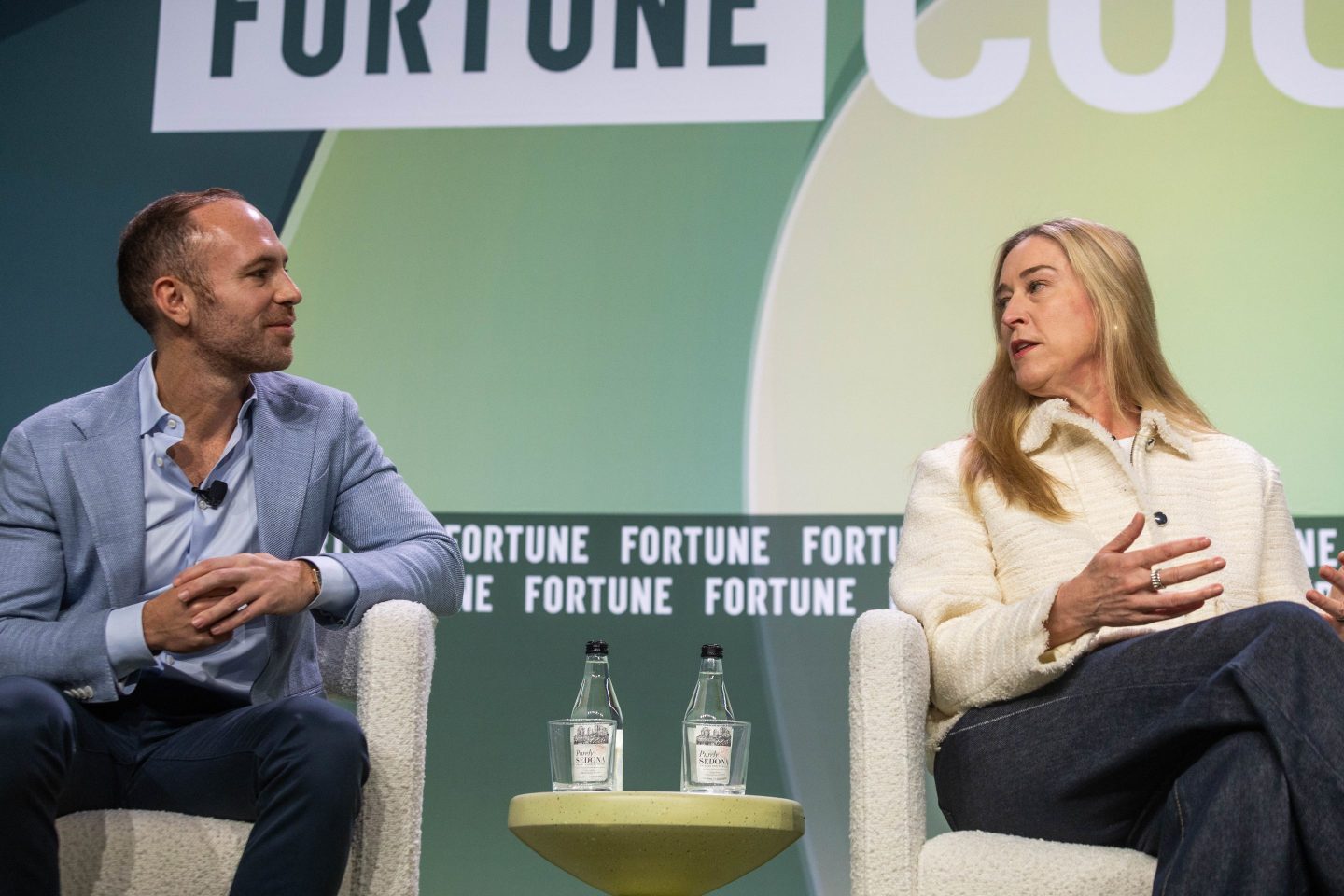
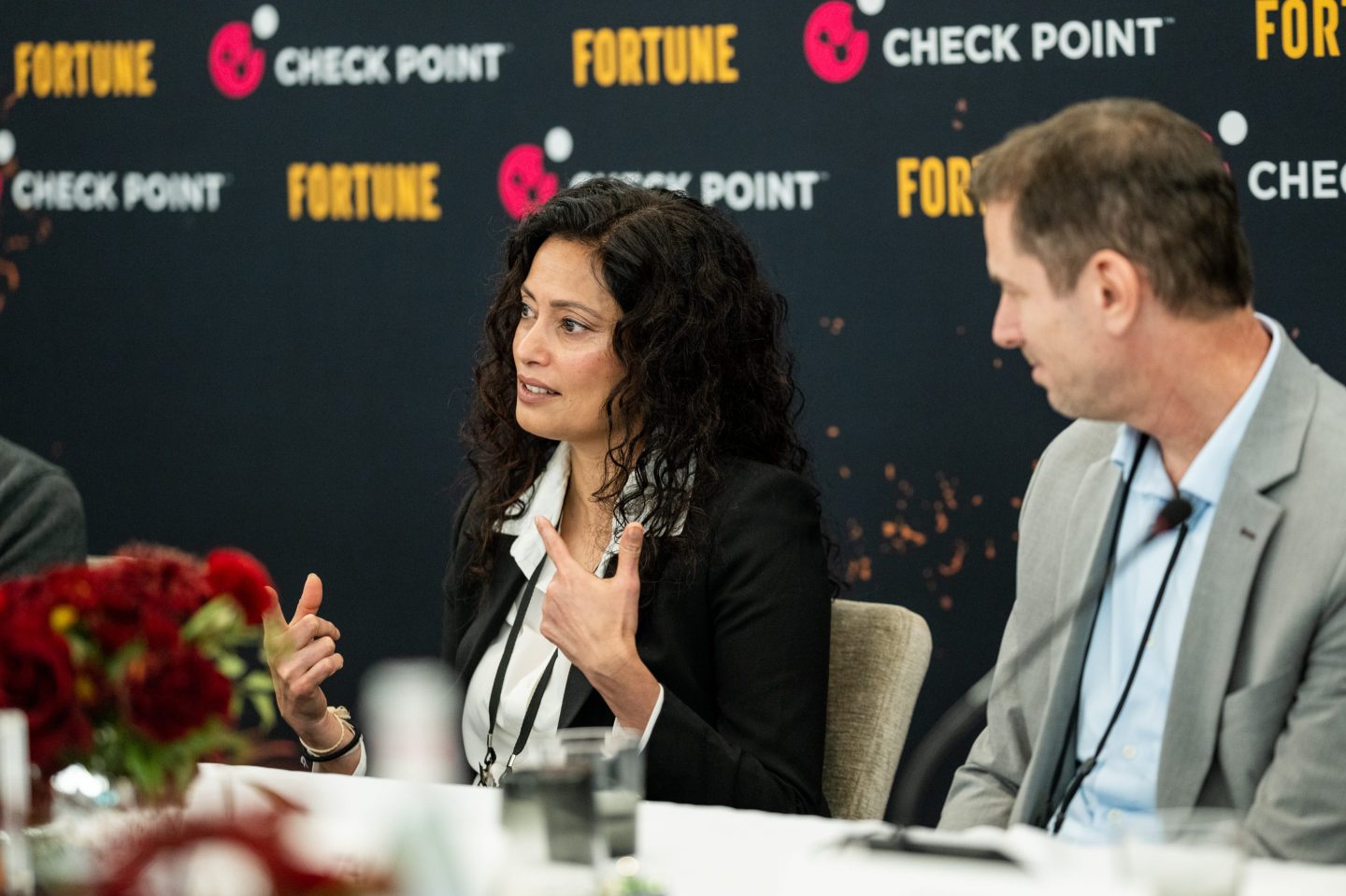
Wipro CTO Subha Tatavarti (left) and Check Point chief strategy officer Itai Greenberg speak about cybersecurity at Fortune Brainstorm AI.
Wipro CTO Subha Tatavarti (left) and Check Point chief strategy officer Itai Greenberg speak about cybersecurity at Fortune Brainstorm AI.Duy Ho for Fortune

As goes the cycle of cybersecurity, every new technology creates both a new landscape of threats and tools to defend against them. Generative AI is no exception.

“Gen AI makes things easier for both the defenders and the attackers,” said Subha Tatavarti, chief technology officer for Wipro, at a panel discussion focused on cybersecurity threats in the AI age at the Fortune Brainstorm AI conference in San Francisco this week.

Generative AI is making phishing attacks more convincing, and large language models in particular have created a massively exposed attack surface. At the same time, malicious actors are now selling hacker-targeted ChatGPT-like chatbots on the dark web that will spin up vector attacks as quickly as OpenAI’s product will answer questions or summarize text. But what’s especially challenging about the impact of generative AI on cybersecurity is the whiplash speed at which it’s hit the market (including the black market). Companies across sectors are now scrambling to not only understand emerging generative AI–enabled attacks and build new defense tools, but deal with fast-moving challenges regarding internal usage of these tools, policy, and compliance. As a result, the CISO (chief information security officer) role is being turned on its head. 

“I feel for the CISOs of today,” said Tatavarti, adding that it’s going to be critical for CISOs to innovate quickly, including doing their own innovation beyond just what’s available on the market.

Tatavarti spoke alongside Check Point chief strategy officer Itai Greenberg and Rodrigo Madanes, global AI innovation leader at EY, during a strategy session exploring how AI is impacting the evolving cybersecurity landscape. Amid the discussion about new kinds of threats being made possible by generative AI, the impact on the CISO role was a clear touchpoint that’s having a massive impact. 

“The CISO’s role is incredibly challenging and evolving quickly,” said Madanes. “I think right now what’s happening is that they have been enforcing existing policies on data and protection, but as they move into the realm of shouldering the responsibility of protecting injection against the conversational interfaces that are being deployed, that requires a different skill set, a different set of tools that haven’t even been developed, that are mostly homegrown right now.”

Similarly, Greenberg said CISOs should be thinking about what tools they’re using and what data they’re uploading to those tools, especially public tools. This also includes carefully laying out guardrails, including for who can remove data from these systems. 

To many, this looks like a different kind of role from the CISOs of yesterday, which narrowed in more on the technical aspects, such as IT outsourcing, rather than making major policy decisions. This point inspired a lively discussion among the participants, who commented on the growing risks of being a CISO and speculation that the role may actually split into two—one more operational role, and one that’s more governance-oriented.

Pointing to the fact that CISOs are now being held personally criminally liable regarding their handling of attacks on their companies, one participant, Ross Camp from data security and protection firm Commvault, asked if we should be worried about a shortage of CISOs in the near future. Just last month, former SolarWinds CISO Timothy Brown was charged by the Securities and Exchange Commission for defrauding investors by failing to disclose known security risks that led to a massive supply-chain attack on the company—and analysts and law professionals believe this will become much more common. 

In terms of how to fight generative AI attacks with generative AI, this is still a work in progress. But in 2024, Madanes said the industry will be off to the races to build solutions. 

“I think we’re only starting to see people realize how the attack vectors that are going to come into agents that are exposed to the outside world—what shape those are going to have, and what are going to be the commercial solutions they need to put in place. But I don’t think we’re there yet,” Madanes said. “I think we’re rushing to build commercial solutions, assess them, and deploy them.”

Greenberg, who provided much of the insight into the new types of attacks forming, such as next-level phishing and the availability of applications like FraudGPT, advocated for the importance of multiple lines of defense and cautioned against believing any one tool can do the job.

“I think it’s important for us to understand that it’s not one system, not one product that can deal with this,” he said.

Fortune Brainstorm AI returns to San Francisco Dec. 8–9 to convene the smartest people we know—technologists, entrepreneurs, Fortune Global 500 executives, investors, policymakers, and the brilliant minds in between—to explore and interrogate the most pressing questions about AI at another pivotal moment. Register here.
About the Author
Sage Lazzaro
By Sage LazzaroContributing writer

Sage Lazzaro is a technology writer and editor focused on artificial intelligence, data, cloud, digital culture, and technology’s impact on our society and culture.

See full bioRight Arrow Button Icon

Latest from our Conferences

Workplace CultureBrainstorm Design
How two leaders used design thinking and a focus on outcomes to transform two Fortune 500 giants
By Christina PantinDecember 4, 2025
1 day ago
Workplace CultureBrainstorm Design
Designer Kevin Bethune: Bringing ‘disparate disciplines around the table’ is how leaders can ‘problem solve the future’
By Fortune EditorsDecember 3, 2025
2 days ago
AIBrainstorm Design
Microsoft AI’s design head wants her team to be AI-native by the end of the fiscal year
By Angelica AngDecember 3, 2025
2 days ago
AsiaFortune Innovation Forum
Syfe CEO: Fintech founders need to focus on trust if the sector is to reach its full potential
By Dhruv AroraNovember 24, 2025
11 days ago
EnergyFortune Innovation Forum
Going green doesn’t always mean going big: ‘Pay attention to the small- and medium-size players as well’
By Angelica AngNovember 24, 2025
11 days ago
AsiaFortune Innovation Forum
A World Bank expert thinks countries should leverage ‘small AI’—and avoid competing with the biggest tech giants
By Nicholas GordonNovember 24, 2025
11 days ago

Most Popular

placeholder alt text
Economy
Two months into the new fiscal year and the U.S. government is already spending more than $10 billion a week servicing national debt
By Eleanor PringleDecember 4, 2025
1 day ago
placeholder alt text
Success
‘Godfather of AI’ says Bill Gates and Elon Musk are right about the future of work—but he predicts mass unemployment is on its way
By Preston ForeDecember 4, 2025
22 hours ago
placeholder alt text
Success
Nearly 4 million new manufacturing jobs are coming to America as boomers retire—but it's the one trade job Gen Z doesn't want
By Emma BurleighDecember 4, 2025
22 hours ago
placeholder alt text
Success
Nvidia CEO Jensen Huang admits he works 7 days a week, including holidays, in a constant 'state of anxiety' out of fear of going bankrupt
By Jessica CoacciDecember 4, 2025
21 hours ago
placeholder alt text
Economy
Tariffs and the $38 trillion national debt: Kevin Hassett sees ’big reductions’ in deficit while Scott Bessent sees a ‘shrinking ice cube’
By Nick LichtenbergDecember 4, 2025
20 hours ago
placeholder alt text
Health
Bill Gates decries ‘significant reversal in child deaths’ as nearly 5 million kids will die before they turn 5 this year
By Nick LichtenbergDecember 4, 2025
1 day ago
Rankings
  • 100 Best Companies
  • Fortune 500
  • Global 500
  • Fortune 500 Europe
  • Most Powerful Women
  • Future 50
  • World’s Most Admired Companies
  • See All Rankings
Sections
  • Finance
  • Leadership
  • Success
  • Tech
  • Asia
  • Europe
  • Environment
  • Fortune Crypto
  • Health
  • Retail
  • Lifestyle
  • Politics
  • Newsletters
  • Magazine
  • Features
  • Commentary
  • Mpw
  • CEO Initiative
  • Conferences
  • Personal Finance
  • Education
Customer Support
  • Frequently Asked Questions
  • Customer Service Portal
  • Privacy Policy
  • Terms Of Use
  • Single Issues For Purchase
  • International Print
Commercial Services
  • Advertising
  • Fortune Brand Studio
  • Fortune Analytics
  • Fortune Conferences
  • Business Development
About Us
  • About Us
  • Editorial Calendar
  • Press Center
  • Work At Fortune
  • Diversity And Inclusion
  • Terms And Conditions
  • Site Map

© 2025 Fortune Media IP Limited. All Rights Reserved. Use of this site constitutes acceptance of our Terms of Use and Privacy Policy | CA Notice at Collection and Privacy Notice | Do Not Sell/Share My Personal Information
FORTUNE is a trademark of Fortune Media IP Limited, registered in the U.S. and other countries. FORTUNE may receive compensation for some links to products and services on this website. Offers may be subject to change without notice.