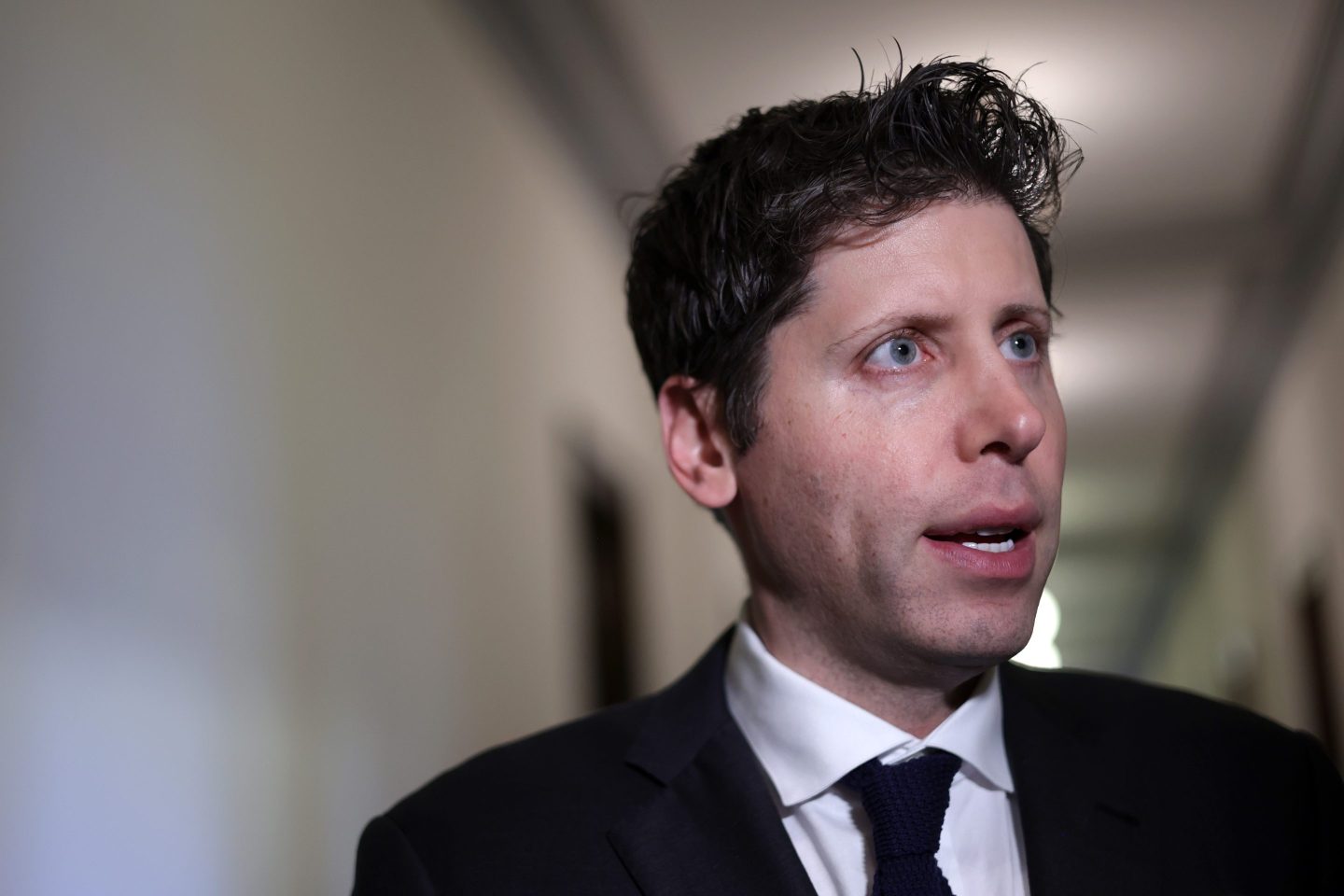
Former OpenAI CEO Sam Altman was unceremoniously fired last week, in a surprise move that set off a weekend of public outcry and dramatic news developments. After early reports that Altman would rejoin the company, Microsoft, which was a major OpenAI investor, announced in the early hours of Sunday morning that Altman would be joining that company instead.
The saga continues, but one thing’s for sure: The Altman implosion has proven to be a “massive wake-up call” about the importance of corporate governance in the tech world, according to Evan Epstein, executive director of the Center for Business Law and an adjunct professor of law at UC Law San Francisco.
“In Silicon Valley, people don’t tend to focus on governance,” he told Fortune. But “bad governance can destroy a company.” As of Monday, hundreds of OpenAI employees have signed a letter asking the board to resign, and mass employee departures are expected over the next few days.
The precise reasons why the board fired Altman have not been verified. Their initial blog post cited a lack of candidness, and over the weekend, the company released a statement to employees that Altman’s firing was not the result of “malfeasance or anything related to our financial, business, safety, or security/privacy practices,” but was instead due to a “breakdown in communications between Sam Altman and the board.” One leading theory is that the board feared Altman was moving too quickly to monetize the company’s AI innovations before proper ethical guardrails could be put in place.
But whether or not the OpenAI board made the right call when it chose to fire Altman—a case that’s hard for outsiders to argue either way given the lack of information—experts tell Fortune that the company’s approach to governance was a demonstrable mess. The dizzying pace of events is evidence that at the very least, the OpenAI board lorded over chaos rather than an orderly transition, the goal of any board of directors when a CEO is replaced.
Here’s what went wrong.
The board structure was weird to begin with
The OpenAI board’s job was not designed to protect or represent shareholders, but rather to prevent an AI apocalypse.
The board oversees the mission for OpenAI Inc, which was launched as a non-profit eight years ago, with the goal of developing responsible and safe artificial intelligence. The non-profit in turn runs the “capped-profit” OpenAI LP, which is the entity in which Microsoft invested $10 billion earlier this year. Altman set up this unusual governance structure at the company to protect the firm from the potentially toxic reach of capital markets.
That structure means that unlike most private companies, where major investors and VCs sit on the company’s board and have a say in how it’s run, OpenAI’s key investors had no power at the board level whatsoever.
Governance experts who spoke to Fortune were divided over whether the model ever would have worked. Jason Schloetzer, associate professor of business administration at Georgetown University’s McDonough School of Business, told Fortune in an email, that “the nonprofit structure was sensible given the original and ongoing strategy of the organization.” But, he adds, “perhaps the pressure to monetize this technology is just too great. And the temptation to abandon the initial strategy was too great.”
The board that fired Sam Altman was fairly small and inexperienced
Besides Altman and Brockman, chairs included OpenAI employee and chief scientist Ilya Sutskever; Adam D’Angelo, CEO of Quora; Tasha McCauley, a technology entrepreneur, and Helen Toner, director of Strategy and Foundational Research Grants at the Centre for Security and Emerging Technology within Georgetown’s Walsh School of Foreign Service. Previously, it also included experienced tech leaders like Elon Musk and Reid Hoffman, the investor and cofounder of LinkedIn, but it lacked heavy hitters last week when the decision to fire Altman was made.
Laurie Yoler, a general partner at venture capital company Playground Global, who has sat on the board of more than 25 Silicon Valley companies, tells Fortune that companies always do better with a larger board that brings a mix of experiences to the table. Even in a bleeding-edge sector where it may be impossible to find leaders with relevant expertise, she says, boards as a collective need to have a broad mix of experiences to draw on just to deal with universal concerns: “How do you deal with big partners? How do you deal with employee issues? How do you create a really good relationship between a CEO and a board? How do you have discussions about conflicts of interest?” None of these topics require specific subject matter expertise.
The chair wasn’t involved in the decision
Notably, the chair of the board, Greg Brockman, was not present during the Google Meet call in which Altman was initially cut loose, according to several reports. That’s unheard of in a traditional governance setting. “Wait a minute, the chairman didn’t know?” Epstein says. “So how are these meetings taking place?” Brockman later announced that he would be stepping down from the board, and then quit the company altogether. He has since joined Microsoft along with Altman.
The Friday afternoon announcement was clumsy
Major announcements at the end of a work week are a typical (if outdated) PR move to try and bury or minimize news. But it “doesn’t really play well in today’s 24 hour news cycle,” says Jo-Ellen Pozner, associate professor of management at the University of Santa Clara Leavey School of Business. Aside from that, it also robbed the employees of OpenAI the time and space they might have had to process such a huge leadership change. “It doesn’t give them the opportunity to have the kinds of deep conversations that you would want to reassure your workforce that everything’s going to be okay. And, you know, it just looks fishy,” she said.
The board didn’t keep investors abreast of the news
Although the board was not obliged to consult with OpenAI’s major investors, failing to get investors’ buy-in didn’t do the company any favors. Microsoft put $13 billion into the company, and other major investors include Thrive, Khosla Ventures, Tiger Global, Andreesen Horowitz, Sequoia Capital, and K2 Global. “This is a nonprofit which controls this massive corporation, and all the investors are unaware,” says Epstein. “You have the CEO of Microsoft, you have the biggest investment firms, all surprised—it just shows how little governance this thing has.” That lack of consideration for major investors was part of a lack of consensus building over the firing, and that played into the board’s loss in the court of public opinion.
The future for OpenAI and AI is now changed
In the coming days, the board’s firing of Altman is sure to feed ongoing debates about how best to oversee the safe development of AI and what role the markets should play in funding the technology. Pozner, at the University of Santa Clara, says that the board may have made the right call, but undermined its own goals with a poor execution.
“In terms of upholding the mission of the organization,” she adds, “it might have put that mission at risk by relinquishing control over the direction of AI.”