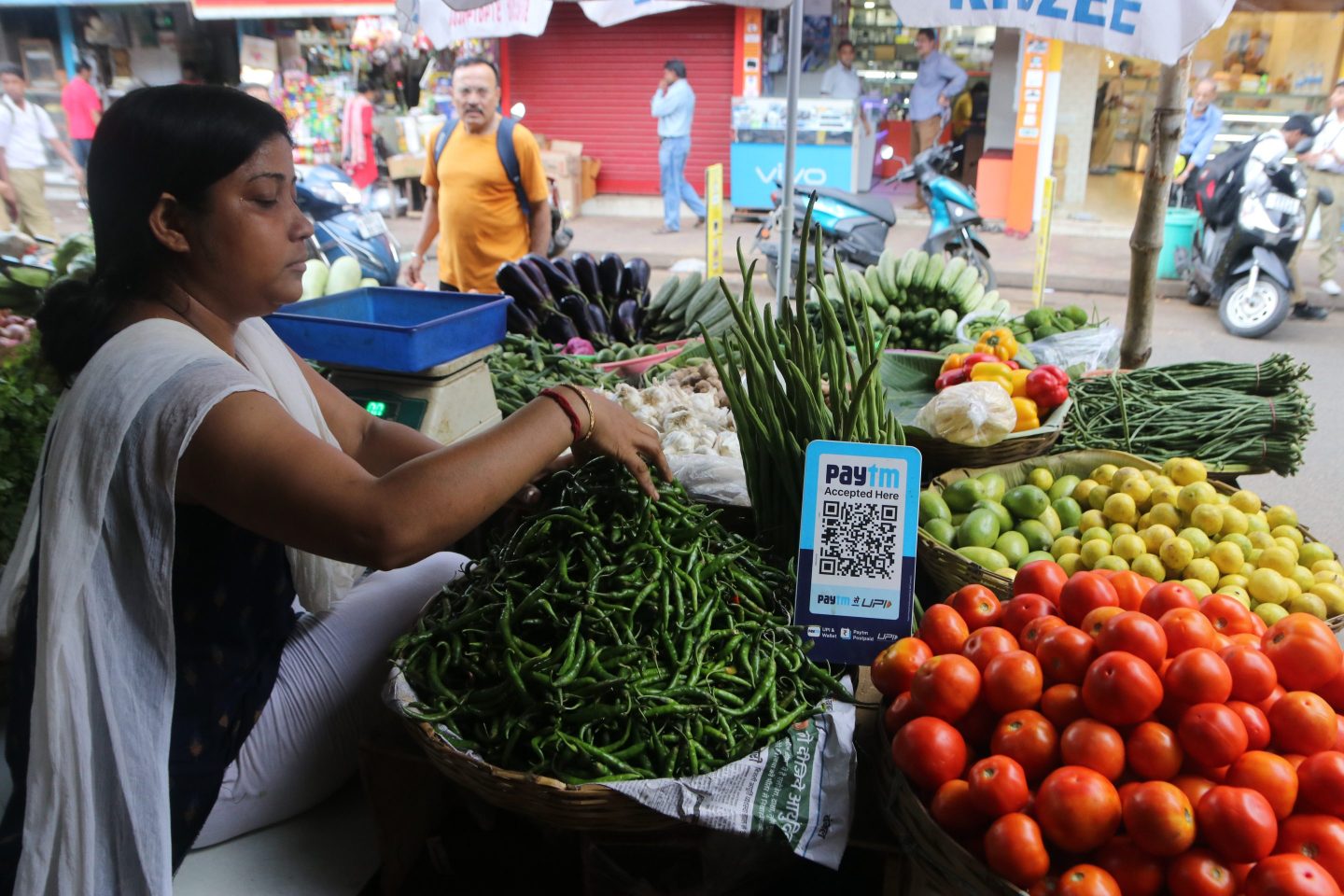
Renu runs one of the millions of mom-and-pop stores, known as kiranas, located all over India. She wanted to expand her business, but as a cash-only operation, couldn’t show banks that she was a worthy investment. An initiative called Project Kirana, launched by Mastercard and its partners, helped Renu adopt digital payments, creating the formal transaction history that would show her business was booming.
Renu is one of the 25 million women entrepreneurs we’ve reached with business solutions since 2020, fulfilling a global pledge to bring greater opportunities to women who have been on the wrong side of the digital divide for too long.
Measuring the number of women shop owners in India who went digital is the easy part. But how do you calculate the value of financially empowering a generation of women and creating role models for the generations to come? And more broadly, how do you measure any social impact project to show its economic benefits and that it reached its intended goals?
By comparison, measurements for environmental projects are fairly mature by now, with multiple levels of analysis available to drill down the direct and succeeding impacts of sustainability initiatives. The lack of similar metrics and tools for social programs means a lot of good work in this field goes unrecognized and businesses will have less incentive to invest in them. Additionally, it’s likely that more precise measurements could direct investments of time and money to more effective programs.
A vacuum of credible information about these programs invites skepticism about them. Critics can-and do-say, “What good are they if we can’t measure their success?”
These programs do matter a great deal. In the decade since I helped launch the Mastercard Center for Inclusive Growth, I’ve seen our financial inclusion work empower people, strengthen communities and build a more sustainable digital economy. What I love about Renu’s story is not just her shop’s digital transformation, but the way it has also transformed her life. As her business grows, her husband has taken on more responsibilities in the home, nudging social norms toward greater equity. We need better metrics to illustrate those types of changes to businesses, the public, and critics.
If we can develop principles for capturing the social contributions companies are making, we can help businesses take action while carrying out their strategic objectives and creating long-term value for shareholders.
To measure social impact, we could start by using the tools we already have.
In the environmental context, companies have adopted the Greenhouse Gas (GHG) Protocol, which tracks the full spectrum of a company’s carbon emissions. The first scope accounts for direct emissions from its operations, the second relates to indirect emissions from energy purchased by the company, and the third tracks indirect emissions from a company’s entire value chain.
At the Center for Inclusive Growth, we have been thinking about how to capture social impact in a similarly methodical way. Just as the environmental framework is tied to the level of control over the source of emissions, we could account for the level of control in social impact. I’ll offer up the following framework to show how our team is thinking about this challenge, so we can help spark a dialogue using the following as a conceptual starting point.
The first scope could cover each company’s approach toward its own employees, since companies have a direct influence on this stakeholder group through workplace investments, programs, and corporate culture. This category could assess pay equity, diversity within leadership ranks, talent development and career progression for underrepresented groups, labor standards, and more. Many companies already track these metrics.
Then, the second scope could look at how companies leverage their core competencies, deploy their products and services and work within their supply chains to help address societal challenges. Companies have skills, technologies, and capital that can create widespread social benefits, and many are already leading the way. The activity in this second category involves stakeholders at a level of control that is less direct than the first, such as customers and suppliers.
Finally, philanthropic giving, volunteering, and other community investments would comprise the third scope. This level of control is distinct from the second scope because company resources are entrusted to other entities that make decisions about how it’s spent. These efforts, while indirect, can strengthen a company’s brand and reputation, cultivate innovation and opportunity, and generate significant societal value.
From there, it’s about measuring the outputs of our investments in all three scopes. A system of accountability for follow-through is vital because when it comes to improving people’s lives, communities, and futures, outcomes matter-not just effort.
There is so much good work happening in the social impact space, but much more work to be done to measure it. To incentivize continued progress, we have to start quantifying the impact, even if the best way to do that looks different across companies or industries.
By sparking a discussion that influences innovation, promotes transparency and accountability, and inspires more companies to apply the full range of their assets for positive social impact, we can demonstrate the true power of the private sector, which is needed now more than ever.
Shamina Singh is the founder and president of Mastercard Center for Inclusive Growth.
The opinions expressed in Fortune.com commentary pieces are solely the views of their authors and do not necessarily reflect the opinions and beliefs of Fortune.
More must-read commentary published by Fortune:
- The FIRE movement is soaring in popularity–but early retirees report feeling lost and unfulfilled
- America turned to hospital-at-home programs during the pandemic–but their stunning success calls for a permanent fix
- ‘The Feckless 400’: These companies are still doing business in Russia–and funding Putin’s war
- Daniel Lubetzky: ‘You can’t make big ESG commitments while failing at the basics of kindness’











