Ping-pong with coworkers bespetacled in Warby Parker; beer carts and fancy cappuccino with a boss glistening with a sheen of Glossier; talking about Buzzfeed lists while seated on uncomfortable bar stools—so was the advertised narrative of the increasingly bygone era of WeWork and the 2010s office culture. The era’s peak wasn’t that long ago, but it rapidly ended in the early 2020s and transformed into a dim shade of millennial pink.
You need no more evidence of this fading office culture than WeWork on Tuesday warning it had “substantial doubt” regarding its ability to keep the lights on. It prompted an immediate 25% drop to its share price to close at just 13 cents on Wednesday. Despite trying an overhaul over the last couple of years, the co-working space’s current predicament is in part due to something beyond its control: No one really wants to go to the office anymore, at least not five days a week. While the company shared that second-quarter revenue was slightly up from the same period a year earlier, it still suffered a net loss of $397 million for the quarter. And the company’s office occupancy hasn’t really rebounded, coming in at 72% by the end of the second quarter, just a 2% increase year over year, and actually down one percentage point from the previous three months.
Three years after the pandemic started, office occupancy rates for landlords across the country remain largely lower than before. The demand for flexible work remains strong, as companies that offer remote options grow faster than their traditional counterparts. Office vacancy in New York City remains at record highs of 17.4%, according to real estate company Colliers. That’s 70% higher than before the pandemic, and it’s not better nationwide, where the vacancy rate is 20%. The lack of employees in the office spells out disaster for co-working spaces like WeWork, which are built on the premise of people electing to come in to collaborate with colleagues or freelance in a shared location.
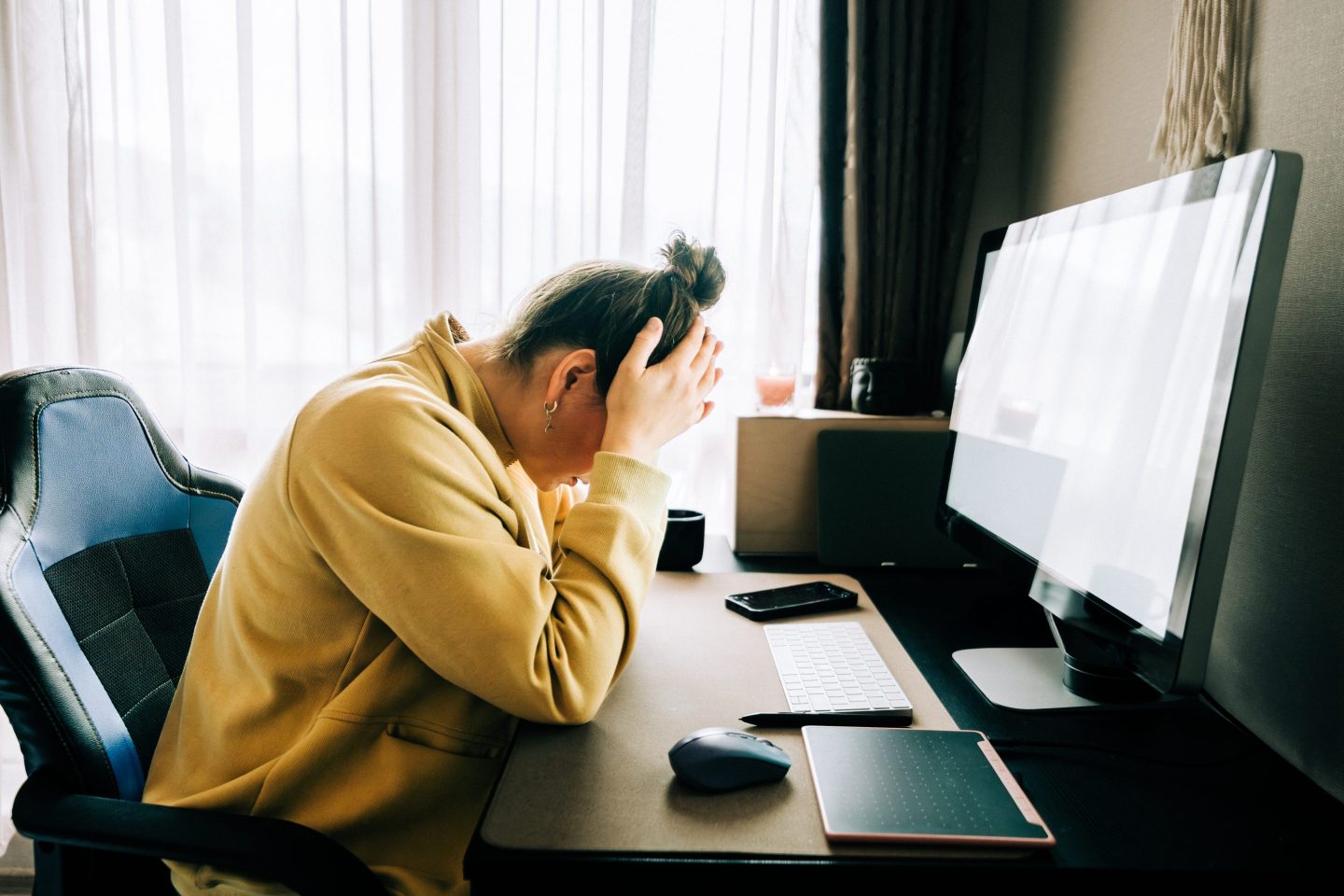
Alongside the slide of WeWork, there’s a vibe shift—an anecdotal rejection of the “hustle culture” that defined the “We” era. Issues of employee burnout got more airtime during the pandemic, as many people used the life-altering event to reconsider their personal and professional goals, as well as address stressors in their life and workplace. Burnout became known as a byproduct of the continual rise-and-grind culture, as some put emphasis on work-life balance, which sometimes seemed more feasible in an era of remote work that was defined by flexibility.
There was also a pushback to the “girlboss” type of feminism that also reigned supreme alongside WeWork’s adult playground. Leaders, or girlbosses, as well came under fire years later for creating toxic workplaces. The movement was also criticized for only empowering affluent white women, as Amanda Mull writes in the Atlantic. It culminated in the end of another similar co-working space, the Wing, an office sharing company built on women’s empowerment that shut down after the pandemic amid claims of a hostile work environment and racism.
As for whether remote work increased or reduced productivity, it depends on who you ask. Experts differ on whether workers are more or less productive when working from home. One thing is becoming apparent: People are still interested in the 2020 era of autonomy and flexibility, as return-to-office mandates coincide with higher office attrition and greater difficulties in recruiting than expected.
To be fair, a major part of what’s happening is beyond the shifting desires of employees in a post-pandemic world. As a public company, the one-time unicorn known as WeWork never approached its private valuation of $47 billion. Although the company has embraced a “transformation plan” since 2019 and managed to go public through a SPAC, it has never been worth all the venture capital invested into it and is still struggling to turn a profit. The founder who raised all that capital, Adam Neumann, secured a $1.7 billion parachute payment as he left the firm in 2019, although a representative told Fortune that he actually received half; still, that did not help balance the books—and that came right before the pandemic hit.
Neumann or not, the pandemic and rise of flexibility gave way to the demise of the co-working dream of the 2010s. The pushback to the open floor plan, which was popular during that era, was happening long before the time of masking. Originally built to engender collaboration, research from Ethan Bernstein and Ben Waber published in Harvard Business Review finds that in practice the layout creates “less meaningful interaction” and face-to-face interactions declined by 70%. As employees became more versed in online tools like Zoom and Slack, the purposelessness of the office in creating collaborative environments became all the more apparent—and the lack of actual human interaction there challenged the major talking point of those who push the benefits of the office.
While WeWork hasn’t truly crashed, the company talks of reducing costs to create more affordable leases, its warning of its potential death on Tuesday signals that the era of millennial co-working might be on its last legs. “The company’s transformation continues at pace, with a laser focus on member retention and growth, doubling down on our real estate portfolio optimization efforts, and maintaining a disciplined approach to reducing operating costs,” David Tolley, interim CEO, said in a press release, adding the company was confident in its ability to evolve to meet the workplace needs.
Of course, WeWork has to evolve. We’re still working—and looking to work differently, after all.
Editor’s note: This article has been updated to clarify that Adam Neumann secured a package worth up to $1.7 billion when he exited WeWork in 2019, however, a representative told Fortune that only approximately half of that was actually executed, worth hundreds of millions of dollars.