
Last week was a big week for private equity. The Federal Trade Commission issued new guidelines that would increase scrutiny of PE rollups, where firms merge portfolio companies and can save on costs. Shortly after, alternative investments firm Blackstone announced in its quarterly earnings that it reached $1 trillion in assets under management—the first PE firm to ever hit that milestone, and, surprisingly, three years ahead of schedule. “They’ve been talking about it a while, but it’s like landing on the moon: It’s still an incredible achievement,” Tim Clarke, senior private equity analyst at PitchBook, told me of Blackstone’s new AUM figure.
But how did they do it?
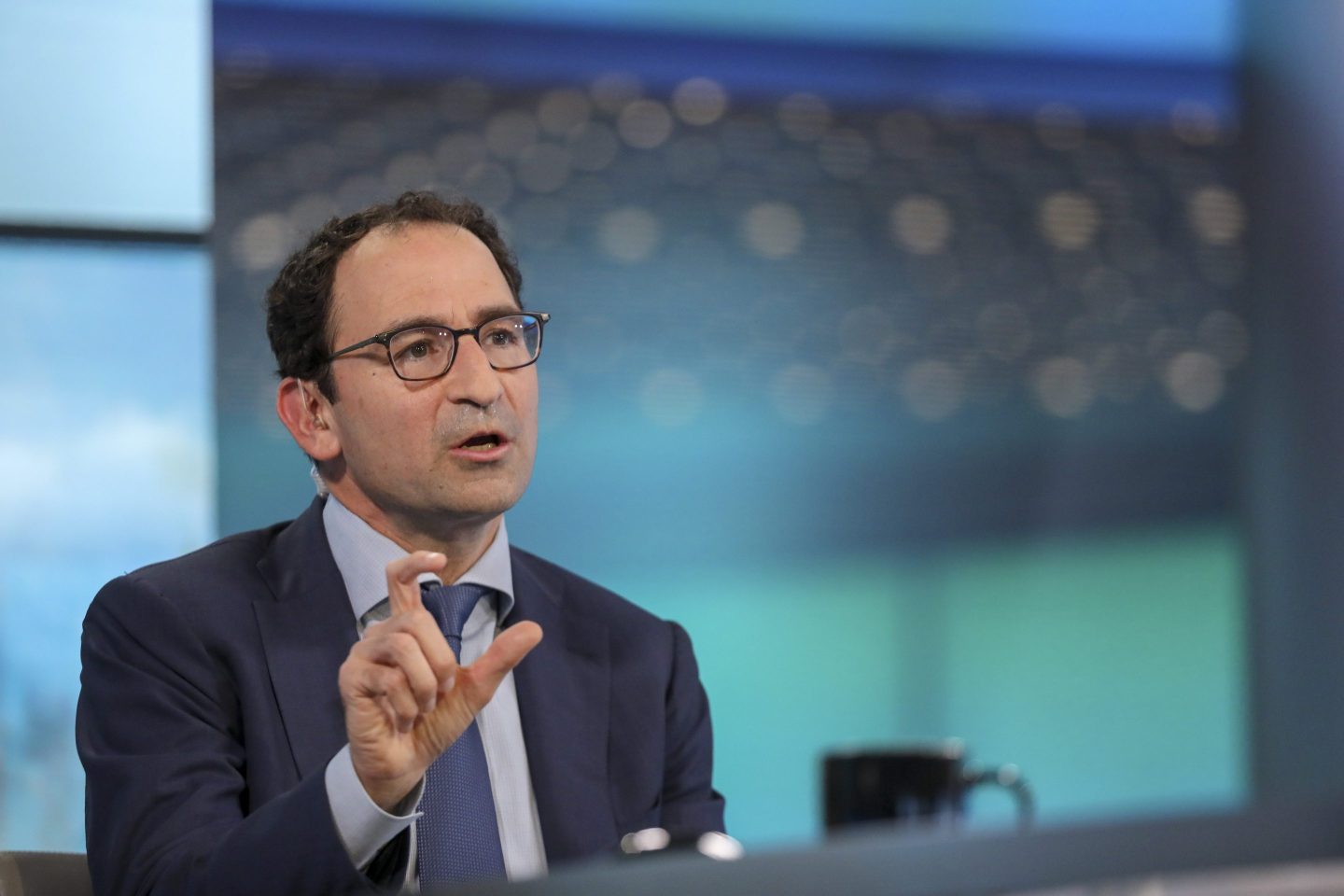
The firm has seen big growth in its other businesses ex-private equity, having a first-mover advantage in areas like real estate and private wealth. And as Blackstone president and COO Jonathan Gray told me, he thinks the firm still has room to scale in certain segments.
CEO and cofounder Steve Schwarzman attributes the achievement to Blackstone’s willingness to think outside the traditional PE box (coupled, of course, with its performance over the long-term). “Our original strategic plan was to start in corporate advisory and then quickly move into private equity, followed by a succession of other asset management businesses over time,” he said on the company’s earnings call last week, highlighting several of the firm’s moves over the years, including into hedge fund of funds in 1990 and private wealth in 2011.
To be sure, the firm is still struggling to raise funds for its flagship buyout fund. And amid a rough overall market, in Q2 Blackstone’s distributable earnings (those they can pay out to shareholders) fell a whopping roughly 40% year-over-year, to $1.2 billion. But other areas like private credit have been a growth engine. “If there was one area in particular that…would probably grow more, I would guess credit” moving forward, Gray told me over the phone.
While the firm traditionally extracted profits from buying and fixing up lagging companies via its private equity business, its expansion into real estate in 1991 has been a boon for the company, too. As my colleague Shawn Tully explored at length in 2020, Blackstone became the world’s largest corporate landlord.
But there’s another big trend afoot that has helped Blackstone achieve its current size: In recent years Blackstone has been pushing to attract high net worth individuals. While PE firms have historically invested cash on behalf of large pensions and endowments, individual (and rich) investors have played a big role in asset growth, as my colleague Jessica Mathews dug into last year. Blackstone’s head of private wealth Joan Solotar predicted in 2018 that retail investors would make up half of the firm’s AUM in five to 10 years; and in 2022, Blackstone said it raised $50 billion of equity capital from that cohort the year prior. As of the firm’s latest earnings, about a quarter of their total AUM ($240 billion) now comes from individual investors, via their private wealth business.
Over the last few years, individual investors have “been a big driver” for Blackstone, Gray told me (although the last 12 months have been slower amid the volatile markets, he added). He also sees that segment growing moving forward: The market for individuals with $1 million or more to invest is around $80 trillion, he estimates, but they’re only about 1% allocated to alternatives at the moment. “We’re certainly earlier days in terms of penetration of the individual investor market,” he says.
Though PitchBook’s Clarke notes that pretty much all of the big public private equity firms have adopted this “supermarket alternative strategy” of numerous business segments outside of traditional PE, Blackstone got “a five to 10 year head start on almost all these other asset classes,” he said.
Who’s next?
“Apollo is coming on strong,” Clarke says. As of Q1 this year, Apollo Global Management had nearly $600 billion in AUM, and Clarke predicts they can reach the trillion-dollar-mark in the next three to four years—even faster if their assets appreciate, he says. “They’re all revved up,” he added when I asked how he imagines other PE firms feel about the Blackstone news.
Some of the other public alternative asset managers still have a ways to go: Carlyle’s AUM is a far cry from that mark at $381 billion in AUM; KKR, meanwhile, had $510 billion in AUM (both as of Q1 this year). “It’s kind of like when you have four fast food restaurants on the same intersection,” Clarke quips about competition among PE firms: “It’s good to have this competition…you just bring more traffic.”
But the bigger you get, the harder it is to keep growing. And it’ll be interesting to see whether Blackstone keeps up its momentum.
See you tomorrow,
Anne Sraders
Twitter: @AnneSraders
Email: anne.sraders@fortune.com
Submit a deal for the Term Sheet newsletter here.
Jackson Fordyce curated the deals section of today’s newsletter.
VENTURE DEALS
- Preply, a Brookline, Mass.-based online language learning platform, raised $42 million in Series C funding. Horizon Capital, Reach Capital, Hoxton Ventures, Educapital, Flashpoint, Foobar.VC, and Evli Growth Partners invested in the round.
- Ati Motors, a Detroit- and Bengaluru, India-based maker of autonomous industrial robots, raised $10 million in Series A funding. True Ventures led the round and was joined by Athera Ventures Partners, Blume Ventures, Exfinity Ventures, and MFV Partners.
- GlobalComix, a Pittsburgh-based digital comics platform, raised $6.5 million in Series A funding. Point72 Ventures led the round and was joined by Endeavor and others.
- Thingtrax, a London-based manufacturing performance platform, raised £4.3 million ($5.53 million) in pre-Series A funding. Concentric, Superseed, and Puma Private Equity co-led the round and were joined by Haatch, Portfolio Ventures, Vinci Venture Capital, and other angels.
- Quench.ai, a Murrieta, Calif.-based A.I. learning coach platform, raised $5 million in pre-seed funding. Firstminute capital, Tuesday VC, BY Venture Partners, Ada Ventures, Plug and Play Ventures, Notion Capital, IFG, Antler, Ventures Together,and others invested in the round.
- Frigade, a San Francisco-based product onboarding and adoption solution for React, raised $3 million in seed funding. Craft Ventures and La Famiglia co-led the round and were joined by Y Combinator, Defy.vc, Magic.fund, and others.
- Stylib, a London-based search platform for design professionals, raised £1.5 million ($1.93 million) in pre-seed funding. Foundamental led the round and was joined by Nemetschek Group and Redstone Built World Strategy.
PRIVATE EQUITY
- KKR agreed to acquire Chase Corporation, a Westwood, Mass.-based protective materials manufacturer. The deal is valued at approximately $1.3 billion.
- DGS Retail, a San Francisco Equity Partners portfolio company, acquired RICH, an Oceanside, Calif.-based point-of-purchase displays and retail store fixtures designer and manufacturer. Financial terms were not disclosed.
- Obra Capital acquired the assets of KDP, a Montpellier, Vt.-based asset management and investment research firm. Financial terms were not disclosed.
OTHER
- Safran agreed to acquire an aerospace business from Raytheon Technologies, an Arlington, Va.-based aerospace and defense company, for an enterprise value of $1.8 billion.
FUNDS + FUNDS OF FUNDS
- Bracket Capital, a Los Angeles-based multi-asset investment manager, raised $450 million across two funds: $150 million for a fund focused on growth- and later-stage, technology-enabled companies and an additional $300 million for coinvestment and evergreen funds.
This is the web version of Term Sheet, a daily newsletter on the biggest deals and dealmakers. Sign up to get it delivered free to your inbox.