The Chinese economy’s sheer size and rapid growth are impressive.
China maintained one of the highest economic growth rates in the world for more than a quarter of a century, helping lift over 800 million people out of poverty in just a few decades. The country is the largest exporter in the world and the most important trading partner of Japan, Germany, Brazil and many other countries. It has the second-largest economy after the U.S., based on the market exchange rate, and the largest based on purchasing power.
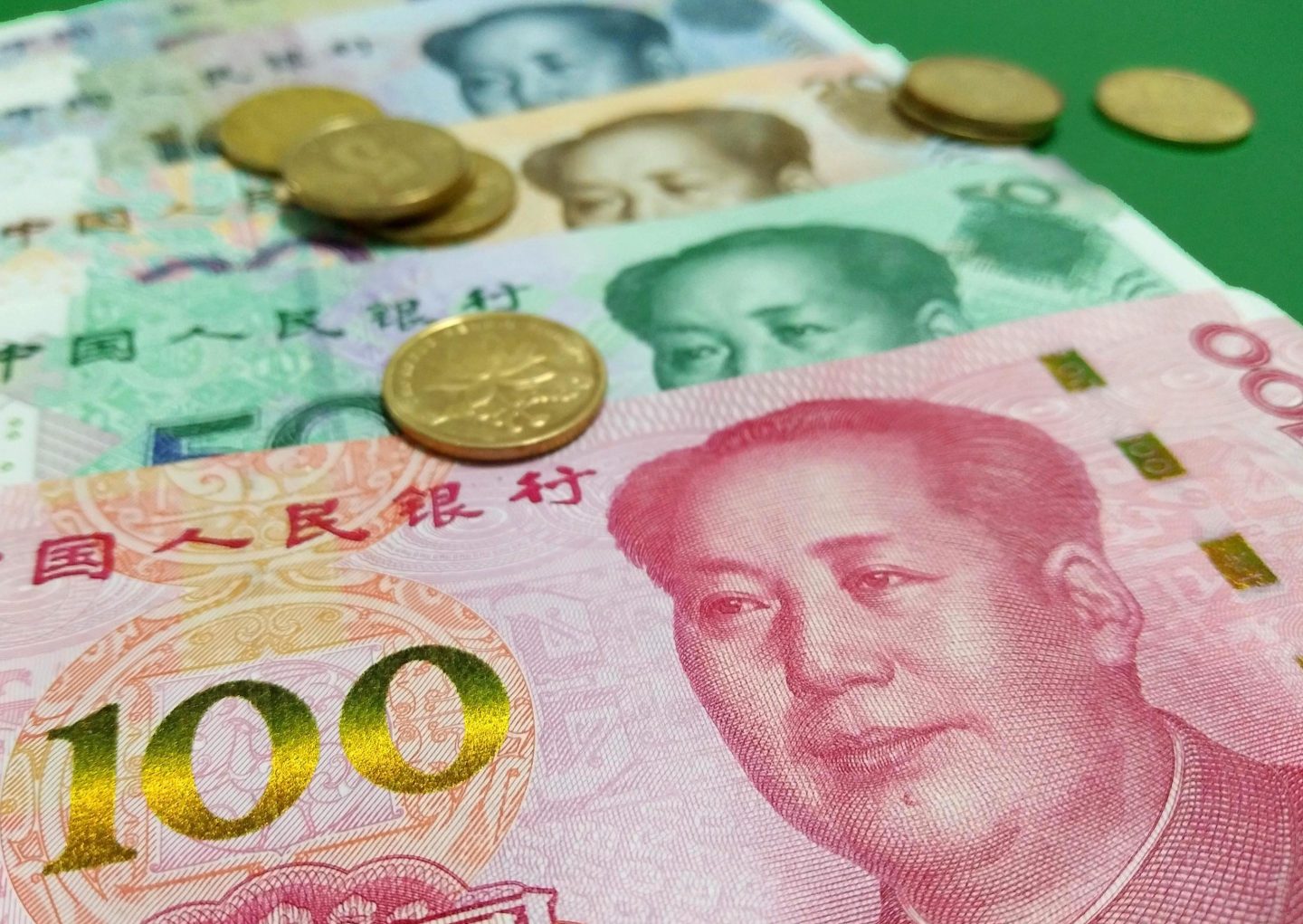
And yet the yuan still lags as a major global currency. The war in Ukraine, which started in February 2022, may change that.
As a professor of finance and expert on international finance, I understand how this geopolitical conflict may put China’s currency on the next phase of its path to becoming a global currency – and prompt the onset of the decline of the U.S. dollar from its current dominance.
China has long wanted to make the yuan a global force and has mounted significant efforts to do so in recent years.
For example, the Chinese government launched the Cross-Border Interbank Payments System, or CIPS, in 2015 to facilitate cross-border payments in yuan. Three years later, in 2018, it launched the world’s first yuan-denominated crude oil futures contracts to allow exporters to sell oil in yuan.
China has also emerged perhaps as the world’s largest creditor, with the government and state-controlled enterprises extending loans to dozens of developing countries. And China is developing a digital yuan as one of the world’s first central bank digital currencies. Even the trading hours for the yuan were recently extended on the mainland.
Thanks to these efforts, the yuan is now the fifth-most-traded currency in the world. That is a phenomenal rise from its 35th place in 2001. The yuan is also the fifth-most-actively used currency for global payments as of April 2023, up from 30th place in early 2011.
Rankings can be misleading, though. The yuan’s average trading volume is still less than a 10th of the U.S. dollar’s. Moreover, almost all trading was against the U.S. dollar, with little trading against other currencies.
And when it comes to global payments, the actual share of the yuan is a mere 2.3%, compared with 42.7% for the dollar and 31.7% for the euro. The yuan also constituted less than 3% of the world foreign exchange reserves at the end of 2022, compared with 58% for the dollar and 20% for the euro.
U.S. dollar’s dominance questioned
The U.S. dollar has reigned supreme as the dominant global currency for decades – and concern about how that benefits the U.S. and potentially hurts emerging markets is not new.
The value of the U.S. dollar appreciated significantly against most other currencies in 2022 as the Federal Reserve hiked interest rates. This had negative consequences for residents of almost any country that borrows in dollars, pays for imports in dollars, or buys wheat, oil or other commodities priced in dollars, as these transactions became more expensive.
After Russia invaded Ukraine in early 2022, the U.S. and its Western allies put sanctions on Russia, including cutting Russia’s access to the global dollar-based payments system known as the Society for Worldwide Interbank Financial Telecommunication, or SWIFT. That clearly displayed how the dollar can be weaponized.
With Russia largely cut off from international financial markets, it stepped up its trade with China. Russia began receiving payments for coal and gas in yuan, and Moscow increased the yuan holdings in its foreign currency reserves. Russian companies like Rosneft issued bonds denominated in yuan. According to Bloomberg, the yuan is now the most-traded currency in Russia.
Other countries took notice of Russia’s increasing use of the yuan and saw an opportunity to decrease their own dependency on the dollar.
Bangladesh is now paying Russia in yuan for the construction of a nuclear power station. France is accepting payment in yuan for liquefied natural gas bought from China’s state-owned oil company. A Brazilian bank controlled by a Chinese state bank is becoming the first Latin American bank to participate directly in China’s payments system, CIPS. Iraq wants to pay for imports from China in yuan, and even Tesco, the British retailer, wants to pay for its Chinese imported goods in yuan.
The combined dollar amount of these transactions is still relatively small, but the shift to yuan is significant.
Yuan still not freely available
China keeps a tight grip on money coming in and out of the country. Such capital controls and limited transparency in Chinese financial markets mean China still lacks the deep and free financial markets that are required to make the yuan a major global currency.
For the yuan to achieve a truly global standing, it needs to be freely available for cross-border investment and not just serve as a payment medium to accommodate trade.
But the war in Ukraine may have just made it feasible for the yuan to eventually join the ranks of the dollar and the euro – even if the volume isn’t there yet. And any U.S. policy decisions that weaken the reputation and strength of U.S. institutions – such as the recent drama over raising the debt ceiling, which brought the government to the brink of default – will accelerate the rise of the yuan and decline of the dollar.
Tuugi Chuluun is associate professor of finance at Loyola University Maryland