Until recently, there was little optimism that the deterioration in relations between China and the U.S. can be reversed. Now, however, some signs of progress have emerged: Senior-level talks have taken place–and more are being planned to address key issues. These don’t guarantee major changes, but even minor ones are welcome at this point.
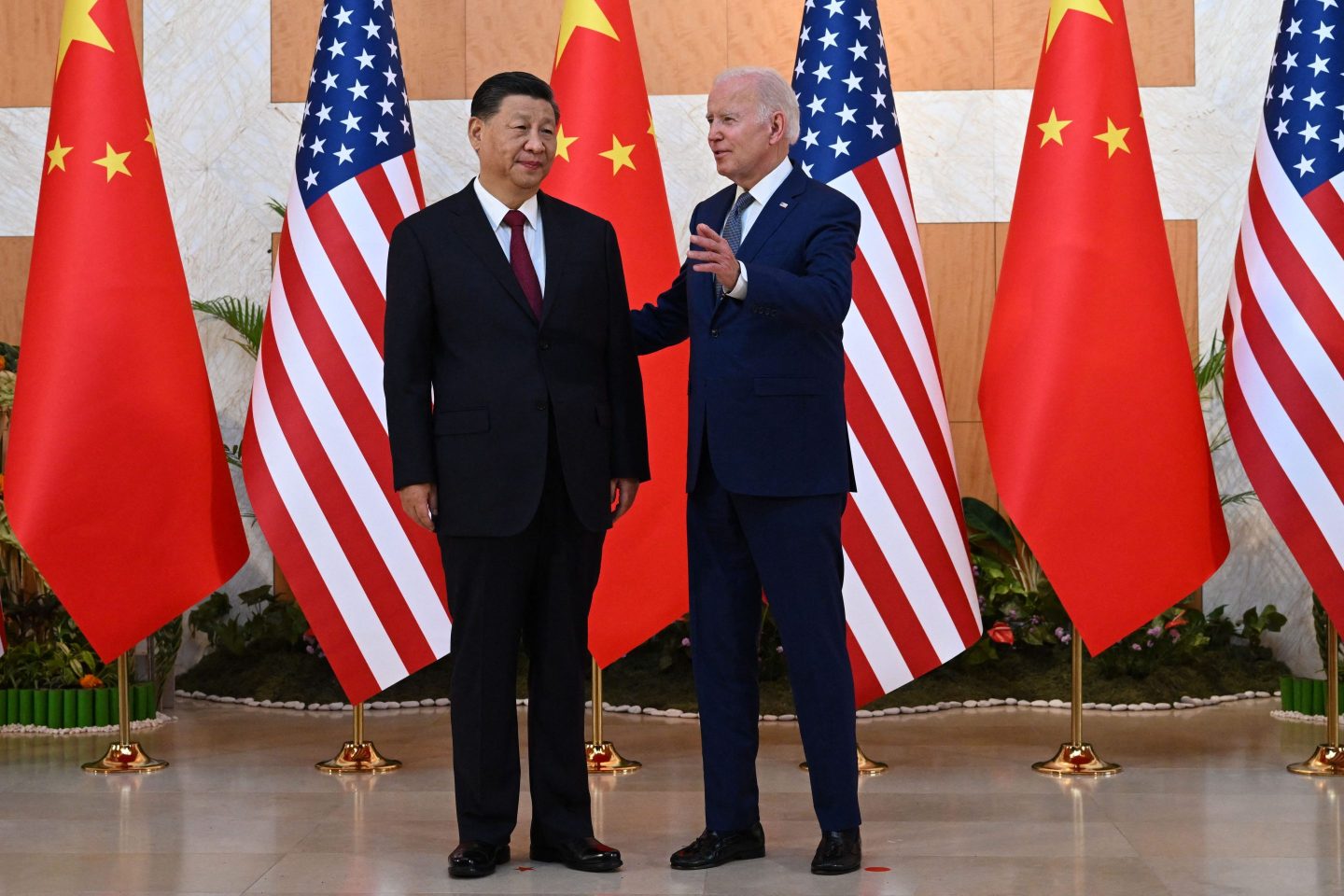
Both countries would benefit from dialogues on several significant and often highly divisive issues in coming months, building toward a possible meeting between U.S. President Joe Biden and Chinese President Xi Jinping at the APEC Summit to be held in San Francisco in mid-November.
Used wisely, this series of talks will enable both nations better to understand one another’s basic goals, articulate what they see as major differences and vital interests, and find ways to build mutual respect and trust.
Such talks are particularly important now, following significant personnel changes among high-level officials in Beijing. These new Chinese officials and their American counterparts need opportunities to get to know one another and develop rapport. The talks also come at a time when control of the U.S. House of Representatives has changed hands. China could be informed by U.S. officials about the new leadership in Congress and what they might mean for future China-US relations and negotiations.
Not all the goals mentioned above can be accomplished quickly. Many months–or even years–might be required to make major progress in some areas. In some cases, we may have to simply agree to disagree and find a constructive framework for managing our differences.
It is useful to recognize that the kind of relationship we had for several decades in the past is unlikely in the future. Relations are likely to be considerably more fraught and, on various matters, more politically confrontational. On the flip side, the recognition of a new set of realities and opportunities could lay the basis for a sound, constructive, and realistic relationship going forward.
The first reckoning is that we cannot organize our bilateral relations or manage the new global order based on sustained tensions between our two countries–or by seeing this as a zero-sum contest. Nor can we do it by engaging in rhetorical challenges to, or criticism of, the legitimacy of the system of governance of one country by the other. There are profound differences in historic cultures and political systems that must be recognized and respected.
For future relations to be productive, there needs to be mutual respect for each country’s culture and system. And we must seek reasonable objectives. For example, for Washington, attempting to slow or impede China’s economic growth and development is not a realistic–or constructive–option. China has the technical capabilities and human skills to maintain significant growth for a long time to come. And the impressive technological progress China has made should encourage the U.S. to focus more of its energies on its own internal improvements at home–building out its own 21st-century technical capabilities and strengthening education at all levels in the fields of science, math, technology, and engineering.
Attempting to curb or deter the growth of China’s economic relations with other nations is equally unrealistic and unconstructive. Most countries, including U.S. allies, seek constructive trade and investment relations with China. For many, China is, and will remain, their largest trading partner.
To address key issues more deeply, an enhanced and more regular high-level dialogue on several issues is critical. I had the privilege of being on the National Security Council staff of Henry Kissinger in the early 1970s, when the dialogue between China and the U.S. was just beginning. Early talks were more about the broad objectives of each country than details. This led to a series of understandings on mutual objectives over the next several years. Our leaders did not set out to resolve all issues from the start. The big areas of agreement set the stage for future steps toward greater normalization in the period that followed.
I was, therefore, encouraged that recently President Joe Biden’s national security advisor, Jake Sullivan, met with Chinese Communist Party Politburo Member and Director of the Office of the Foreign Affairs Commission Wang Li, to address a wide range of bilateral and international issues. Most importantly, the two sides agreed “to maintain this important strategic channel of communication.” This is a healthy step.
The U.S. Secretary of State and China’s top foreign policy official should also undertake a series of regular meetings to better understand one another’s regional and geopolitical objectives and manage their differences. Similarly, meetings between the U.S. Treasury Secretary and China’s finance minister can lead to understanding and cooperation on bilateral and global issues, as it did in the 2008 financial crisis when their cooperation was excellent and vital to a solution.
The two countries also must effectively address trade and investment relations, which have been sources of tensions between us for several years. Commerce Minister Wang Wentao will soon be meeting with Commerce Secretary Gina Raimondo and U.S. Trade Representative Katherine Tai.
These meetings are not likely to produce any quick solutions–but they are a step in the right direction. A major challenge is that a growing number of trade and investment issues are inextricably linked to security issues. Both sides want to protect their advanced technologies, especially those that could have military uses, and avoid vulnerability to possible strategic or political leverage by the other.
Additionally, the two countries would do well to agree on a communication channel and regularly scheduled meetings between top military leaders on both sides in order to understand each nation’s strategic objectives and avert conflict and miscalculations.
In a wide range of non-strategic areas, both economies can gain enormously from mutual and fair trade and investment. This can only happen if domestic policies, sanctions, and rules in each country are not applied in a way that is discriminatory to the other. Mutual understandings are necessary to accomplish this. And because numerous other countries have an interest in the evolving global economic order, China and the U.S. have an interest in broadening their participation in many aspects of these discussions.
There are many other areas, including climate change and cooperation on medical research and disease prevention, where sustained talks among scientists and researchers can produce enormous benefits. Considerable progress has already been in these areas to the benefit of both countries.
Finally, summits between heads of state are vitally important. November’s APEC (Asia-Pacific Economic Cooperation) Summit in San Francisco is an optimal opportunity for the next meeting between our presidents. We should welcome President Xi to the U.S. for this important meeting of Pacific Leaders and an opportunity to defuse tensions.
Government officials work best when facing deadlines, and now would be a good one to mobilize key agencies and personnel on both sides of the Pacific to prepare a constructive agenda and constructive outcomes.
The goal would not be to cover every issue or every detail. It would be to discuss the broad goals of each country, identify a few key initiatives with potential for progress and agree on ways of building a mutually beneficial and stable relationship in the future. It can be a big step toward a more constructive relationship for both nations and the world.
Robert Hormats is a former Under Secretary of State for Economic, Growth, Energy, and the Environment, and the author of The Price of Liberty: Paying for America’s Wars.
The opinions expressed in Fortune.com commentary pieces are solely the views of their authors and do not necessarily reflect the opinions and beliefs of Fortune.
More must-read commentary published by Fortune:
- Stanford researchers scoured every reputable study for the link between video games and gun violence that politicians point to. Here’s what the review found
- Is it smart to be a ‘stupid genius’ like Elon Musk?
- Why there will be no winners in the never-ending war between Disney and DeSantis
- America had the debate about paying its debt after the Revolution and the Civil War. Here’s why we reached the same conclusion twice