Those Transportation Security Administration requirements are drilled into every frequent flyer’s head: You can carry on liquids that are only less than 3.4 ounces (100 milliliters) in volume each.
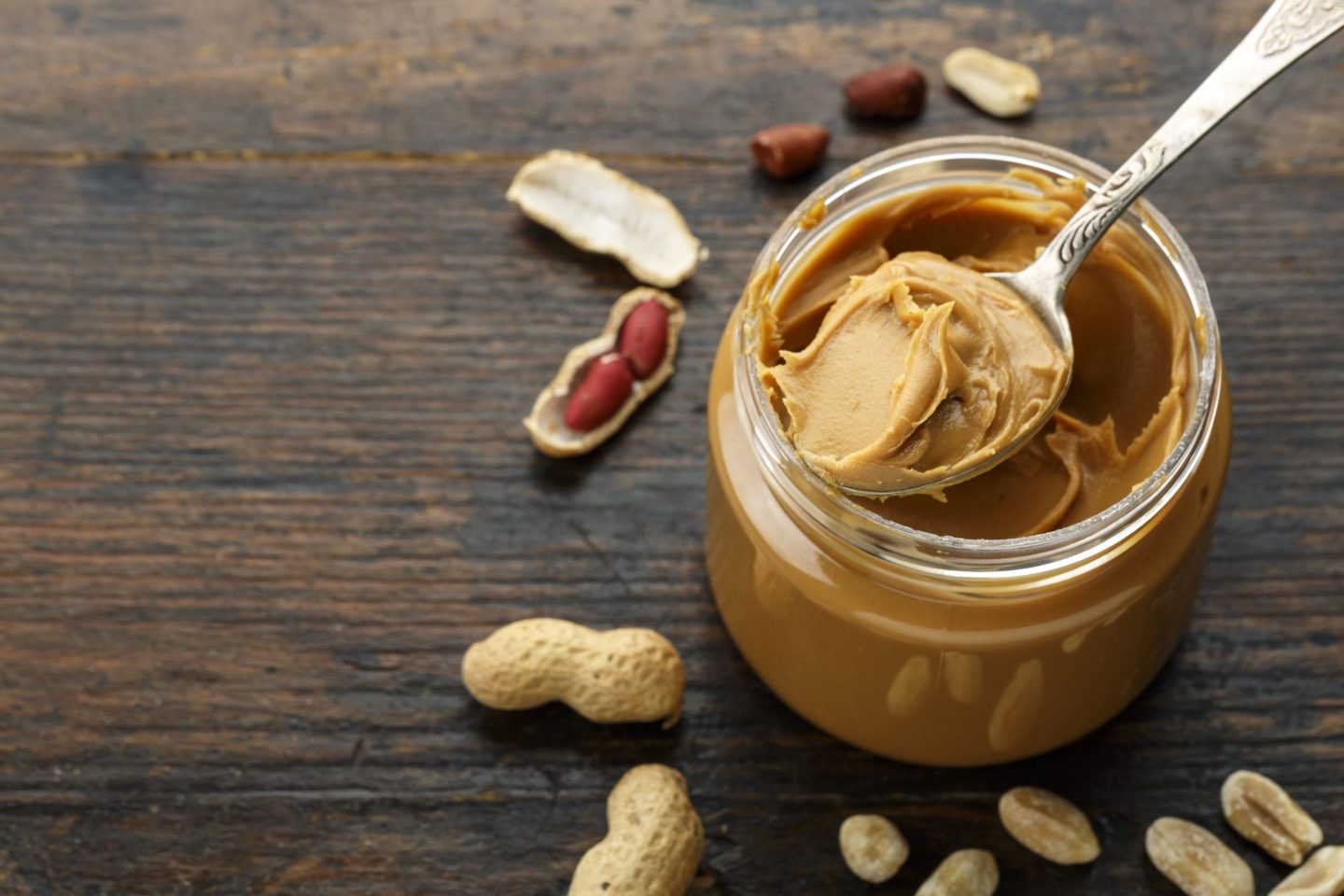
But when the TSA recently confiscated a jar of Jif under this rule, peanut butter lovers were up in arms. Some skeptics of security may suspect hungry officers just wanted to make their own PB&Js. TSA, however, contends that peanut butter is a liquid – and a full-size jar of Jif is over the 3.4-ounce limit.
Just like Americans’ favorite legume-based sandwich ingredient, the story – and the outrage it inspired – began to spread. However, I’m a mechanical engineer who studies fluid flows, and the TSA action made sense to me. By the scientific definition, peanut butter is indeed a liquid.
First consider fluids
To define a liquid, we must first define a fluid. Any material that flows continuously when a shearing force is applied is a fluid. Think of a shearing force as a cutting action through a substance that causes it to flow continuously. For example, moving your arm causes the surrounding air to change shape – or deform, to use the physics term – and flow out of the way. The same thing happens to water when your arm takes a swim stroke.
There are many kinds of fluids. Some act very predictably and move smoothly, as air or water do. These are called Newtonian fluids, named after Sir Isaac Newton. Scientifically, a Newtonian fluid is one in which the shear force varies in direct proportion with the stress it puts on the material, known as the shearing strain. For a Newtonian fluid, the resistance to fluid flow – that is, its viscosity – is constant at a given temperature.
Other types of fluids do not move quite as smoothly and easily. For some, like peanut butter, a minimum shearing or cutting force may be needed to get it flowing, and it may vary nonlinearly with shearing strain. Imagine you’re stirring a jar of peanut butter. If you stir really fast, with more shearing force, the PB gets runnier, while if you stir slowly the PB remains stiff. These types of fluids are called non-Newtonian fluids. Peanut butter may stick more than flow – maybe you could consider this movement more chunky-style.
Peanut butter is actually a great example of a non-Newtonian fluid because it doesn’t flow as easily as air or water but will flow if sufficient force is applied, such as when a knife spreads it on bread. How easily it flows will also depend on temperature – you may have experienced peanut butter drips after slathering it on warm toast.
Strange fluids are all around us
Our everyday lives – but not our airplane carry-ons – are filled with substances that are unexpected fluids. In general, if it can flow, it’s a fluid. And it will eventually take the shape of its container.
Some surprising fluids are peanut butter’s kitchen neighbors, like whipped cream, mayonnaise and cookie batter. You’ll find others in the bathroom, like toothpaste. The natural world is home to other strange fluids, like lava, mudslides, avalanches and quicksand.
Gravel can be considered fluidlike. The individual particles are solids, but a collection of gravel particles can be poured and fill a container – its what’s called a granular fluid, because it has fluidlike properties. The same can be said for cereal poured out of a box or sugar into a bowl.
Traffic flows on a busy highway, and people flow out of a crowded sporting venue.
You could even consider a cat lying in the sun to be a fluid when it has flattened out and fills its containerlike skin. Sleepy, relaxed dogs, squirrels and even zonked-out babies can meet the definition of a fluid.
Liquids are one type of fluid
Now, you might be objecting: But, the TSA didn’t call peanut butter a fluid, they said it’s a liquid!
Fluids are divided into two general categories: gases and liquids. Both gases and liquids can be deformed and poured into containers and will take the shape of their container. But gases can be compressed, while liquids cannot, at least not easily.
Peanut butter can be poured into its container and then it deforms, or takes the shape of that container. And every 5-year-old knows that peanut butter does not compress. When they squish their PB&J or peanut butter crackers together, the peanut butter does not smoosh into a smaller volume. No – it squirts out the sides and onto their hands.
So, the verdict on peanut butter: delicious liquid.
If you plan to make a PB&J sandwich midflight, count on bringing less than 3.4 ounces of liquid peanut butter. And the same goes for its liquid cousin, jelly.
Ted Heindel is University Professor, Bergles Professor of Thermal Science, and Director of the Center for Multiphase Flow Research and Education, Iowa State University.
This article is republished from The Conversation under a Creative Commons license. Read the original article.