• Home
  • Latest
  • Fortune 500
  • Finance
  • Tech
  • Leadership
  • Lifestyle
  • Rankings
  • Multimedia
Finance

3 economic historians explain how the SVB report and First Republic’s near collapse show that incentives, risk and greed are universal truths

By
Alexandra Digby
Alexandra Digby
,
Dollie Davis
Dollie Davis
,
Robson Hiroshi Hatsukami Morgan
, and
The Conversation
The Conversation
Down Arrow Button Icon
By
Alexandra Digby
Alexandra Digby
,
Dollie Davis
Dollie Davis
,
Robson Hiroshi Hatsukami Morgan
, and
The Conversation
The Conversation
Down Arrow Button Icon
April 28, 2023, 2:19 PM ET
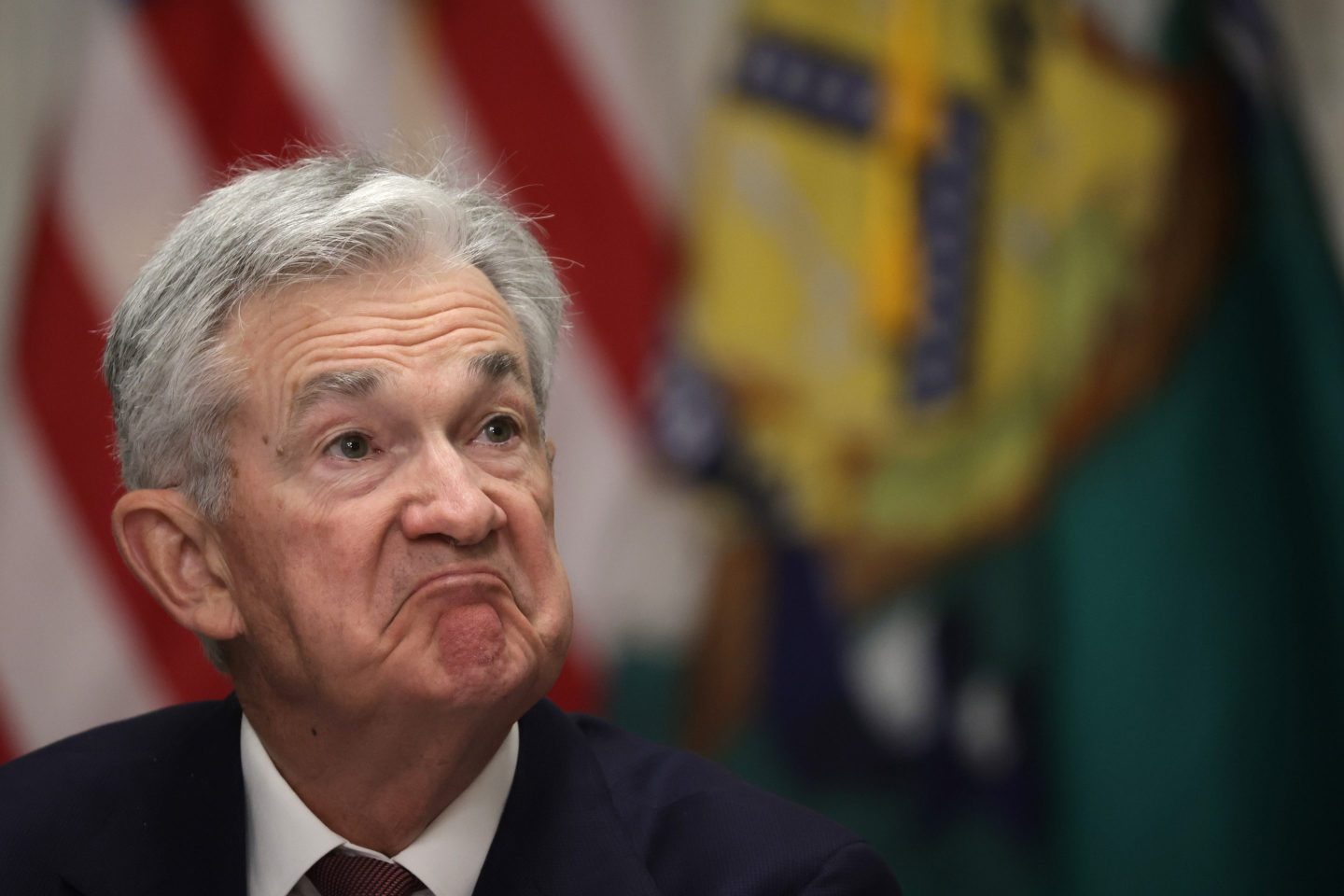
Jerome Powell
Federal Reserve Chair Jerome Powell.Alex Wong/Getty Images

First Republic Bank is on the brink of collapse, a victim of the panic that has roiled small and midsize banks since the failure of Silicon Valley Bank in March 2023.

Recommended Video

Should First Republic fail, it would underscore how the impact of risky decisions at one bank can quickly spread into the broader financial system. It should also provide the impetus for policymakers and regulators to address a systemic problem that has plagued the banking industry from the savings and loan crisis of the 1980s to the financial crisis of 2008 to the recent turmoil following SVB’s demise: incentive structures that encourage excessive risk-taking.

The Federal Reserve’s top regulator seems to agree. On April 28, 2023, the central bank’s vice chair for supervision delivered a stinging report on the collapse of Silicon Valley Bank, blaming its failures on its weak risk management, as well as supervisory missteps.

We are professors of economics who study and teach the history of financial crises. In each of the financial upheavals since the 1980s, the common denominator was risk. Banks provided incentives that encouraged executives to take big risks to boost profits, with few consequences if their bets turned bad. In other words, all carrot and no stick.

One question we are grappling with now is what can be done to keep history from repeating itself and threatening the banking system, economy and jobs of everyday people.

S&L crisis sets the stage

The precursor to the banking crises of the 21st century was the savings and loan crisis of the 1980s.

The so-called S&L crisis, like the collapse of SVB, began in a rapidly changing interest rate environment. Savings and loan banks, also known as thrifts, provided home loans at attractive interest rates. When the Federal Reserve under Chairman Paul Volcker aggressively raised rates in the late 1970s to fight raging inflation, S&Ls were suddenly earning less on fixed-rate mortgages while having to pay higher interest to attract depositors. At one point, their losses topped US$100 billion.

To help the teetering banks, the federal government deregulated the thrift industry, allowing S&Ls to expand beyond home loans to commercial real estate. S&L executives were often paid based on the size of their institutions’ assets, and they aggressively lent to commercial real estate projects, taking on riskier loans to grow their loan portfolios quickly.

In the late 1980s, the commercial real estate boom turned bust. S&Ls, burdened by bad loans, failed in droves, requiring the federal government take over banks and delinquent commercial properties and sell the assets to recover money paid to insured depositors. Ultimately, the bailout cost taxpayers more than $100 billion.

Short-term incentives

The 2008 crisis is another obvious example of incentive structures that encourage risky strategies.

At all levels of mortgage financing – from Main Street lenders to Wall Street investment firms – executives prospered by taking excessive risks and passing them to someone else. Lenders passed mortgages made to people who could not afford them onto Wall Street firms, which in turn bundled those into securities to sell to investors. It all came crashing down when the housing bubble burst, followed by a wave of foreclosures.

Incentives rewarded short-term performance, and executives responded by taking bigger risks for immediate gains. At the Wall Street investment banks Bear Stearns and Lehman Brothers, profits grew as the firms bundled increasingly risky loans into mortgage-backed securities to sell, buy and hold.

As foreclosures spread, the value of these securities plummeted, and Bear Stearns collapsed in early 2008, providing the spark of the financial crisis. Lehman failed in September of that year, paralyzing the global financial system and plunging the U.S. economy into the worst recession since the Great Depression.

Executives at the banks, however, had already cashed in, and none were held accountable. Researchers at Harvard University estimated that top executive teams at Bear Stearns and Lehman pocketed a combined $2.4 billion in cash bonuses and stock sales from 2000 to 2008.

A familiar ring

That brings us back to Silicon Valley Bank.

Executives tied up the bank’s assets in long-term Treasury and mortgage-backed securities, failing to protect against rising interest rates that would undermine the value of these assets. The interest rate risk was particularly acute for SVB, since a large share of depositors were startups, whose finances depend on investors’ access to cheap money.

When the Fed began raising interest rates last year, SVB was doubly exposed. As startups’ fundraising slowed, they withdrew money, which required SVB to sell long-term holdings at a loss to cover the withdrawals. When the extent of SVB’s losses became known, depositors lost trust, spurring a run that ended with SVB’s collapse.

For executives, however, there was little downside in discounting or even ignoring the risk of rising rates. The cash bonus of SVB CEO Greg Becker more than doubled to $3 million in 2021 from $1.4 million in 2017, lifting his total earnings to $10 million, up 60% from four years earlier. Becker also sold nearly $30 million in stock over the past two years, including some $3.6 million in the days leading up to his bank’s failure.

The impact of the failure was not contained to SVB. Share prices of many midsize banks tumbled. Another American bank, Signature, collapsed days after SVB did.

First Republic survived after it was rescued by a consortium of major banks led by JPMorgan Chase, but the damage was already done. First Republic recently reported that depositors withdrew more than $100 billion in the six weeks following SVB’s collapse, and now it appears that it could soon fail too.

The crisis isn’t over yet. Banks had over $620 billion in unrealized losses at the end of 2022, largely due to rapidly rising interest rates.

The big picture

So, what’s to be done?

We believe the bipartisan bill recently filed in Congress, the Failed Bank Executives Clawback, would be a good start. In the event of a bank failure, the legislation would empower regulators to claw back compensation received by bank executives in the five-year period preceding the failure.

Clawbacks, however, kick in only after the fact. To prevent risky behavior, regulators could require executive compensation to prioritize long-term performance over short-term gains. And new rules could restrict the ability of bank executives to take the money and run, including requiring executives to hold substantial portions of their stock and options until they retire.

The Fed’s new report on what led to SVB’s failure points in this direction. The 102-page report recommends new limits on executive compensation, saying leaders “were not compensated to manage the bank’s risk,” as well as stronger stress-testing and higher liquidity requirements.

We believe these are also good steps, but probably not enough.

It comes down to this: Financial crises are less likely to happen if banks and bank executives consider the interest of the entire banking system, not just themselves, their institutions and shareholders.

Alexandra Digby is Adjunct Assistant professor of Economics, University of Rochester; Dollie Davis is Associate Dean of Faculty, Minerva Schools at KGI, and Robson Hiroshi Hatsukami Morgan is Assistant Professor of Social Sciences, Minerva Schools at KGI.

This article is republished from The Conversation under a Creative Commons license. Read the original article.


Join us at the Fortune Workplace Innovation Summit May 19–20, 2026, in Atlanta. The next era of workplace innovation is here—and the old playbook is being rewritten. At this exclusive, high-energy event, the world’s most innovative leaders will convene to explore how AI, humanity, and strategy converge to redefine, again, the future of work. Register now.
About the Authors
By Alexandra Digby
See full bioRight Arrow Button Icon
By Dollie Davis
See full bioRight Arrow Button Icon
By Robson Hiroshi Hatsukami Morgan
See full bioRight Arrow Button Icon
By The Conversation
See full bioRight Arrow Button Icon

Latest in Finance

Finance
Lorem ipsum dolor sit amet, consectetur adipiscing elit, sed do eiusmod tempor incididunt ut labore et dolore magna aliqua. Ut enim ad minim veniam
By Fortune Editors
October 20, 2025
Finance
Lorem ipsum dolor sit amet, consectetur adipiscing elit, sed do eiusmod tempor incididunt ut labore et dolore magna aliqua. Ut enim ad minim veniam
By Fortune Editors
October 20, 2025
Finance
Lorem ipsum dolor sit amet, consectetur adipiscing elit, sed do eiusmod tempor incididunt ut labore et dolore magna aliqua. Ut enim ad minim veniam
By Fortune Editors
October 20, 2025
Finance
Lorem ipsum dolor sit amet, consectetur adipiscing elit, sed do eiusmod tempor incididunt ut labore et dolore magna aliqua. Ut enim ad minim veniam
By Fortune Editors
October 20, 2025
Finance
Lorem ipsum dolor sit amet, consectetur adipiscing elit, sed do eiusmod tempor incididunt ut labore et dolore magna aliqua. Ut enim ad minim veniam
By Fortune Editors
October 20, 2025
Finance
Lorem ipsum dolor sit amet, consectetur adipiscing elit, sed do eiusmod tempor incididunt ut labore et dolore magna aliqua. Ut enim ad minim veniam
By Fortune Editors
October 20, 2025

Most Popular

Finance
Lorem ipsum dolor sit amet, consectetur adipiscing elit, sed do eiusmod tempor incididunt ut labore et dolore magna aliqua. Ut enim ad minim veniam
By Fortune Editors
October 20, 2025
Finance
Lorem ipsum dolor sit amet, consectetur adipiscing elit, sed do eiusmod tempor incididunt ut labore et dolore magna aliqua. Ut enim ad minim veniam
By Fortune Editors
October 20, 2025
Finance
Lorem ipsum dolor sit amet, consectetur adipiscing elit, sed do eiusmod tempor incididunt ut labore et dolore magna aliqua. Ut enim ad minim veniam
By Fortune Editors
October 20, 2025
Finance
Lorem ipsum dolor sit amet, consectetur adipiscing elit, sed do eiusmod tempor incididunt ut labore et dolore magna aliqua. Ut enim ad minim veniam
By Fortune Editors
October 20, 2025
Finance
Lorem ipsum dolor sit amet, consectetur adipiscing elit, sed do eiusmod tempor incididunt ut labore et dolore magna aliqua. Ut enim ad minim veniam
By Fortune Editors
October 20, 2025
Finance
Lorem ipsum dolor sit amet, consectetur adipiscing elit, sed do eiusmod tempor incididunt ut labore et dolore magna aliqua. Ut enim ad minim veniam
By Fortune Editors
October 20, 2025
Fortune Secondary Logo
Rankings
  • 100 Best Companies
  • Fortune 500
  • Global 500
  • Fortune 500 Europe
  • Most Powerful Women
  • Future 50
  • World’s Most Admired Companies
  • See All Rankings
Sections
  • Finance
  • Fortune Crypto
  • Features
  • Leadership
  • Health
  • Commentary
  • Success
  • Retail
  • Mpw
  • Tech
  • Lifestyle
  • CEO Initiative
  • Asia
  • Politics
  • Conferences
  • Europe
  • Newsletters
  • Personal Finance
  • Environment
  • Magazine
  • Education
Customer Support
  • Frequently Asked Questions
  • Customer Service Portal
  • Privacy Policy
  • Terms Of Use
  • Single Issues For Purchase
  • International Print
Commercial Services
  • Advertising
  • Fortune Brand Studio
  • Fortune Analytics
  • Fortune Conferences
  • Business Development
  • Group Subscriptions
About Us
  • About Us
  • Editorial Calendar
  • Press Center
  • Work At Fortune
  • Diversity And Inclusion
  • Terms And Conditions
  • Site Map
  • About Us
  • Editorial Calendar
  • Press Center
  • Work At Fortune
  • Diversity And Inclusion
  • Terms And Conditions
  • Site Map
  • Facebook icon
  • Twitter icon
  • LinkedIn icon
  • Instagram icon
  • Pinterest icon

Latest in Finance

 The world’s 500 richest people made more than a quarter trillion yesterday as volatile markets react to fragile Iran war ceasefire
EconomyBillionaires
 The world’s 500 richest people made more than a quarter trillion yesterday as volatile markets react to fragile Iran war ceasefire
By Jacqueline MunisApril 9, 2026
5 hours ago
Only five ships crossed the Strait of Hormuz Thursday, far below Iran’s pledge as negotiations begin
EnergyIran
Only five ships crossed the Strait of Hormuz Thursday, far below Iran’s pledge as negotiations begin
By Eva RoytburgApril 9, 2026
7 hours ago
7 best debt relief companies 2026
Personal FinanceLoans
7 best debt relief companies 2026
By Joseph HostetlerApril 9, 2026
7 hours ago
iran
EnergyFood and drink
A global food emergency: Why the closed Strait of Hormuz puts half the world’s calories at risk
By Aya S. Chacar and The ConversationApril 9, 2026
9 hours ago
Willie Walsh, wearing a blue suit, looks to his right with his mouth slightly open.
EnergyAviation
Jet fuel supply disruptions are comparable to 9/11 and could take months to replenish even if Hormuz Strait is reopening, airline trade group warns
By Sasha RogelbergApril 9, 2026
9 hours ago
erewhon
EconomyFood and drink
Americans hate the economy so much, they’re buying $22 smoothies
By Yuanyuan (Gina) Cui, Patrick Van Esch and The ConversationApril 9, 2026
9 hours ago

Most Popular

The U.S. government is spending $88 billion a month in interest on national debt—equal to spending on defense and education combined
Economy
The U.S. government is spending $88 billion a month in interest on national debt—equal to spending on defense and education combined
By Fortune EditorsApril 9, 2026
15 hours ago
2 years ago, Saudi Arabia quietly canceled the ‘petrodollar’ deal with America that wired the world economy for 50 years. Then war broke out in Iran
Energy
2 years ago, Saudi Arabia quietly canceled the ‘petrodollar’ deal with America that wired the world economy for 50 years. Then war broke out in Iran
By Fortune EditorsApril 7, 2026
2 days ago
Gen Z doesn't want your full-time job. They want several part-time roles, and it's reshaping the entire workforce
Success
Gen Z doesn't want your full-time job. They want several part-time roles, and it's reshaping the entire workforce
By Fortune EditorsApril 9, 2026
18 hours ago
Self-made billionaire MrBeast says his work-life balance is nonexistent and calls it a ‘miracle’ if he works less than 15-hour days: ‘I live to work’
Success
Self-made billionaire MrBeast says his work-life balance is nonexistent and calls it a ‘miracle’ if he works less than 15-hour days: ‘I live to work’
By Fortune EditorsApril 8, 2026
1 day ago
Gen Z workers are so fearful AI will take their job they’re intentionally sabotaging their company’s AI rollout
AI
Gen Z workers are so fearful AI will take their job they’re intentionally sabotaging their company’s AI rollout
By Fortune EditorsApril 8, 2026
1 day ago
The U.S. had a national debt ‘home run’ in its grasp, says Jamie Dimon. But the government did nothing, and now its best option is crisis management
Economy
The U.S. had a national debt ‘home run’ in its grasp, says Jamie Dimon. But the government did nothing, and now its best option is crisis management
By Fortune EditorsApril 8, 2026
2 days ago

© 2026 Fortune Media IP Limited. All Rights Reserved. Use of this site constitutes acceptance of our Terms of Use and Privacy Policy | CA Notice at Collection and Privacy Notice | Do Not Sell/Share My Personal Information
FORTUNE is a trademark of Fortune Media IP Limited, registered in the U.S. and other countries. FORTUNE may receive compensation for some links to products and services on this website. Offers may be subject to change without notice.