More than a million Americans own a reptile—from iguanas and geckos to snakes and turtles. Yet many of these beloved pets eat more than the typical kibble or fresh vegetables; they need live insects as a steady part of their diet.
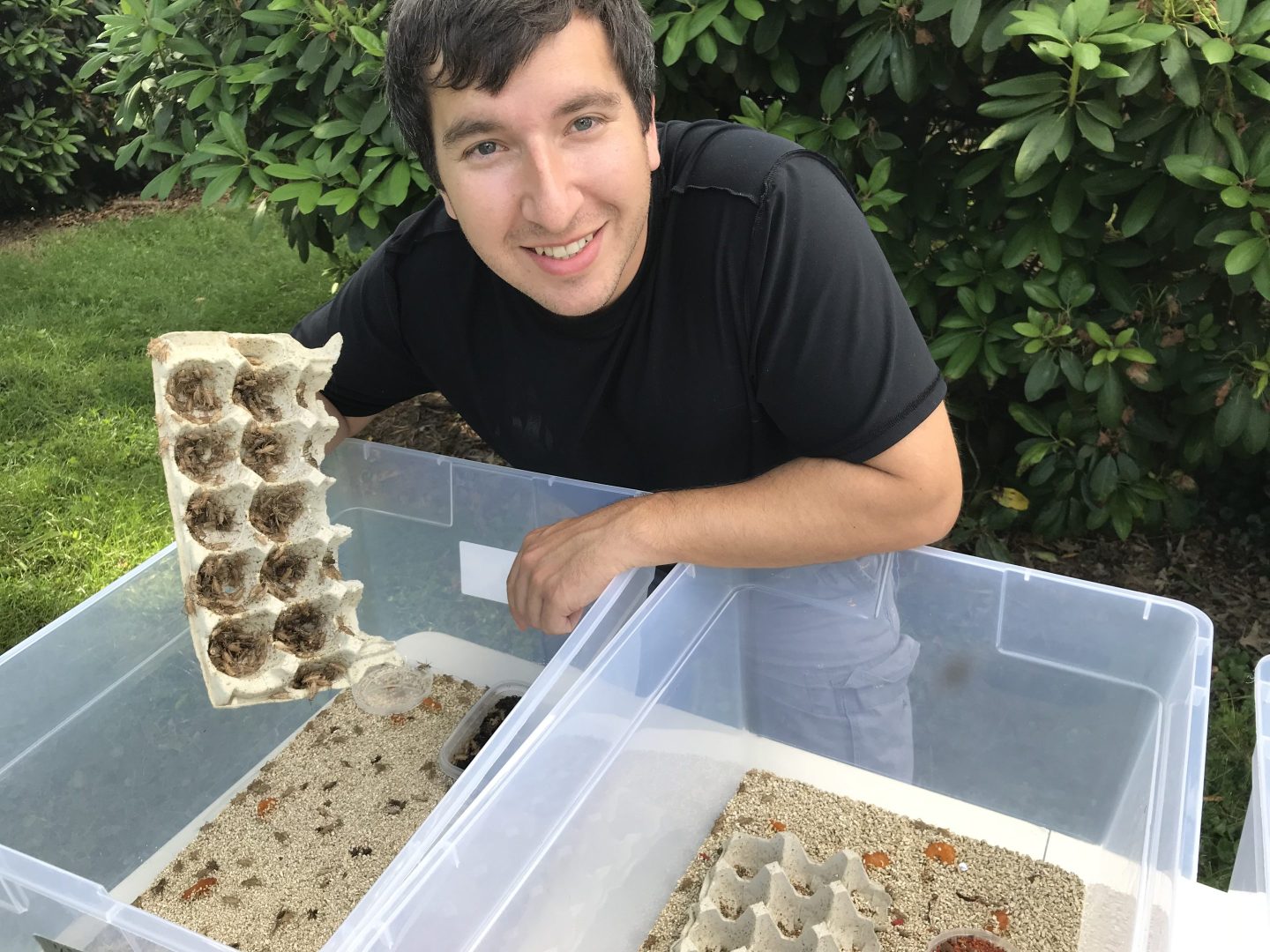
That’s where Jeff Neal comes in. Neal operates The Critter Depot, where he breeds and ships millions of live crickets and other feeder insects to bait shops and reptile owners in California, Maine, Alaska, Texas, and everywhere in between.
Neal took time away from his insect farming operation to talk to Fortune about how this side hustle came to be and how it all works.
This conversation has been edited and condensed for clarity.
How did you get started breeding crickets?
I’m your prototypical millennial side hustler. In 2016, my youngest daughter was around 4 and we had a bearded dragon as a pet. And we are buying crickets all the time to feed it. [Editor’s note: Crickets retail for between $0.10 and $0.13 per insect from a pet store, and baby bearded dragons can eat between 25 and 80 per day.] It just got to the point where I thought, why not try to breed these crickets on my own?
So I started researching it and discovered it’s not hard to create a good cricket habitat. The most challenging part is separating the older crickets from the younger ones because crickets are cannibals. They will eat the young ones.
The next thing you know, I had more than I needed. I thought if I’m paying for these, someone else might pay for my extra—no need to throw them out. So I started going to online reptile forums and was asking if anyone needed crickets. It was a lot of trial and error, especially around learning how to package them, but eventually it got to the point where I had a lot of repeat people coming back. It kind of bloomed from there and I launched the website. It’s just been a consistent side hustle since then.
Have you considered taking this full-time?
It’s definitely crossed my mind. I work as an estimator for a mechanical contractor. I don’t have a background in mechanical engineering or contracting, but I got my foot in the door because I was good with internet marketing. They brought me on to help ramp up the marketing, but you have to learn everything you can once you get your foot into the business. Little by little, they start asking you to estimate projects, go look at projects, sell projects, talk to clients.
I’ve been running the cricket farming business for a few years now, but after COVID, it really ramped up. So much so, it was almost like I was doing two full-time gigs. And, of course, you’ve got to strike when the iron is hot. So I definitely considered whether I could just do this full-time. But I was always concerned that the boom was due to stimulus money inflating the market.
I just couldn’t take the dive, and I’m glad I didn’t because there’s no way it would be sustainable at this point. The pandemic order spike is tapering off from its height in the pandemic. It’s way more manageable now, but still worth doing as a side hustle that takes up roughly 20 hours a week. I earn between $20,000 and $30,000 a year in profit—nothing I can, at this point, live off of since I’m the sole provider in my house.
How do you breed crickets?
A cricket’s life span is pretty short, about six to eight weeks. They’ll start breeding in about three to four weeks. Typically what you do is take a large tub—the size of like a laundry basket—and fill it with recently hatched crickets. Document the start dates on your tubs, and then you can feed the crickets vegetable scraps like potatoes. That’s where they get their hydration from. I also feed them what I call a ‘gut load mix’ that’s loaded with the proper nutrients they can then pass on to the reptile. I live in rural Pennsylvania with a lot of farmland, so any kind of grain I need is within a 10-minute drive.
Once the crickets are old enough, then you place them in a little breeder bin usually filled with peat moss. You want to make sure that stays nice and moist. After a couple days, you take out that little incubator tub, and you put it into a new bin. That way, the little babies are separate from the adult crickets.
Insects breed like it’s their business. You just have to keep the environment warm, make sure the food doesn’t get moldy. Moldy food can wipe out your colony. Also, if there are any crickets that do die, which always does happen, you need to clean those out. As crickets die, they actually release ammonia. If that builds up in your bin, that too can wipe out your colony.
How did you learn how to do all of this?
I mostly learned on the job. But here’s a lot of documentation online and YouTube videos too.
What’s the typical day-to-day routine look like?
It really starts on Saturday and Sunday. That’s when you start rotating the bins, getting your counts ready, figuring out what orders you can fulfill, and trying to get a rough headcount of how many orders you think you got to run to the post office.
This time of year, the business starts to ramp up. A lot of fishermen like crickets. Spring and summer is really when you start to boom. In contrast, in November when the weather gets colder, reptiles go into a process called brumation. It’s like a form of hibernation, and their metabolism slows down. They don’t eat as much, so there’s just less demand for crickets. It’s really feast or famine.
How do you ship crickets so that they survive the mail system?
The packages always have some kind of screen on the side, just to allow your airflow. During the winter, you don’t really want that airflow, so we’ll tape over it. Just to try and insulate the insects. Of course, that doesn’t always work.
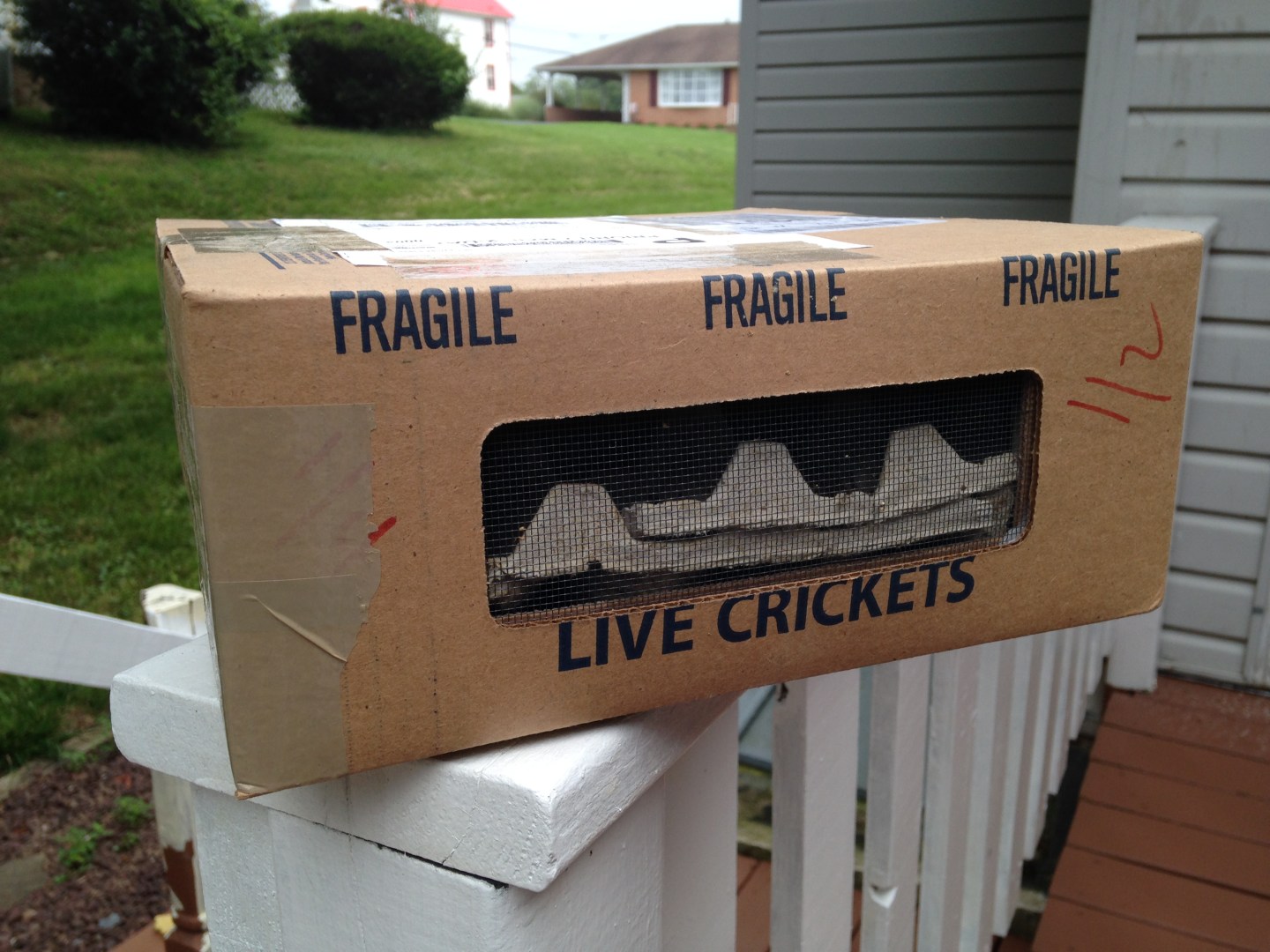
I like to guarantee live delivery, just to make sure customers have a peace of mind. But if you’re trying to order from Minnesota or Maine, you just can’t ship when the weather is really cold. If the temperatures drop too low, it’s almost guaranteed the insects are not going to survive the trip. In those cases, I’d rather just postpone the shipment until it’s a safer temperature or issue a refund, whichever the customer prefers.
This all started with the family’s pet bearded dragon. Is it living its best life with all these crickets around?
The business has lasted longer than the dragon. But my children’s love for pets is still going strong and will probably outlast the website. Now my kids have toads and rabbits. It makes them happy, so that’s worked for me.
The business has lasted longer than the dragon. But my children’s love for pets is still going strong and will probably outlast the website. Now my kids have toads and rabbits. It makes them happy, so that’s worked for me. We used to have chickens, but they escaped.
I like keeping this in my back pocket. At least I have this little home business, side-hustle thing that I can lean on. Maybe I’ll just use that for our supplemental income when I retire. So I don’t see any reason to ever get rid of it—it’s only been beneficial.