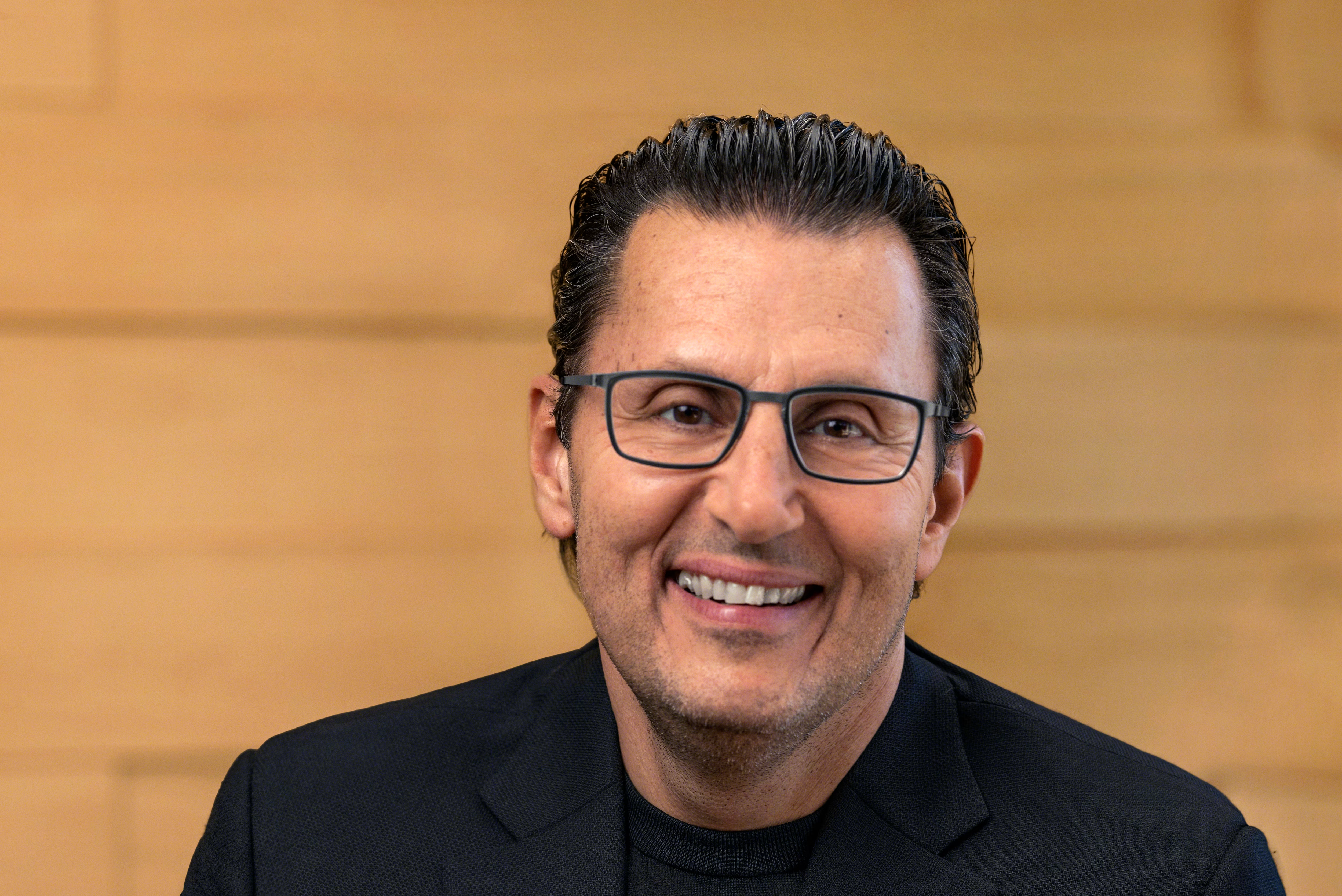
In 2021, as companies across the globe ramped up spending on diversity and inclusion programs, MMG Earth was asked to submit a proposal to help a European tech firm develop strategies for greater workplace equity.
Founded a decade ago by CEO McKensie Mack, MMG Earth centers the “principles of racial justice and social justice” as it reimagines management for employers ranging in size from 20 to 6,000 team members. But when Mack submitted their proposal, they sensed some resistance. Mack was later told a different vendor was selected because “leadership raised a lot of concerns about working with a nonbinary person.”
“There are still a number of folks in executive leadership positions, or on boards, who are not working with vendors who push or challenge them,” says Mack.
Not even three years after the murder of George Floyd led to a racial reckoning across many aspects of American life, multibillion-dollar efforts to address diversity, equity, and inclusion (DEI) have faced a backlash. Republican lawmakers are advancing bills that target diversity initiatives at public colleges. DEI roles in the private sector are disappearing at a faster pace than non-DEI roles, according to research from Revelio Labs, losses that can at times eliminate the entire function when accounting for the small size of many DEI teams.
DEI and anything deemed “woke” has become a catchall bogeyman. A recent opinion piece in the Wall Street Journal posited the demise of Silicon Valley Bank could be due to too much focus on diversity. Of course, “woke” policies didn’t cause the California lender’s collapse, and this narrative ignores countless studies that show DEI is good for business outcomes.
Even the appropriation of the term “woke” raises alarms among DEI advocates. “Originally, it was a term focused on reminding Black folks of where we come from and also the kind of oppression we experience in society,” explains Mack. “And then it was co-opted by white liberals and white progressives, and then co-opted again by right-wing conservatives. It’s opened the door for people to be even more racist, by blaming folks.”
Nichole Barnes Marshall, global head of inclusion and diversity at Pinterest, says the recent trend of layoffs affecting DEI roles is distressing. “It is when companies are under pressure, I believe, when your values really show up,” says Marshall. “When DEI roles are cut, it is saying something about the companies and the priority of the work.”
Marshall joined Pinterest in early 2022 and since then, her focus is on integrating diversity and inclusion across every stage of a career life cycle; culture programs like employee resource groups; and inclusive products and creator content. In 2020, Pinterest set a goal of increasing representation of women in leadership to 36% by the end of 2025, a goal it has already exceeded, and now a new target will be set for greater aspirations to leverage the voices of women at the company. Pinterest is also boosting representation of U.S. employees who self-identify as Black, Hispanic, American Indian, Alaska Native, and Native Hawaiian and/or Pacific Islander to 20% by 2025.
For progress to be made, Marshall says it is critical to have the support, endorsement, and championship of senior leadership, beginning with the CEO. “There’s a lack of recognition of the time it takes to shift cultures,” says Marshall. “Cultures don’t change overnight. It really is trying to turn the Titanic away from the iceberg.”
Global investment management firm T. Rowe Price has a similar view. Beginning in 2021, the CEO mandated a DEI performance objective, ensuring everyone would be assessed for the work they do to support a culture of inclusion as part of their goal setting.
“All of those annual reviews and assessments that we do for any other large business priority, we do those same things for diversity, equity, and inclusion,” says Raymone Jackson, global head of diversity, equity, and inclusion at T. Rowe Price. “While not always perfect, it ensures that we are creating that space for the conversation and pivoting where we need to.”
For this work to make meaningful progress, Jackson says, it starts at the top of the house. There are quarterly meetings with the T. Rowe Price management committee to talk about what’s working, what isn’t, and what’s ahead. The board of directors is also given visibility on DEI strategies and any potential risks that could emerge.
“Yes, it is the right thing to do,” says Jackson. “And it is a business imperative.”
“There is interest and appetite in organizations thinking more deeply about their talent supply and maximizing the effectiveness of the talent they have across the globe,” says Julie Coffman, chief diversity officer at Bain & Company. “And we at Bain think of it that way, too. It isn’t just a U.S. issue.”
In recent years, Coffman says, Bain’s clients across the globe have taken a more intentional lens toward their efforts to create a more diverse workplace and an environment where everyone can shine—work that has broadened to professional career development; how companies support local communities; and which vendors they choose to work with.
“It’s important work in setting ambitions that are tied to a company’s strategy and purpose, that are uniquely bringing to life the commitments and the energies of the leadership team, which can often include the board as well,” says Coffman. “And also tied to something that is part of their ethos as a business.”
That recognition of inclusive values has a business case, critical for any for-profit entity. Take into consideration the examples of Microsoft launching an Xbox controller for disabled gamers or Nike designing a hijab for Muslim women to participate in sports. These innovations are both inclusive and open up opportunities for companies to tap new consumer markets.
And advocates say there is no harm in providing equitable access to resources.
“There is this general consensus that achieving equity means that someone needs to lose something,” says Natalie Gillard, creator of Factuality, a 90-minute game that has been used as a training tool at companies like Google and Macy’s to teach workers about structural inequality in America.
Gillard said in the wake of Floyd’s murder, Factuality saw a huge uptick in demand, with some clients looking to gently introduce equity to their employees and others a bit further along in their inclusive journey. But demand has diminished “significantly” in recent months, especially from school systems, who used to be a key client.
“We are making too much progress here, so let’s start implementing all these policies to make it against the law to have these fact-based conversations,” says Gillard, when explaining the abrupt shift in demand that began in 2022.
The unevenness of DEI progress has led to muddled progress. While spending on DEI initiatives is increasing and projected to reach over $15 billion globally by 2026, the diversification of boardrooms across America has been very gradual.
“The reality is that, if you are on a board, and everyone on that board is white, that’s already a political statement,” says Mack. “By virtue of the lack of existence of anyone else who potentially does not hold the dominant identities.”