• Home
  • News
  • Fortune 500
  • Tech
  • Finance
  • Leadership
  • Lifestyle
  • Rankings
  • Multimedia
shadow banks
Europe

The IMF warns that shadow banks that hold nearly 50% of global assets are vulnerable as central banks raise rates to tackle inflation

Will Daniel
By
Will Daniel
Will Daniel
Down Arrow Button Icon
Will Daniel
By
Will Daniel
Will Daniel
Down Arrow Button Icon
April 5, 2023, 1:03 PM ET
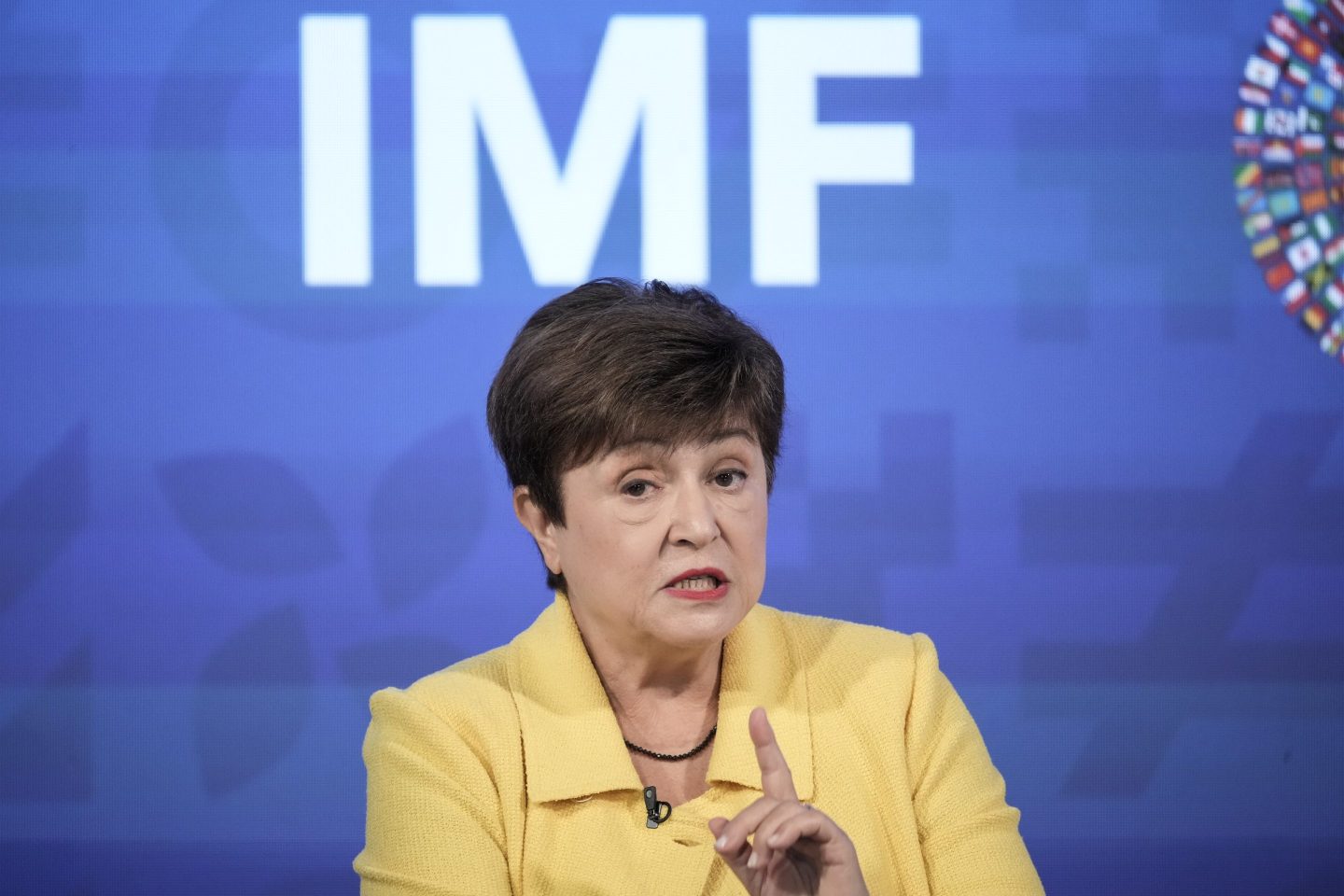
IMF Managing Director Kristalina Georgieva participates in a town hall discussion at IMF headquarters on Oct. 10, 2022, in Washington, D.C.
IMF Managing Director Kristalina Georgieva participates in a town hall discussion at IMF headquarters on Oct. 10, 2022, in Washington, D.C.Drew Angerer—Getty Images

In 1930, coming off the back of a plague of bank runs that plunged the country into the Great Depression, the voice of a then-unknown Orson Welles gripped American audiences: “Who knows what evil lurks in the hearts of men? The Shadow knows…” Nearly 100 years later, history is rhyming amid the second- and third-largest bank failures in U.S. history, as International Monetary Fund researchers warn of the evils that still lurk in the shadows. The shadow banking system, that is.

Nearly 50% of all global assets are now held in shadow banks, according to the IMF. These institutions, also called non-bank financial intermediaries (NBFIs), include pension funds, insurers, hedge funds, private equity funds, structured investment vehicles (SIVs), limited-purpose finance companies (LPFCs), and numerous other entities—each with their own acronym. 

Shadow banks are often the under-regulated middlemen of the financial system, and they’re growing in number. For nearly a decade now, Federal Reserve officials have repeatedly warned about the hidden dangers present in these shadow banks. And it’s not just U.S. regulators that have expressed concern—from Ireland to China, the risks inherent in the shadow banking system are well known.

Even JPMorgan Chase CEO Jamie Dimon argued in his 2019 annual shareholder letter that shadow banks need to be “assiduously monitored.” But the IMF says these institutions still have “little regulatory or supervisory oversight” and commonly have “virtually no loss-absorbing capital.”

“NBFI vulnerabilities appear to have increased in the past decade,” the fund’s researchers wrote in a Tuesday article. “Policymakers need appropriate tools to tackle turmoil in the NBFI sector that may adversely affect financial stability.”

The researchers highlighted key risks in the shadow banking system, including elevated leverage and the potential for a liquidity mismatch caused by rising rates. Given their high levels of “interconnectedness” with the traditional banking system, they added, shadow banks present a risk to financial stability.

One poignant example of that risk was seen last October, after concerns about fiscal policy in the U.K. led to a massive selloff in government bonds, called gilts. The selloff meant pension funds, which are a part of the shadow banking system, weren’t able to fund their liability-driven investment funds (LDIs) that guarantee a lifetime income post-retirement based on salary. Ultimately, regulators were forced to step in to save the day. Bank of England Deputy Governor Jon Cunliffe said at the time that multiple LDI funds would have gone bust without the intervention, leading to a “self-reinforcing spiral” and “consequent widespread financial instability.”

“Last year’s U.K. pension fund and liability-driven investment strategies episode underscores the perilous interplay of leverage, liquidity risk, and interconnectedness,” the IMF researchers wrote.

After banks’ recent issues and the U.K. pension fund rescue last year, the fund’s researchers urged banking regulators worldwide to ensure there is “robust surveillance, regulation, and supervision” of shadow banks, arguing that there are “gaps” in the data these institutions share with officials. And they noted that with inflation proving to be a consistent challenge globally, central banks would face “challenging tradeoffs” between fostering financial stability and ensuring price stability if a shadow bank were to fail.

“In a low-inflation environment, central banks can respond to financial stress by easing policy such as cutting interest rates,” they noted, but these days “injecting central bank liquidity for financial stability purposes could complicate the fight against inflation.”


Subscribe to Well Adjusted, our newsletter full of simple strategies to work smarter and live better, from the Fortune Well team. Sign up today.
About the Author
Will Daniel
By Will Daniel
LinkedIn iconTwitter icon
See full bioRight Arrow Button Icon

Latest in

Epstein
LawJeffrey Epstein
Epstein grand jury documents from Florida can be released by DOJ, judge rules
By Mike Schneider, Michael R. Sisak and The Associated PressDecember 6, 2025
5 minutes ago
Sarandos
InvestingM&A
Netflix’s $5.8 billion breakup fee for Warner among largest ever
By Elizabeth Fournier and BloombergDecember 6, 2025
19 minutes ago
index
Investingindex funds
Quant who said passive era is ‘worse than Marxism’ doubles down
By Denitsa Tsekova, Vildana Hajric and BloombergDecember 6, 2025
2 hours ago
meta
LawSocial Media
‘Its own research shows they encourage addiction’: Highest court in Mass. hears case about Instagram, Facebook effect on kids
By Michael Casey and The Associated PressDecember 6, 2025
2 hours ago
Zaslav, Sarandos
BankingMedia
A Thanksgiving dealmaking sprint helped Netflix win Warner Bros.
By Michelle F. Davis and BloombergDecember 6, 2025
2 hours ago
Nuzzi
Arts & EntertainmentMedia
Olivia Nuzzi to leave Vanity Fair while denouncing ex-fiance Ryan Lizza’s Substack attack as ‘fiction-slash-revenge porn’
By David Bauder, Hillel Italie and The Associated PressDecember 6, 2025
2 hours ago

Most Popular

placeholder alt text
Economy
Two months into the new fiscal year and the U.S. government is already spending more than $10 billion a week servicing national debt
By Eleanor PringleDecember 4, 2025
2 days ago
placeholder alt text
Success
‘Godfather of AI’ says Bill Gates and Elon Musk are right about the future of work—but he predicts mass unemployment is on its way
By Preston ForeDecember 4, 2025
2 days ago
placeholder alt text
Success
Nvidia CEO Jensen Huang admits he works 7 days a week, including holidays, in a constant 'state of anxiety' out of fear of going bankrupt
By Jessica CoacciDecember 4, 2025
2 days ago
placeholder alt text
Success
Nearly 4 million new manufacturing jobs are coming to America as boomers retire—but it's the one trade job Gen Z doesn't want
By Emma BurleighDecember 4, 2025
2 days ago
placeholder alt text
Big Tech
Mark Zuckerberg rebranded Facebook for the metaverse. Four years and $70 billion in losses later, he’s moving on
By Eva RoytburgDecember 5, 2025
23 hours ago
placeholder alt text
Real Estate
‘There is no Mamdani effect’: Manhattan luxury home sales surge after mayoral election, undercutting predictions of doom and escape to Florida
By Sasha RogelbergDecember 4, 2025
2 days ago
Rankings
  • 100 Best Companies
  • Fortune 500
  • Global 500
  • Fortune 500 Europe
  • Most Powerful Women
  • Future 50
  • World’s Most Admired Companies
  • See All Rankings
Sections
  • Finance
  • Leadership
  • Success
  • Tech
  • Asia
  • Europe
  • Environment
  • Fortune Crypto
  • Health
  • Retail
  • Lifestyle
  • Politics
  • Newsletters
  • Magazine
  • Features
  • Commentary
  • Mpw
  • CEO Initiative
  • Conferences
  • Personal Finance
  • Education
Customer Support
  • Frequently Asked Questions
  • Customer Service Portal
  • Privacy Policy
  • Terms Of Use
  • Single Issues For Purchase
  • International Print
Commercial Services
  • Advertising
  • Fortune Brand Studio
  • Fortune Analytics
  • Fortune Conferences
  • Business Development
About Us
  • About Us
  • Editorial Calendar
  • Press Center
  • Work At Fortune
  • Diversity And Inclusion
  • Terms And Conditions
  • Site Map

© 2025 Fortune Media IP Limited. All Rights Reserved. Use of this site constitutes acceptance of our Terms of Use and Privacy Policy | CA Notice at Collection and Privacy Notice | Do Not Sell/Share My Personal Information
FORTUNE is a trademark of Fortune Media IP Limited, registered in the U.S. and other countries. FORTUNE may receive compensation for some links to products and services on this website. Offers may be subject to change without notice.