• Home
  • Latest
  • Fortune 500
  • Finance
  • Tech
  • Leadership
  • Lifestyle
  • Rankings
  • Multimedia
TechAI

Nobel laureate Paul Krugman dampens expectations over A.I. like ChatGPT: ‘History suggests large economic effects will take longer than many people seem to expect’

By
Chloe Taylor
Chloe Taylor
Down Arrow Button Icon
By
Chloe Taylor
Chloe Taylor
Down Arrow Button Icon
April 3, 2023, 10:45 AM ET
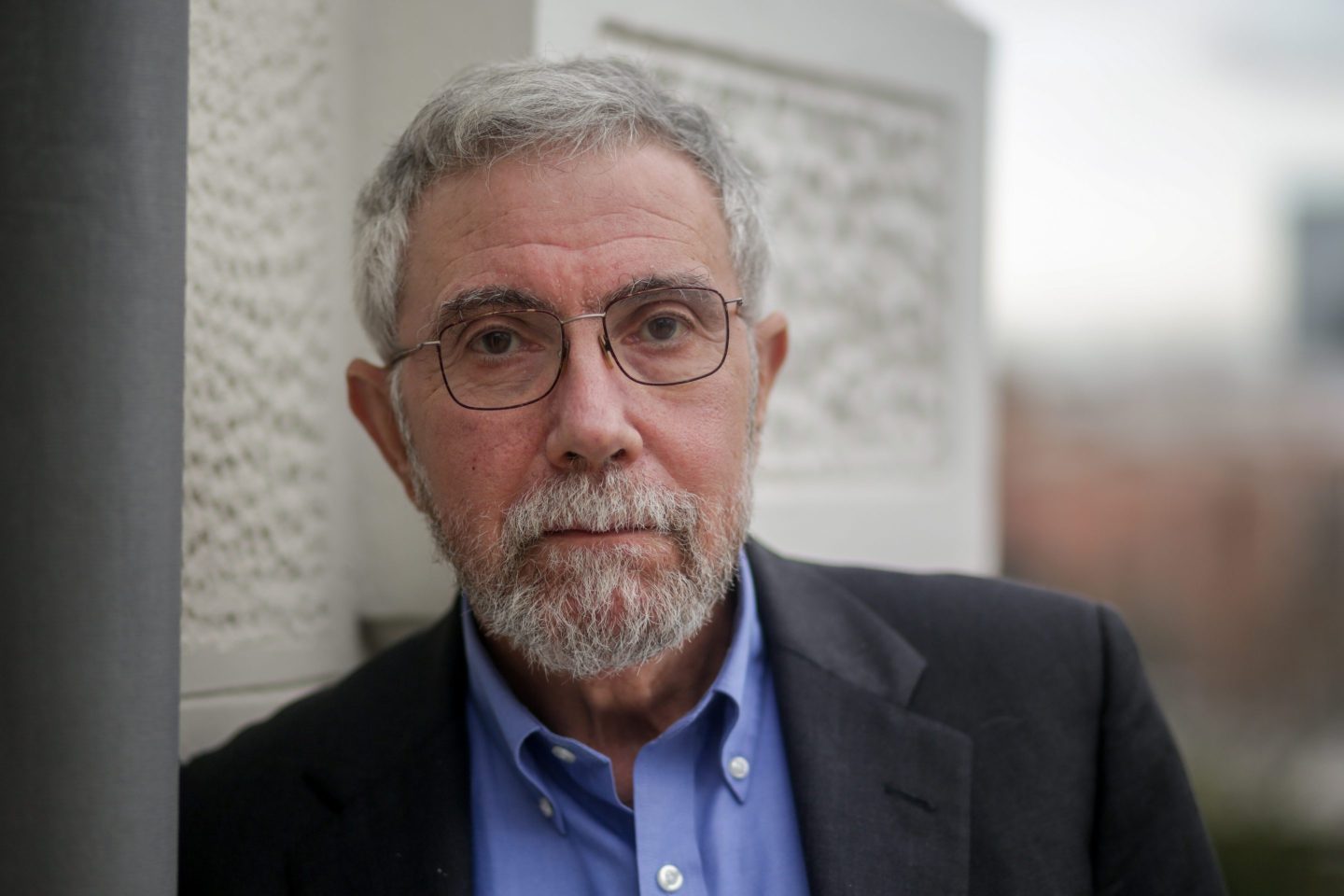
Paul Krugman poses after an interview with Europa Press at the Rafael del Pino Foundation on February 17, 2020 in Madrid, Spain.
Paul Krugman, pictured in February 2020, has predicted that A.I. like ChatGPT will not have a major economic impact anytime soon.Ricardo Rubio—Europa Press/Getty Images

The A.I. race is heating up, with tech giants Microsoft, Google, and Baidu among those ramping up their efforts to launch advanced chatbots after OpenAI’s ChatGPT took the world by storm.

With billions being invested in the development of cutting-edge A.I. technology, many are speculating about how it will disrupt our day-to-day lives—leading to predictions around jobs being lost to machines, calls for greater A.I. governance, and forecasts that the world will soon see the dawn of a new A.I. era.

However, one high-profile economist isn’t convinced that the A.I. being rolled out right now will have much of an impact in the immediate future.

Paul Krugman, who was awarded the Nobel Memorial Prize in Economic Sciences in 2008 and served on the Council of Economic Advisers under the Reagan administration, said in a New York Times op-ed on Friday that the rise of large language models (LLMs) like ChatGPT and Google’s Bard were unlikely to make any major economic headway just yet.

“History suggests that large economic effects from A.I. will take longer to materialize than many people currently seem to expect,” Krugman, a professor emeritus at Princeton, wrote.

He pointed out that historical innovations like the computing revolution or the electrification of industry had taken decades to have any notable impact on the economy.

Krugman also pointed to the famous 1965 theory by Gordon Moore, cofounder of Intel, which stated the number of transistors on a microchip doubles about every two years—an observation that became known as Moore’s law.

“For at least two decades after Moore’s law kicked in, America, far from experiencing a productivity boom, suffered from a protracted productivity slowdown,” he noted. “The boom kicked in only during the 1990s, and even then it was a bit disappointing.

“The lag in this economic payoff even ended up being similar in length to the lagged payoff from electrification,” he added. “Having a technology isn’t enough. You also have to figure out what to do with it.”

Krugman said in his editorial that the great economic boom that unfolded between the 1940s and 1970s was actually the result of technologies like the internal combustion engine that came into being decades earlier.

“That’s not to say that artificial intelligence won’t have huge economic impacts,” he conceded. “But history suggests that they won’t come quickly. ChatGPT and whatever follows are probably an economic story for the 2030s, not for the next few years.”

While Krugman argued that A.I. models like ChatGPT would eventually take over a significant number of tasks currently done by human beings, “nobody really knows” how big the effect of such a shift would be on society.

“Predictions about the economic impact of technology are notoriously unreliable,” he said, insisting that LLMs in their current form should not hugely affect economic projections for the next year—or even the next decade.

However, he conceded that this “doesn’t mean we should ignore the implications of a possible A.I.-driven boom…The longer-run prospects for economic growth do look better now than they did before computers began doing such good imitations of people.

“Not to put too fine a point on it, but anyone who predicts a radical acceleration of economic growth thanks to A.I.—which would lead to a large rise in tax receipts—and simultaneously predicts a future fiscal crisis unless we make drastic cuts to Medicare and Social Security isn’t making much sense,” Krugman said.

Subscribe to Well Adjusted, our newsletter full of simple strategies to work smarter and live better, from the Fortune Well team. Sign up today.
About the Author
By Chloe Taylor
LinkedIn iconTwitter icon
See full bioRight Arrow Button Icon

Latest in Tech

robots
InnovationRobots
‘The question is really just how long it will take’: Over 2,000 gather at Humanoids Summit to meet the robots who may take their jobs someday
By Matt O'Brien and The Associated PressDecember 12, 2025
7 hours ago
Man about to go into police vehicle
CryptoCryptocurrency
Judge tells notorious crypto scammer ‘you have been bitten by the crypto bug’ in handing down 15 year sentence 
By Carlos GarciaDecember 12, 2025
7 hours ago
three men in suits, one gesturing
AIBrainstorm AI
The fastest athletes in the world can botch a baton pass if trust isn’t there—and the same is true of AI, Blackbaud exec says
By Amanda GerutDecember 12, 2025
8 hours ago
Brainstorm AI panel
AIBrainstorm AI
Creative workers won’t be replaced by AI—but their roles will change to become ‘directors’ managing AI agents, executives say
By Beatrice NolanDecember 12, 2025
8 hours ago
Fei-Fei Li, the "Godmother of AI," says she values AI skills more than college degrees when hiring software engineers for her tech startup.
AITech
‘Godmother of AI’ says degrees are less important in hiring than how quickly you can ‘superpower yourself’ with new tools
By Nino PaoliDecember 12, 2025
10 hours ago
C-SuiteFortune 500 Power Moves
Fortune 500 Power Moves: Which executives gained and lost power this week
By Fortune EditorsDecember 12, 2025
11 hours ago

Most Popular

placeholder alt text
Economy
Tariffs are taxes and they were used to finance the federal government until the 1913 income tax. A top economist breaks it down
By Kent JonesDecember 12, 2025
16 hours ago
placeholder alt text
Success
At 18, doctors gave him three hours to live. He played video games from his hospital bed—and now, he’s built a $10 million-a-year video game studio
By Preston ForeDecember 10, 2025
3 days ago
placeholder alt text
Success
Palantir cofounder calls elite college undergrads a ‘loser generation’ as data reveals rise in students seeking support for disabilities, like ADHD
By Preston ForeDecember 11, 2025
1 day ago
placeholder alt text
Arts & Entertainment
'We're not just going to want to be fed AI slop for 16 hours a day': Analyst sees Disney/OpenAI deal as a dividing line in entertainment history
By Nick LichtenbergDecember 11, 2025
1 day ago
placeholder alt text
Success
40% of Stanford undergrads receive disability accommodations—but it’s become a college-wide phenomenon as Gen Z try to succeed in the current climate
By Preston ForeDecember 12, 2025
12 hours ago
placeholder alt text
Success
Apple cofounder Ronald Wayne sold his 10% stake for $800 in 1976—today it’d be worth up to $400 billion
By Preston ForeDecember 12, 2025
12 hours ago
Rankings
  • 100 Best Companies
  • Fortune 500
  • Global 500
  • Fortune 500 Europe
  • Most Powerful Women
  • Future 50
  • World’s Most Admired Companies
  • See All Rankings
Sections
  • Finance
  • Leadership
  • Success
  • Tech
  • Asia
  • Europe
  • Environment
  • Fortune Crypto
  • Health
  • Retail
  • Lifestyle
  • Politics
  • Newsletters
  • Magazine
  • Features
  • Commentary
  • Mpw
  • CEO Initiative
  • Conferences
  • Personal Finance
  • Education
Customer Support
  • Frequently Asked Questions
  • Customer Service Portal
  • Privacy Policy
  • Terms Of Use
  • Single Issues For Purchase
  • International Print
Commercial Services
  • Advertising
  • Fortune Brand Studio
  • Fortune Analytics
  • Fortune Conferences
  • Business Development
About Us
  • About Us
  • Editorial Calendar
  • Press Center
  • Work At Fortune
  • Diversity And Inclusion
  • Terms And Conditions
  • Site Map

© 2025 Fortune Media IP Limited. All Rights Reserved. Use of this site constitutes acceptance of our Terms of Use and Privacy Policy | CA Notice at Collection and Privacy Notice | Do Not Sell/Share My Personal Information
FORTUNE is a trademark of Fortune Media IP Limited, registered in the U.S. and other countries. FORTUNE may receive compensation for some links to products and services on this website. Offers may be subject to change without notice.