• Home
  • Latest
  • Fortune 500
  • Finance
  • Tech
  • Leadership
  • Lifestyle
  • Rankings
  • Multimedia
FinanceEconomy

Bank crisis will tip U.S. into hard landing after all, says Apollo’s chief economist: ‘I changed my view’

By
Vildana Hajric
Vildana Hajric
,
Michael P. Regan
Michael P. Regan
, and
Bloomberg
Bloomberg
Down Arrow Button Icon
By
Vildana Hajric
Vildana Hajric
,
Michael P. Regan
Michael P. Regan
, and
Bloomberg
Bloomberg
Down Arrow Button Icon
March 18, 2023, 5:14 PM ET
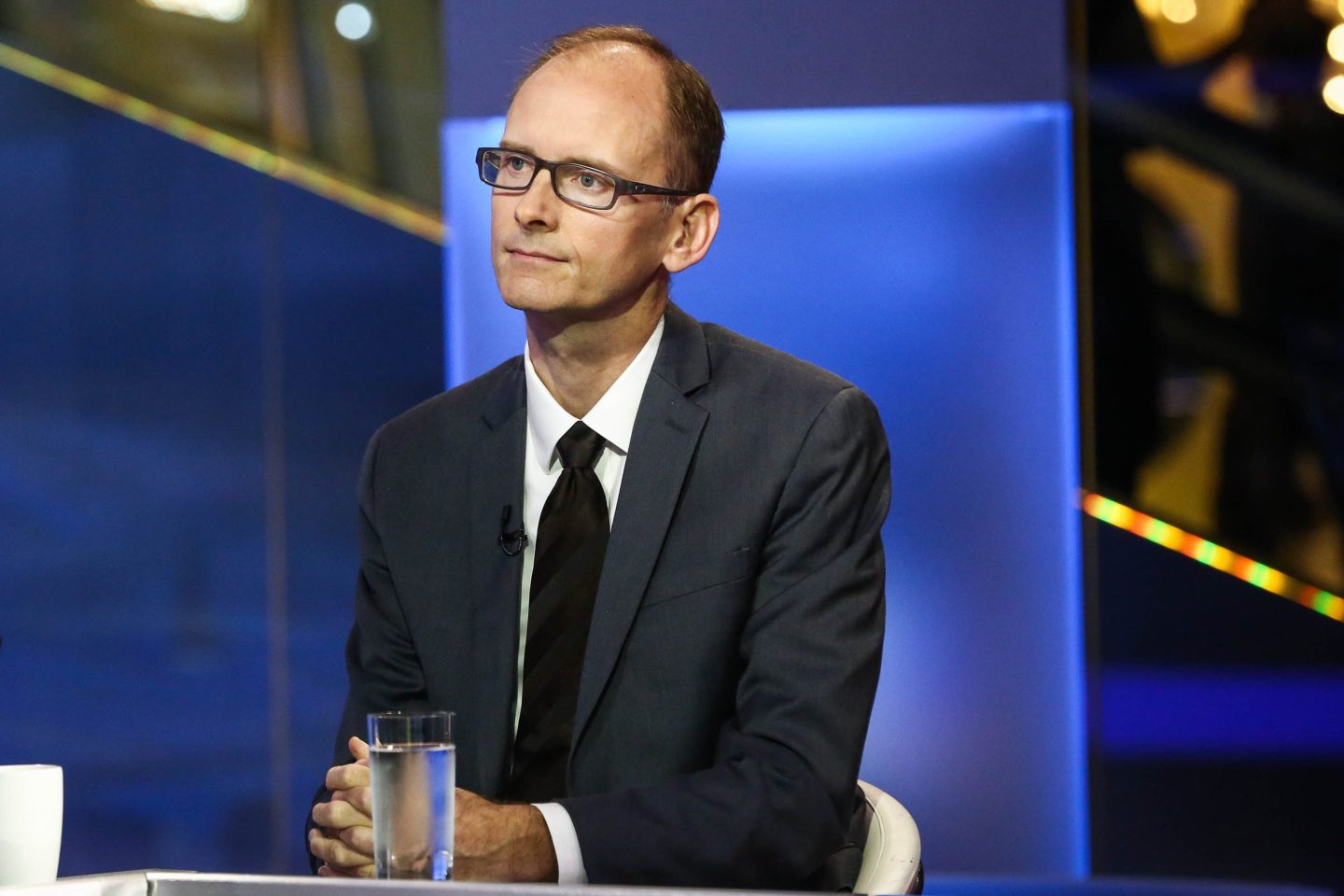
Torsten Slok sees a hard landing ahead after crisis with SVB and other banks.
Torsten Slok sees a hard landing ahead after crisis with SVB and other banks.Goodney/Bloomberg via Getty Images

If you asked Torsten Slok a week ago how the economy was going to fare this year, he would have told you he was expecting a no-landing scenario, whereby the Federal Reserve would tame inflation without triggering a downturn.

But all has changed following the collapse of three US banks over a matter of days. The chief economist of Apollo Global Management now says he’s bracing for a hard landing. He joined the What Goes Up podcast to discuss his changing views.

Here are some highlights of the conversation, which have been condensed and edited for clarity. Click here to listen to the full podcast on the Terminal, or subscribe below on Apple Podcasts, Spotify or wherever you listen.

Q: You changed your view of seeing a no-landing scenario to a hard-landing one — tell us about this.

A: The debate up until recently was that, well, why is the economy not slowing down when the Fed is raising rates? Why is it that the consumer is still doing so well? And a very important answer to that was that, well, there was still a lot of savings left across the income distribution, that households still had plenty of savings left after the pandemic. And up until recently, the debate was why is this economy not slowing down? And call that what you want, but that’s what we have called the no landing. And that was the reason why inflation continued to be in the range of 5%, 6%, 7%. That’s why the Fed had to raise rates. 

What happened, of course, here with Silicon Valley Bank was that suddenly out of the blue, at least for financial markets, really nobody — and I think that’s safe to say at this point — had seen this coming.

And as a result of that, suddenly we all had to go back to our drawing boards and think about, OK, but what is the importance of the regional banks? What is the importance of the banking sector in terms of credit extension? In data from the Fed, you will see that roughly a third of assets in the US banking sector are in the small banks. And here a small bank is defined as bank number 26 to 8,000. A large bank is number one to 25 ranked by assets. So that means that there’s a long tail of banks. Some of them are fairly big, but the further you get out, the smaller they get. And the key question for markets today is, how important are the small banks that are now facing issues with deposits, with funding costs, facing issues with what that might mean for their credit books, and also facing issues with what does it mean if we now also have to do stress test on some of these smaller banks?

So this episode with the Silicon Valley Bank, markets are doing what they’re doing and there’s a lot of things going on, but what is really the major issue here is that we just don’t know now what is the behavioral change in terms of lending willingness in the regional banks. And given the regional banks make up 30% of assets and roughly 40% of all lending, that means that the banking sector has now such a significant share of banks that are now really at the moment thinking about what’s going on. And the risk with that is that the slowdown that was already underway — because of the Fed raising rates — might now come faster simply because of this banking situation. So that’s why I changed my view from saying no landing, everything is fine to now saying, well, wait a minute, there is a risk now that things could slow down faster because we just need to see over the coming weeks and months ahead, what is the response going to be in terms of lending from this fairly significant part of the banking sector that is now going through this turbulence we are seeing.

Q: We haven’t really seen any deterioration in creditworthiness yet. Will it play out in a similar fashion as far as curtailing the supply of credit? Or is there a reason to think it’ll be different? And is it possible we still have another shoe drop with the deterioration of credit quality going forward?

A: I started my career at the IMF in the 1990s, and the first thing you learn is that a banking crisis and a banking run normally happen because there are credit losses on the bank’s books. We saw that in 2008. If you go back to the 1990s, you saw that on the savings and loan crisis. And these were very illiquid losses. This couldn’t just be sold very quickly. That is very, very different. We have basically never had a banking crisis in a strong economy. And the irony of this situation is that it is actually the most liquid asset, namely Treasuries, that turned out to be the problem.

So that’s why if 10-year rates, let’s say that they go down to say, 2.5% or even 2%, that will be helping incredibly on the banks’ balance sheets because it is the liquid side of the balance sheets that have, at least in this episode, been the main problem in terms of what the issues are. So that’s why the fear is that if we now have not only the lagged effects of the Fed hiking rates already slowing the economy, but if you now have a magnified effect that the slowdown might come a bit faster, then of course we do ultimately also need to look at what does that mean for credit losses, for everything that banks have on their balance sheets.

Q: What everybody in the market is saying is that they were waiting for the moment the Fed “broke” something and now something has broken. So what are you expecting from the Fed meeting?

A: The challenge today, looking to the Fed meeting, is that there are some risks for the Fed to financial stability. If we had spoken about this a week ago, then I would’ve said they’re going to go 50. But today, it is suddenly the case that the top priority — which we thought until recently was all inflation — has been replaced and put into the back seat of the car. Now the top priority is financial stability. And when the top priority is financial stability, then the Fed needs to be absolutely sure that the financial system is stable and financial markets are calm, and that, therefore, that credit is flowing to consumers, to corporates, to residential real estate, commercial real estate, with the idea that if that is not the case, then you are at risk of having obviously a much harder landing. So that’s why financial stability being the top risk would lead me to the conclusion that they can always raise rates later if this does turn out to be like Orange County and LTCM. But at the moment, the biggest risk going into this meeting is certainly that the financial system needs to be stable for them to feel comfortable before they can begin to even think about raising rates again.

— With assistance by Stacey Wong

Subscribe to Well Adjusted, our newsletter full of simple strategies to work smarter and live better, from the Fortune Well team. Sign up today.
About the Authors
By Vildana Hajric
See full bioRight Arrow Button Icon
By Michael P. Regan
See full bioRight Arrow Button Icon
By Bloomberg
See full bioRight Arrow Button Icon

Latest in Finance

Finance
Lorem ipsum dolor sit amet, consectetur adipiscing elit, sed do eiusmod tempor incididunt ut labore et dolore magna aliqua. Ut enim ad minim veniam
By Fortune Editors
October 20, 2025
Finance
Lorem ipsum dolor sit amet, consectetur adipiscing elit, sed do eiusmod tempor incididunt ut labore et dolore magna aliqua. Ut enim ad minim veniam
By Fortune Editors
October 20, 2025
Finance
Lorem ipsum dolor sit amet, consectetur adipiscing elit, sed do eiusmod tempor incididunt ut labore et dolore magna aliqua. Ut enim ad minim veniam
By Fortune Editors
October 20, 2025
Finance
Lorem ipsum dolor sit amet, consectetur adipiscing elit, sed do eiusmod tempor incididunt ut labore et dolore magna aliqua. Ut enim ad minim veniam
By Fortune Editors
October 20, 2025
Finance
Lorem ipsum dolor sit amet, consectetur adipiscing elit, sed do eiusmod tempor incididunt ut labore et dolore magna aliqua. Ut enim ad minim veniam
By Fortune Editors
October 20, 2025
Finance
Lorem ipsum dolor sit amet, consectetur adipiscing elit, sed do eiusmod tempor incididunt ut labore et dolore magna aliqua. Ut enim ad minim veniam
By Fortune Editors
October 20, 2025

Most Popular

Finance
Lorem ipsum dolor sit amet, consectetur adipiscing elit, sed do eiusmod tempor incididunt ut labore et dolore magna aliqua. Ut enim ad minim veniam
By Fortune Editors
October 20, 2025
Finance
Lorem ipsum dolor sit amet, consectetur adipiscing elit, sed do eiusmod tempor incididunt ut labore et dolore magna aliqua. Ut enim ad minim veniam
By Fortune Editors
October 20, 2025
Finance
Lorem ipsum dolor sit amet, consectetur adipiscing elit, sed do eiusmod tempor incididunt ut labore et dolore magna aliqua. Ut enim ad minim veniam
By Fortune Editors
October 20, 2025
Finance
Lorem ipsum dolor sit amet, consectetur adipiscing elit, sed do eiusmod tempor incididunt ut labore et dolore magna aliqua. Ut enim ad minim veniam
By Fortune Editors
October 20, 2025
Finance
Lorem ipsum dolor sit amet, consectetur adipiscing elit, sed do eiusmod tempor incididunt ut labore et dolore magna aliqua. Ut enim ad minim veniam
By Fortune Editors
October 20, 2025
Finance
Lorem ipsum dolor sit amet, consectetur adipiscing elit, sed do eiusmod tempor incididunt ut labore et dolore magna aliqua. Ut enim ad minim veniam
By Fortune Editors
October 20, 2025
Fortune Secondary Logo
Rankings
  • 100 Best Companies
  • Fortune 500
  • Global 500
  • Fortune 500 Europe
  • Most Powerful Women
  • Future 50
  • World’s Most Admired Companies
  • See All Rankings
Sections
  • Finance
  • Fortune Crypto
  • Features
  • Leadership
  • Health
  • Commentary
  • Success
  • Retail
  • Mpw
  • Tech
  • Lifestyle
  • CEO Initiative
  • Asia
  • Politics
  • Conferences
  • Europe
  • Newsletters
  • Personal Finance
  • Environment
  • Magazine
  • Education
Customer Support
  • Frequently Asked Questions
  • Customer Service Portal
  • Privacy Policy
  • Terms Of Use
  • Single Issues For Purchase
  • International Print
Commercial Services
  • Advertising
  • Fortune Brand Studio
  • Fortune Analytics
  • Fortune Conferences
  • Business Development
  • Group Subscriptions
About Us
  • About Us
  • Editorial Calendar
  • Press Center
  • Work At Fortune
  • Diversity And Inclusion
  • Terms And Conditions
  • Site Map
  • About Us
  • Editorial Calendar
  • Press Center
  • Work At Fortune
  • Diversity And Inclusion
  • Terms And Conditions
  • Site Map
  • Facebook icon
  • Twitter icon
  • LinkedIn icon
  • Instagram icon
  • Pinterest icon

Latest in Finance

MUSCAT, OMAN - MARCH 22: The Albina Bulk carrier sits anchored on March 22, 2026 at Sultan Qaboos Port in Muscat, Oman.President Donald Trump had threatened to attack Iran's energy infrastructure if it did not end its de facto blockade of the Strait of Hormuz by just before midnight GMT of March 23. A subsequent statement from President Trump said the U.S. and Iran had held "very good and productive conversations regarding a complete and total resolution of our hostilities in the Middle East," and that he would postpone any attacks on Iranian energy infrastructure for five days. Maritime traffic through the strait, which conveys about 20% of the world's oil and gas, has mostly come to a halt after the joint U.S.-Israeli war with Iran that began on February 28.
EnergyIran
Trump has a labyrinth of bad options in the Strait of Hormuz. Here’s why some warn that walking away could transcend ‘our defeat in Vietnam’
By Jordan BlumMarch 31, 2026
18 minutes ago
Bernard Looney, CEO of Prometheus Hyperscale
EnergyBP
Former BP CEO takes over Wyoming data center developer, as first woman leader of Big Oil giant becomes new BP chief
By Jordan BlumMarch 31, 2026
35 minutes ago
Wall Street just had its best day in nearly a year over a rumor
EconomyMarkets
Wall Street just had its best day in nearly a year over a rumor
By Eva RoytburgMarch 31, 2026
1 hour ago
Bobby Witt Jr. throws a baseball. He is standing in front of a FanDuel sign on a baseball field.
Bankinggambling
Credit card delinquencies among millennials and Gen Z have soared because of sports betting—even in states where it’s illegal, new Fed study finds
By Sasha RogelbergMarch 31, 2026
1 hour ago
hegseth
EnergyWhite House
‘Go get your own oil’: Trump’s message to allies who haven’t backed war in Iran
By Jon Gambrell, Mike Corder, Darlene Superville and The Associated PressMarch 31, 2026
1 hour ago
walmart shoppers
EconomyRecession
A Wall Street vet’s Walmart recession indicator just hit its highest point since 2008—and he says the fear ‘just keeps multiplying’
By Jake AngeloMarch 31, 2026
2 hours ago

Most Popular

Jerome Powell says the $39 trillion national debt is ‘not unsustainable,’ but warns the trajectory ‘will not end well’
Economy
Jerome Powell says the $39 trillion national debt is ‘not unsustainable,’ but warns the trajectory ‘will not end well’
By Fortune EditorsMarch 30, 2026
1 day ago
A man used AI to call 3,000 Irish bartenders to track the cost of Guinness. Now pubs are lowering their prices to compete
AI
A man used AI to call 3,000 Irish bartenders to track the cost of Guinness. Now pubs are lowering their prices to compete
By Fortune EditorsMarch 30, 2026
1 day ago
A CEO trying to reindustrialize America says blue-collar pay is headed for 'massive hyperinflation' and kids should skip college to become welders
Success
A CEO trying to reindustrialize America says blue-collar pay is headed for 'massive hyperinflation' and kids should skip college to become welders
By Fortune EditorsMarch 30, 2026
1 day ago
Current price of gold as of March 30, 2026
Personal Finance
Current price of gold as of March 30, 2026
By Fortune EditorsMarch 30, 2026
1 day ago
The federal government shed 385,000 employees last year. Now the Trump administration is on a blitz to hire Gen Z workers
Politics
The federal government shed 385,000 employees last year. Now the Trump administration is on a blitz to hire Gen Z workers
By Fortune EditorsMarch 31, 2026
16 hours ago
Markets cheer as Trump threatens to abandon Iran war, but Jamie Dimon sides with allies: ‘Win this thing and clean up the straits’
Energy
Markets cheer as Trump threatens to abandon Iran war, but Jamie Dimon sides with allies: ‘Win this thing and clean up the straits’
By Fortune EditorsMarch 31, 2026
8 hours ago

© 2026 Fortune Media IP Limited. All Rights Reserved. Use of this site constitutes acceptance of our Terms of Use and Privacy Policy | CA Notice at Collection and Privacy Notice | Do Not Sell/Share My Personal Information
FORTUNE is a trademark of Fortune Media IP Limited, registered in the U.S. and other countries. FORTUNE may receive compensation for some links to products and services on this website. Offers may be subject to change without notice.