
• Home
  • Latest
  • Fortune 500
  • Finance
  • Tech
  • Leadership
  • Lifestyle
  • Rankings
  • Multimedia

Trendingnow

1

The millennial generation has split, new Fed research shows: Those over 35 are edging toward boomer-style wealth, while everyone else falls behind

2

Scott Bessent casually says the U.S. has more than $1 trillion in gold—and that it doesn’t matter for the dollar

3

Mark Cuban says he has the solution to growing income inequality, and it's to reward every employee—from CEO to janitor—with company stock

1

The millennial generation has split, new Fed research shows: Those over 35 are edging toward boomer-style wealth, while everyone else falls behind

2

Scott Bessent casually says the U.S. has more than $1 trillion in gold—and that it doesn’t matter for the dollar

3

Mark Cuban says he has the solution to growing income inequality, and it's to reward every employee—from CEO to janitor—with company stock
FinanceMarkets

Bond traders haven’t been this scared of a recession since 1981

Christiaan Hetzner
By
Christiaan Hetzner
Christiaan Hetzner
Senior Reporter
Down Arrow Button Icon
Christiaan Hetzner
By
Christiaan Hetzner
Christiaan Hetzner
Senior Reporter
Down Arrow Button Icon
March 8, 2023, 1:16 PM ET
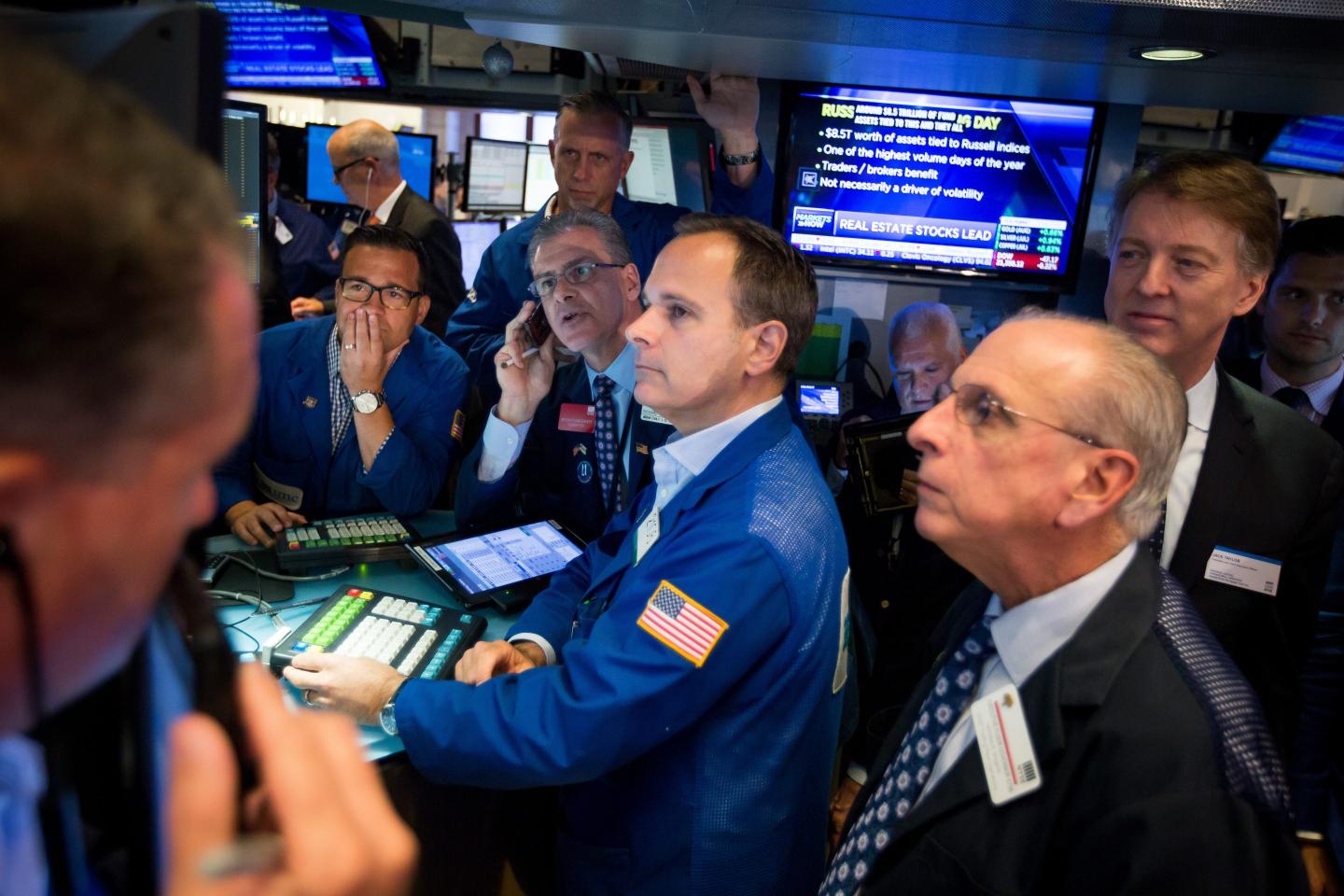
The bond market is flashing red after the yield curve inverted to levels not seen since 1981.
A key recession signal is flashing red after the spread between two-year and 10-year Treasuries inverted to levels not seen since 1981.Michael Nagle—Bloomberg/Getty Images
Add Fortune on Google for similar content.

One of Wall Street’s most closely followed recession indicators has hit highs not seen in more than four decades. While this signal doesn’t inevitably lead to the economy contracting, every recession since 1955 has been preceded by the dreaded yield curve inversion.

This rare phenomenon occurs when investors demand a higher rate of return to lend the federal government money for just two years rather than for a longer period of 10—normally the opposite is true. The immediate reason that fixed-income investors are currently so bearish about the outlook for the U.S. economy is Tuesday’s warning from the Federal Reserve.

In his semiannual testimony before the Senate Banking Committee, Chair Jay Powell wrong-footed markets by saying the terminal interest rate would likely have to be higher than previously anticipated. 

“Chair Powell was much more hawkish than we anticipated,” wrote the UBS global rates strategy team on Tuesday, adding that the two-10 spreads “blew through” the 100 basis point mark. The last time the gap was that high was 1981, during what the St. Louis Fed calls the period of “Great Inflation,” when yields on the two-year note hit 16% under former Fed Chair Paul Volcker.

Following Powell’s remarks, UBS argued the Fed appeared to reverse course and throw overboard its more cautious approach of hiking by 25 basis point increments, if at all.

Now a 50 basis point hike at the next Fed policy meeting on March 22 is a distinct possibility, despite the Fed’s preferred inflation gauge only ticking up one-tenth to 5.4% in January: “We thought it would take extraordinarily strong data to put larger hikes back on the table.”

Stockholders should always have an eye on the bond market for three reasons. 

First off, ultrasafe Treasuries form the minimum risk-free rate an investor can expect, upon which all asset prices ultimately derive. Second, bondholders more accurately predict fluctuations in the economic cycle, since corporate earnings typically lag. 

Third, its size is enormous, with $615 billion worth of Treasuries traded every day, excluding other fixed-income products like corporate debt and mortgage-backed securities. And the greater the liquidity, the more meaningful a market’s signals.

What exactly is meant by the yield curve?

The easiest way of viewing the bond market is not through its prices—as with equities—but rather its yields. These serve as the most common barometer of market appetite: When demand drops, yields rise as bondholders charge a higher return in exchange for the risk of accepting a fixed-rate coupon. 

Once we collate the yields for short-dated and long-dated Treasuries, we can chart the plot of the yield curve along the range of their respective maturities. 

“The Fed is excessively data dependent,” says @elerianm. “They lack a long-term view. They lack a monetary framework. Going to 25 basis points was a mistake.” pic.twitter.com/JP9xwVXOEH

— Squawk Box (@SquawkCNBC) March 8, 2023

The yield of a two-year Treasury note will typically be lower than that of its benchmark 10-year sibling, since the opportunity cost of holding a bond with a fixed coupon grows the longer its duration. 

This is because visibility over inflation—the worst enemy of a bondholder—steadily becomes murkier the further into the future one goes. 

Instead of the usual upward sloping curve, two-years are currently trading near 5% and 10-years at just below 4%.

Why is a yield curve inversion such a reliable signal?

Typically, the short end of the curve tracks the central bank’s thinking on the economy, reflecting the current views and economic analysis of its Federal Open Market Committee (FOMC). 

The Fed’s chief tool is setting a target for the overnight rate at which banks lend and borrow among themselves. That Federal funds rate currently hovers between 4.5% and 4.75%, following its Feb. 1 hike.

By comparison, the collective inflation expectations of bond investors reign supreme over the 10-year and 30-year Treasury market, where yields move more independently of the U.S. central bank. 

The Fed cannot directly influence longer duration rates through conventional means: The only exception is when it dips into its emergency toolkit and intervenes through outright asset purchases, as was the case with its 2011 “Operation Twist,” for example.

A yield curve inversion telegraphs to the Fed that the overall market is taking a far dimmer view of the economic outlook, implying the FOMC has lagged behind the market’s collective wisdom and needs to take swift action to stimulate demand by lowering rates.

Over time, that will then restore the conventional upward slope of the yield curve. By that point, however, it can be too late and the economy has already begun to contract.

That’s why the degree to which a yield curve is inverted merely predicts the likelihood of recession—but GDP doesn’t begin to actually shrink until the inversion has already been corrected.

Mohamed El-Erian, an influential economic commentator, warned the Fed was in the horns of a dilemma after reducing its rate hike to a quarter-point from the previous pace of a half-point. 

“They have to stop digging themselves such a deep hole,” he told CNBC on Wednesday.

Fortune’s CFO Daily newsletter is the must-read analysis every finance professional needs to get ahead. Sign up today.

About the Author
Christiaan Hetzner
By Christiaan HetznerSenior Reporter
Instagram iconLinkedIn iconTwitter icon

Christiaan Hetzner is a former writer for Fortune, where he covered Europe’s changing business landscape.

See full bioRight Arrow Button Icon
Add Fortune on Google for similar content.

Latest in Finance

Finance
Lorem ipsum dolor sit amet, consectetur adipiscing elit, sed do eiusmod tempor incididunt ut labore et dolore magna aliqua. Ut enim ad minim veniam
By Fortune Editors
October 20, 2025
Finance
Lorem ipsum dolor sit amet, consectetur adipiscing elit, sed do eiusmod tempor incididunt ut labore et dolore magna aliqua. Ut enim ad minim veniam
By Fortune Editors
October 20, 2025
Finance
Lorem ipsum dolor sit amet, consectetur adipiscing elit, sed do eiusmod tempor incididunt ut labore et dolore magna aliqua. Ut enim ad minim veniam
By Fortune Editors
October 20, 2025
Finance
Lorem ipsum dolor sit amet, consectetur adipiscing elit, sed do eiusmod tempor incididunt ut labore et dolore magna aliqua. Ut enim ad minim veniam
By Fortune Editors
October 20, 2025
Finance
Lorem ipsum dolor sit amet, consectetur adipiscing elit, sed do eiusmod tempor incididunt ut labore et dolore magna aliqua. Ut enim ad minim veniam
By Fortune Editors
October 20, 2025
Finance
Lorem ipsum dolor sit amet, consectetur adipiscing elit, sed do eiusmod tempor incididunt ut labore et dolore magna aliqua. Ut enim ad minim veniam
By Fortune Editors
October 20, 2025

Most Popular

Finance
Lorem ipsum dolor sit amet, consectetur adipiscing elit, sed do eiusmod tempor incididunt ut labore et dolore magna aliqua. Ut enim ad minim veniam
By Fortune Editors
October 20, 2025
Finance
Lorem ipsum dolor sit amet, consectetur adipiscing elit, sed do eiusmod tempor incididunt ut labore et dolore magna aliqua. Ut enim ad minim veniam
By Fortune Editors
October 20, 2025
Finance
Lorem ipsum dolor sit amet, consectetur adipiscing elit, sed do eiusmod tempor incididunt ut labore et dolore magna aliqua. Ut enim ad minim veniam
By Fortune Editors
October 20, 2025
Finance
Lorem ipsum dolor sit amet, consectetur adipiscing elit, sed do eiusmod tempor incididunt ut labore et dolore magna aliqua. Ut enim ad minim veniam
By Fortune Editors
October 20, 2025
Finance
Lorem ipsum dolor sit amet, consectetur adipiscing elit, sed do eiusmod tempor incididunt ut labore et dolore magna aliqua. Ut enim ad minim veniam
By Fortune Editors
October 20, 2025
Finance
Lorem ipsum dolor sit amet, consectetur adipiscing elit, sed do eiusmod tempor incididunt ut labore et dolore magna aliqua. Ut enim ad minim veniam
By Fortune Editors
October 20, 2025
Fortune Secondary Logo
Rankings
  • 100 Best Companies
  • Fortune 500
  • Global 500
  • Fortune 500 Europe
  • Most Powerful Women
  • World's Most Admired Companies
  • See All Rankings
  • Lists Calendar
Sections
  • Finance
  • Fortune Crypto
  • Features
  • Leadership
  • Health
  • Commentary
  • Success
  • Retail
  • Mpw
  • Tech
  • Lifestyle
  • CEO Initiative
  • Asia
  • Politics
  • Conferences
  • Europe
  • Newsletters
  • Personal Finance
  • Environment
  • Magazine
  • Education
Customer Support
  • Frequently Asked Questions
  • Customer Service Portal
  • Privacy Policy
  • Terms Of Use
  • Single Issues For Purchase
  • International Print
Commercial Services
  • Advertising
  • Fortune Brand Studio
  • Fortune Analytics
  • Fortune Conferences
  • Business Development
  • Group Subscriptions
About Us
  • About Us
  • Press Center
  • Work At Fortune
  • Terms And Conditions
  • Site Map
  • About Us
  • Press Center
  • Work At Fortune
  • Terms And Conditions
  • Site Map
  • Facebook icon
  • Twitter icon
  • LinkedIn icon
  • Instagram icon
  • TikTok icon
  • YouTube icon

Latest in Finance

California Republican’s awkward pitch: vote for me even if you hate Trump
BankingElections
California Republican’s awkward pitch: vote for me even if you hate Trump
By MIchael R. Blood and The Associated PressJuly 23, 2026
4 hours ago
z
EconomyElections
Democrats decide 2026 midterm elections are the perfect time for a civil war pitting socialists against moderates
By Jill Colvin and The Associated PressJuly 23, 2026
4 hours ago
police tape
North AmericaCrime
American homicides on track for lowest level in more than a century: ‘one of the most significant public safety developments in decades’
By Safiyah Riddle and The Associated PressJuly 23, 2026
4 hours ago
Photo of Speaker of the House Mike Johnson.
PoliticsCongress
The Republican-controlled House just passed a stock trading bill — that exempts Trump’s 3,600 Q1 trades
By Joey Cappelletti and The Associated PressJuly 23, 2026
4 hours ago
ford
EnergyAutos
Ford’s F-150 now doubles as a $1,100 home backup generator
By Alexa St. John and The Associated PressJuly 23, 2026
4 hours ago
t
North AmericaWhite House
Trump signed a nuclear deal with Saudi, then rewrote its terms on social media to include Israel
By Aamer Madhani, Collin Binkley, Michelle L. Price and The Associated PressJuly 23, 2026
4 hours ago

Most Popular

The millennial generation has split, new Fed research shows: Those over 35 are edging toward boomer-style wealth, while everyone else falls behind
Real Estate
The millennial generation has split, new Fed research shows: Those over 35 are edging toward boomer-style wealth, while everyone else falls behind
By Nick LichtenbergJuly 22, 2026
1 day ago
Scott Bessent casually says the U.S. has more than $1 trillion in gold—and that it doesn’t matter for the dollar
Economy
Scott Bessent casually says the U.S. has more than $1 trillion in gold—and that it doesn’t matter for the dollar
By Sasha RogelbergJuly 22, 2026
1 day ago
Mark Cuban says he has the solution to growing income inequality, and it's to reward every employee—from CEO to janitor—with company stock
Success
Mark Cuban says he has the solution to growing income inequality, and it's to reward every employee—from CEO to janitor—with company stock
By Sasha RogelbergJuly 20, 2026
3 days ago
'The man who dies rich dies disgraced': The last time America had such wealth inequality, Andrew Carnegie knew he had to give it all away
Success
'The man who dies rich dies disgraced': The last time America had such wealth inequality, Andrew Carnegie knew he had to give it all away
By Nick LichtenbergJuly 22, 2026
1 day ago
Mathematicians grapple with a ‘very rapid and very unsettling change’ as AI cracks yet another century-old problem
AI
Mathematicians grapple with a ‘very rapid and very unsettling change’ as AI cracks yet another century-old problem
By Eva RoytburgJuly 21, 2026
2 days ago
Despite a $156 million contract, Knicks star Jalen Brunson still calls his parents for financial advice any time he makes a big purchase
Success
Despite a $156 million contract, Knicks star Jalen Brunson still calls his parents for financial advice any time he makes a big purchase
By Emma BurleighJuly 21, 2026
2 days ago

© 2026 Fortune Media IP Limited. All Rights Reserved. Use of this site constitutes acceptance of our Terms of Use and Privacy Policy | CA Notice at Collection and Privacy Notice | Do Not Sell/Share My Personal Information
FORTUNE is a trademark of Fortune Media IP Limited, registered in the U.S. and other countries. FORTUNE may receive compensation for some links to products and services on this website. Offers may be subject to change without notice.