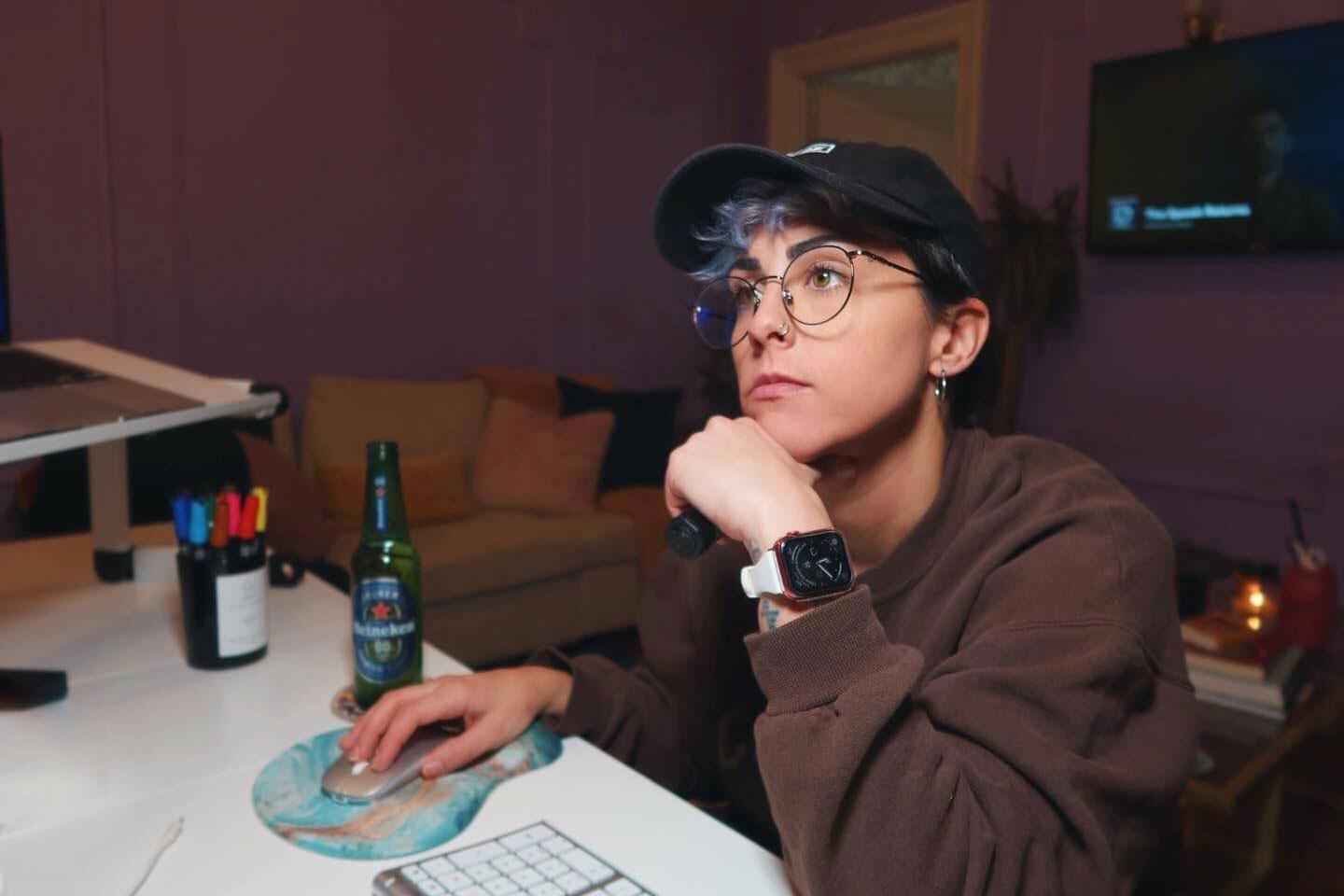
Nicole Onyia, 24, goes live on TikTok for about five hours every day—all while juggling her full-time job as a data analyst.
You might wonder, like a 1960s infomercial narrator, “How does she do it all?” The answer: She’s doing both at the same time, livestreaming herself working from home to an audience ranging from hundreds to thousands of viewers.
She usually starts work at 9 a.m. and goes live an hour later. Onyia’s TikTok live videos, which she calls “work alone together,” have earned her 100,000-plus followers. She has an aesthetic desk setup with ambient music, and she stops working from time to time to answer questions in her comments section from viewers who work alongside her.
Onyia is body doubling, or parallel working—a new term for an old strategy: doing work in the presence of others. Traditionally done in the same room, the trend is now taking over TikTok live and Zoom as remote work leaves many people struggling to concentrate or looking for community.
To some, watching someone work on a laptop might seem as boring as watching paint dry. And others might find it unsettling, considering the workers are strangers. But with more people struggling with ADHD and a loneliness epidemic, body doubling is seen as a way to assuage both conditions.
People with ADHD sometimes struggle with self-directed attention, self-restraint, and other processes, says Allie K. Campbell, who hosts live “ADHD co-working sessions” every Thursday on TikTok for her 88,000 followers. The stranger in body doubling serves as an unbiased, accountable “other” that helps one to get out of their personal struggles, explains Campbell. She adds that it has “completely changed the game” for her productivity and that of other people with ADHD she’s worked with.
It’s not the most novel concept, but one that is “blowing up” because it’s become more accessible and innovative thanks to technology, says David Sitt, licensed psychologist and professor at Baruch College. He noted that many people who advise those with ADHD have said that working while someone else is around is easier. Plus, he added, streaming work sessions allows you to connect with people worldwide, which is helpful when it’s difficult to get people to actually commit to working with you IRL.
That was the case for Onyia, who started body doubling sporadically about a year ago. As someone with ADHD, Onyia usually calls a friend while doing chores. One day, no one was available so she turned to TikTok and went live instead, expecting some friends to just pop in. She was surprised to see how much work she got done and that others who joined commented that it helped them focus too. She likes the office but lives an hour away; with her phone, she can find people searching for camaraderie almost instantly.
“It just made my heart happy in a weird way,” she explains. “I work from home; I go to school from home; I don’t really leave my apartment a lot. And being able to connect with people from around the world and we’re all working from home together, it’s a really fun feeling.”
While Sitt tells Fortune he hasn’t seen formal research looking into this function hack, he’s been promoting this type of behavior to his clients for a very long time and sees “great value in it.”
Body doubling can help workers with ADHD be more productive
Campbell’s weekly co-working sessions are complete with upbeat music that she DJs. Her interactions with her live followers aren’t all that different from friends or past coworkers, she says.
She created the space in 2021 while working for a nonprofit, but when it mandated an office return, she quit for a “lifestyle that allowed me to work where I wanted, when I wanted, and, most importantly, how I wanted,” Campbell says.
Now working as a content creator and freelance digital communications specialist, Campbell has done just that with her livestreams. “Engineers, artists, teachers, entrepreneurs—you name it, and I’ve probably seen it in at least one stream,” she adds. What brings them all together: a better work environment or, as Campbell’s slogan puts it, “Have fun and get shit done.”
At the core is accountability—when you have someone you’re sharing goals with, you’re more likely to achieve them, says Alicia Navarro, CEO of Flown, a company that hosts Zoom body doubling. A study from the University of East London on 101 Flown members found a majority indicated an above-average impact on focus (96%) and productivity (94%).
“If you observe a whole screen of people focusing and working, it’s much easier for your own nervous system to calm down and to almost subconsciously mirror those positive behaviors,” Navarro says.
This benefit is similar to co-working, Sitt says. It’s what those with ADHD needed after the pandemic removed the structure of routine, leaving them more distracted and perhaps leading to an increase in diagnoses. As people worked from home, he says, they “became much more thinned out” and realized they weren’t as good at multitasking as they originally thought. “The community of ADHD has grown significantly during COVID,” he says. “And being able to tap into the conversations around ADHD is more available.”
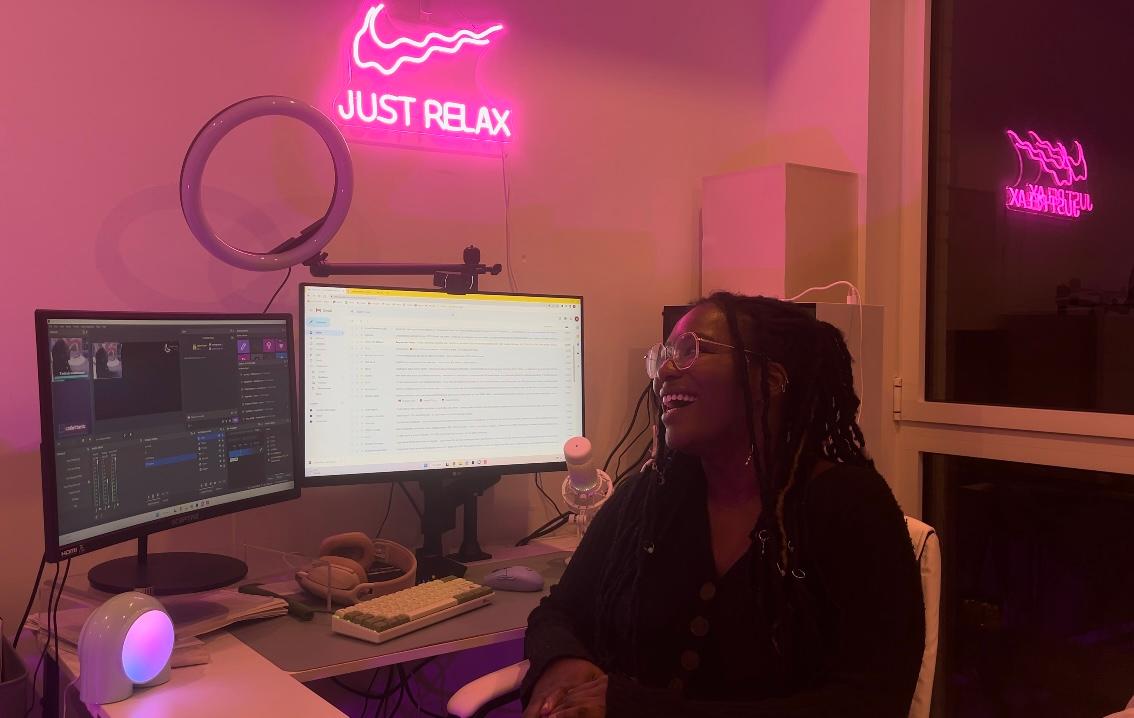
For Onyia, having people watch her TikTok livestreams is a nice reminder to keep working. “I always refer to it as utilizing social pressure,” she says, adding that talking to people on live has also made her more confident in other areas of her career, including speaking and giving presentations, something she sometimes has difficulty with given her speech impediment.
Body doubling addresses a need for community
Body doubling also fills a need for friendship that working from home can’t always deliver. These days, friendships seem harder to come by. Many Americans lost friends during the pandemic, per the Survey Center on American Life. And during a remote environment, work friends (which can provide a boost in happiness) can be more difficult to forge and require greater intentionality.
It’s another way in which body doubling is like a co-working space, Campbell says. With many workers now on hybrid schedules, offices weren’t really doing the job. “I think it started for the same reason that a lot of things start: There was a group of people who felt like they weren’t getting their needs met, and once they found a tool that helped them to get those needs met, it caught on,” Campbell says of body doubling.
As one testimony from a Flown regular indicates, “Being primarily home-based and single parenting, I love the social aspect.”
Navarro says her sessions create a sense of community and help attendees alleviate loneliness. “People crave human connection,” she says.
Onyia explains that she’s been able to connect with others in a way that reminds her of a college library or a study room with friends. She has people that show up every day now, and some become friends in her comment section.
“I have my regulars. It’s pretty cool,” she says. “And now I’ll have like 8,000 people watching me in one livestream. That’s absolutely bonkers to me.”
Learn how to navigate and strengthen trust in your business with The Trust Factor, a weekly newsletter examining what leaders need to succeed. Sign up here.