It’s been three years since office workers packed up their desks and the work landscape changed dramatically. But we still haven’t gotten the balance right.
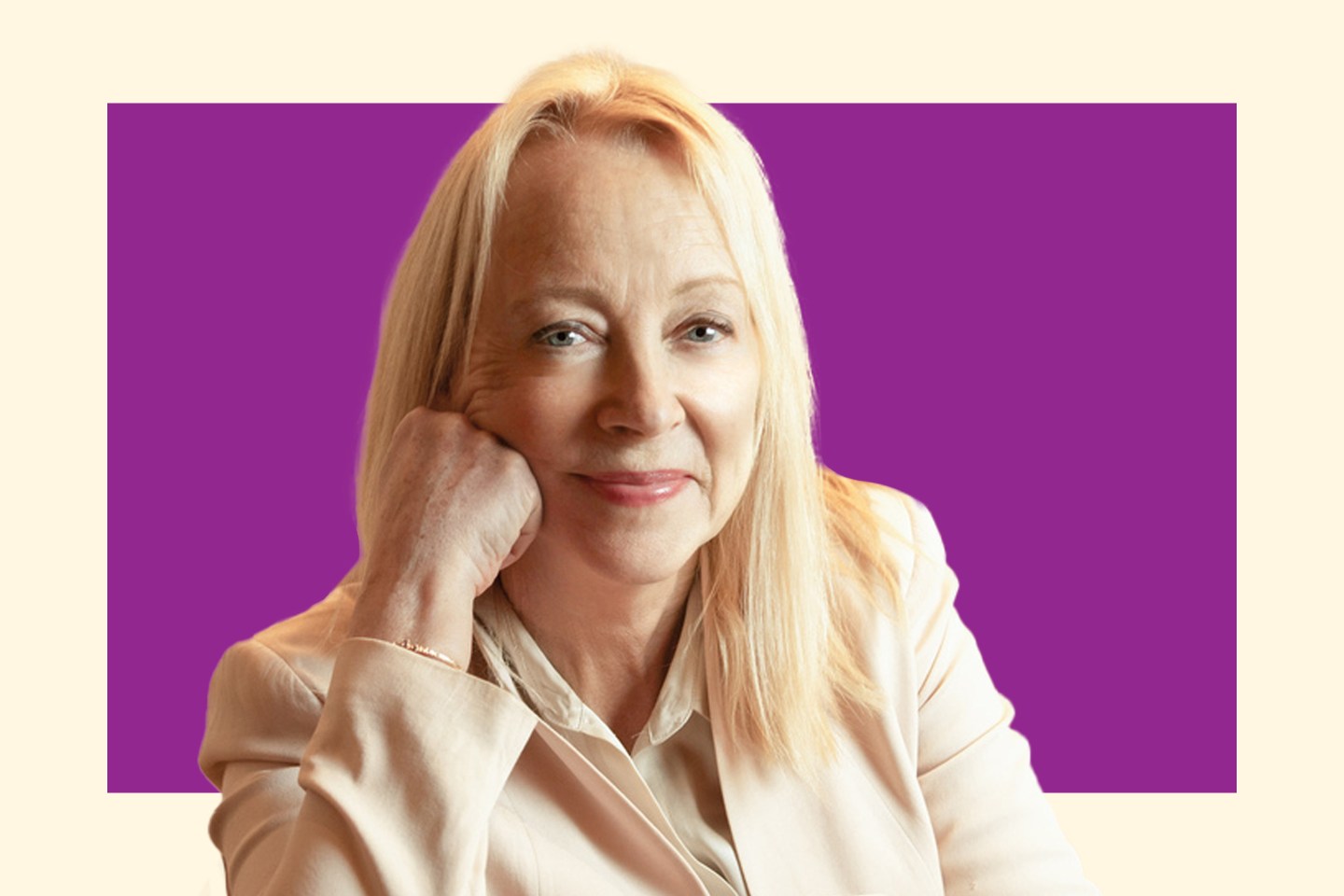
So says Lynda Gratton, a management professor at London Business School and the founder of HSM Advisory, a consultancy that helps companies future-proof their business. On a panel last week with Fortune Connect, Fortune’s exclusive education community, Gratton bemoaned the shortcomings most companies have faced as they’ve instituted their hybrid plans.
Her decades of research have found that people generally want the same things at work in order to feel motivated, Gratton said.
The first is autonomy, which she defined as “some sort of choice about what’s happening to them,” adding that this topic has been getting the most airtime lately. (That’s mainly because of the endless push and pull between managers who insist on returning to the office and workers who are more than happy at home.)
The second, which she said is under-discussed, is mastery. Workers “actually want to learn something,” she said. “They want to feel that, every day, they’re getting better at something.”
The third: connectivity, in all its forms. As pro-office bosses are quick to point out, in a remote-first workforce, this is the first one to go.
But the current state of hybrid work, at most places, addresses only autonomy, Gratton said. “We’re not really hitting the second bit, which is what makes you feel better about being at work,” she said. When people feel they’re learning something, that creates meaning. “You feel it; it’s got a purpose.”
One out of three isn’t an especially good score. And while Gratton, who consults with businesses across the globe, encourages leaders to home in on delivering all three prongs of meaningful work, she acknowledges that tradeoffs are unavoidable.
Comparison is the thief of joy
“We’re getting a great deal of variance [in return-to-office plans] because organizations are choosing different things,” she said. With so much variance across the labor market, if a worker sees one company doing something their company isn’t—such as a work-from-anywhere policy or even free lunch—they’re likely to start demanding those same choices.
Workers “are scanning the whole landscape and cherry-picking to say, Why aren’t you doing it like this?” Gratton said, adding that often, workers are “really pissed” when they don’t get what they want.
She cites a particularly stark example: Workers at crafting marketplace Etsy shouldn’t expect the same perks as those at Goldman Sachs. “The truth is that as a manager [at Etsy], you can’t deliver that. There isn’t a hybrid [company] that’s both the salary of Goldman, and the flexibility of Etsy,” she said. “That’s the reality of it, and that’s what’s really hard at the moment.”
Hybrid work tradeoffs are inevitable, no matter the company or industry. But, to be sure, many places come close—as close as they can—to striking a balance. In October, Nick Bloom, Stanford economist and cofounder of WFH Research, gave Fortune his top three companies that he believes are pulling off hybrid work best: Salesforce, Lazard, and Blue Shield of California.
They each follow a similar hybrid model, toggling between in-office and remote work on a team-by-team basis instead of a top-down approach. Bloom calls that “organized hybrid,” which focuses on social work rather than trendy office perks. Executed correctly, it prioritizes training, mentoring, and the collaborative thinking that makes in-person collaboration irreplaceable. Executed incorrectly, and workers are left coming in on random days of their choosing only to find an empty office void of one of the prongs of meaningful work: connectivity.
Picking what matters
Gratton cites the example of her husband, a corporate lawyer whose job affords no flexibility at all. “That’s his thing; he’s okay with that,” she said. “But I couldn’t live like that. I’m a different character. These are very much individual decisions about what you’re prepared to do for the job.”
That’s why, as companies consider which tradeoffs make sense for them and their workforce, one of the big three—autonomy, mastery, or connectivity—will likely end up on the chopping block. “For example, people join Goldman because they get paid a lot and learn a lot—the mastery bit pulls them,” she explained. “But at Goldman, you don’t get any autonomy. That’s the deal. You have to decide whether you want the deal or not.”
When Fortune’s Megan Leonhardt, who conducted the interview on Connect’s platform, implied that Gratton was speaking to a tradeoff between flexibility and compensation, Gratton said it was much broader than that: Everything is a tradeoff. “Those of you who’ve got young children know there’s a tradeoff there,” she said. “Every time you decide to go into the office versus stay at home, that’s a tradeoff.”
That’s a necessary part of business, she added, and workers shouldn’t expect any company to offer everything at once. Plus, companies shouldn’t expect to offer it. “To tell anyone there’s no tradeoffs is, really, to not treat them like a human being.”